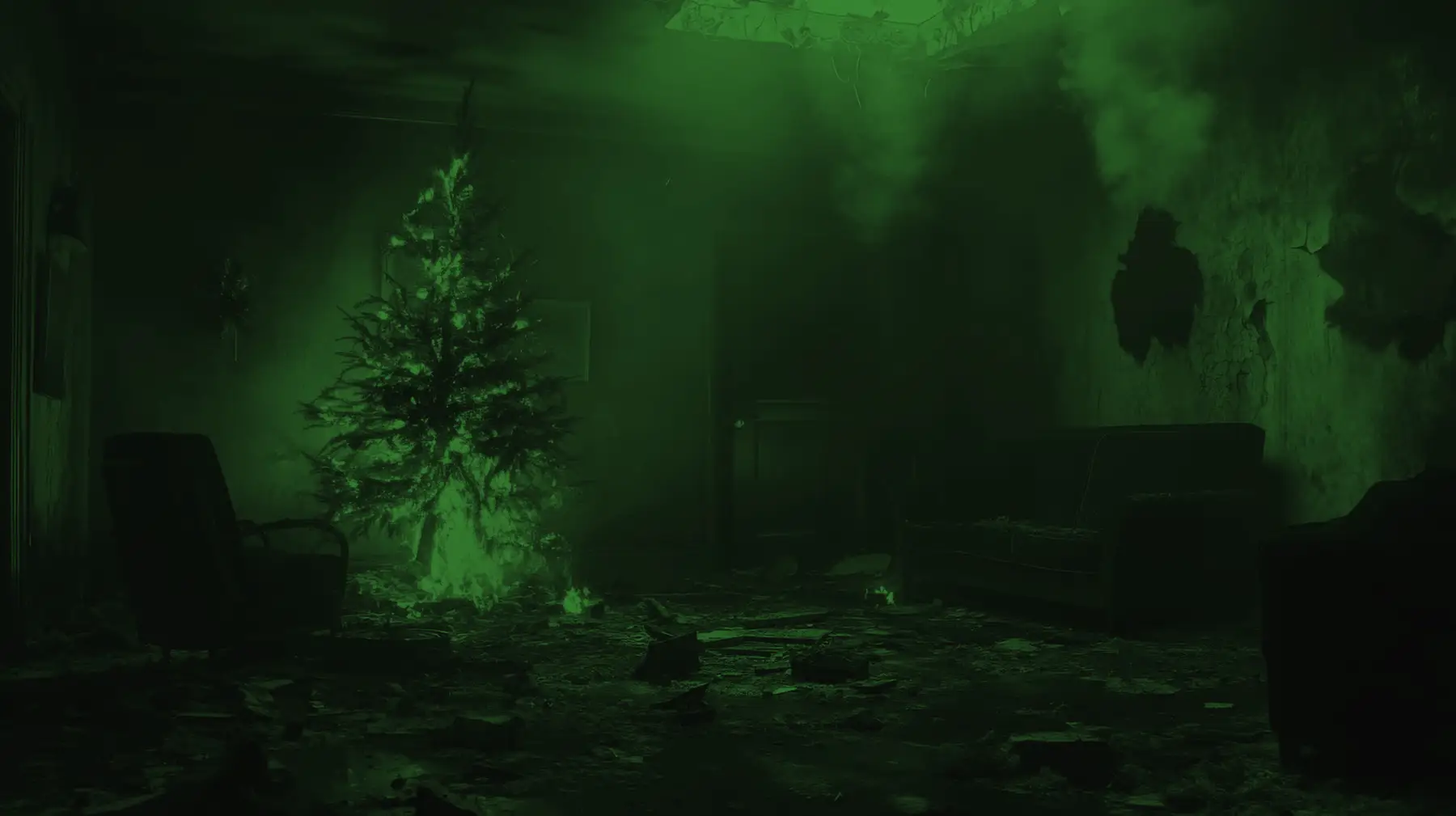
Case file 047Weird History & Odd CustomsBefore 1800

The First War On Christmas

Long before holiday cups and Happy Holidays, Puritans fined Christmas celebrants in Massachusetts. How the first war on Christmas was waged, and lost.

Dec 23, 20231h 3mRe-aired Nov 29, 2025 as Revisiting The First War On Christmas
00:00 / 1:02:57
Or listen to this episode onApple PodcastsSpotifyYouTube
Share this episode

In this episode

  • Why belief in predestination made other people's Christmas parties the Puritans' business
  • Plymouth's second Christmas, and what Governor William Bradford caught a group of newcomers doing in the street
  • What King Charles II did to Oliver Cromwell's body once Christmas was back
  • The holiday dessert Puritan Massachusetts condemned as idolatry
  • Christmas Eve 1914, and the sound British soldiers heard from the German trenches

“It was the Puritans, those black-clad icons of sobriety and piety, who fired the very first shot at Christmas.”

The story

Long before anyone got worked up over a red coffee cup, Christmas was a crime in America. For 22 years, from 1659 to 1681, anyone in the Massachusetts Bay Colony caught celebrating it could be fined up to three days' wages. The people behind the ban weren't atheists or merchants. They were Puritans, and they meant it.

Twelve days of mad mirth

In 17th-century England, Christmas was a whole season, not a single day. It ran for twelve days, from December 25th to the eve of the Epiphany on January 5th. People earned it by getting through Advent, the stretch of fasting, restrictions and prayer before the holiday, and then a Christmas Eve fast with no cheese, eggs or meat. After that came the feast: capons, geese, even swans roasted and piled on the table, plus venison, veal and lamb, mince pies, custards, cakes and spiced wine. Then there was dancing, carol singing, card games and stories by the fire. The poet John Taylor described Christmas revels that ended only when the new day dawned, and not always even then.

Put a crowd together with plenty of alcohol and things get out of hand. Brawls broke out, and people got drunk and indecent in public. Petty theft spiked because the poor were just as determined to lay out a big holiday spread, which meant a lot of meat stolen from the markets. The Puritans didn't see a party that had gone too far. They saw a threat to their eternal salvation.

This came from a sect that believed in predestination, the idea that God decided every soul's salvation or damnation before birth. So if heaven and hell were already settled, why police a little dancing under the mistletoe? Logic rarely gets a seat at the table when religious intolerance is hosting.

Cromwell comes for the feast

Oliver Cromwell saw Christmas as a Roman Catholic abomination. The Puritans pointed out that December 25th appears nowhere in scripture. They were also appalled that back in the 4th century the Catholic Church had folded pagan customs into the holiday, including the lights, drinking and feasting of Saturnalia, the ancient Roman celebration of the winter solstice.

In 1644 the Puritans banned any observance of Christmas in England, and even going to Christmas Mass was forbidden. After King Charles I was beheaded, Cromwell's parliament declared December 25th a day of fasting and humiliation. Shops had to stay open, and soldiers patrolled the streets of London seizing any food that looked meant for a Christmas feast. The English went right on celebrating in secret and clashed violently with the authorities.

The ban didn't outlive Cromwell. After he died in 1658, King Charles II took back the throne and quickly brought Christmas back. He also had Cromwell's body dug up and hung at Tyburn Gallows, London's first permanent gallows. When that stopped being fun, the king had the corpse beheaded and put the head on display at Westminster Abbey, a church, for 20 years.

No gaming in the streets

After losing in England, the Puritans tried again in the New World, where they ran the governments of Massachusetts Bay, Connecticut and New Plymouth. The second Christmas at Plymouth fell in a brutal winter: sickness had killed many colonists, and a nearby tribe threatened conflict. Governor William Bradford ordered everyone to work. A handful of men who had just arrived on the ship Fortune said working on Christmas went against their conscience, and Bradford reluctantly excused them. Hours later he found the same men playing cards and dice in the street. He wrote in his journal: "If they made the keeping of it a matter of devotion, let them keep to their houses, but there should be no gaming or reveling in the streets." What really worried him was the slippery slope. First a day off, then a little feast, then gifts, and soon the full twelve days of debauchery.

In 1659 Massachusetts Bay made it law with the Penalty for Keeping Christmas. Anyone "found observing any such day as Christmas or the like, either by forbearing of labor, feasting, or in any other way" owed five shillings per offense. Schools and shops had to stay open on Christmas Day, and churches had to stay closed. Mince pies were condemned as "idolatry in a crust." The Reverend Increase Mather, who led Harvard for two decades and was the father of Cotton Mather, a major player in the Salem witch trials, complained in 1687 that Christmas keepers spent the holiday "in excess of wine and mad mirth."

The weird part

The first war on Christmas in America was fought by devout Christians. Puritans made celebrating the holiday a crime in Massachusetts for 22 years, and the state didn't make Christmas a public holiday until 1856.

From crime to holiday

In the end a king forced the change. Charles II wouldn't tolerate a colony whose laws defied the Crown's, and in 1681, facing the loss of its royal charter, Massachusetts Bay repealed the penalty. Nobody was happy about it. In 1686 the new royal governor, Sir Edmund Andros, sponsored Christmas services in Boston and attended them surrounded by armed British soldiers for his own protection. As late as 1689, children caught skipping school on December 25th could be expelled, and often were. Massachusetts didn't make Christmas Day a public holiday until 1856, 175 years after the repeal. The rest of the country wasn't much quicker. The first state to make Christmas an official holiday was Louisiana, in 1830.

Singing in No Man's Land

By comparison, the modern war on Christmas looks a little silly. In 2015 Starbucks dropped the reindeer and ornaments from its holiday cup and went with plain red, and people were outraged over a cup they had chosen to pay for. No one was taking away anybody's home-brewed Folgers, the way Cromwell's soldiers once seized holiday food. Even "Merry Christmas" has a rowdier past than its defenders think. Merry once meant action, revelry, a party. The phrase was an order to go celebrate, which is exactly what the Puritans hated.

A truer picture of Christmas came on Christmas Eve 1914, on the Western Front of World War I. At about 10 o'clock that night, British troops heard the Germans across the battlefield singing Christmas carols. Worried it was a trap, soldiers on both sides slowly climbed out of their trenches and met in No Man's Land, the strip of ground between the armies. There they traded handshakes, tobacco, a bit of food and some wine taken from an abandoned farmhouse. When the sun came up, they went back to trying to kill each other. The Puritans never learned what those men found out in a single night: nobody can outlaw Christmas.

The transcript

Chapters & full transcript9,100 words
Chapters
  1. 00:07The Puritans who hated Christmas
  2. 02:44Twelve days of excess
  3. 06:37Cromwell's ban
  4. 09:07Outlawed in the New World
  5. 21:16Coffee cups and culture wars
  6. 29:16The Christmas truce

This transcript was generated automatically from the episode audio and may contain errors. Times are approximate, since ad breaks can shift them by a minute or two.

00:00

Hey true weirdos, at the end of this episode, stick around if you want for a little bonus content and conversation. Way back in the 17th century, there was a scheming Puritan named Oliver Cromwell who, like the Grinch, hated Christmas. It could be that he found the holiday deeply pagan and not right. It could be that his Puritanical black shoes were buckled too tight, but I think the most likely explanation is that Cromwell viewed Christmas as a Roman Catholic abomination.

00:36

Banning Christmas in England was a total non-starter, so the Puritans sailed to North America where the living was harder. And that's how they liked it, cold, hungry, and bleak. Christmas, they said, was a trap for the weak. They hated the singing, the dancing, the jolly, the feasting, the gifting. It all looked like sheer folly.

01:00

There's no Christmas in the scriptures, the Puritans opined. And if we catch you celebrating, you're gonna get fined. Truly weird stuff. And so, for 22 years from 1659 to 1681, anyone in the Massachusetts Bay Colony caught in the act of celebrating Christmas was fined up to three days' wages for the crime. That was getting off easy.

01:51

The Puritans reveled in their power in the New World. They were here to build a new society, one where the church and the state worked hand in glove to support and reinforce each other. One where all citizens were compelled to comply with their beliefs or suffer the consequences, which were severe. Exile and execution were on the table, and so was murder.

02:18

But hey, you can't make a theocratic omelet without breaking some eggs. Why were the Puritans so rabid in their distaste for Christmas? Believe it or not, it isn't just because they loathed a good time. It's more because the way Christmas was celebrated in their native England had become such a riotous free-for-all that it seemed to them both morally vacant and morally offensive.

02:44

And listen, the English did Christmas in a big way. Christmas Day in 17th century England was only the beginning of the festivities. Their holiday was the 12 days of Christmas, not the song. We're talking literally. From December 25th to the eve of the Epiphany on January 5th, this was the highlight of the whole year.

03:07

The people earned their celebration by enduring an Advent season of fasting and restrictions and prayer, followed by a Christmas Eve fast that prohibited the eating of cheese and eggs and meat. By Christmas Day, they were ready for the abundance that awaited. Poultry, everything from capons to geese, even swans were roasted and piled on the Christmas table.

03:32

Meat was the big star on the menu. Venison, veal, and lamb were all served. Mince pies and custards and cakes and spiced wines rounded out the meal. After feasting, there might be dancing and carol singing and card games. Stories would be told by the fire. The poet John Taylor described Christmas rebels that ended only when the new day dawned, and not always even then.

04:00

These people took the celebration of Christmas very, very seriously. And, like any party that mixes a crowd with free-flowing alcohol, there were times when things got out of hand. There were outbursts and brawls, public intoxication and public indecency. Petty thieving spiked at Christmas, because the poor were as determined as everyone else to lay out an abundant holiday spread, which meant a whole lot of meat stolen from the markets.

04:30

The chaos, the disorder, the Puritans saw it all not as the byproduct of too joyous a party, but as a real threat to their eternal salvation. They hated it. Why did the Puritans worry so much about how other people celebrated Christmas? Well, two reasons. One, they were disgusted to see a religious occasion disgraced by such girthy, animalistic pleasure.

05:05

And two, such things collided with their belief in predestination, which basically goes like this. The Puritans believed that one's salvation or damnation was determined by God before birth. On the one hand, you hear that and think, well, okay then, since it's already decided, how about you let us have a little dance under the mistletoe in peace, since nothing we do on this mortal plane matters in the slightest when it comes to finding yourself with a halo or with hellfire.

05:36

Then on the other hand, it's like, mind your business. If God's already decided, then who are you to have an opinion? Isn't that kind of arrogant? If God is all-seeing and all-knowing, it's not like God needs your input, Puritans. And also, snitches get stitches. But of course, logic and reason have no place at the table when religious intolerance is hosting.

05:59

And that's what this was all about. And if you're thinking, wait, that can't be right. Everyone knows the Puritans fled England to escape religious persecution. So aren't they the last people to want to persecute anyone else? You'd think. But as it happens, the Puritans found religious persecution of their faith unendurable.

06:24

But religious intolerance as practiced by them? That was another story. That was just part and parcel of nation-building. Oh, the hypocrisy. When the Puritans, led by Oliver Cromwell, came for Christmas at home in England, it started with a ban in 1644 on any observance of the holiday. Even attending Christmas Mass was forbidden.

06:52

No sooner had the head of poor King Charles I rolled to a stop beneath the guillotine that Cromwell's parliament declared December 25th a day of fasting and humiliation, that the English people might repent their sins. The English people were like, sure, whatever. And then continued to celebrate in secret. But soon, shops were forced to stay open on the day, and soldiers even patrolled the streets of London, seizing any food items they suspected were intended for a Christmas feast.

07:26

There was much resistance to the insanity of the outlawing of Christmas, and frequent violent clashes between citizens and the authorities. For the faithful, being denied Christmas worship was a grave assault on their very way of life. For the not-so-faithful, being denied those 12 days of food and drink and play and rest was an insufferable outrage.

07:52

Were their whole lives to be spent at labor, with never enough to eat and nothing to hope for? And now this, their one release, their one brief time of joy and color? That was to be taken from them too? The answer from the people was a very hard no. Thankfully, Cromwell's brief and brutal success in stopping Christmas didn't outlive him.

08:19

When Cromwell died in 1658, King Charles II returned to the country as rightful heir and took back the throne. Not only were the laws banning Christmas promptly overturned, but the king had Cromwell's body exhumed from its grave and hung at Tyburn Gallows. Those were the very first permanent gallows in London. And when that stopped being fun, the king had Cromwell decapitate it and his head put on display at Westminster Abbey for 20 years.

08:50

And Christmas? It was back, baby, and bigger than ever. Now, despite having been completely ineffective at shutting down Christmas in merry old England, the Puritans took another swing at it in the New World. The first leader of Plymouth Colony, Governor William Bradford, took a handful of settlers to task for taking Christmas Day off rather than showing up to work.

09:16

It wasn't so much that Bradford objected to his people honoring the day, it was more that he feared the inevitable slippery slope. Give the colonists Christmas Day off, and before you know it, there's a little feast, then a few gifts, then a small party. And just like that, the full-blown debauchery of the Twelve Days of Christmas gains a foothold in the New World, and everyone's going straight to hell.

09:43

This time, the Puritans had the upper hand. They held the power, they controlled the government, in Massachusetts Bay, in Connecticut, and in New Plymouth. And when Governor Bradford saw something that displeased him, he took swift action. Example, so it's the second Christmas in the New World. Sickness had claimed the lives of many Puritans, and for the first time, the colonists found themselves under threat of conflict by one of the nearby indigenous tribes.

10:13

It was a bad, bad winter. On December 25th, Governor Bradford put out the call to work. A handful of men, newly arrived on the ship Fortune, told him that it went against their conscience to work on Christmas Day. Bradford wasn't pleased, but he permitted it. And then, hours later, he came upon those very same men playing cards and dice in the street.

10:42

Bradford was incensed. He noted in his journal, If they made the keeping of it a matter of devotion, let them keep to their houses, but there should be no gaming or reveling in the streets. Bradford banned Christmas right then and there, though it did take a few years to get the law into writing. But Governor Bradford and the Puritans in general were no quitters, and once they had a notion to clamp down on something, you best believe they followed through.

11:11

In 1659, the Massachusetts Bay Colony enacted the Penalty for Keeping Christmas. The law read like this, For preventing disorders arising in several places within this jurisdiction by reason of some still observing such festivals as were superstitiously kept in other countries, to the great dishonor of God and offense of others, it is therefore ordered by this court and the authority thereof that whosoever shall be found observing any such day as Christmas or the like, either by forbearing of labor, feasting, or in any other way, upon such accounts as aforesaid, every such person so offending shall pay for every such offense five shillings as a fine to the country.

12:00

Here's a trippy little fun fact. Under these anti-Christmas laws, Puritans in the New World were required to keep schools and shops open on Christmas Day and churches closed. How crazy is that? They forbade mince pies for crying out loud, calling it idolatry in a crust. In the city of Boston, town criers roamed the streets on December 24th, ringing bells and shouting, Go Christmas! Go Christmas!

12:33

It's so nutty that it gives you the giggles, right? And yet, if a giant celebration on December 25th couldn't be found in the Bible, then the Puritans held it had no place in decent society. So what did the Puritans mean when they said that Christmas had no basis in Scripture? Well, they took the Bible extremely literally and insisted that any civil legislation mirror the Bible as closely as possible.

13:00

And, to be fair, there is no mention of December 25th in Scripture. But even beyond that, Puritans were appalled by the pagan roots underlying most of the holiday's festive traditions. It sure didn't help that the despised Roman Catholic Church had gone ahead back in the 4th century AD and swept a whole host of pagan traditions into the basket we now know as Christmas.

13:27

From the ancient Roman celebration called Saturnalia came lights and drinking and feasting all around the observance of the winter solstice. You know, the shortest day of the year, the longest night. Now throw in gambling, promiscuity, gluttony, and drunkenness that marked many of the Christmas celebrations, and you can see how the Puritans were in a frenzy of clutching their pearls.

13:51

Metaphorical pearls, of course. The real ones would have been seen as the most grotesque and wanton vanity. The sort of thing a devout godly woman would never permit to cheapen her flesh. Now, let's meet a Puritan superstar, the man who really got his shorties in a knot over these pagan rituals turned Christmas revelry.

14:11

The Reverend Increase Mather. He was a powerful force in the Massachusetts Bay Colony and served as the president of Harvard University for two decades. He was the youngest of six brothers and the fourth of them to enter the ministry. He'd been safely tucked under Oliver Cromwell's wing and was serving as a military chaplain at a garrison in the Channel Islands when Cromwell died.

14:36

Mather was as adept at deciphering a political moment as he was at interpreting scripture, and he believed it was in his best interest to get far away from England and the righteous wrath of its newly restored monarch, King Charles II. So the Reverend Increase Mather sailed back to Massachusetts, married his stepsister, which is not nearly as scandalous as it sounds, and not even uncommon given the scant population at the time, which surely did limit one's options for courtship and marriage.

15:10

Increase and his wife Maria welcomed a son into the world two years later. Aw, look at baby Cotton, so adorable in his wee cradle. It's hard to believe that this sweet infant would grow up to be Cotton Mather, one of the driving intellectual forces in colonial America and a major player in the deadly hysteria that was the Salem witch trials.

15:38

Puritan's gonna Puritan and all that. Anyway, Increase Mather was as bothered by the merriment and festive fun of Christmas as Governor Bradford. He had this to say about it in 1687. The generality of Christmas keepers observe that festival after such a manner as is highly dishonorable to the name of Christ. How few are there comparatively that spend those holidays, as they are called, after a holy manner.

16:07

But they are consumed in compotations, in interludes, in playing cards, in revelings, in excess of wine and mad mirth. The laws against Christmas in Massachusetts remained in place long after the laws in England were overturned, long after Cromwell's Head found its new home at Westminster Abbey. They were enforced and not, meaning any public acknowledgement of the holiday was strictly monitored.

16:33

But many families continued to observe Christmas quietly, privately, in their homes, which suited the Puritans just fine, since it was rowdiness and disorder that they most abhorred. This arrangement, however, did not suit King Charles II. The colony was under his rule. These were his subjects, and he could not abide their refusal to align their laws with those of the Crown.

17:00

It was most terribly disobedient and disrespectful, and over time, the King put more and more pressure on the colony to fall into line. Finally, in 1681, under threat of losing their royal charter, the Massachusetts Bay Colony finally repealed the penalty for keeping Christmas. They weren't happy about it, and even with the law repealed, there was real animosity aimed at any celebration of Christmas.

17:29

So, what did Christmas in the New World look like post-repeal? After all, an entire generation had lived with Christmas not as a joyous tradition, but as a crime. You could probably sum it up in one word, uneasy. In 1686, the Crown appointed a new royal governor, declaring this one to be head of the Dominion of New England.

17:56

The territory Governor Sir Edmund Andros presided over included all of New England and all of the mid-Atlantic colonies, except for Delaware and Pennsylvania. He didn't win the hearts of the colonists, what with his authoritarian style and his fidelity to the Church of England, which, remember, the Puritans had fled England to escape.

18:18

The locals were like, this guy is a popish puppet. And then there was his strict enforcement of the Crown's revenue laws, which apparently infuriated everyone except for the colonists of Rhode Island. No one was hit harder by that than the poor Puritans scratching a living out of Plymouth Colony. Throw in Andrews' outlawing town meetings, save for one annual meeting where elections would take place, and it's not hard to see how his leadership planted the seeds of resentment and rebellion against the oppressive rule of the Crown.

18:53

When December 25, 1686 rolled around, the new Governor Andrews gangly sponsored Christmas services in Boston. He even attended those services, surrounded by armed British soldiers for his own protection. Redcoats, as the colonists called them. That's how controversial the public observance of Christmas was, and it stayed that way for a long time.

19:20

Even in 1689, eight years after the repeal of the Christmas penalty laws, children caught skipping school on December 25 to celebrate could be, and often were, expelled. And even though working on Christmas Day was no longer compulsory, 20-plus years of habit sure died hard. How long did it take for Christmas to creep back into the lives and traditions of the Massachusetts colonists?

19:50

Well, the answer to that's pretty shocking, because it wasn't until 1856, 175 years after the repeal of the Christmas penalty laws, 175 years, that Massachusetts finally declared Christmas Day a public holiday. And while they were at it, they went ahead and put George Washington's birthday on the 4th of July on the official calendar, too.

20:18

For a lot of Americans, who think the War on Christmas was started by an overpriced coffee franchise and the use of the phrase, Happy Holidays, all this news about the Puritans might come as an uncomfortable surprise, because the way the culture warriors like to spin the War on Christmas is to scream and holler that God is being taken out of the holiday in favor of bloated consumerism and cartoon snowmen.

20:43

But the truth, as always, is much more complicated. It wasn't atheists or toy makers or merchants who tried to undermine the holiday. It was the Puritans, those black-clad icons of sobriety and piety, who fired the very first shot at Christmas. And now, it's that magical time of year when twinkling lights and brightly wrapped packages signal the beginning of the annual battle in this season's War on Christmas.

21:16

Starbucks baristas have been bravely manning the front lines low these many years since 2015. That was the year that Starbucks' release of their annual holiday cup sparked an unexpected furor. Unlike previous years, when the cups featured whimsical reindeer and festive Christmas ornaments, the 2015 model was a minimalist red adorned only with the chain's logo.

21:41

The reaction to this was wild. You'd have thought Starbucks had hijacked the Holy Grail. The outrage over these cups. What kooky fever dream was this? It's a cardboard cup that you, the customer, willingly elected to pay to have filled with whatever gingerbread, peppermint, chai, latte, double-whip, extra sprinkles concoction your heart desires.

22:06

An action that is 100% voluntary. The government didn't go door-to-door demanding that all citizens surrender their home-brewed Folgers in favor of a red cardboard cup of fancy coffee. You know, like they did in London under Cromwell when foods that looked celebratory were routinely confiscated. Like, if you don't want Starbucks in a holiday cup, it's super easy to avoid having it.

22:31

But also, who cares what the cup looks like? It's not like Starbucks offered up the goblet of Beelzebub or the chalice of eternal suffering. This idea of the war on Christmas has jumped the shark book good in America. Remember back in 2021 when the 50-foot-tall Christmas tree outside Fox News headquarters was set ablaze?

22:53

The man charged with the crime, 49-year-old Craig Tamanaha, appeared to be suffering a grievous mental health crisis and torched the tree for reasons clear to no one, including himself. But, of course, the flaming tree was immediately cast as a symbol of the godless, hateful war on Christmas. As was the phrase, Happy Holidays!

23:16

Those who tell you that the phrase Merry Christmas is or was or will be banned, there's zero evidence to back it up. Target, the store, was accused of prohibiting employees from using the phrase Merry Christmas. The accusation was false, and Target was the subject of social media harassment and half-hearted boycotts until the frenzy moved on to the next...

23:38

Target. Sorry about that. Couldn't resist. It is true, very true though, that in Target and plenty of other retailers, you'll see the words holiday and season and tradition more than you might see the word Christmas. Some of that is the store itself, but a lot of it is the manufacturers of the products they sell. As America has become a more secular nation, folks in the business of selling stuff have responded by trying to make their products appealing to the widest possible audience, which is how we get a phrase like traditional holiday stocking, for example.

24:16

I mean, the company manufacturing those is fully aware that those stockings are a Christmas tradition. But in the world of late-stage consumer capitalism, it's all about driving profits. And who knows? Maybe Festivus stockings will catch on. See how that works? The Puritans wanted control, so their neighbors didn't celebrate Christmas.

24:39

Today, we want the same control over how our neighbors do celebrate Christmas, which all amounts to the same thing, forcing one point of view onto all the people, which is always dangerous, always leads to oppression and conflict and real war, the kind of war where the red comes from spilled blood, not a cardboard cup from Starbucks.

25:05

If you think Massachusetts was late in acknowledging the Christmas holidays, the news isn't much better for the whole United States. We became our own sovereign nation on July 4, 1776. But somehow, no one got around to seeing Christmas as any kind of big deal until 1830, when Louisiana became the first state to declare December 25, Christmas Day, an official holiday.

25:32

Put that in your America's whatever-the-founding-father-said-it-was pipe and smoke it. Because as far as the founding fathers were concerned, you'd best keep your blacksmith forge open on Christmas Day and your little celebration private. For the Puritans, it was these ranked displays of holiday hedonism that drove them to clamp down so tightly on Christmas.

25:56

For us, I think it's nostalgia. So many people yearn for what we call a simpler time, a time when everyone decorated a Christmas tree, nestled a nativity scene under its glowing branches, and paused in their daily labors to give thanks and gratitude for the birth of the child who would cleanse our sins and redeem us all.

26:20

That is a beautiful picture. It's the one I grew up with, even if my family never quite pulled it off. But in some ways, it's every bit as mythic as the rotund and rosy-cheeked Santa Claus bestowed on the world by Coca-Cola and the artist Haddon Sundblom. It's because so many of us have never had that kind of golden, glorious, nostalgic Christmas that we crave it so deeply.

26:47

Why we try year after year to create it, to buy it. It's like our souls are wanderers who long to be home for Christmas, if, like the song says, only in our dreams, even when the closest we've ever gotten to experiencing that kind of Christmas is seeing it in a movie on the Hallmark Channel. And listen, the phrase Merry Christmas, that flashpoint phrase that signifies for many the religious nature of the holiday.

27:20

Well, ho, ho, ho, ho, hold on to something. You'll notice that we don't say Merry Birthday or Merry Fourth of July. We use the word happy instead of merry for most holidays. Happy being an emotion. But the word merry, that has a different meaning. Merry meant action, revelry, a party. It's interesting that the English use the phrase Happy Christmas, even though it was their holiday merriment that drove the Puritans to ban the celebration altogether.

27:53

So, as it happens, the phrase Merry Christmas didn't start out as a way of signaling one's faith. It was a command to get out there and celebrate with all the joy and gusto you could manage. Strip all the shouting and tinsel and you men create a doctrine away and it comes down to this. It's not Christmas magic that's make-believe.

28:22

It's the war on Christmas that's make-believe. Christmas magic is a real thing. A spark of peace and unity that has the power to quiet the whole world if only for a moment. The war on Christmas is the fake thing. A drummed up bit of nonsense that has the power to darken the season and divide us all. And before you get worked into a frenzy because the exhausted teenager checking you out at the mall said Happy Holidays instead of Merry Christmas, pause for just a moment and ask yourself why that feels like an attack.

29:00

Is that all Christmas is? Words? Words and money and piles of stuff? Christmas, real Christmas is so much more. Real Christmas is what happened on Christmas Eve 1914 in the filthy, cold, muddy trenches on the Western Front in World War I. It was about 10 o'clock at night that Christmas Eve when British troops heard something strange.

29:34

A sound so unexpected and otherworldly that they could scarcely believe their ears. The enemy army, Germans, crammed into their own trenches on the opposite side of the shadowed battlefield. They were singing. They were singing Christmas carols. Slowly, soldiers on both sides crept from the trenches and moved toward each other along the strip of ground known as No Man's Land.

30:05

Instead of bullets, the men exchanged handshakes, embraces, kind words. They shared what little they had. Tobacco, a bit of food, some wine liberated from an abandoned farmhouse. There, in that frigid darkness, on that wretched, blood-soaked soil where so many bodies were strewn, a miracle happened. Amid all that inhumanity and death and despair, Christmas came.

30:40

It came without ribbons. It came without tags. It came without packages, boxes, or bags. There's a truth that we know deep in ourselves that Christmas isn't about phrases or presents or elves. The Puritans tried, but they couldn't stop it. Capitalism's done everything possible to top it. And here we arrive at yet one more December with a history that somehow we don't remember.

31:19

If you celebrate Christmas, hold on to it tight and let others who don't enjoy that same right be like the Grinch whose tense, shriveled heart they do say witnessed the true meaning of Christmas and grew three sizes in one day. Next time on True Weird Stuff. As we wrap up the year, we wanted to take a moment to wish you peace this holiday season however you celebrate.

31:49

We're down for every kind of tradition except for the elf on the shelf. That nosy little tattletale for Santa is too weird even for us. I mean, what the heck are you doing in my bedroom, Mr. Jingles? Get out of here. We're going to take a week off so that the True Weird crew can hang out with their people and take a well-earned break.

32:08

And we will be back with a brand new episode on Friday, January 5th, 2024. It's the story of a trucker who found himself riding in a whole other kind of rig. The kind you might call a flying saucer. We'll see you on the next True Weird Stuff. I mean, listen, I get why people are so reactive and emotional about how the holidays are presented, described, celebrated, all of that.

32:51

Because it's a deep connection, whether you come from a place of faith or a place of tradition. That stuff runs deep. But when you stop and consider that Christmas was illegal. Will you sit with that for a second? Christmas was illegal in this country. It was illegal. Not everywhere. But it also wasn't even a holiday until 1830.

33:22

Do you know how many people don't know that? I wasn't aware of that. I was not aware of that. That it was that late that it became a holiday. Because you're just assuming that we've done it all along. Because there's a lot of old traditions and old hymns that go back to the 15, 16 hundreds. Well, yeah. And the people, the first wave of immigrants to this country coming from England, they they had grown up with the tradition of Christmas.

33:54

So it's not like, oh, we've never heard of this day. But they disliked the way that it was observed. And so they decided to outlaw it. It's shocking when you consider that it was 1856 before Massachusetts declared it a holiday. That that blows people's minds when they learn it. Just a few years before the Civil War started.

34:17

But the bottom line is, if people want to do it, they're going to do it. You can legislate it all you want. People, you know, you cannot legislate people's behaviors. You just can't. Well, this is an interesting word of people say history repeats, but she doesn't just repeat. She echoes and like a hit song. You know, you've got that verse chorus bridge like we keep coming back to the same themes because we don't learn from any of them.

34:48

When the Puritans got here, they had their chance to have their world, their perfect world, just the way they wanted it. And and so they were extremely authoritarian and they could be. There were a handful of, you know, human souls in the first wave of Puritan colonists. Right. So what they wanted to do was create a theocracy.

35:14

Right. I mean, that's what that was. That was a theocratic government. And they were they were kind of in a pickle because this was a British colony and they were subject to the crown. Whether they whether they agreed with the rule of the crown, they were forced to pay taxes, all those revenue deals. Right. So they wanted a theocratic government.

35:37

But they were a British colony. And when you think about all the ways that history could be different. You know, if the Puritans had been successful, the United States of America would look very different today than it does. And there are people and this is the unsettling thing. There are people that today right now would like to put a theocratic authoritarian government into place.

36:03

And they some of them that they that desire comes from a place of real devout faith and you go. But that's not what we have here. And any time you have one group of people forcibly imposing their will on the on the population. It doesn't end well. There's nothing in history that points to that ending well. And it didn't go well here in the new world, because even as the Puritans were successfully outlawing Christmas, forcing schools and businesses to be open and churches to be closed.

36:41

I mean, in the in the 1800s, kids in Massachusetts were still getting expelled from school for taking Christmas Day off to be with their families. There were banishments, exiles and even killings and executions of people that disobeyed the Christmas laws. Like you look at that and you think you want that now. You really want to bring that back. You really think that that's an OK way to live to force that kind of oppressive theocracy down other people's throats.

37:15

That's kind of where we are. Well, and I think you made it. Let me just say this first. I love the fact that mince pies were idolatry and a crust. Right. Is there anything more gross than a mince pie? That was one of my favorite things I wrote when you were reading it. I wrote it down. I went, oh, we got to talk about this, you know.

37:38

But what would those what would those Puritans make of little Debbie if they thought mince pie was a seductress? Come on. I think, you know, it's kind of a cliche to say, well, you know, Christmas is really about. But the bottom line is Christmas really is about that stuff that isn't with what you buy or anything else.

37:57

It's really not. It's about being with people. It's about the relationships you have with people. It's about helping people. It's about making people feel good. It's about there is there is real magic that's connected with it. If you just look for it and you make the magic yourself as well. So, I mean, I think that you make that point very well.

38:20

Well, thank you. I I really feel like the greatest example of Christmas we have is the Christmas Eve truce in World War One. That was that was an example of the spirit of Christmas, this moment of pure peace. And I'll come at it from a faith perspective, you know, having been brought up in the Catholic Church. And then my mom, you know, became LDS. So I've had like a foot in all these different worlds.

38:51

What did we Max, you'll know this. You went to Catholic school, too. What did we call Jesus? But the prince of peace. Right. Right. And what what was Christmas? The miracle, the miracle that unto unto us, a child is born. It's going to redeem the world. That is the spirit of Christmas that happened on that battlefield in 1914.

39:18

That is an amazing story. I never tire of hearing that story in the many ways that I have. The thing that always is interesting about it is the men who got together on that Christmas. They had no beef with one another. They had no beef. They were all the same. They were all they were all forced into the same situation and they had that in common.

39:46

And I'm always amazed that, OK, if these guys can sort of get this along, can't we all kind of get this get along? I it's the thing that always amazes me about that story. That it to me, the Christmas truce is one of like if I had to make a list and I had to come up with just five things in defense of humanity for the alien overlords, that will be on my list because I want you to think about.

40:18

So let's let's let's go back to that Christmas Eve, 1914, and we're on the Western Front, which is I believe it was Germans. It would be German soil today. Is that right, Max? If memory serves, it's been German. It might be Belgium. I mean, it just it's right. Yeah. So they're on the Western Front. It's bitterly cold. The ground is wet.

40:47

Like these these soldiers fighting trench warfare in World War One, the misery. They were never warm. They were never dry. They were never they never had a moment where they felt like safe. Right. They were when we say trench warfare kids like we literally mean they dug trenches and concealed themselves in them. So here we have this enormous battlefield.

41:12

And on one side, inside these earthen, wet, muddy trenches, there are dead bodies everywhere. Human waste, filth, despair, cold, cold, cold. On one side, the German army is huddled in these trenches. On the other side, the British forces. And it's cold and it's late and they're taking shifts sleeping. And they've got soldiers on sentry duty. I guess they don't shoot at each other in the middle of the night routinely.

41:46

War. The choreography of war is just something that blows my mind. Anyway, the German it was the German soldiers who started it. They began singing and the British at first were like, wait, is this some sort of their first thought was this is a trick. This is this. And so after a time, you know, they called out to each other and the German soldiers said, join us.

42:18

The British were like, you first. So because they thought it was a trap, a trap. So one by one on that dark, cold, muddy field, the soldiers began emerging from these trenches and moving toward each other where they met in the middle at no man's land. And what I said in the episode is true. They they were sharing cigarettes and chocolate and bread and whatever little bits of things they had.

42:46

And they they celebrated Christmas together. And then they returned to their separate trenches. And when the sun came up, they commenced the business of trying to kill each other again. It's mind blowing, but it's a true, true, true expression of what I think Christmas really means. And if you you would like to see what World War One was like and it was just awful.

43:11

I mean, it was just they shall never grow old, which is Peter. Peter Jackson, who did, you know, Lord of the Rings. So Peter Jackson got some old footage from World War One and they colorized it and they fixed it. And then they even put some voices. They got lip readers to see what some of the people were saying since there wasn't sound.

43:37

And they got voice actors to recreate some of it. It is a magnificent achievement. And if you really want to know what World War One was like, watch that movie. It is fascinating. And I think if you watch that and then hear about this story, it really does help in understanding just how deplorable the conditions were that these men were living and while fighting this war in the trenches.

44:04

You know, I think it puts things into perspective like I genuinely I mean, I grew up celebrating Christmas, right? I mean, that was that's the tradition my family comes from. Yours may celebrate Kwanzaa or Hanukkah or nothing. You may be into Festivus, right? Whatever. I I can't even imagine being outraged if someone said to me, happy holidays.

44:30

I'm so glad that people are nice, like myself. Happy holidays to you, too. And why why is it some big negative thing to try to be inclusive? But the point about perspective being. If the worst thing that happens to you in the month of December is somebody says happy holidays instead of Merry Christmas. Hot damn. Be glad that you're not up to your knees and piss and blood with trench foot and people firing bullets at you, you know, and the risk of mustard gas.

45:07

Like maybe maybe there are worse things in the war on Christmas than happy holidays. They they would wear the same boots for like a month at a time. And I'm like, I feel a little weird if I miss a day with a shower for some reason, you know, if I'm sick or something. So, oh, the suffering. Right. The suffering. And, you know, I don't want to get like just mostly because I don't want a bunch of people screaming at me because I could go into more detail on the modern war on Christmas, which has been with us since about the maybe the mid 1990s.

45:46

That war on Christmas was started by a very cynical media organization. And the goal was to make you angry so that they would keep your eyeballs and your attention. And it's about othering. Right. Like you celebrate Christmas. I'm glad for you. Merry Christmas. You are not Christian or into Christmas and you're happy Hanukkah.

46:14

Happy Hanukkah. Happy Kwanzaa. Happy holidays. The hell do you care what other people are doing with their hearts and minds and wallets and families? I mean, my God, when you think about the Puritans started the war on Christmas and made it illegal and punished people, imprisoned people in some cases for celebrating Christmas. Gosh, if that doesn't put it into perspective, I don't know what it's going to take.

46:42

What do you think, Max? Do you think that this the war on Christmas is a legitimate thing? No, I think I have a sense that it's that it's manufactured. And I think that you're right. There's a lot of companies that are doing it just out of a desire to appeal to as many people as possible. I think conversely, too. I mean, I I hate when, you know, I have a Jewish friend or I had Jewish friends or I dated a Jewish woman, which I did.

47:09

And the one thing that they would always say is if somebody said Merry Christmas to them, they understood the spirit behind it. They didn't act like you're offending me because I don't celebrate Christmas. They would go. That's somebody being nice. They're being friendly. And they understood the spirit in which it was intended.

47:26

It wasn't like somebody was trying to ram it down your throat, you know? Yeah, I'm just so so the one thing about the modern war on Christmas that leaves me just gobsmacked. The minute you're pissed off because someone said happy holidays to you, Christmas is over for you. I want you to give that some thought for a second, that minute you're that pissed off, because what is Christmas?

47:56

What did the Grinch learn? Let me remind you what the Grinch learned. The Grinch went to Whoville because he freaking hated Christmas. He was like Oliver Cromwell and the Puritans, the noise, noise, noise, the feasting, the gifts. I mean, Seuss was writing Cromwell as the Grinch. So the Grinch and his dog, Max, zoom down to Whoville and they steal every gift, every Christmas tree, every ornament.

48:24

He takes the last can of who hash and he goes back up to his little Grinchy hideout and the day dawns. And he's like, good. I've stopped Christmas from coming. And what happens, Max? What does the Grinch hear floating up from the valley below? Like the soldiers in those trenches on Christmas Eve, 1914, World War One. The Grinch heard singing and he was as bewildered by it as those soldiers were.

49:05

Singing? What is there to sing about in this place when Christmas has been taken? But of course, as the Grinch learned and those soldiers learned and the Puritans never figured out, was that Christmas is something that you can't legislate or dictate or make rules about. Because Christmas isn't just a day or a faith practice or a tradition.

49:34

Christmas is a feeling. And that's why all of this crazy nonsense about happy holidays or Merry Christmas or whether or not you have a tree, whether or not there's an angel on your tree or a basset hound or whatever. That's a bunch of just human beings looking to kill time before we die because it has nothing to do with Christmas.

50:01

Nothing. Tell me one way, Max, that any of that relates to what Christmas really is. It doesn't have anything to do with the actual. If you're if you're fighting the happy holidays thing, I'm not saying this in any kind of religious way. It's just it's just OK. Not everything's the way you want it to be. Oh, well, go in peace. Go spread the peace of whatever you are finding and whatever spiritual faith that you have and spread that to other people, no matter what the situation is.

50:36

That's all I'm saying. That exactly. Like, I mean, whatever. Part of the reason I decided to write this episode is, one, I'm fascinated by the fact that I go door to door going, hey, did you know that Christmas was illegal in the new world? And they're like, no, because we think you hear phrases thrown around all the time, like America is a Christian nation.

51:06

Well, I think we could talk about that all day long. But if America is a Christian nation, we skip the biggest holiday. Well, the second biggest holiday on the on the Christian calendar with Easter, I guess, coming first, the founding fathers, blah, blah, blah. The founding fathers may have celebrated Christmas privately, but it wasn't a public occasion.

51:29

You know, we have a freedom. We have a freedom of religion in this country. I mean, that's one of the things this is one of the things that they were very adamant about when they set up the government, that we have freedom, that we that it's not a theocracy. That we do have freedom of religion for whatever it is that we want to do.

51:48

People do. There are people that think that we should have a more theocratic government, that a lot of society's ills could be cured with Bible scripture stuff in schools, et cetera, et cetera. I don't know, you know, maybe, but that's not going to happen here without like force, because America has become very secular.

52:14

And for better or worse, people are turning away from I mean, if you look at the data, just look at the statistics. People are turning away from churches and. I wonder if people are turning away from churches, not because people are abandoning their faith or God, but because churches have become these incredibly politicized and dogmatic institutions.

52:44

Thoughts. Not all of them, of course, Max, but thoughts. Well, I think that it seems like as whatever you have, that is some kind of movement, that they they go through some sorts of growing pains that take them away from whatever the original message was. And I'm not I'm not that's not a saying that it's anti church or anything else, but it seems like hating groups of people hating things, that sort of thing seems to be far and away different than the original message.

53:16

I mean, yeah, and it's not new. I mean, let's get real. Cromwell hated the Roman Catholic Church, hated it. The Puritans were like, OK, Roman Catholic Church, that's bad. Hey, Oliver, nothing to lose your head about, you know. Oh, yeah. Oh, remind me. We're going to come back to that. King Charles II. Oh, hell hath no fury like the fury of King Charles II. But, you know, like it's it's oh, it's like a team.

53:50

It's not a team sport. Like people's faith is a question of their heart and their soul. Like it's not the NFL where you have to pick a team. I don't think Americans are losing their faith so much as they've lost their faith in religious institutions. So let's come back to Charles II. So when Cromwell and his merry band had Charles I, who was the sitting monarch in England at the time, executed, they took him and had him beheaded people back in the day with the beheadings.

54:25

And then, you know, his body was buried. So here comes King Charles II to retake his rightful throne. What's the first thing he does after he restores Christmas? He has Cromwell dug up and hung and hung. What was the word used? It was then decapitated. Permanent gallows or something. Permanent gallows. Yeah. So they had a permanent in London, the Tyburn gallows. They had a permanent gallows because they were just, you know, capital punishment all the way. I mean, like the world back then. Right.

55:03

So Charles II is like Christmas is back on. Eat, drink and be merry. Go dig up Cromwell's body. And they left him floating in the breeze literally at Tyburn gallows until the king was bored of that. And then he had him decapitated and had his head put on display at Westminster Abbey for, I will remind you, 20 years. I'll bet that looked interesting, huh? That was probably a sight.

55:32

It makes you wonder because 20 years is a very long time, you know, to have Oliver Cromwell's head on display. And I'm assuming that eventually it probably wasn't embalmed or anything. My God, the people of the past had strong stomachs. They really did. Westminster Abbey is a church. It is. So make that make sense. Like, oh, we're going to go in for Sunday services. Why don't you sit with us? We are two pews back from Cromwell's head. What?

56:04

Well, it might be a way to get get more people in the doors. Oh, you know it because humans are we are blood thirsty, foolish little. Why is it that we end up with some really odd things involving men's heads in recent episodes of true weird stuff? You know, you're right. We had that episode about the Barrow gang, the red. If you haven't listened to it, the episode is called The Red Crown. It's a it's the true story and a not very well-known story of one of the little misadventures of the Barrow gang, Bonnie and Clyde. So, Max, why don't you do the honors of telling people what happened to Buck Barrow's head?

56:43

So Buck Barrow was shot in the head. Right. And so you could actually see his brain in his head. Now, he had been shuffled into a car as they left the Red Crown Motel after a shootout with U.S. marshals. And they ended up in an amusement park and they didn't know what to do with Buck about his head. So they procured some hydrogen peroxide and kept on dumping it in his head.

57:11

Until they got him to a hospital and they took him to a hospital and he eventually he succumbed to this. But during the time he was alive for, I think it was three days, he was eating and drinking and talking and everything else. But you could see his brain. But you could see his brain. So the police decided that they wanted to interview him. But the problem was the smell from his head was so bad, no one could get close to him. And so what they did is to help him with the pain, they gave him opiates. But then so he'd be awake enough to answer questions, they gave him amphetamines.

57:55

And then he had this head wound that stunk so bad, nobody could get close. Sherry, I'm sorry I had to tell this one. But when I found this out after we did the episode, I did a deep dive into Bonnie and Clyde and found this out. And I went, oh, I know who will appreciate this, Sherry and all the people that listen to this podcast.

58:12

Well, I mean, it is astounding to think about taking a bullet to the forehead and living for three days chit chatting, eating fried chicken, letting your wife the unbelievable, mmm, the smoke show that was Blanche Barrow. She was so hot. You're letting... Max, if you had a hole in your head and we could see your brain, are you sitting still for one of us to dump peroxide into it? I mean, come on.

58:46

Sherry, I had a sneaking suspicion if I was shot in the head, my brain was exposed. You'd still want me at this board running true weird stuff in the Bob and Sherry show. Well, I mean, you know, it's your duty. You're called to this. Max, that's no excuse. Max, that's no excuse. Now, Tony Garcia, our executive producer, would be like, so let me ask you. So he's talking and he's eating. Yeah, Tony's talking and he's eating, but you can see his brain and we have to keep pouring hydrogen peroxide. Well, sure. I mean, if he's talking and eating, let him work.

59:30

Tony is going to hear this and I could hear him. He's going to send an email. I hate you all. I hate you. Tony's like, you know how he is. He'll be. This is what Tony would say. Sure. You know how he is. He'll be more uptight and anxious, not working than working. And if it's making you all uncomfortable seeing his brain, maybe you could pull his hat down a little bit and just keep at it.

59:55

Well, y'all, on that note, listen, we will see. Happy holidays. We will. We are going to take next week, December 29th off because Max, even though you can't see his brain, he's tired and he needs a little bit of a break. And then we'll be back on January 5th with a brand new episode and a whole twenty twenty four's worth of weirdness for you to look forward to. And thank you so much for listening to our little podcast. We had no idea when we started this, whether anybody would care about it or want to listen to it or anything else.

1:00:30

And those of you that have written reviews and given us five star ratings and everything else. Thank you so much. That really does help us. It helps us a lot. And if you haven't, you've been thinking about leaving a review, just something brief. It really is helpful. And we really appreciate it. And, you know, tell people.

1:00:48

So thank you. Merry Christmas. Happy holidays. Happy Kwanzaa. Happy Hanukkah. Happy Festivus. Happy New Year. Happy whatever. However you celebrate, if you celebrate it all, we're so thrilled to have you here. And for those of you that are pissed off because somebody said happy holidays, just remember you could be up to your knees and human excrement with people firing guns at you and trench foot, which is so terrible.

1:01:17

I can't even describe it. And that's saying something from a couple of people that can't get enough of Buck Barrow's brain. That's how bad trench fit is. But no, folks, trench foot is worse than Buck Barrow's exposed brain. And I stand by those words. I don't know. We'll see. We'll see you next year on the next true weird stuff. And if you listen to us on Apple podcast, hit the plus button in the top right corner. And now it helps an independent podcast like ours to get discovered. And we really appreciate it. If you subscribe, rate and review true weird stuff.

1:01:56

Hit our Web site, true weird stuff dot com for show notes and photos and videos when we have it. And bonus content. Everything true weird is waiting for you at true weird stuff dot com. And follow true weird stuff on Instagram and Twitter. True weird stuff is a Now! Media production. Our executive producer is Anthony Garcia.

1:02:16

The show is written and hosted by me, Sheri Lynch, along with my deeply weird director, Max. Our equally odd producer is Kary Bowser. Additional production by the mysterious Stephen Call. Our digital witch and social media cult leader is Heather Furr original graphics by Kevin Nash. Original artworks by Olivia Axland. True weird original music composed and performed by Jack Griffin and St. Nash. Copyright 2023. Now! Media. All rights reserved. All wrongs remembered.

One new weird tale a week.

The strangest true stories in history, in your inbox.

Unsubscribe anytime. Privacy policy.