Case file 084Death, Corpses & the MacabreThe 1800s

Rest In Peace

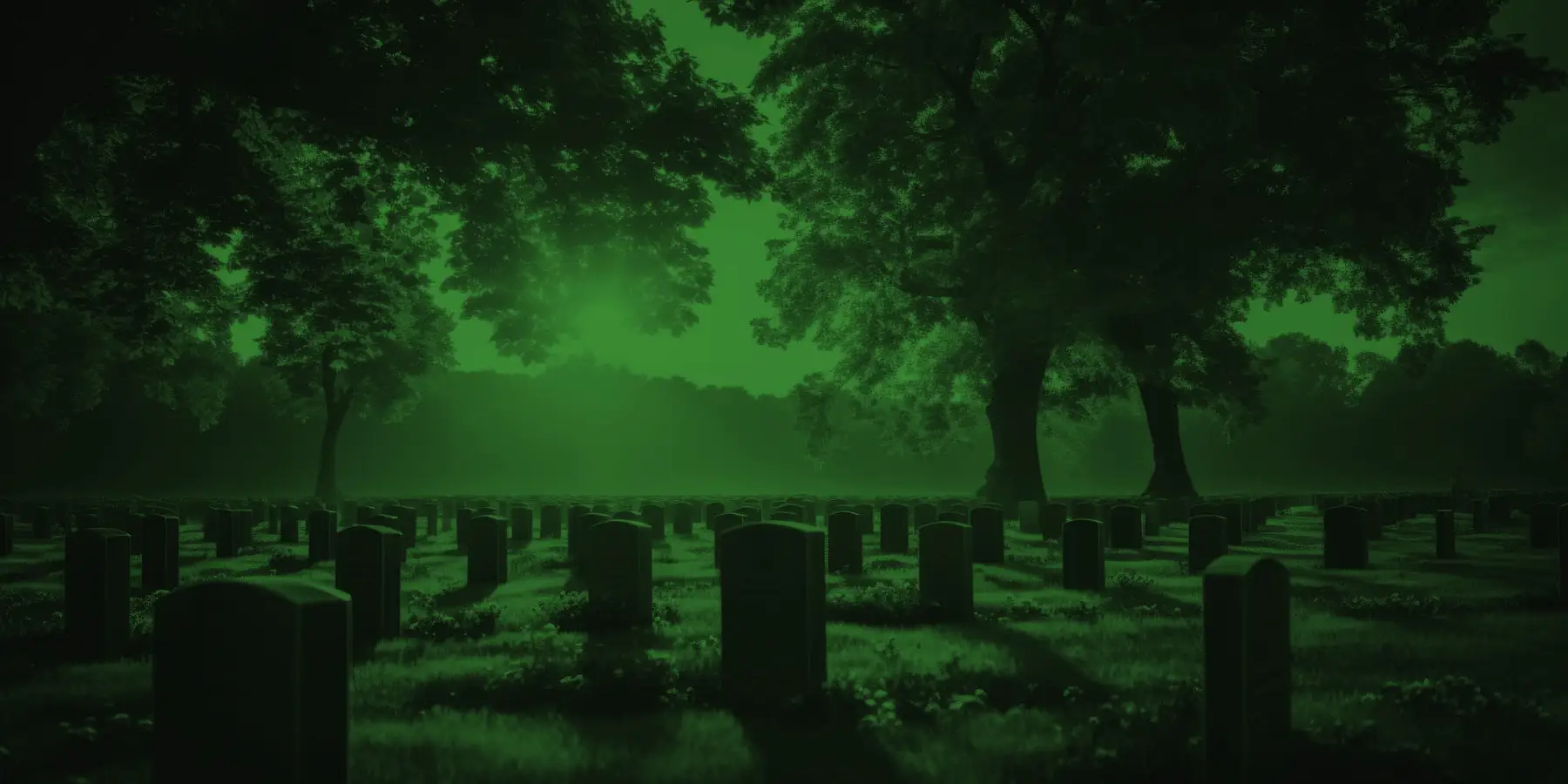
Victorian London stacked bodies in chapel cellars. San Francisco dug up 100,000 of its dead, left thousands behind and built seawalls from their tombstones.

Oct 18, 20241h 20mRe-aired Aug 21, 2026 as Revisiting Rest In Peace: The Church Built Over a Pit of Corpses
00:00 / 1:20:14
Or listen to this episode onApple PodcastsSpotifyYouTube
Share this episode

In this episode

  • Why a London doctor greeted a crowd of partygoers with a human skull in each hand
  • Enon Chapel's cellar: small, cheap to be buried in and somehow never full
  • Why San Francisco's mayor decided the living outranked the dead
  • The 1941 plumbers who opened a casket, had a look and kept working
  • Where San Francisco's tombstones ended up, and why they were laid face down

“Death may be final, but your final resting place, maybe not.”

The story

In 1842, a crowd at a London dance hall was invited down to the cellar, and the man waiting at the door held a human skull in each hand. By flickering torchlight, the revelers toured the spots where bodies had been stacked, the rooms where corpses had been quietly dissected and the coffins chopped into splinters. The grand finale was the mummy-like corpse of the pastor who had taken money from grieving families to bury their dead, and then didn't.

The host was Dr. George Alfred Walker, and the shock was the point. He was trying to change how London treated its dead. Nearly a century later and an ocean away, San Francisco would show how far that lesson traveled.

A city out of room

By the mid-1800s, London was the largest city in the world, and it had run out of places to put the dead. Gravediggers sank 20-foot shafts and stacked coffins until a couple of inches of soil covered the top one. Old coffins were dug up, the remains dumped on the ground and the wood chopped up and sold to the poor as firewood. People visiting graveyards tripped over bones scattered among the tombstones.

Victorians blamed the smell. They believed in miasma, a poisonous, foul-smelling vapor they thought caused sickness and death, and the city gave them plenty to smell. Human waste heaped up in courtyards and ran through the gutters into the Thames, while cholera, typhoid and scarlet fever tore through the population. Graveyard gases were real enough, too. Undertakers were routinely called to drill holes in coffins sitting in church vaults, a practice called tapping, to keep them from exploding.

The cellar under Enon Chapel

Walker was convinced the dead were London's number one health problem, and his favorite example was Enon Chapel. It was built in the slums in the 1820s as a burial speculation: a church that offered the poor a cheap alternative to the cemetery plots only the wealthy could afford. The pastor raked in the mourners' shillings, and the bodies went into the cellar, right under the congregation. Parishioners sat through sermons with handkerchiefs pressed to their noses.

The cellar wasn't large, but somehow it never filled up, and the rumors about why turned out to be true. Workers hauled out the oldest corpses to make room, loaded them onto wagons and dumped them in the Thames. Sometimes they flushed remains into the sewer running under the chapel. Sometimes they hacked bodies into smaller pieces. Walker documented what the work did to the men: pain in the head, violent palpitation of the heart, universal trembling with vomiting.

He pleaded with the government for reform. "Graveyards are laboratories of malaria," he argued. He tried appealing to officials' humanity with testimony about gravediggers playing skittles, an old bowling game, with the dead: "Put up bones and take skulls and knock them down." Officials listened, which was more than the Bishop of London would do, but they weren't convinced. Neither were Walker's fellow doctors. The Royal College of Physicians pointed instead to rotting bodies leaking into the wells of the poor, which was closer to the truth than Walker's bad air.

Cholera forces a reckoning

Cholera, a bacterial disease spread through contaminated water, killed 52,000 people in its first outbreak in 1830. When it came surging back in 1848, the government brought in Edwin Chadwick, a lawyer and social reformer whose careful data tied filthy living conditions directly to disease. The Public Health Act of 1848 followed. Parishes got government loans to build garden-like cemeteries on the edge of the city, and 36 of the 43 urban burial sites were ordered closed, to the Bishop of London's fury.

Some owners took it badly. One falsely announced that he'd been ordered to dig up every body, and the digging happened anyway. At New Bunhill Fields, next to an elementary school, children watched broken coffins spill out their liquefied contents. But in July 1854, the parish of St. Pancras opened a cemetery laid out like a park, lovely enough that people came just to stroll. Even Walker was pleasantly surprised.

The weird part

San Francisco outlawed burial and shipped more than 100,000 corpses to a town where the dead now vastly outnumber the living. Thousands more never left and still lie under its golf course and museums, and their tombstones became the city's seawalls and rain gutters.

Evicting the dead

San Francisco once had 30 or more cemeteries. Today it has two. Around 1900, its graveyards were as filthy as London's. Coffins were the exception, and kids and dogs kept stumbling onto human bones. Wealthy property owners complained that cemeteries dragged down land values on real estate far too valuable to leave to the dead. In March 1900, the city outlawed burial within city limits. The dead went about 10 miles south to Colma, a necropolis (a city of the dead) that now holds more than a million and a half graves and fewer than 2,000 living people.

In 1914, the city declared its old cemeteries a public nuisance. Mayor Jim Rolph Jr.., known as Sunny Jim, explained in an open letter: "The duty of government, however, is always more to the living than the dead." Every body had to be dug up. Moving a loved one cost $10, about $314 today, and families who couldn't pay got a mass grave. Wyatt Earp made the trip fast, but the Catholic Archdiocese, the Freemasons and the Oddfellows fought the law. It was an odd team-up, since the Church had condemned those secret societies. The Oddfellows didn't start moving their 26,000 graves until 1931. By 1937, the lawsuits were over and more than 100,000 corpses were rolling south in daily hearse processions, because any body dug up had to be moved that same day.

Not everyone made the trip. In 1941, plumbers hit iron caskets, opened one for a look at the bones, shoved everything back and finished the sewer line. In 2001, workers found 18 skeletons under the future Asian Art Museum, on the site of the Yerba Buena Cemetery, which had closed in 1871. Thousands of the poor, with no one to claim them, still lie under Lincoln Park Golf Course and the California Palace of the Legion of Honor. Plowing over them was cheaper than moving them.

Tombstones by the bay

During the Great Depression, few families could afford to move a headstone, so the Department of Public Works found uses for tons of them. Old gravestones reinforce the seawall at Aquatic Park, built in 1938 and never modified since. The white stones in the Marina District's yacht harbor seawall were once grave markers. In Buena Vista Park, broken marble tombstones line the rain gutters, laid face down, though stray letters and numbers still show. In July 1979, the owner of a pet cemetery found the marble slab from the grave of Colonel Edward Dickinson Baker, Abraham Lincoln's good friend, who was buried with full military honors, sitting in a run-down barn in Colma.

The transcript

Chapters & full transcript11,543 words
Chapters
  1. 00:10Skulls at the cellar door
  2. 05:25London runs out of room
  3. 09:26Dr. Walker and Enon Chapel
  4. 19:57San Francisco evicts its dead
  5. 29:51Where the tombstones went
  6. 39:04Stardust, meat suits and Colma

This transcript was generated automatically from the episode audio and may contain errors. Times are approximate, since ad breaks can shift them by a minute or two.

00:00

Hey true weirdos, at the end of this episode, stick around if you want for a little bonus content and conversation. Sometimes, the only way to get people's attention is by shock. That was the plan that night in 1842 at a dance hall in London. What the revelers didn't know was that beneath their feet was a scene straight out of a nightmare.

00:27

The man greeting them at the door to the cellar wielded a human skull in each hand. Once inside, the party goers were shown by flickering torchlight the places where the bodies were stacked, the rooms where the corpses had been quietly dissected, the coffins chopped into splinters. This place wasn't a crime scene, it was the cellar of what used to be a chapel and the finale was a peek at the very man who'd taken money from the grieving to bury their dead.

01:01

Except he didn't. He was a pastor who piled the bodies in that chapel cellar and did the unspeakable. By that night in 1842, the pastor had been dead for ten long years. It was his wizened corpse like a mummy that the crowd came to see and the man who set it all up, a doctor who helped change forever how London treated the dead.

01:30

Death may be final, but your final resting place, maybe not. Grab your shovel, we've got a whole cemetery to move. I know. I know. I know. I know. Death is the ultimate finality and the grave, our final resting place. But when it comes to cemeteries, we don't give those much thought at all until we're watching a casket being lowered into the freshly turned earth.

02:25

There are more than 20,000 cemeteries in the United States, covering more than a million acres of land. Those are the registered cemeteries. Add in roughly 91,000 cemeteries that the U.S. Geological Survey describes as missing and about 700 pet cemeteries and now you've got a whole lot of places in America to go pay your respects.

02:51

And that's just the official number. There are countless private burial sites, including those held sacred by Native Americans. The number of abandoned African-American cemeteries isn't even known. Many were destroyed, paved over, sacrificed to the building of highways, stadiums, strip malls, and suburban developments.

03:16

About 117 billion human beings have been born on this earth, and 7.8 billion of them are alive right now, but not forever and not for long in the grand scheme of time. All those people have to go somewhere when they die, right? In America today, about 36% of people choose to be buried versus cremated. In Japan, 99.7% people elect to be cremated because death, like everything else, is cultural.

03:49

Japan is a tiny island nation with little space to spare, unlike the U.S., with its seemingly unlimited places in which to expand. Three of the largest cemeteries in the world are right here in America. We don't get bragging rights for the biggest. That goes to Iraq's Wadi al-Salam Cemetery, spanning 1,500 acres, and home to more than 5 million interred bodies.

04:19

The dead are everywhere, because of course they are. We don't like to think about or talk about death in American culture. We think it's morbid and depressing. We're more likely to die in hospitals than at home. It's strangers, professionals in the mortuary business, who prepare our bodies for burial or cremation, not family members or friends.

04:45

We're so squeamish about death and dying that it makes you wonder if that's why Halloween is such a huge holiday in the U.S. Maybe cosplaying death and decay is our way of releasing the tension that builds up in a culture like this, a culture of death denial. If you're one of those people who feels very uneasy around the subject of death, then take a moment to be grateful that you're alive now and here, where you can avoid the realities of death up to the very moment you take in your last breath.

05:25

Here's a little story, a true story, out of London. It's the 19th century, mid-1800s, and the population is rapidly expanding. One of the problems that came with that growth was where to put all the people, not just the living ones, but the dead. London's graveyards were filled to overflowing, so were its burial grounds, vaults and mausoleums.

05:52

Quick fun fact, we call them graveyards when the site is attached to a church, and burial grounds or cemeteries when it's not. We all understand the need for adequate housing, we just don't give a minute's thought to the idea of adequate housing for the dead. In 19th century London, things reached a point where even the oblivious living were forced to confront the problem of what to do with all those corpses and bones that were piling up everywhere.

06:23

In places where the demand for graves far exceeded the available supply, the people of the time tried a few different solutions. They dug 20-foot deep shafts, stacking coffins one on top of another, until only a couple of inches of soil concealed the dead resting below. It wasn't uncommon at all for older coffins to be dug up, the putrefying remains or the moldering bones dumped unceremoniously on the ground.

06:50

The coffins then might be chopped up and sold to the poor as firewood. Grave diggers mostly gathered up what rotting bits and bones they could, but it was a nasty nightmarish task and visitors to graveyards frequently stumbled over human bones left scattered among the tombstones. Not only was tripping over a moldy human femur enough to give you a fright, Victorian England was firmly convinced that the grave was a festering source of disease, a dire threat to the living forced to breathe the foul air of the dead.

07:27

This particular theory of disease, as caused by breathing unclean air, was called miasma. The notion of miasma, a sort of poisonous foul-smelling vapor that caused sickness and death, may have originated in the Middle Ages, but it was still going strong in 19th century England. As the largest city in the world at the time, London was battling all of the problems that come with a massive population explosion, like human waste. That stuff was piling up everywhere.

08:01

Fly covered heaps in courtyards, overflowing cesspits and basements, streams of foul liquid running through gutters, flowing into canals and waterways and rivers. It was a perfect setup for outbreaks of disease, typhoid, scarlet fever, and most terribly, cholera. Cholera is a bacterial disease that can cause severe diarrhea, leading to dehydration and even death if left untreated. It's spread through contaminated water and food, which is why cholera's favorite places are those with poor sanitation and dirty drinking water. Places like Victorian London, where sewage ran through the streets and into the River Thames. Few people, if any, seem to make the connection between rivers of human waste and disease. Fewer still guess that London's overstuffed and festering graves might be a It's hard for us to understand. We live in a sanitized world where death happens behind closed doors. The idea of sitting in church, the stench of decay thick in the air, or having a job that requires you to constantly handle decomposing flesh, for us, that's a horror movie. The people of London didn't love it either. They just didn't know any different. Enter Dr. George Alfred Walker.

09:29

He was a doctor, and he was convinced that the number one health problem facing London and its residents was the dead. To be more specific, it was the way the dead were disposed of that caused a poisonous miasma that hung over the city like a putrid fog. It was, Walker said, that gases emanated from decomposing bodies that was the real culprit. No one at the time had much trouble accepting this. It was well known that graveyard gases were a real and really awful phenomenon. It was a routine part of an undertaker's job to be called to drill holes into coffins resting in church vaults. It was called tapping to prevent them from exploding.

10:14

There were even rare cases where people had died from suffocation upon breaking open a swollen coffin and breathing the gases inside. One of Walker's pet examples of just how wretched burial conditions in London were was the Enon Chapel. It was located in the slums, nothing fancy. It had been built in the 1820s to serve as what was then called a burial speculation. Get ready, because this is gruesome. A burial speculation was a church that offered a very specific service with cemetery plots as we know them, something that only the wealthy could afford. These churches gave the poor an affordable alternative. Dead bodies would be piled by the hundreds of thousands into the cellars of places like Enon Chapel. The church would take money from the grieving who thought they were paying for a burial. The church also collected donations from those attending services in buildings where the dead were piled just beneath their feet. The stench could be overpowering. It became customary for gagging parishioners to endorse sermons with handkerchiefs pressed to their noses. Then they'd get home from church only to discover what they did. People get sick. Well, yes, they did. Not from breathing the revolting air, but from the bacterium multiplying in the decomposing flesh beneath their feet.

11:51

They had no way of comprehending what bacteria even was then, much less why it was making them sick. The grim solution to managing London shortage of grave space worked out great for the pastor at Enon Chapel. He was selling burials to the poor at a cheap price, raking in the shillings. But you know the saying, if something seems too good to be true, it probably is. Enon Chapel wasn't very large, yet its cellar weirdly seemed to have limitless space for bodies.

12:27

Questions started to be asked. Rumors started to spread about what was really happening underneath Enon Chapel. And this is one of those times when the rumors turned out to be true. Grave workers would be sent into the cellars to haul out the oldest corpses to make room for new arrivals. Those old corpses were piled into wagons and dumped into the River Thames. But not always.

12:55

Sometimes remains would just be flushed right into the sewer that flowed beneath the chapel. Sometimes bodies would be hacked and chopped into smaller pieces to make way for newcomers. Dr. Walker painstakingly documented the effects all this corpse handling had on the workers. He noted a range of afflictions. Pain in the head, heaviness, extreme debility, lacrimation, violent palpitation of the heart, universal trembling with vomiting. Dr. Walker pleaded with the government of London to enact a series of cemetery reforms.

13:33

Graveyards are laboratories of malaria. So many centers of infection, constantly giving off noxious effluvia. Only the differences in locality, atmosphere, and individual constitutions help render such gases a slow or energetic poison. Government officials at least listened, which was more than the Bishop of London consented to do.

13:52

But they weren't convinced. Walker even tried appealing to their humanity, calling their attention to the appalling desecration of human remains. I have seen them play at what is called skittles. Put up bones and take skulls and knock them down. Stick up bones in the ground and throw a skull at them as you would a skittle ball.

14:12

The reality was there was hardly the political will to attend to the needs of the poor who were alive. Did you really expect them to care about the poor who were dead? And besides, Dr. Walker's fellow physicians themselves weren't convinced that stench led to disease. The Royal College of Physicians suggested that the real issue had more to do with the effect liquefying decomposing bodies had on wells and the water supply available to the poor.

14:41

Which, yes, exactly. Thank you very much. But remember, Dr. Walker was focused on the noxious miasma, not the polluted groundwater. A doctor at the King's College Hospital, located directly next to one of the more awful of London's graveyards, noted that the putrid smell didn't inconvenience his patients one bit. Of course, no one asked the patients themselves, because the word of an expert was more than enough to settle the question. Meanwhile, London was battling yet another outbreak of cholera.

15:19

The first in 1830 killed 52,000 people. Doctors were mystified. They didn't understand the cause and they had no idea how to treat it. When cholera came surging back in 1848, the British government realized that something, something had to be done. The government commissioned a lawyer and social reformer named Edwin Chadwick. Chadwick was very smart, highly analytical, and went about the process of carefully collecting data. In time, Chadwick was able to demonstrate the direct connection between unsanitary living conditions and disease. His investigation inspired the passage of the Public Health Act of 1848.

16:00

This was real progress. Chadwick argued for the removal of human waste. He called for better drainage, cleaner streets, and improved ventilation. He also pushed for the creation of national cemeteries, something that was ultimately too costly to make happen. But government loans were made available to church parishes to help pay for the building of garden-like cemeteries on the outskirts of the city. And the nastiest and foulest of graveyards could be closed by order of the Secretary of State, which really infuriated the Bishop of London. Thirty-six of the 43 available urban burial sites were ordered closed.

16:48

Where were the dead to go? And the owners of those closed burial grounds? Some of them took the news hard. One owner was so put out that he announced that not only had he been ordered to close, he'd been ordered to dig up every body to be moved. This wasn't true, but it happened anyway. One of these burial places, New Bunhill Fields, happened to be next to an elementary school. As the children watched, coffins were hauled out of the earth, many broken with the liquefied contents spilling out, bones tossed into piles. Just as bad were the abandoned burial grounds. Many became dumps. Garbage, human excrement, and filthy water covered the ground, ground where so many forgotten bodies were taking their eternal rest.

17:43

None of it came as a surprise to Dr. Walker. He knew as well as anyone that the burial business was a filthy one, literally and metaphorically. Too many of the owners of these burial speculations had never once shown an ounce of reverence for the deceased. And that's when they were getting paid. When the government shut them down, they treated the bodies in their care with even more contempt, if that's possible. But thanks to the efforts of Chadwick and Walker, change did come.

18:16

Even Dr. Walker was pleasantly surprised to see what the large and affluent parish of St. Pancras did with the dead when they opened in July 1854. It was a cemetery laid out like a park, graves in the style of a garden. Not only did it attract the grieving, it attracted people who just wanted to stroll in a beautiful setting.

18:41

It couldn't have been more different from that ghastly, foul cellar at Enon Chapel, where the dead lay rotting in piles on the filthy floor. That's the same chapel where Dr. Walker invited the revelers at that dance hall to come into the cellar to have a peek at how the dead used to be treated. It's super comforting, isn't it, to think that such things happened an ocean away a very long time ago, except that's a fairy tale. See, once upon a time, the city of San Francisco had 30 or more cemeteries. Today it has two, the San Francisco National Cemetery in the Presidio and the Mission Dolores Cemetery. So what gives? Are the people of San Francisco immortal, all 808,473 of them? Because if they're not, then where does the city put its dead today?

19:48

What happened to the 28 or so cemeteries that no longer exist in San Francisco? Where did those people go? Let's go back to 1900 San Francisco. Many of the city's cemeteries were just about as nasty, poorly kept, badly regulated as any in Victorian London. Coffins were the exception, not the norm. How many people didn't even bother with the cemetery, they just buried their dead in whatever spot happened to be available.

20:21

And you know what that means. Kids and dogs often stumbled upon human bones and human remains. Big yikes. As graveyards filled and the population grew, conflict began brewing between the living and the dead. Wealthy property owners argued that cemeteries brought down land values, a classic example of not in my backyard. And besides, the land those cemeteries sat on was far too valuable to be occupied by the deceased. Oh yeah, and it was also unsanitary to have all these dead bodies lying around. So San Francisco came up with a pretty extreme solution.

21:05

In March 1900, the city's board of supervisors passed an ordinance called prohibiting the burial of the dead in the city and county of San Francisco. With a stroke of a pen, all burials were outlawed within city limits. Now ordinance or not, people in the city still died and they had to go somewhere, right? That somewhere was 10 miles or so south in the city of Colma, which today has more than a million and a half graves and fewer than 2,000 living people. That's why it's called a necropolis, a city of the dead. Banning burials in San Francisco only fixed half the problem.

21:53

What to do with all those cemeteries that already existed? We're already full and we're taking up land that developers were drooling over. The pressure to put all that real estate to a different use was on. In 1914, the board declared those cemeteries a public nuisance. Mayor Jim Rolph Jr.., they called him Sunny Jim, wrote an open letter to the people of San Francisco.

22:23

No feeling is more honorable or credible than respect for the dead. The duty of government, however, is always more to the living than the dead. We must provide for expansion of our city. It must be a city of homes. And so the cemeteries of San Francisco were to be closed and every single body had to be dug up, removed, and relocated. And that's just what happened.

22:50

And in the most respectful and dignified manner possible. Not exactly, not even close. The bodies were headed to Coma. Now, back then, Coma was called Lawndale. And the price of relocating the body of your loved one was $10, which doesn't sound like much. But in 1914, spending $10 was like spending $314 today. Many families simply couldn't afford to pay that. Not to worry. The city of San Francisco did offer a cheaper option, a mass grave. But before you could worry about where a body was headed, the cemeteries had to obey the new law. Some complied immediately. That's how the body of legendary Wild West lawman Wyatt Earp got to Lawndale so fast. The biggest and grandest of cemeteries in the city, though, declined to respect the law. Those cemeteries were owned by powerful organizations, the Catholic Archdiocese, the Freemasons, and the Oddfellows. And the hilarious part about that is how much the Catholic Church condemned secret societies, the Freemasons and the Oddfellows in particular, and then found itself in a weird three-way gang up against the city of San Francisco.

24:17

It took until 1931 for the Oddfellows to get started on moving the 26,000 graves in their cemetery. It was 1932 for the Freemasons. And that was zippy. The battles over the 1914 ordinance were still being fought more than 20 years later. By 1937, though, the legal battles were finally over, and the greatest body removal in history was underway. More than 100,000 corpses were relocated. The rules were clear. Bodies that were dug up had to be moved that same day, which made for macabre processions of hearses making their way from San Francisco to Lawndale, now Colma, every day. And this went on for years. You already know, right, that they didn't move everybody from every cemetery. You know that. You already know that corners were cut and compromises were made. In 1941, an anonymous phone call to the city's health department kicked off an investigation into the former Oddfellows Cemetery. Plumbers laying lines to a new house under construction came upon several iron caskets in their way.

25:40

The men dug them out, and several couldn't resist their own curiosity. They opened one of the caskets and checked out the human bones within. These were some badass plumbers, because after they had a look, they finished connecting the sewer lines and shoved the caskets and bones back into the excavated site and covered it up. If not for that anonymous tip, no one would have ever known, including the homeowner. In 1950, a man digging post holes in his backyard unearthed several human bones and a skull. In 1958, a pair of exterminators working in the basement of a home on Castro Street found human bones and a skull. Neighbors, reporters and cops swarmed to the scene. People were excited at the prospect of a grisly crime and then disappointed by the coroner's report. The bones were old, Henry Turkle said, maybe left there by a medical student. Guess Turkle was unaware that the house where the bones were found was on a street that was built on land that used to belong to, wait for it, a cemetery. A cemetery that once contained as many as 11,000 bodies.

27:00

In 1969, workers digging a trench for a new station on the Bay Area Rapid Transit line came upon human bones that were at least 100 years old. Part of a wrist, couple of thigh bones, no way of knowing whose. In 2001, construction began to transform the original San Francisco Public Library into the Asian Art Museum. 18 skeletons were unearthed, buried 13 feet below ground and just 25 feet from the sidewalk. Turns out the Yerba Buena Cemetery used to be right on that site. It closed in 1871 and all of the bodies were allegedly moved. Except, no they weren't.

27:46

Probably because that was a gold rush cemetery, already ancient by the time the big removals began. The owners of the property must have figured, who would even care? All these old, old remains, just leave them. And so they did. One of the fundamental principles of humanity is how we treat our dead. We do it with reverence, respect, ritual. So it feels outrageous and awful to learn that human remains were just scattered like that around the city. Were these just a handful of graves that somehow got missed in the big removal? Or was it intentional? And was the reason money? When it came time to relocate the dead to Coma, the poor, as always, got the usual raw deal. Thousands of bodies were just left in the ground, like the bodies under what later became Lincoln Park Golf Course.

28:51

But most of the golfers who play there have no idea what lies beneath those greens and sand traps. Untold number of bodies are in the ground beneath and around the museum at the California Palace of the Legion of Honor. Construction workers doing upgrades to that museum in the mid-1990s kept unearthing human skeletons. These were the remains of people who had no one to claim them.

29:16

Bodies that were a burden to the owners of the closed cemeteries. Bodies that were cheaper and easier to plow over than to move. In fact, many residents of San Francisco are happily oblivious to the fact that their neighborhoods and homes were built directly above what once was the final resting place of the dead. Why not, right? The dead can't hurt you.

29:43

Isn't that what we tell ourselves? And besides, you don't believe in ghosts, do you? Now, what about all those headstones and grave markers? Were those carefully transported to their new final resting place in Coma City of the Dead? Not exactly. Not even close. It was costly enough to move a body. Few could afford to move a grave marker, a headstone, or a monument. It was the Great Depression, and every nickel was needed for food and shelter. It was up to the San Francisco Department of Public Works to find a use for those discarded slabs of stone. Tons and tons and tons of gravestones had to be dumped somewhere.

30:34

One of those places was San Francisco's Aquatic Park. Today, it's part of America's National Park System. Maybe you've been. It's on the city's northeast waterfront, surrounded by Fisherman's Wharf, the Maritime Museum, and the legendary Ghirardelli Square. People swim there even though the bay is cold as balls. The seawall at Aquatic Park is one of those things that inspires comments like, they don't build them like that anymore. That seawall has weathered storm after storm like a boss.

31:10

And it might be because it was built from granite paving blocks from San Francisco's streets and fortified with heaps and tons of old gravestones and tombs. Constructed in 1938, it's never even been modified and it's still in great condition today. The Marina District's Yacht Harbor has a seawall made of bricks and carefully placed old gravestones. If you're there, pay attention to the white sections of the seawall. Those white stones were once grave markers.

31:49

Now take a walk through Buena Vista Park. Notice anything about the rain gutters? Workers smashed marble tombstones into pieces and used them to line the gutters. If you bend down and look closely, you can even see letters and numbers here and there. You won't see names or epitaphs. The workers were very careful to lay those pieces face down. But not every abandoned grave marker found a new home. A lot of them were literally dumped, sometimes intact, sometimes smashed on Ocean Beach. The intention was to create a wall to slow erosion. But years later, beachgoers were a little freaked out when their walk in the sand led them to a tombstone.

32:35

Like a guy named Joseph Mirable out for a jog on the beach in April 1977. The last thing he expected to find was a jumble of marble slabs and granite tombstones. The oldest dated back to the 1860s. Now that wasn't the tombstone of Colonel Edward Dickinson Baker. He died in 1861 in the to be dug up and carried to the US Capitol, the Lion State. Then his body was sent home to San Francisco via steamship. Thousands of people were waiting on the dock to pay their respects.

33:19

The crowd formed a procession all the way to the Laurel Hill Cemetery. Colonel Baker was laid to rest with full military honors under an enormous slab of marble. That slab was found in a decrepit old barn in Colma in July 1979 by the owner of a pet cemetery. Baker's good friend Abraham Lincoln probably couldn't even imagine a pet cemetery, much less where that monument would end up.

33:54

Do not stand at my grave and weep. I am not there. I do not sleep. I am a thousand winds that blow. I am the diamond glints on snow. I am the sunlight on ripened grain. I am the gentle autumn rain. When you awaken in the morning's hush, I am the swift uplifting rush of quiet birds in circled flight. I am the soft stars that shine at night. Do not stand at my grave and cry. I am not there. I did not die. The poet Mary Elizabeth Frye nailed it.

34:46

The word cemetery comes to us from the Greek word coimitarion. A thousand apologies to Greece and the Greek language for how badly I butchered that. That word means sleeping place, which is interesting when you think about how humans think about death. The ancients called it sleep. The Bible calls it sleep more than 50 times. The book of Job, which is believed to be the oldest book in the Bible, makes it clear. Now shall I sleep in the dust, which is so squeamish now, so grossed out by the truth of the body? We fight the end. When it comes, we fight decay. We pump our dead full of chemicals and turn our loved ones into waxen effigies. Then we lay them to rest in a cemetery, which we may or may not ever visit again. We make the mistake of confusing the grave with eternity. And we're horrified to learn that the grave just might wind up being lost forever beneath something like the San Francisco Civic Center. We get a lot of things wrong, humans do.

36:00

But one thing we have gotten better at is how we care for our dead. We no longer pile their bodies into the cellars of churches. We don't dig them up and sell their coffins for firewood. We're careful about our dead, careful to not leave them out where children and dogs might find their bones. When our city streets have a foul stench, it's not because the sewers are running with corpses. We've gotten better. But we better not get too comfortable.

36:32

Because we won't be here forever. And we have zero control over what happens when we're gone. If we're lucky, maybe our tombstones will someday be part of a beautiful city park, or maybe embedded in a wall that protects the living from the violence of the sea. Do not stand at my grave and cry. I am not there. I did not die.

37:01

These days, cemeteries don't sell grave plots. They rent them for 100 years. Countries around the world are doing this now, because we're running out of places to bury the dead. 100 years is a long time. Plenty of time for anyone to take up that much space, don't you think? And one final thought. Remember that the U.S. Geological Survey estimates that there might be about 91,000 cemeteries that have gone missing in this country.

37:38

If you happen to live in Kentucky, go ahead and wonder what's under your house. Because the Bluegrass State is missing 17,800 cemeteries. 12,400 cemeteries are AWOL in Virginia. And if you live in North Carolina, and worry that your house might be haunted, you might be right. With 18,000 or more missing cemeteries, chances are you're near one.

38:08

If not, right on top of one. Not that you believe in ghosts. Next time on True Weird Stuff, they used to find gold deep beneath the ground in the Black Hills. of South Dakota. But now they're looking for something else. Something infinitesimally small that might turn out to be the biggest discovery of all time. As in, the secret of the universe.

38:46

The Dune Project on the next True Weird Stuff. Special thanks to our voice talents on this Hey, this was a pick me up or huh? It was very interesting. One of the things that was interesting about this was the story about the man who had been brought to Washington by Abraham Lincoln with all the pomp and ceremony. And then and then sent back. And then what happened to him. And then of course, in an earlier episode, we talked about what happened to Abraham Lincoln after he was assassinated. What happened to his corpse? No, it was kind of when you said that I went, oh, yes. Well, Abraham Lincoln, bad things are coming for you, too.

39:36

I mean, it was it was a hard time to be alive and a grim time to be dead. That is for damn sure. I you know what? So there's so much like nobody likes to think about death. It freaks me out, too. Right. But I did like an informal survey of people I know who love to see me come and let me tell you, hey, did you know it's illegal to bury people in San Francisco? And did you know that, by the way? Were you aware? I was not aware of that. No. Yeah. Nobody seems to be aware of it.

40:06

Now, there are two cemeteries, the National Cemetery at the Presidio is that's like, you know, the Presidio is military. Right. And then the Mission Dolores Cemetery is ancient. It's just been there forever and ever. And I think that they left it as a historical site, but it's not like you can go get buried in it. Right. So in all of San Francisco, which is an enormous American city, that's it for cemeteries.

40:30

Ten miles to the south is Colma, the necropolis, the city of the dead. I said in the episode there were a million and a half graves and fewer than 2000 people. There's actually just a tick over 1500 people who live in Colma. And you can go. It's a very interesting place to visit. It's very serene. I mean, most of most of Colma is a graveyard. Right.

40:56

And there are sections of Colma that you can't visit that are close to the public that are private, including what became when the Oddfellow Cemetery relocated their 26000 dead, although I don't believe for an instant they moved all of those graves. The new Oddfellow Cemetery in Colma, for example, is close to the public. I think you can go visit Wyatt Earp, which shocks people when they learn that Wyatt Earp was buried in San Francisco and not in like Tombstone or Tucson or whatever. But Colma is a really interesting place and it's very thought provoking. It's very to visit a necropolis. And it's interesting that Colma sort of what was this little sleepy town outside, you know, Gold Rush, Boomtown, San Francisco became a necropolis. It's interesting to think about what it means to live in Colma. And if you are a San Franciscan, it's just a matter of course that that's where if you have a burial, that's where your funeral goes. It goes to Colma.

42:00

Now there are columbariums, I think I'm pronouncing that right, in San Francisco where the urns of cremates, people have chosen to be cremated, you can have your urn installed in a columbarium in San Francisco. But for all intents and purposes, Colma is where San Francisco's dead go now. And it's a really unusual and unique situation. And I get why it's not publicized, what is there to really say? It would be off-putting, I guess, for people to know that.

42:35

But the simple truth about San Francisco and a lot of places, but we'll stick with San Francisco here. The city is built on the dead. It just is. There are so many graves beneath the San Francisco Civic Center. We don't even know how many human remains lie beneath the city of San Francisco because of poor record keeping. And some of these graves do date back to the gold rush, you know, the pre-earthquake, pre-fire San Francisco. A lot of it isn't malicious, you know, just things happen, you lose track. When I was a Boy Scout, and I'm trying to remember, I think it was one of the guys who was in my troop who had to do like an Eagle Scout project.

43:27

And so we helped him with it. And so it was a cemetery, but it was like in the woods with trees growing up in it. You know what I mean? I mean, it was very unkept. And so the project was, we were going to go into the cemetery that we really knew nothing about, but had headstones that dated from the 1860s, 1870s. So we went in there and started to work at it. And a man showed up, this elderly black man showed up, and he started crying because his grandfather was buried there. This, unbeknownst to us, we're cleaning up a cemetery. This was a cemetery that was established for African Americans who could not afford to be buried elsewhere in Fairfax City, Virginia.

44:21

It's called the Germantown Cemetery. And in fact, you can go to GermantownCemetery.org, and you can help to support to, you know, keep the upkeep of this place now. And so we ended up getting written up in the paper about this, because this ended up being a big deal. We really didn't know about it at the time. So in this country, segregation was everywhere at that point, you know.

44:48

There are an extraordinary number of lost African American cemeteries dating back to pre-Civil War, you know, because people who were enslaved were not treated with reverence while they were alive. What do you think happened to their bodies when they died? Like, just be so real, please. What do you think happened? And this was a step. So this cemetery was established three years after the Civil War ended. So these were slaves who were still alive, emancipated slaves who were still alive, and then their descendants were buried in this cemetery. But anyhow, it's kind of a fascinating thing. The idea of how we dealt with the dead and the historical part of it that you put forward, or what happened in England and all, it really is fascinating because who knew that it was the events that happened there that made people start thinking, you know, we ought to make this like a park and be able to have a place to put the dead.

45:52

And isn't it interesting that the social reforms that Edwin Chadwick and Dr. Walker promoted ended up being sort of the model for the cemetery as we understand it today, you know, these garden settings, right? So modern Homo sapiens, us, we've really only been around, according to at least the fossil record, for about 300,000 years. And so we're pretty tricky, man. We are an impressive creature, because we've done a hell of a lot in that relatively short amount of time, right? People mistake the age of the earth for the length of humanity. We're very new here, very new. And one of the things that anthropologists look at in examining ancient settlements and civilizations is, what do we do with the dead? Because it is a hallmark of humanity and civilization, this reverence that we have for the dead. We don't just, you know, an animal, God bless, if a deer dies, you know, the other deer are like, well, that sucks. And then they keep going, right? Because that's just the way it is. It's human beings. We are the ones who practice funeral rituals, although there's some interesting findings about certain animal species and the way that they handle the dead. That's a whole other episode we'll do in the future, I think, maybe. But what was happening in Victorian England, which is not all that long ago, and many of you listening right now are descended from the people who emigrated to the new world from that, is pretty savage. Like when you hear about bodies just stacked up in basements, corpses hacked and sent into sewers, that's pretty horrible. That's the work of like, you know, something out of a Saw movie. That's serial killer territory.

47:45

But that was just the way we did. And it's like the great Maya Angelou quote, when you know better, you do better. And in time, we did know better. At the time that the streets were running with decomposing human remains, we didn't have germ theory yet. Like, we didn't know anything. Like, we were just, you know, clomping around, making a hot mess of things and completely ignorant of the way the body worked, disease, the natural world, all of it.

48:15

But when we knew better, we did better. And that's kind of encouraging, right? Don't you think, for people, that idea that when we figure it out, we do make some improvements? It is. I was thinking about the episode that we have, and I'm sorry, I don't remember the episode name where the people did horrifying things at a funeral home. And this is a daughter body snatch. Right. And so that was just not long ago. And I think about what happened at Enon Chapel.

48:43

There is something about all of this where they take people's grief, and they it is for the for the darker side of human nature, a way to make money with it, and to not follow through in the you said you were going to follow through, because, hey, the dead aren't going to complain. It's its own kind of evil, like it's greed, and avarice, and all of that. But there's, then it has its own skin of evil laid on top of all of that. It's so incredibly filthy.

49:21

Yeah. It's just, I don't know, you know, and that happened down in Atlanta, where they were supposed to be cremating. And what they were giving them, they were giving them the remains were not their remains. I mean, cement dust. Yeah, you know, my parents both passed away in the past year. So my father was a veteran. And so they're buried in a veteran cemetery. But one of the problems in veteran cemetery is they're running out of space.

49:53

So my parents are buried one on top of another. They're not side by side, they're on top of each other. With my mother, my mother is underneath my father. And my nephew, who has a very wry sense of humor, he said, I can just imagine friends in the in the great beyond complaining about this to Yeah, she's not, she's not on top, you know, but that you know, what you just described is very similar to the practice in Victorian England of digging these very deep shafts and stacking the coffins one on top of the other. This is why like in Japan, death, you know, death, death, practice, death rituals, ideas about that are so cultural, they are not universal.

50:42

And in Japan, it's a very small island nation, they got no room to bury you. 99.7% of the dead are cremated. And there's something really beautiful about people who cremate and then scatter the ashes. That is so much more like environmentally sound in so many ways than filling up millions of acres with not just bodies, but in modern in our modern age, these bodies, there are concrete vaults and grave liners to keep water and you know, the natural elements out steel caskets, and bodies that have been heavily embalmed.

51:27

And so the chances of ashes, ashes, dust to dust, not only is it going to take forever for that to happen. But there's all of this like nasty toxic stuff seeping into the earth and the groundwater, which is why more people are beginning to explore what's called a green burial where you are not embalmed. Or there's an embalming practice that is very limited, you know, buys you just a couple of days, and it's not nearly as toxic. But that will be its own episode all by itself. But and you're wrapped in a shroud and placed in the earth, and a more natural form of decomposition is allowed to take place. So there are people that are electing for green burials. In America now, the majority of people are not choosing to be embalmed and interred. It's only like 36%. So we are kind of moving away from that. And we probably need to. Because a land scarcity and be look at what we're putting in the ground.

52:34

That is not your your grandpa. That is your grandpa. As Mary Elizabeth Fry said, your grandpa is not in that waxen body in that steel casket in that concrete vault. And part of why part of the issue with death being so cultural and our squeamishness about it and our refusal to think about it or deal with it, the way we die in hospitals and nursing homes, the way we're afraid to touch a dead body, you know, the way we have an entire professional class tasked with handling that. We are very, very far from our natural selves in the way we handle death in American culture right now. Well, I think that has probably changed in the last 20, 30 years, maybe because I can think when my grandmother passed, they they laid her out at a funeral home and had put makeup on her. And I remember people, people would say the she looks so natural. And I would think to myself, I was a kid and I went, she doesn't look natural to me.

53:45

You know, when my cousin died, my cousin was he was he was six, six. And he was not only was he tall, he was big. He had hands and feet that were big. He was an accomplished athlete. He was just an amazing. And when they laid him out, his body had been ravaged by cancer. And he he little I'm sure the funeral people did what they could, but he little represented to me what I remember as being my cousin. And I thought it would have been so much better because this happened as as an adult, I was working for the show when this happened. I was thinking that would be better if we just remembered it as he was rather than this, you know? Yeah, it's, it's so macabre.

54:34

You know, growing up in an ethnic family, you know, so I grew up in an Italian American family, very Catholic, right. And I grew up with older people. And funerals were social occasions, funerals and viewings. We've talked a little bit about this before on True Word Stuff. But I can remember as a child having absolute, like bottom of the abyss, existential terror at the thought of being buried like that. And I would go to my grandma and make her promise me that if I died before her that she made sure I had socks because my feet were always cold.

55:13

And I couldn't bear to be in the grave without my without socks. Like the things that you think about as a kid, it's really pitiful to terrorize each other about death this way. Because absolutely no one escapes it. Absolutely no one, except for Nicolas Cage, who does appear to be immortal. But Nicolas Cage, the rest of us, you know, man, that's where we're all headed one way or the other.

55:37

And all we can do is live our lives as best as we can. And accept that that is, you know, we're all going through that doorway to wherever it leads. And what, what do we want done with the husk that we leave behind? So it, it's complicated in America to think about death and talk about death. It freaks people out. And one of the things that I found, I mean, it made me giggle a little bit. So the US Geological Survey, the USGS, part of the government, used findagrave.com.

56:18

So findagrave.com seems like a goofy website, like, Oh, let me go see where Elvis Presley is, right. But findagrave.com is a tool for people doing genealogical research and true crime podcasters use it. And the US Geological Survey uses it too, because it's a pretty comprehensive database. The only problem is, is that it's a pretty incomplete database, because of all of these abandoned, lost, missing, private, unregistered cemeteries, which are all over the United States, everywhere. And I just shouted out three states that have a very high number of cemeteries that are missing cemeteries that were once registered, and then they fell off the radar. And like in North Carolina, 18,000 cemeteries, Max, that's a lot of cemeteries. It's a lot. Yeah, it's a lot. And if you live in a, you know, a beautiful, suburban housing development, you know, maybe you're sitting on what used to be a field full of tobacco and soybeans, and maybe not. And ultimately, what does it matter? Right? What does it matter? The dead can't hurt you. Unless you're telling a scary story about ghosts. Let me take you back to a classic, classic movie. Let's look at the movie poltergeist. What was the problem in the movie poltergeist that was causing all of the haunting and scary stuff? Do you remember? I never saw it. So I don't know. Let me help you out. There's a terrifying scene toward the end of the movie, where bodies are just coming out of the ground. Because the house was built on a cemetery. See, that's like, that's a running thing in American pop culture in horror, right?

58:11

Right. The idea, you've heard, like, we used to joke the, the old radio station that we worked for, that thing, that place was so afflicted with misfortune, that we were like, is this thing on a graveyard that was not desanctified? Like, what is going on here? It wouldn't surprise me. Wouldn't surprise you. So we have this, we're so weird about death in this culture. And that's why I think Halloween is such a big deal. Because it's a way to safely kick the grim reaper and not get kicked back. Right? Right. So we have this idea of, oh, you don't want to be is that place on a graveyard, a burial ground? Because, you know, we feel that the dead will haunt the living. And so the idea that a lot of us are sitting on top of human remains should not come as a surprise.

58:58

Where do you think dead people go? Right? They don't disappear. And we're so squeamish about it, that we've created a whole genre of storytelling to scare ourselves and comfort ourselves. Because horror stories are both scary and comforting at the same time. It's very scary to think that the bodies of the dead will rise again and terrorize you. But it's very comforting to know that that's the story, right? And that you the living have more power. So there's a lot to this idea of cemeteries in our culture, memorial gardens, as we call them in a lot of places. And this idea that when it becomes inconvenient, we knock the tombstones down, and we build on top of it.

59:47

And that shouldn't matter. But it does, if the body's underneath that CVS drugstore for your ancestors, and you're looking for them. Yeah. It's funny, you were talking about this. And in the midst of this, I was thinking to myself, I know that my father's parents are buried in southern New Jersey somewhere, but I'm not sure where. So I guess I may do find a grave to be able to find out. My mother's parents, my grandmother is, I think, in California, and my grandfather, I would guess is in Florida.

1:00:27

But he was, because of his chaotic life, he wasn't a part of our lives. So look at you. These are recent family members, and you're not really sure where they are. That's why I said we embalm them, and we entomb them, and then we maybe never come back. And in part, we don't maybe come back because we know in our souls, in our bones, that they aren't there.

1:01:00

So my grandparents and my aunt on my father's side are buried side by side in a cemetery in New Jersey. And when I go up there to visit family, I try to make it over to the St. Mary's Cemetery to pay my respects. And this is a cemetery that doesn't allow upright gravestones. They're flat grave markers. And you know why that is? Kids, let me tell you why that is.

1:01:26

That's not an aesthetic choice. That makes it easier to cut the grass. If you have flat grave markers that are level with the surface of the earth, you can just drive a riding mower right over that. That's why flat grave markers are in cemeteries. In case you were wondering, what happened to that great old goth aesthetic of tombstones? They're a pain in the ass to cut the grass. So I go to St. Mary's, and it takes forever to find their graves because it's just acre after acre of flat, rolling landscape. And then I find them, and I go sit there, and I look at the names and dates, and I try to feel their presence. They're not there.

1:02:07

Oh, please. They are not there in any way, shape, or form. But you go, and you pay your respects, and put flowers down or whatever. But a lot of us don't do that. And so it's very easy to lose track of a grandparent, or in your case, a great grandparent. You don't live in the state where those people are buried. You have, if any memories at all, very dim memories. You're maybe six or seven. So they're real to you, but they're not in the same way. And this brings up the land use question. If that's the case, if it's not even sacred to you, why does it have to be sacred to everyone? Isn't there a better way to handle the death process and the grieving process than that?

1:03:01

So like, what would your response to that be, as someone with family members who are interred there? What difference does it make to you if this ground is reused? Because I want them to be respected because they're my ancestors, even though it's just their remains. I mean, I think there's a sense of that. I think that we're forever connected to them.

1:03:34

And it's a representation of what they were. It's the only tangible, it's the only really tangible thing left. So I think there's a feeling of, I want to hold on to that in their memory. I don't know, because I have no desire to be buried. I want my ashes to be spread somewhere. Because to me, what's important about my life, when I look at it, what's important about my life is, how did I ripple through people's lives? We all have this energy. And how did we use that energy? Did we use that energy for rippling in a negative way? Or did we do it in a positive way?

1:04:18

And did we ripple in a way that that ripple is so far away from us that it's affecting somebody who we would never even think that it's affecting? Do you see what I mean? Totally. And so to me, that's all that's important. And in that way, we continue to live. That energy, that energy in that positive way, is how we continue to live on.

1:04:44

And that scattering of your ashes becomes a physical representation of that. Some of Max will stay close, and some will be carried on the wind. And we'll never really know all the ways and hows of how your earthly remains impacted the environment. And that is a physical version of what you're describing in terms of the life energy. Some of it is, we struggle with the idea of eternity and a soul. And so we very much mistake the meat suit for the thing itself. We become very attached to the body. And we don't want to understand or we maybe can't understand because it's beyond the scope of our limited minds to understand that it's just a shell.

1:05:41

That the things that make you you, consciousness, soul, however you want to qualify it, once the body dies, that inhabiting spark is elsewhere. It's gone. And if you are in a person of faith, maybe you could be a person of science and understand that we can't destroy this energy that you're talking about. We can only transform it. Even matter, I can take your body and even if I burn it and have your ashes, I have not destroyed that. I've transformed it into another substance. So there are a lot of ways to feel about it. But what it really comes down to for so many of us, and I'm thinking of a mutual friend of ours who has a paralyzing fear of death.

1:06:26

And what he fears is not the death of the body or even the death of the soul. It's the death of the ego. You can tell this person all day long, but you will not die. You cannot die. You will transform. And we don't know what that transformation is, but you will transform, you will go on. And he's like, but I don't want to go on as like something else. I want to be me.

1:06:53

That's fear of the death of the ego. But of course, like so many things in life, we don't control that. Control is an illusion. Oh, and a drug. You know, like some people get really hooked on this feeling, if I can control all these variables, then I'm okay. I'm safe. And of course, you never are, right? Like you're just a person. You're doing the best you can. You're made of meat. You're clinging to a rock.

1:07:28

And everything that is important that is you is made up of all the things that make up the stars and the planets and the nebulae and asteroids. Look at you made of stardust and meat, clinging for a brief second to a watery rock that's hurtling through the void. And who the hell even knows anything? You know, it's true, but like, settle down.

1:07:55

That's it. But nonetheless, when I look at a starlit night, and I am overcome by the vastness of it all, I also think about the fact that I'm a part of this scene, too. I don't mean to puff up my own self-importance, but it means that I have a place in all this. And I have a place. I have things that I'm supposed to do. And I think there's something about that that is comforting.

1:08:21

And then when the work is done, you go to whatever the next thing is. And I don't know what that is. If this is it, and there is nothing beyond that, I can't control that. You know what my brother Mark says? Because he and I were riding through the desert talking about death, as lynches want to do on a sunny day. I'm telling you, man, we are some creepy people.

1:08:44

It's not just me. I come from a clan of creepy people. So we're driving through the desert and chatting about death. And it's a beautiful day, not a cloud in the sky. My brother said, before I got here, I didn't know anything. I didn't have any pain. I didn't have any fear. I didn't have any worries. And I'm figuring that when I die, I'm going to not have any pain or fear or worries. I'm not going to know anything. I'm not going to be sad. Wherever I was before is where I'm going back to. And it doesn't seem so bad. So that's my brother Mark's take on it.

1:09:20

You know, sometimes people say things and you're like, yeah, but what do you really think? He really seems to have found his peace and comfort in that idea that there was nothing to be afraid of before he was Mark Lynch. And there's not going to be anything to be afraid of after he's not Mark Lynch. And why not just do the best with what you have while you're here in your Stardust meat suit? And then maybe be delightfully surprised by whatever comes next.

1:09:50

So Max, I will only be able to tell you like a half a teaspoon full of this. But I've been reading about this physicist who is, what's the word? He's theorizing that consciousness, human consciousness is part of the quantum field. That's it. That's all I got. But I'm working, I'm chewing my way through it bite by bite, because I would like to do an episode on consciousness. But if you want to have some trippy stuff come your way, start reading about human consciousness, because we don't know what it is. Doctors don't know, science doesn't know, neuroscience doesn't know. What is consciousness? Why are we conscious?

1:10:43

How is it that we know ourselves? And we also are beginning to discover that we may not be the only species that's conscious. We were very arrogant for a very long time in thinking that human beings were not only at the top of the food chain, we were at the top of every chain. We're beginning to understand that in the animal kingdom, there are other species that are therefore conscious. I think, therefore I am. I perceive myself, therefore I exist.

1:11:17

We're not maybe the only thing on this planet that is capable of that. So what is consciousness? What does it mean? It's not enough to say, well, consciousness is being alive. That doesn't quite get at it. This mystery, this profound mystery of why we aren't just scrabbling in the dirt for food and a mate, why we make art and music, why we have these intense and vast spiritual belief systems. Why are we this way? It's consciousness. What is consciousness?

1:11:54

Is it an artifact of the living meat body? Or does it exist in some other form or fashion? And so this physicist is looking at consciousness as part of the quantum field, and can that be measured? And that is very trippy because, of course, you could then argue for reality as a simulation and all sorts of other fun things that we enjoy doing here on True Weird Stuff.

1:12:19

Sounds like a conversation two stoners have at 3.30 on a Saturday morning. But I think that one of the things that kind of verifies what you're talking about is what happens to people when they have these near-death experiences. So there's one thing that I accept. I accept that what I know is a tiny, tiny, tiny, tiny, tiny fraction that so much of this is beyond my can of understanding. I accept that, OK, there's a bunch of stuff out here I'm not going to understand. But when these people who have had these kinds of experiences, especially after they die, where they are, you know, going towards the light and have had these interactions with, like, family members and all kinds of stuff, oh, my God, I'm connected to them after death too, Sherry. But the thing is, there seems to be a similarity with the people who are having these experiences. Now, some people will tell you it's just the brain shutting down, and then other people will tell you it's because it taps into something that is beyond that. It is where we, where our essence, where our spirit, where our soul goes when it no longer inhabits this form. And isn't it kind of wonderful to think that, like, you're made of, you know, all the elements that make up the universe, whatever the hell the universe is, we don't know what that is either, and we're never going to know. How could we ever know, right? That you came from something and you go back and you become something again.

1:14:12

And the idea of, like, ego death is terrifying, because, like, I'm like a hot mess, loosely held together by skin. But I'm enjoying being this version of my Stardust meat suit. And it would be sad to let it go. But man, it might be so awesome to find out that for the next millennia or so, I get to be like a meteor or whatever, or a flower, like, or a puppy, like, who even knows?

1:14:40

We don't know. And it's the not knowing that makes us terrified. And fear in human beings often manifests as anger becomes violence. And, and so we are, you know, we're like, so flawed and beautiful at the same time, like, we're so terrible and so wonderful. We're awful, and yet we're transcendent. And it's a brief ride. And a lot of people, including when we did our Talking to Heaven episode with James Van Praag, the medium, James Van Praag said, you know, we, we come here, because this, this world, and this species, humanity, is just so emotional, like everything is feelings, we think of ourselves as rational beings. But what we are, are cyclones of emotion, loosely covered in skin and hair. And we're just ricocheting off each other causing all kinds of mayhem and joy. And that's why we're here. Because we learn so much from being such emotional beings in such a volatile emotional reality and experience. And that, that we won't always be this way. This is like, what did he call it, Max? Soul school, right? That's exactly right. Yeah, soul school. So yeah, I mean, who knows, right? And the idea that your grave is forever, you need to let go of that.

1:16:08

You need to let go of that your grave is not forever. It is no more sacred than anything else. And you're not even there. That patch of ground that you're so scared to death is going to be plowed over so that a Chipotle can be built on top of it. So what, man, you're not there. That's not you. Right? That's not you. I don't want to see like my grandma get dug up so that they can put a donut there. Because that feels wrong. But at the same time, that's not her. That's not you.

1:16:40

So if you're listening to this, and you live anywhere near San Francisco, like the weekend is here, or it's coming. And you should pay you a visit to the necropolis of coma. necropolis is my new. That's my new vocabulary word from this episode, by the way, the city of the dead. And if you're looking for it, it's spelled C. O. L. M. A. is such an interesting place. So try to stay alive until next week at least true weirdos because please, because we're gonna try we're gonna try to stay alive. Because we're going to bring you an episode on the dune project, which is happening deep beneath Black Hills, South Dakota.

1:17:29

And if you've heard of Black Hills gold, it's a real thing. It's a very specific kind of gold that is made in South Dakota. Maybe you've seen it on the shopping channel. What's happening underground in South Dakota is just fascinating. Because it's possible that what they're doing far beneath the surface in the Black Hills has the potential to answer the question of the universe. Because the universe contains within it countless mysteries. But maybe the biggest one of all is this at the moment of the Big Bang, there should have been an equal amount of matter and antimatter, which means the moment of the Big Bang, there would have been annihilation and nothing. But somehow, somehow, there was just a tiny bit more matter than antimatter. And it's that tiny bit more matter that spawned the universe of stars and planets and galaxies in you.

1:18:32

And the theory is, is that the secret to that lies in a little something called the neutrino, which right now as we speak, you're being bombarded by, but they pass through you leaving no trace. What is the deal with the neutrino? And what in the hell are we doing about a mile below the surface in South Dakota? And is it the secret of the universe? And we will see you on the next True Weird Stuff. And if you listen to us on Apple podcast, hit the plus button in the top right corner. And now it helps an independent podcast like ours to get discovered.

1:19:10

And we really appreciate it if you subscribe, rate and review True Weird Stuff. Hit our website trueweirdstuff.com for show notes and photos and videos when we have it and bonus content. Everything True Weird is waiting for you at trueweirdstuff.com. And follow True Weird Stuff on Instagram and Twitter. True Weird Stuff is a Now! Media production. Our executive producer is Anthony Garcia.

1:19:36

The show is written and hosted by me, Sheri Lynch, along with my deeply weird director, Max Heaton. Our equally odd producer is Kary Bowser. Additional production by the mysterious Stephen Call. Our digital witch and social media cult leader is Heather Furr. Original graphics by Kevin Nash. Original artworks by Olivia Axland. True Weird original music composed and performed by Jack Griffin and Zane Nash. Copyright 2024 Now! Media. All rights reserved. All wrongs remembered.

One new weird tale a week.

The strangest true stories in history, in your inbox.

Unsubscribe anytime. Privacy policy.