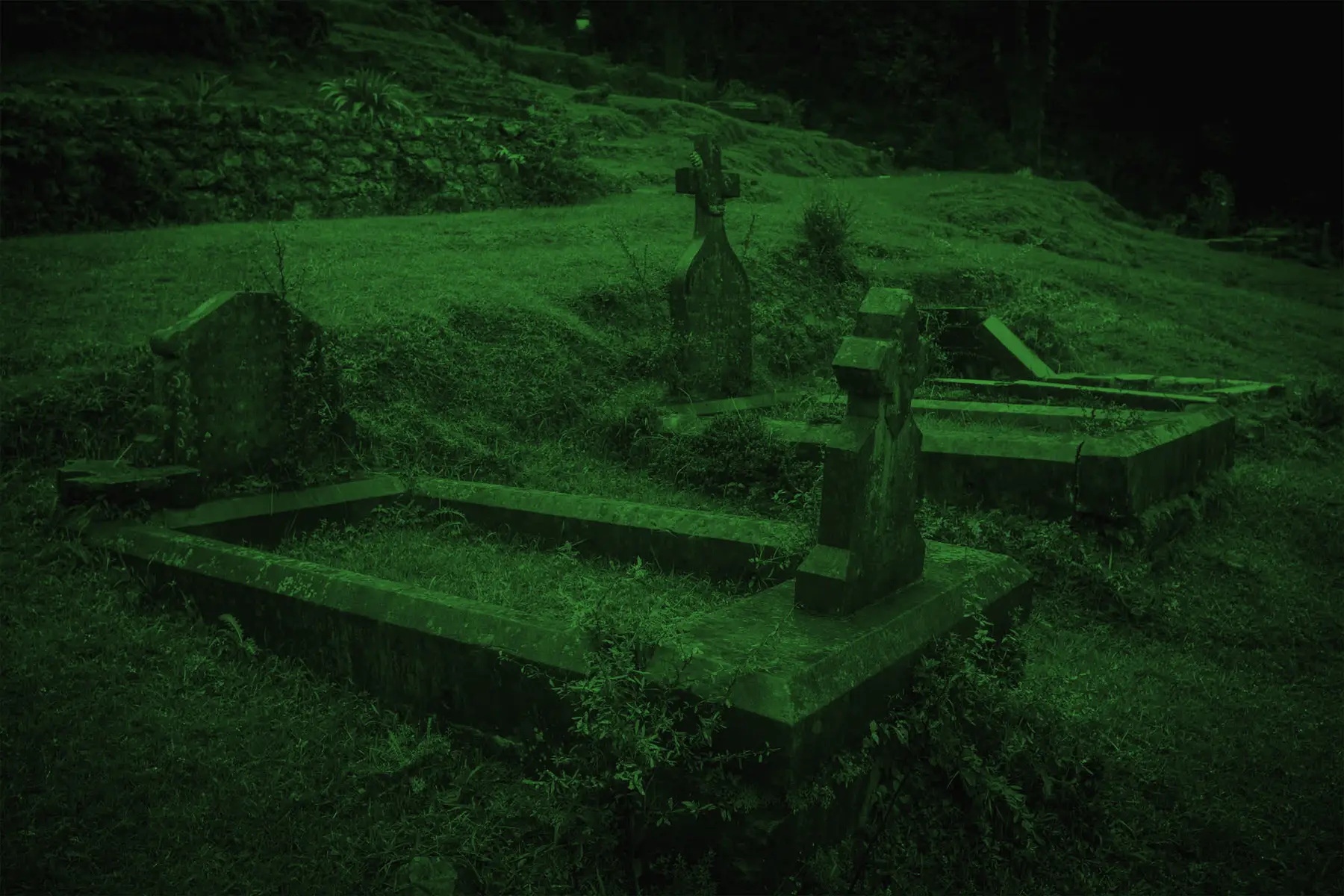
Case file 109Ghosts, Curses & the ParanormalBefore 1800

Casket Girls

New Orleans whispered that the casket girls of 1721 carried vampires. The truth: France kidnapped poor Paris children and shipped them to Louisiana.

May 3, 20251h 31m
00:00 / 1:30:37
Or listen to this episode onApple PodcastsSpotifyYouTube
Share this episode

In this episode

  • Why Catholic priests in the Louisiana swamps begged France for women, and where the first shipment came from
  • A mass wedding in Paris for 184 couples who had met the day before, and the 300-mile walk that came next
  • The riot on the docks, and what one guard lost in it
  • Baptismal certificates, bounty hunters and the March day the people of Paris fought back
  • 800 silver screws, a leaking roof and what a repairman found under the attic floor

“as long as vampires and demons prowl the world, we don’t have to face up to the fact that human beings are the scariest monsters of all.”

The story

On January 8, 1721, a ship called La Baleine tied up in New Orleans, and 88 young women stepped onto the dock. Each one gripped a small wooden box that held everything she owned. The youngest was barely 12. Within a few years the city would whisper that those boxes held vampires, but the true story of how the girls got there is uglier than the legend.

A colony without wives

France claimed Louisiana in 1682. That year the explorer René Robert Cavelier, Sieur de La Salle, planted a wooden cross at the mouth of the Mississippi and declared that the river's entire drainage basin belonged to King Louis XIV. That came to nearly 4 million square miles, from the Gulf of Mexico to the Great Lakes. Nobody asked the people who already lived there. France also had neither the money nor the people to develop the land, so a couple hundred soldiers were left to guard all of it.

France founded New Orleans in 1718, and life there was miserable. It was sweltering and stormy, full of mosquitoes and poisonous snakes, and yellow fever stalked the settlers "like an over-eager intern for the grim reaper." Nearly everyone in the colony was a man: trappers, traders and criminals the crown had deported. That was a problem for two reasons. A bigger population meant more power, so France needed loyal French families to hold the territory. And the Catholic priests believed their faith would never take root in the swamp without wives. They wrote home begging for women.

The first answer was to empty the brothels and jails. Officials rounded up women they considered tainted and put them on ships across the ocean.

Brides in shackles

Next came John Law, a Scotsman whose Mississippi Company held exclusive rights to develop France's lands along the river. In 1719 he staged a mass wedding at a Paris church. All 184 couples came from poorhouses, and none of them was older than 20. The brides and grooms had met the day before. After the ceremony the newlyweds were shackled together, and royal archers marched them nearly 300 miles to the port of La Rochelle. Between that march and the ocean crossing, more than half the women died, along with about a quarter of the men.

Law's company offered a dowry, a cash payment to the husband, to any woman who would go willingly. Only three signed up, so the company started kidnapping girls. One group of 150 girls was grabbed off the streets of Paris, and they rioted at the docks. They bit, scratched and yanked out hair, and one guard had his eyes gouged out. A dozen girls slipped away into the crowds, and archers shot another half dozen as they ran. Of the 132 girls forced aboard, 69 survived the crossing.

The children kept fighting back. In March 1720 alone, 127 of the 210 children meant for the colony escaped. The company responded by pushing French police to hire bounty hunters, who were paid for every child they caught. Any poor child who couldn't show proof of identity, such as a baptismal certificate, could be taken, and no peasant child carried one. The company even marched captives through Paris in fancy clothes, their hair tied with ribbons and irons on their wrists and ankles. Parisians had seen enough. On March 29, 1720, a mob of more than 300 people killed seven bounty hunters, and by summer 17 bounty hunters had died in the streets of Paris. The company didn't stop. It just started moving its captives at night.

Boxes, not coffins

The women on La Baleine came from poorhouses, orphanages and La Salpetriere, a Paris hospital for the poor that shared its grounds with an overcrowded women's prison. Historian Randall Ladnier described La Salpetriere as "a cross between a concentration camp and a convent." Its inmates lived on bread and water and slept four to a bed on straw mats crawling with lice.

The women's boxes were called cassettes, meaning small wooden cases for carrying belongings. People on the dock called the women the filles à la cassette, which became "the casket girls" in English. Back then, a casket had nothing to do with death. The word wouldn't mean a box for a corpse for another hundred years or more.

The weird part

Behind New Orleans' vampire legend is a real crime: France let a private company kidnap poor girls and children in Paris and ship them to Louisiana in shackles. The feared caskets were just the boxes they packed their belongings in.

What waited in the attic

This is where the legend takes over. In the legend, the Ursuline nuns, a teaching order that had come to Quebec in 1639, led the girls to their convent in what is now the French Quarter and gave them beds in the attic. In real life, the sisters wouldn't reach Louisiana for another seven years, and the convent wouldn't be built for another 30.

In the legend, something was off about the girls. Their skin was pale with an odd, fungal tint, it reddened and blistered within moments in the bayou sun, and they seemed to glide as if their feet never touched the ground. Some men refused to marry them. The men who did marry them neglected and beat them, and the girls nobody would marry turned to prostitution to survive. When the king ordered the girls sent home, they waited in the attic for a ship, and that's when the city started dying. Hand mirrors vanished. Neighbors wasted away as though their blood had drained out. Crops failed. Small animals turned up dead, without a mark on them and drained of blood.

The sisters threw the girls out and nailed the attic windows shut with 800 silver screws shipped from Rome and blessed by the Pope himself. Years later, a man hired to fix the leaking roof opened up the attic. Under the pried-up floorboards he found a long hollow space full of wooden caskets, every lid ajar and every one empty. Had the girls smuggled vampires across the Atlantic? Or were the girls themselves the vampires, sleeping in their own boxes?

Monsters of a different kind

The simple explanations are easy to find. Girls kept below deck for weeks would be pale, and fair skin blisters under a Louisiana sun. A frightened city hit by disease and failed crops wanted someone to blame, and the strangers from the ship showed up at exactly the wrong time. Some genealogists call the brides the mothers of the bayou, and many people in Biloxi and New Orleans today can trace their families back to them.

Still, a vampire story is easier to live with than the truth: a king let a private company kidnap children to fill a colony, and families in Paris watched their sons and daughters vanish from the street.

The transcript

Chapters & full transcript12,404 words
Chapters
  1. 00:25The pale brides arrive
  2. 03:00How France claimed Louisiana
  3. 18:16Brides in shackles
  4. 25:05The ship docks in New Orleans
  5. 30:00The vampires of the convent attic
  6. 51:19Vampires or human monsters?

This transcript was generated automatically from the episode audio and may contain errors. Times are approximate, since ad breaks can shift them by a minute or two.

00:00

Hey, true weirdos, we just wanted to take a minute. And thank you so much for your support. True Weird Stuff has won the Best History podcast and the Women in Podcasting Awards. And we've also won a Signal Award in the Paranormal category. And that's only happened because of you, our fellow strange people. Thanks. Stick around if you want after the episode for a little bonus content and conversation.

00:25

He was embarrassed by his nervousness, but then it wasn't every day that a man might set his eyes on his future bride. Not that he was certain which of the girls filing past, heads bowed against the too bright midday sun, might be the one he would call his wife. They were all strangers, all newly arrived on the ship La Balan.

00:50

And he wondered at their pallor, their faces utterly drained of color. Had it been a rough crossing? That must be the answer, he thought. Poor things had been trapped below decks by storms for what could have been weeks. The girls glided silently past, each holding tightly to a wooden box. And then it happened. So fast, he later hoped that he might have imagined it.

01:18

Prayed even, that he imagined it. The way the last girl in the procession tilted her head and met his eyes. The way her lips parted. Not in a smile, nothing so forward as that. No, more like, more like a flash of teeth. And those teeth. Later, his tongue loosened by too much brandy. He confided in a fellow traveler. The man jeered.

02:11

But he knew what he'd seen. And this man, who'd survived so long in a hostile wilderness with little more than his wits and instincts. He was afraid. It was a fear as cold and deep as the grave itself. And they got a small beam of light again. True. Stuff. Louisiana, from the bayous to Burbank. Street. There are few places in the U.S. is steeped in history and mystery and legend and lore as Louisiana.

03:10

Long before the USA was even a twinkle in the founding father's People were calling Louisiana home. There's an archaeological site in Monroe, Louisiana called the Watson break. It's a collection of mounds, human-made mounds. It's been dated to roughly 3,500 BCE, which makes it 5,400 years old older than Stonehenge in the UK older than the pyramids in Egypt.

03:41

Those mounds were built over centuries by a hunter-gatherer society. What's really interesting about that is mound building had long been associated with societies that had settled down in one place. And were dependent on the cultivation of food crops Watson break forced a whole rethinking of hunter-gatherer groups in this part of Louisiana.

04:06

At least they were sophisticated and organized in ways that contradicted long-held beliefs. By the time Louisiana became our 18th state. She'd already been the darling of France a prize for Great to Spain a moneymaker for Napoleon and a real headache for the Pope. It was way back in 1682 that Louisiana became a colony of the kingdom of France.

04:40

That's how she got her name in honor of King Louis the 14th. And if you're wondering how the king of France managed to seize himself an enormous chunk of North America, here's what happened. A French Explorer named René Robert Cavelier-Sieur de La Salle marched his bad self with his big name right up to the mouth of the Mississippi River hacked up some wood build a large cross stuck it in the ground and announced that he was claiming the entire drainage basin of the Mississippi River in the name of King Louis the 14th.

05:18

You could do that sort of thing back then. It was an excellent time to be a colonizing Explorer utterly indifferent to the reality that the land you were so pompously taking ownership of already belonged to the indigenous people who were you know already there. So since who just casually happens to know what the drainage basin of the Mississippi River even is let's have a look the land claimed by Explorer René Robert was an enormous territory starting at the Gulf of Mexico and going all the way to the Great Lakes bound it on the east by the Appalachian Mountains and on the West by the Rocky Mountains.

06:02

We're talking nearly 4 million square miles and it was now part of this giant colonial parcel called New France that extended all the way into what is now Canada. The king of France was delighted with his new colony and other French Explorers wasted no time checking the place out, but it never got much further than that due to the simple fact that France had neither the money nor the people to really get in there and develop that vast wilderness even guarding their claim was hard on the French monarchy.

06:40

They could cut loose only a couple hundred soldiers to oversee that whole massive territory. The colony's capital was located in Quebec and administrative duties were handed over to two people. That's it. Just two people for all that wild land. It was up to the governor and his intendo fancy word for underling assistant to make sure that King Louis the 14th absolutist policies were enforced in the new world absolutist as an absolute supreme and unlimited power in the hands of the King Louis the 14th believed he'd been placed on the throne by God was subject to no other power on earth and that his wishes were best served by professional bureaucrats who answered only to him when the British trounced the French in the Seven Years War King Louis the 14th had no choice but to hand over the eastern part of that territory to the Brits.

07:42

Then he had to give up the western part to Spain. So they've stopped carrying on about having lost Florida. Oh, you think being a king is all about, you know feasts and parades and getting to wear a crown but poor Louis the 14th was beset on all sides by geopolitical drama and poor health. The man was forever being bled and he was given enema after enema. We told his story back in April 2024 that episodes called the enema King to bless his heart.

08:16

Maybe instead we should be blessing the anal fistula that tormented him for all his days. Anyway before you know it here comes the American Revolution as any proper fan of the musical Hamilton knows the French decided to lend a hand to the colonists in their fight against the British which pissed the British off to no end but the French didn't care because no they were the French and helping the colonists gain their independence led to the French getting that Louisiana territory back from Spain.

08:51

Now France didn't take it by force. They gave Spain some territory in Tuscany in exchange and this is where Napoleon Bonaparte enters the story. He rubbed his little hands together and made plans for all the ways that France would cultivate and exploit Louisiana and his plan would have worked if it wasn't for the fact that France had so many other things going on not just in Europe and North America, but in the Caribbean to France was overextended forcing Napoleon to accept the deal that most American kids learned about in elementary school.

09:39

The year was 1803 and the price was 15 million dollars three million seven hundred fifty thousand of that was designated to settle all claims of citizens against the country of France. It was a great deal for the US since those 828,000 acres effectively doubled the size of the nation, which is nice and all that but our story is set in the Louisiana of long ago the Louisiana that once belonged to France.

10:14

French Explorers and traders and fur trappers made their way to a patch of high ground along the bend of the Mississippi River. There was an established trading route nearby and the Bayou Saint-Jean offered access to both the Mississippi and Lake Pontchartrain as well as the Port of Biloxi and the Gulf of Mexico. It was a prime location and the French weren't the first people to discover that because humans have lived there since about 400 CE. The French called their first settlement Port Bayou Saint-Jean.

10:49

Today we call it the Faubourg Saint-Jean neighborhood. Then in 1701 the French erected a small fort at the mouth of the Bayou and you can actually pay a visit to what's left of that fort today. Just know that they call it the old Spanish Fort in New Orleans now when you go looking for it. In 1708 there were fewer than 400 people in the French colony and we know this thanks to a census taken that year.

11:17

60 of those people were identified as Canadian backwoodsmen. There were 122 sailors, soldiers, and craftsmen on the monarchy's payroll and about 157 enslaved European and indigenous people. Men, women, and children. The occasional Catholic missionary or priest made the place a temporary home even though they'd had almost no success in converting the local indigenous people to the church.

11:47

Then in 1712 King Louis the 14th gave his financial secretary Antoine Crozat a deal of a lifetime. Maybe. Control over French Louisiana. A 15-year monopoly. It's your turn to figure it out said the Anima King. Crozat didn't really succeed at that though somewhere between 200 and 500 new European settlers did head to the Bayou to give it a try. Despite efforts to make a go of cash crops like silk and indigo, it was fur trading that still paid the bills. Crozat eventually gave up and handed the whole thing over to a Scotsman named John Law who was if not a shady character than a guy guilty of doing shady things like setting up a bank authorized to issue paper money and a company with exclusive rights to develop all of France's holdings in the Mississippi River Valley.

12:51

First there was a boom beginning in 1717 and then there was a bust in 1720 which all added up to financial ruin and a god-awful economic hangover that tormented France for years and in between King Louis the 14th died of gangrene on September 1st, 1715. He'd spent 72 years on the throne and died believing that the colony of New France would enjoy as long and glorious future as France herself. In 1718, right smack in the middle of letting John Law's artificially inflated good times roll, the French found at the city of New Orleans. Four years later, New Orleans replaced Biloxi as the capital of French Louisiana.

13:42

New Orleans was a place destined for greatness, even if it was a place where the living was difficult and often downright miserable. For starters, since the French were forever fighting one war or another, there was just never enough money to adequately finance any of their colonial enterprises, which meant that French Louisiana was almost entirely on its own financially. Settlers had been lured to this new world with promises of wealth. Gold everywhere for the taking was the story.

14:19

So when those early settlers, mostly French Canadians, arrived, they didn't much bother planting crops or hunting game. Instead, they scavenged for crayfish and crabs and traded what utensils, blankets and trinkets they could spare to the local tribes of indigenous people in exchange for meat and corn. The climate was hostile, sweltering and humid, with sudden drenching and wicked storms seemingly coming out of nowhere. Mosquitoes were a plague and poisonous snakes a constant threat. Settlers were always hungry and often sick. Yellow fever stalked the meager population like an over-eager intern for the grim reaper. At this point, the population of New France and its three main outposts, Biloxi, Mobile and New Orleans, was almost entirely male. Not just trappers and traders, but a motley assortment of criminals and others forcibly deported by the French crown. It hadn't gone as they'd hoped. Thriving French families hadn't magically sprung up from this handful of poorly scattered seeds. Back then, as now and always, population size was critical to power. If the French were going to hang on to this territory, they needed to fill it with French subjects loyal to the crown.

15:56

At the same time, Catholic priests tasked with saving souls in this swampy and forsaken hinterland were troubled to no end by the mostly male population of the colony. Not because the men were denied the comforts of a wife and family. What really troubled the priest was that without women, without wives to be more precise, there was little hope of the Catholic faith or even the Christian message taking root in this wild place. Women, they knew, had a civilizing effect, which would serve the colony well and the church even better. But women, as you know, don't grow on trees. They would have to be imported somehow. Persuaded or forced to emigrate to this remote off to a population of men who'd been as long separated from the cordial companionship of a lady as they'd been from a clean bed and a hot bath. In October 1719, the man tasked with managing the mess, Governor Jean-Baptiste Lemoyne de Bienvie sent a letter to the King's Council in Paris expressing his extreme displeasure with the caliber of convict labor being shipped off to Louisiana. And at the same time, priests were sending letters home to their bishops in France pleading for women to be sent to the new world.

17:32

The bishops in turn leaned on mayors and bureaucrats and their first solution? Brothels and jails. Women who were considered tainted were scooped off the streets and released from their brothels, packed onto ships and sent to New France. Sending these so-called undesirables away seemed like a win-win to the men making those decisions. They cleaned up their towns and a whole bunch of bearded wild men an ocean away now had a chance at marriage with one of their own country women. That was like the rough idea at least. Scotsman John Law, continuing his pattern of wreaking havoc, stepped in and arranged a better solution. That same year 1719, John Law organized a mass wedding at the Church of St. Martin-de-Champs in Paris. Priests blessed the unions of 184 couples bound for the new world, which sounds so romantic and adventurous and all that, except for one very critical detail.

18:39

The brides and grooms had only just met the day before. All of them had been removed from poor houses in Paris. None were older than 20. In the priory of the church on the day of the wedding, the girls were instructed to choose a husband from the crowd of boys. Once the mass marriage ceremony was complete, the couples were shackled together, guarded by 20 of the king's royal archers They were forced to march to the port city of La Rochelle. It's a distance of nearly 300 miles. Not all of them made it. Between the journey from Paris on foot and then the Atlantic crossing, more than half of the women died and about a quarter of the men as well. And for all that, there still weren't enough women to be had in the colony. John Law's business, the Mississippi Company, then tried offering an incentive, money in the form of a dowry payable to the lucky husband. But only three women took that deal and Law suspected them of being prostitutes. It appeared that since no women were willing to come to the territory voluntarily, the company would have no choice but to forcibly acquire brides by snatching them. So they did. 150 girls taken from the streets of Paris were rounded up and brought to the docks, where they promptly rioted. It was a brawl. The young women launched themselves at their captors. They bit, they scratched, they yanked out hair. One guard had his eyes gouged right out of his head. A dozen of the girls managed to escape, disappearing into the throngs of people who clogged the streets of the port city. Archers killed another half dozen as they ran. The girls who were left were terrified, defeated, just desperate to survive. They were roughly shoved aboard the waiting ship. Of the 132 girls forced up that gangplank, only 69 survived the brutal ocean crossing. Brutal because it took breeding grounds for everything from lice and scabies to yellow fever. The girls who survived the journey arrived at the docks in Mississippi, sickly and traumatized, ghosts of who they'd once been. But seasoned human traffickers like John Law and the Mississippi Company were pragmatic. Riots and high death In January 1720, a group of 50 girls and boys were again rounded up on the streets of Paris and taken to the port of La Rochelle. As the children were being forced onto the gangplank, they rebelled. 18 girls and 20 boys attacked their guards. In the scuffle, they managed to snatch the keys to their shackles. By the time it was all over, 48 children managed to escape being forcibly shipped to Louisiana. March of that same year saw two more riots. Of the 210 children meant for the colony in March, 127 escaped. Better to be fugitives than to face the harsh and deadly conditions of waiting them in Louisiana. That's how bad a rep the place had back home in the mother country of France. Did Law's Mississippi Company give up? No, they doubled down. Under pressure from the company, French police forces began hiring what were essentially bounty hunters. Instructed to round up children who'd escaped forced migration. But with a price on each head, the bounty hunters were grabbing kids anywhere they could find them.

22:44

Which meant the children of the poor were grabbed and it was on them to prove that they weren't runaways. How? By immediately presenting an official document of their identity, like a baptismal certificate, for example, something no peasant child carried around ever. Which is how hundreds of kids ended up shackled and shoved onto ships bound for Louisiana and their new life as colonial settlers. The Mississippi Company made no secret of these forced migrations of kidnapped children.

23:23

Like some Age of Enlightenment version of the Capitol in the Hunger Games movie franchise, John Law's thugs put on extravagant parades, marching abducted children through the streets of Paris, dressed in fancy garb, their hair beribboned, heavy irons on their ankles and wrists. It was supposed to be a celebration of the French expanding their empire. But of course, these kids were shackled like prisoners and only a fool was blind to the reality of what was really happening. One thing you have to say for the French is that when they're poor and oppressed have had enough, they take to the streets and push back. On March 29, 1720, 15 bounty hunters were mobbed by a crowd of more than 300 fed up poverty stricken Parisians. The bounty hunters tried to get away, but the crowd only became angrier and angrier and seven of the bounty hunters were murdered. The other eight were savagely beaten and injured. By summer of that year, 17 bounty hunters had been slaughtered in the streets of Paris. Another three were killed in Port Rochelle. The Mississippi Company was like, oh, we were wrong about the parades. They shifted their operations to the dead of night, moving their young captives through the dark streets, threatening them with violence if they dared to break the silence. On January 8, 1721, a group called Le Balin arrived in New Orleans. There were 88 women aboard. Some had been inmates at La Salpetriere, a hospital for the poor in Paris that shared its grounds with a notorious overcrowded prison for women. Historian Randall Ladnier described it as a cross between a concentration camp and a convent, a truly hellish place where inmates were fed only bread and water and slept at least four to a bed on straw mats crawling with lice. Others had been inmates of various poorhouses and orphanages. The youngest of the Balin brides, as they were called, was barely 12 years old.

25:54

What may have seemed like, you know, sort of a good idea back in the port cities of France turned out to be deeply problematic in the Bayou country of Louisiana. Believe it or not, neither the women packed off to New France nor the men awaiting them were terribly impressed with each other. The general consensus seems to have been that these women were too lacking in virtue to make proper wives. And of course, no one asked or cared how the women felt about being abducted and forced migrated to a savage wilderness some 4,000 plus miles from home and then handed over to strangers as though they were property. The 88 young women who gingerly stepped off the ship and onto the soil of the new world carried all of their worldly possessions in small wooden boxes. In their native language, French, those boxes were called cassettes.

27:00

The English translation, caskets, a word that had nothing to do with death in those times. It would be another hundred years or more before the word casket came to mean a box intended for a corpse. The curious onlookers watching dubbed the women via la cassette, which in English was translated as the casket girls. The first place where the true story of the casket girls and the legend of the casket girls diverges right here on the dock. In the legend, the casket girls, heads modestly bowed, were shepherded off to the convent of the Order of the Sisters of St. Ursula. There, under the watchful eye of the nuns, these young ladies were carefully protected and prepared for their future nuptials on behalf of the French monarchy. The problem with this version of the story is that the Ursuline convent wouldn't even be built in New Orleans for another 30 years and the sisters themselves wouldn't arrive in Louisiana for another seven years. Don't you just hate when the facts get in the way of a great story? We sure do, which is why, now that you know those two basic facts, we'll tell the version of the story that isn't all the way true, so far as we know. I mean, I guess that all depends on where you stand on the subject of vampires.

28:43

Here goes. The Sisters of St. Ursula believed very strongly that for any society to be truly civilized and just, never mind spiritual and aligned with God, its women must be educated. In this way, the 17th century Ursuline nuns were considerably more evolved than many of the folks screaming into the void on social media today. The Ursulines made their first home in North America, in what is now the Canadian province of Quebec. No sooner had they arrived in 1639 than they made it their business to learn the languages of the indigenous people.

29:25

They began teaching the children of those people how to read and write, among other refined domestic arts like embroidery and drawing. Their convent in Quebec City, still in operation, is the oldest educational institution for women in all of North America. These were good women who lived their faith and played a huge role in keeping the fire of religion alive for the French settlers in the New World. They'd go on to do more of that good work in the city of New Orleans. So far, all true.

30:03

True, until this part. It was the sisters of St. Ursula who took the casket girls into their care. As people stared, they led the young women through the muddy streets of New Orleans to their convent, a sturdy, generous building in what is now the French Quarter. The entire first floor was used as an orphanage, complete with classrooms and an infirmary. Living quarters for the sisters took up the second floor. The third floor was mostly attic, with a few rooms set aside for any souls who might find themselves in need of the sisters' ministrations. The casket girls followed single file up the narrow staircase to the third floor. There, they were assigned beds, and their wooden cassettes, or caskets, were stored in the attic until they might be needed again. The entire city was abuzz with gossip about the fille à la cassette. But the talk was uneasy. And the men for whom these brides were destined were the most uneasy of all. There was something about the young women that just didn't sit right, didn't feel right.

31:23

Something that inspired a shudder of, well, revulsion. The girls were pale, but not the aristocratic pallor to be expected of a genteel young lady unaccustomed to laboring outdoors in all weather. This wasn't fancy drawing room pale. There was an unwholesome quality to the tone of their skin, an odd, fungal sort of a hue. Onlookers were horrified to see how their skin reddened and blistered within moments of exposure to the glaring bayou sunlight. The Ursuline sisters saw it too, and hurried their charges through the streets to the safety of the hushed and darkened rooms of the convent.

32:10

Even burdened as they were with carrying their wooden caskets, the girls seemed indifferent to both the harsh sun and the rough and mucky ground, appearing to almost glide in one smooth, unbroken rank. Translation? My God, it says so their feet do not touch the ground. The doors of the Ursuline convent had barely closed behind the strange procession when the city erupted with rumors about just who or what this Fille à la Cassette might be.

32:51

Superstition had a tight grip on the people, as it always does, no matter the time or place. In such a rough and lonely country as this, and despite the efforts of the Catholic priests and missionaries to bring the word to the swamps, the people clung to their old beliefs. Think of it like a kind of gumbo made up of Catholic catechism blended with Aboriginal legends and old world folktales. For some, the uncanny appearance of the casket girls triggered deep ancestral fears of an ancient, unclean evil. The men for whom these brides were intended suddenly found themselves reluctant to go forward with marriage, and some flatly refused. The men who did accept these peculiar pale girls as wives did so under duress, and those marriages, unwanted and hastily arranged, weren't successful. Remember that the men were, for the most part, trappers and traitors. They were gone for long stretches, away from home more than they were there, leaving their young brides to fend for themselves in an unfamiliar and very hostile environment. Neglect was the least of it. Many of the women were beaten, left with injuries and scars, and the girls for whom no husband could be found were no better off. The sisters of St. Ursula could only house and feed them for so long. The convent was poor, and what little they had to spare went to the orphans in their care. The unmarried girls looked for work, but prostitution was the only means they had of earning a living. What had seemed like such a promising idea from back at the royal court at Versailles had quickly unraveled into a disaster in Louisiana. Word reached the King of France that the Fille Lacassette were truly suffering from the harsh treatment and conditions they'd found in the new world.

35:14

All of His Majesty's hopes that these young women would make better marriage stock than the criminals and kidnapped children who'd gone before them were dashed. Oh, it is such a thankless job being king, grumbled Louis XIV as he signed a royal decree declaring that all of the girls were to be returned home to France at once. The sisters of St. Ursula were placed in charge of making the necessary arrangements, a process that could take months since the girls would have to find passage on a ship bound for France.

35:49

So the girls returned to the convent, returned once again to the third floor, each carrying her wooden casket. The girls again shared the six attic bed chambers that lined the narrow hall, stowing their caskets at the foot of each bed. Daylight peeked through the uneven slats of the old building, casting shadows that lengthened like cruel fingers as the sun moved across the sky. The floors were made of long planks of wood, buckled in places, uneven and loosely nailed down. There was just one more room in that sweltering attic space, a small windowless chamber with a brick floor and a Dutch door. It was said that this room was where the sisters housed the insane.

36:41

The brick floor was easy to clean with a bucket of water and the Dutch door made it possible for food or medicine to be delivered with less risk of escape. This was the place where the young brides of La Baleine gathered to wait their eventual voyage home. It was at this time that inexplicable and terrible things began to happen in the city. It began with something trivial.

37:12

Several of the girls tentatively approached the sisters to complain of theft. Hand mirrors carried with them all the way from their homes in France and mysteriously vanished. The sisters were at a loss. No one had access to the third floor of the convent and the sisters themselves were certainly not thieves. Their holy vows of poverty, chastity and obedience stood firmly between them and anything so reeking of worldly vanity as a mirror.

37:43

It was a mystery. Followed by other mysteries. People in the city, particularly those living near the convent, fell ill. Whatever this disease was, it didn't respond to any treatment nor to prayer. Its victims weakened and weakened and then succumbed. An awful sort of life was wasting away as though their very life blood had somehow abandoned them. Food crops began to fail, even under weather conditions that in the past had been ideal. The bodies of small animals would be found dead, but seemingly uninjured, just lifeless and drained of blood. It was whispered that even scavengers would not touch those carcasses. An air of foreboding hung over the city. In those days before electricity or even gas street lamps, darkness didn't just fall on the city of New Orleans. It submerged the place in impenetrable shadow.

38:58

Those who had to be out and about after sundown would go a mile or more out of their way to avoid the convent of St. Ursula. The people were no longer whispering their suspicions about the pale young women housed on the third floor of the Ursuline convent. Now, the word they'd hesitated to utter was spoken aloud. That dreadful creature they thought they'd left behind forever in the old world was here, living amongst them, beating on them. The vampire. The French may not have had the long history of vampire legends like the deep folklore of Southern and Eastern Europe, but they knew well enough to fear a revenant.

39:51

That's a corpse with unfinished business. In fact, the word revenant comes from the French verb revenir, which means to return. But even these colonists in the bayous of Louisiana, so far from France, were familiar with the stories of bloodthirsty undead that roamed Romania, Russia, Poland, and Germany. Whatever was stalking the streets of New Orleans must surely be kin to the foul creatures they believed they'd left an ocean away, and they knew with dread and sinking hearts that once unleashed, those dark forces would make the new world their home and their hunting grounds. The good sisters of St. Ursula had fulfilled their vows as best they knew how, but as fear and paranoia in the city escalated, they too became infected with it. It was unthinkable for the convent to be at the center of such dark rumors. This was a house of the Lord, a refuge for the lost and forsaken. These rooms had been consecrated. All of the sisters' waking hours were devoted to serving God. If the girls were blameless, that was unfortunate, but the good of the entire community had to be considered. The decision was ultimately made to cast the girls out to fend for themselves. They meekly obeyed, once again taking the narrow stairs in single file. As the last girl departed, the sisters took up hammers and nailed every shuttered window permanently closed. And then they did the same for the door that opened into that attic. Several years passed, with the third floor of the convent remaining tightly shuttered, and bodies drained of blood still being found in gutters and alleyways. After a particularly long and wet winter, the sisters discovered that the roof of their old building was leaking. A man was hired to make repairs. The sisters had no choice but to unseal the third floor attic door. Once inside, the man found something strange. Many of the floorboards had been pried up. Bending down for a closer look, he saw that there was a cavity beneath the floor that ran the length of the attic. Strange. As his eyes adjusted to the darkness, he saw that the cavity was filled with boxes. No, no, not boxes. Caskets. Wooden caskets. Each with its lid ajar. And each empty. In his panic, the man stumbled, nearly losing his balance and just barely righting himself before he tumbled into that dark space with its mysterious contents. It was well known that the pale girls had been ordered out of the convent.

43:34

But why in the world had they left their boxes behind? And why were those boxes tucked beneath the floorboards? Standing in the dusty attic, with sunlight punching its way through every crack and seam, little stabs of heat and brightness illuminating cobwebs and splinters? The answer seemed clear. The girls had carried vampires in those caskets, carried them the long sea journey across the Atlantic, carried them slumbering in their eternal darkness until at last they might be unsealed and unleashed on the unsuspecting people of New Orleans. Whether the girls willing to give them the benefit of the doubt. At best, they were in service of vampires. The familiars who tended to the tiresome arrangements that were critical to the survival of their undead masters. Perhaps even the sisters of St. Ursula had known or at least suspected. If the vampires, who it was agreed, could certainly fly, were departing from the attic and returning before dawn, it would be through those shuttered windows. Windows the sisters had nailed tightly closed after the girls departed using 800 silver screws shipped from Rome and blessed by the Pope himself. That's one version. Another is that the girls had not carried vampires to the new world. The wooden caskets they loaded were empty, though, which explains why they seemingly had no struggle managing the weight. Empty because those caskets were where they themselves sheltered from the punishing sunlight.

45:38

Remember how their skin immediately reddened and blistered as they exited the darkness of the hold of the ship and emerged into the daylight? The girls, so oddly pale, their movements fluid to the point of being uncanny. They themselves were the vampires taken in their youth, now forever ageless and beautiful and doomed.

46:07

Pretending to be brides, but craving only blood. Some say that New Orleans is the most haunted place in all of America. They say the dead can find no rest there, that even the earth itself is an inhospitable place for flesh and bones. Ghosts and spirits drift through the streets and cling to the places they knew in life. Malevolent forces stalk the unwary. The tourist, drunk on one too many hurricanes on Bourbon Street, stumbling back to his hotel, mistaking the alley where he'll draw his last breath for a shortcut. Places like New Orleans can't help but birth dark stories. It's an ancient place with only the thinnest veneer of modern life laid over top centuries of human struggle and suffering. Old secret of magic, existing side by side with casinos and souvenir shops and bars. The air itself is heavy, the streets of the old French Quarter slick and uneven, the buildings themselves watchful and alive. It's best to step very carefully in New Orleans, to stick to the well routes, to respect and even honor the things that are felt, but go unseen. It would seem that the Brides of Balen failed in their mission to civilize the swamps for the French monarchy, but maybe that's not the case. According to some genealogists, at least the ones who laugh at the idea of vampires, they succeeded abundantly. They became the mothers of the Bayou. Many people living today in Biloxi in New Orleans can trace their heritage back to these mysterious pale girls who arrived via ship that January day in 1721. Unless, you know, that's just the version of the tale we've decided to call the truth, because it's nice and tidy and it fits better into our idea of how reality works.

48:39

Our bright and rational reality where there's no such thing as the eternal undead. It feels like we've spent even more energy avoiding learning the truth of how these young women even got to America than we have dismissing stories of vampires. Because it's just so ugly to think of children being snatched off the streets and packed into ships to populate the colony. So ugly to think of that as the official plan. We're better than that, we tell ourselves. There's no way that's the story of how this part of America was settled. Let's be honest and admit that it kind of hurts our feelings as Americans anytime we don't get to be the hero of the story, doesn't it? So much so that we'd almost rather believe in vampires. Because as long as vampires and demons prowl the world, we don't have to face up to the fact that human beings are the scariest monsters of all. That we are the real stuff of nightmares.

50:28

Next time on True Weird Stuff. Hey, why in the world would the CIA classify a book written by a geologist and yank it off the shelves and block it from being seen for decades? What could possibly be the problem with a book about rocks and earthquakes? What was the CIA so worked up about? Probably nothing. Unless maybe everything you think you know about the world, this planet, human history, and yourself is a great big lie. We're going to meet Adam and Eve on the next True Weird Stuff. Special thanks to our voice talent on this episode, Caramia.

51:19

So our good friend King Louis the 14th makes a return appearance to True Weird Stuff. I was so glad to see that because when you said it went, is it the enema guy? And then you said, yes, he was the sun king, but we called him the enema king. The enema king. You know, what's amazing is that man had the worst health and really like not a good time on any given day. And not only was he fighting wars in every possible direction, including his own booty, but he was managing to try to dominate this giant wild stretch of territory in North America. Like it's crazy.

52:01

There was no way it was going to work, right? What I love about them trying to get people to the new world, rather than giving them incentives for going, they decided, let's kidnap them and take them. And then this idea of the one set of people, they kidnapped them and then paraded them dressed up, but in leg irons. What kind of madness was this?

52:30

What's wild about it? And history has so many delicious echoes. But what's wild about the scene you just described? There were a lot of people that were violently opposed to kidnapping and force migrating these children. And there were also lots of people who cheered it on and thought it was just the grandest idea. Get this filth and rabble off the streets.

52:53

When they tried to incentivize people, nobody would go. I mean, who the heck wanted to leave Paris, cross the Atlantic, and land in a place where you're going to be married off to some hairy brute and die of yellow fever. Like you can see why it was a tough sell. But in the version of history that we learn in school, and I mean, let's face it, you know, you're in like fifth grade or whatever, when you learn about the Louisiana Purchase, they don't tell you any of this. Did you know about these literal multi-year trafficking campaigns of snatching people off the street and shipping them to Louisiana?

53:32

Sherry, I had no idea about any of this stuff. I was so shocked by that. Vampire Girls aside, I was so shocked about that part of the story. And the certain irony that the guy who was the trafficker, his name was John Law. John Law. Yeah, yeah. You know, I know it was a different time, but at the same time, it was, what you're doing is, you know, in some ways it's not. I mean, we've got human trafficking going on right now. I mean, it's not in the same way, but it's, you know, it's still going on. You would want to think that as a people we're so far evolved from this sort of thing. But how could you expect anybody to be happy about what is being done? We're going to force you to do this and you're going to be happy.

54:31

No wonder that they were miserable and revolted. Well, when we, the reason that we did this story, so about once a month, we do a live True Weird Wednesday happy hour on one of our Facebook pages. And people, like people, we've done episode, listeners have sent in requests and we've done episodes based on listener requests. And so we were on that one true weird happy hour. And somebody said, you guys should do an episode on the casket girls, the St. Ursula casket girls. And we were, and both of us were like, oh, that's a good idea. We should, because if you've been to New Orleans as a tourist, you've bumped up against, there's a gazillion haunted legends and ghosts and stuff, right? So when I sat down to, all right, let me take a look at the vampire girls of St. Ursula's convent. There are, the story is very small and thin, like you can really do it in a page. Because it's a legend, right? But it's when you take a step back, and then one step back behind that, and you go, oh, well, wait a minute, what did I just see? So I started with the girls at the convent, where did they come from? They arrived on this ship. And that ship came from, and how did they get on the ship? And the next thing you know, I'm up to my eyeballs in this massive state-sponsored trafficking operation that nobody seems to know even existed. And so there are real vampires in this story, but it might not be the girls. There are real bloodsuckers and monsters in this one, but it might not be those girls. What do you think?

56:18

It's fascinating is the story is about the vampire girls. I'm, I'm a little, I'm a little suspicious of this one. Although I, you know, I have been in all but three of the continuous 48 states. I have been all over this country and all kinds of cities and everything else, never been to New Orleans. So I don't know what the vibe is like there. I can only imagine what it is from the descriptions that I've heard from you and from this story. So there's a lot of spookiness there and a lot of things that are haunted and I believe that things can be haunted, but I don't know that these girls were necessarily vampires. I think it's interesting the way that we the way that you know, it's part of it's part of what makes human beings human when we are confronted with something that we don't understand or a mystery where we don't have all the puzzle pieces.

57:16

We our brains can't just let it sit like we we make a story. We make a story and there was a lot there was a lot going on with these girls when that ship docked whether or not they themselves were vampires or toting vampires in their little wooden boxes, right? There was a lot going on and a ton of superstition and the girls themselves as you can imagine being snatched and sent across the Atlantic and finding yourself in the bayou.

57:50

You might not adapt all that. Well, the girls didn't do well. And so in all of these gaps where there were questions and unknowns, you know people filled them in with superstition and their imagination and fear and legends and all of that like we still do that now, right? So why are we surprised they did it then? What's amazing to me is we are and I said this in the episode we we prefer to think about a vampire story than to stare down the fact that that part of the world was a destination for stolen children.

58:35

Yeah and force migrate at people because that's real ugly and we don't like we don't like to have to be accountable for ugly things. Well and who can blame us, right? Right. Nobody wants to and you know, we always as you said in the story, it is very American to want to rush in and be the hero of a story. I do think though this business with their skin that their skin blistered and all of that stuff.

59:06

Is it possible? They just had fair skin and we're out in the sun a little too long. I mean your skin can you know, your skin can indeed blister from really bad sunburn. So so those those Atlantic crossings. This was not like on the Norwegian star. No, no, no, no. These were you were lucky to survive. First of all, you were lucky if you stayed healthy, that would be a miracle and you were really lucky if you didn't die on your way over here when you look at the death tolls and these were young people.

59:40

These were children and teenagers in a lot of cases and if they're not strong enough to survive it right and they were you know kept below decks and so yeah, they were pale. They were definitely not used to the Louisiana climate isn't Paris kind of on the same latitude longitude as Wisconsin like they weren't they weren't ready for the buy.

1:00:03

Have you ever been to the Bayou? Holy moly. The mosquitoes are the size of birds like they weren't prepared for any of that and I think there was I mean clearly some exaggeration and how quickly their skin blistered because the people the people that the eyewitnesses to the procession of the by land brides like their they were their skin was breaking out and blisters like right in front of them.

1:00:30

The way, you know, Dracula would if exposed to the sunlight is something else that's very interesting about New Orleans to the kind of plays into all this business with the vampires and stuff is the interesting mixture of cultures that all came together. So you had that mix of the Christianity and then there's this sort of voodoo part to this and and and other things because you know, a lot of people would come from North and come down the river and so that had an influence on what happened in that area.

1:01:04

So it is a very interesting place in regards to all of that mixture of things that all came together in one place that continues to this day to this day. And so like sometimes I tell him I tell myself do not like nobody needs this much context. Nobody does but you kind of do because a lot of us we grow up thinking that America was a great big empty continent and that's not true.

1:01:36

America was inhabited by people going back before Christ. Okay, like it wasn't empty. There were folks here, right? And and one of the places where you really are forced to confront just how long people have been here is New Orleans is Louisiana because of the archaeological evidence that was left behind and we have been forced pretty recently to reevaluate our ideas about those people.

1:02:09

They had a very sophisticated society. Not sophisticated in the way we tend it like we're like, well, did they have the internet and iPhones? No, not that kind of sophistication, but they had a very sophisticated. They had like trade systems. It was a society. And so that is there that's present and then here come the French trappers and traitors and they bring they bring their own culture to it here come the Catholic missionaries and priests and they're bringing Catholicism to it.

1:02:48

And now you've got you've got Catholicism layered over like Protestantism layered over ancient indigenous beliefs and that's just the little stew that's present when the ball and brides arrive. Now you bring in people from other parts of the world and the Caribbean and you've got this explosion this melting pot that to this day is pretty unique and in all of America.

1:03:19

Thank you. New Orleans is a really unique place. It is one theory for why the casket girls legend took off the way that it did. So when the author and rice who created the vampire list at right and and she's a really big and wonderful body of work and rice called New Orleans home and set a lot of her stories there and is kind of credited in many circles as being the mother of like the paranormal in the city of New Orleans, which is fair, but it kind of short changes the people that came before with their legends and their stories like voodoo was there before, you know and rice but there was a real appetite during the vampire list that heyday people would go on walking tours and take their get their pictures taken outside and rice's house in the city and there was a real appetite for more and more and more of these kinds of tales and so in a city that's crazed with vampire list that tourists it's not that much of a stretch to see the casket girls of st.

1:04:33

Ursula become vampires. Mm-hmm. And so a lot of the things I was able to find and there's not much. I mean a lot of what you're going to find out about the casket girls are going to come from like tourists and ghost walks and and that sort of thing because it's a pretty modern invention as legends go even though when you go back and back and back there it was whispered but the people were so afraid because if you think about if you think about migration to the new world a lot of these people came from places where you had these ancient folklore this ancient folklore of the vampire and it didn't yet exist in the new world and they were scared of it.

1:05:23

They thought they left that behind. They thought the vampire couldn't cross the water. But then there are all these terrible things happening in the city of New Orleans and people always want to scapegoat. They're always looking for an explanation someone to blame and it just coincided with the arrival of these girls.

1:05:42

So while the like the heavy-duty vampire part of the legend is pretty modern the suspicion and the whispers and the rumors that these girls were vampires or had been transporting vampires does go pretty much all the way back. They must have been very small vampires. Yeah, because these are not giant. They said they were carrying the boxes and I went I can't imagine these girls came down the plank of the ship carrying a big casket.

1:06:10

Yeah, there were a couple of things in here that were super fun. Like we when you when you say casket we think funeral right right back then a casket was just a wooden box that you stored things in or traveled with so it's just interesting to see the way that you know a pretty average everyday sort of story how it was allowed to grow and morph and change into a vampire legend.

1:06:40

That said anyone who spent any amount of time in New Orleans, especially if you are walking around late at night when the bars are closed. Your skin crawls there is something about the place that is alive in its own way. That's what I would like to go there and experience. I really would because because I've had that experience in Gettysburg, Pennsylvania where the battle was because that that place is all kinds of haunted.

1:07:15

I think you would feel it. I've spent a lot of time in New Orleans just as a tourist just as a visitor and there's something about especially at night walking the streets in the old quarter where this the convent of st. Ursula still stands where the first Fort that the French built still stand. So what's left of it? So that convent is still there that was that was that was going to be my next question.

1:07:43

As a matter of fact, Yep, you get the feeling you there's always a strange the air is heavier than it is in other places even heavier than in Savannah or Charleston, which are also old port cities and humid climates with lots of Spanish moss and whatnot. The air is heavy. There's a feeling of eyes on you and the sensation that what was that a shadow slipping around the building in the corner of the street just in front of you could swear there was no one there.

1:08:24

So there's if it's a city that plays tricks on you and it's a city that invites you to pick up your pace and walk a little bit faster to get back where you're going. I love it. I love New Orleans. It's just a story waiting to be told. But the vampire thing I mean if you believe you believe and if you don't you don't the for me what and this is what makes this a true weird stuff episode is yeah, the vampire legends kind of weird and there's a lot of weird detail around these girls and this convent and the men who you'd think after being alone in the wilderness for so long.

1:09:12

You'd think they'd be willing to overlook a thing or two. Yeah, there's some red flags. I think she might be undead. Oh who among us hasn't approached some red flags painted them green. Yeah, you know I'm saying like there's just some there's some heavy-duty discomfort around this one. But so that the legend of it is just so good.

1:09:37

But the truth of it is so freaking unbelievably bad. So it does make you wonder with these sisters of st. Ursula and what is it that I mean beyond the things that you mentioned here? What what is it that they knew that we that were was never put out that made them so spooked that they had to get these silver screws that were blessed by the Pope to to you know barricade this part of their building off.

1:10:08

It does make you wonder it's not they were yeah, they were afraid of something. Yeah, they were afraid of something they sent to the Vatican and had these silver screws that were blessed shipped back to them. And that's what they nailed everything closed with. Hey fun fact the very first Pope to visit the United States of America visited New Orleans and re-blessed building.

1:10:35

Oh, wow. So there's that silver thing again. Isn't it silver bullets? If you're going to kill a vampire isn't there? I think it's silver bullets for a werewolf. Maybe a silver stake. Oh, it's a wooden stake for a vampire. But can't you repel them? Can't you repel them with like a silver crucifix silver has ancient power.

1:10:57

It's believed to have ancient. Yeah power. Sherry of all the things that we do the Bigfoot the UFOs and all that sort of thing vampires are the thing. I know the least about I know a little bit about it, but you know, most of what I know about vampires comes from Sesame Street, you know. Well, but you know an awful lot about the Catholic Church that I do know.

1:11:19

Yes, and so does does it not get your attention just a little teeny tiny bit. I will say that. Yes, I do believe. I do believe that there are things possessions. I believe that there are things that we can't explain that go along with that that you know the whole business with exorcisms. I believe that there is a there's a portal to some real darkness there that I think I remember I asked a priest about this one time who was a friend and I said what about all this and he said best not to fool with it at all.

1:11:57

That was his advice, you know, and he wasn't doing it. He was doing it dramatically. He wasn't doing it to be dramatic. He was doing it because he understood that there is something there and that we don't understand it and it's best just not even toy with it. So I mean, yeah, yeah, I mean we have to remember where we were in time.

1:12:26

This is a very different time. Pre-modern time and the sisters were the sisters of st. Ursula like total real deal very educated women who believed powerfully in the necessity of educating the people this these were not a bunch of primitives, but they were women who had taken Holy Orders and if they believed something unclean was among them.

1:12:57

Of course, they're going to go to the Vatican, right? Of course, they're going to go to the Holy Father for help. Whatever they whatever was really happening. They were authentically frightened frightened. Yes, whatever that was. So that's interesting all by itself and then that the Pope would, you know, make a make a visit there to re-bless the building is kind of like your Holy your holiness.

1:13:24

We've kind of tell you about something if you're going to go there. You might want to go here because we believe blah blah blah blah blah. I think that I'm not sure what to file this under but isn't it interesting that we could know the true story of the Balenbrides or we could turn it into a vampire legend because isn't it more fun to believe in vampires than to reckon with human trafficking?

1:13:57

Well, that's true. I I you know, I think that when you when you look at any kind of a story there is there is the facts of the story and a lot of these stories get handed down in ways that it's it's this Game of telephone and so facts get changed through the course of time. And so the every one of the details that you had that are now somehow accepted as fact about the story.

1:14:29

I always look at it like maybe could it be this maybe could it be that and I did in this story, but I have to believe that it was convenient for a lot of the people at the time when bad things were happening to sort of blame it on these vampire girls and just say but it's their fault. It all happened after they came and everybody's getting together going.

1:14:52

Yeah. What he said? Yeah. Oh, listen, we don't have to go back to the 1600s in what would later become the United States of America with our Puritan Puritan forebears going. The cow has not given milk. It must be because prudence is a devil. Yeah, it's true. It's it's a thing. It's a thing that we do right? It's just a thing that we do.

1:15:17

I one of the cool things about working on this episode was so my husband's mother was born in Mississippi. Oh and one thing I learned working on this one is that it's only by a few twists and turns of fate that Biloxi is not a bigger deal than it is because Biloxi was the big deal not New Orleans back in the days of the convent of the casket girls.

1:15:46

So let's so follow this. My husband's mother was born in Mississippi and then after a tornado swallowed her daddy the family ended up in Louisiana. So she grew up just outside New Orleans. So my husband's mother had dark hair dark eyes and an olive complexion and my husband has olive toned skin to dark hair guys and the family never knew like where where is your what is your ancestry because his mom died before 23 and me was a thing, right?

1:16:18

Right. So they used to go. Well, maybe there's some maybe we have some Greek in his mom looks kind of Greek or maybe there are a lot of Italian immigrants who flooded into New Orleans and Louisiana. Maybe there's some Italian blood but as I was reading about this genealogical study of the people of Biloxi in that part of the world and how many of them could trace their lineage back to one of these forced migrated brides.

1:16:47

I got to thinking because I don't know what like I don't know what your stereotypical idea of a French person is but if it's blonde and blue eyes think again, it you know, it can be dark hair dark eyes more of an olive complexion Mediterranean. And so I said to Kev what if your people were in some way descend it from one of these forced migrated girls, maybe not one of the Balen vampire brides, but certainly one of the other hundreds of barely legal girls that were packed off to settle the colony and it we got into a conversation about how like we really don't none of us especially if you are a multi-generational American none of us really know who we are like the number of people that have a family tree that they can trace back to some village in the Cotswold in England.

1:17:53

They're in the minority. A lot of us are more mongrely than that. You know, we're much yeah, and there's all sorts of like weird trippy branches in our family trees. We don't know who we are. And I find that weirdly comforting right? It's like it's interesting to me that we could be made up of things that we can't even imagine and if you are listening to this and your people are from that part of the world, Biloxi, New Orleans, by St. John, I gotta tell you is some stuff in your family tree that you probably don't really know because not only was marriage kind of an ad hoc affair, the women would die frequently in childbirth and be replaced by other women.

1:18:56

If your fur trap and trading man was gone for 15 months, you know, you might end up having a child with another man that happened a lot. We've seen that in you know, with the we've seen that in other parts of American history and world history. So we just we just don't know and we certainly are not taught that that chapter of the populating of our nation was done by the French King mandating that kids be snatched off the street.

1:19:34

Bet you didn't know that when you woke up this morning. No, Sherry. That was the most shocking thing about this story. And I mean, I just couldn't believe when no wonder they revolted in France. You know, the French got no time for your boy. It's true. But the but the the ham fisted way that they went ahead and did all this stuff and then these poor people were kidnapped and put into these harsh conditions and ships with the disease and they died.

1:20:06

So many of them died and then where's their destination? Well, this mosquito infested place. Malarial swamp. Oh man, I can't stop. I've been haunted by the image of children in leg irons being force-marched 300 miles and that part of it. They didn't give them they didn't say well, we'll you know, we'll we'll put you in carriages or something.

1:20:34

No, they made them walk and they in many of them didn't survive that and here's another thing to think about. I'm so proud of the ones that rebelled though. Oh, yeah, those kids who got to the dock and we're like not today Satan and fought back some of them lost their lives in the fight being shot to death by Royal archers.

1:20:55

Oh my God. Can you imagine but many of them escaped and disappeared into the streets and alleyways of Port Rochelle and we've been there lost to history. Yeah, this has been the most shocking thing about this episode as you're saying this I went they did what and then they did what and then they did that I think that has been the most shocking thing about this because I always learn new things from from these episodes, but that was the thing that I just couldn't believe.

1:21:29

I mean and look at how the King contracted with a private company the John Law Mississippi company to do his dirty work. That's the thing that we still see today like every day all day everywhere governments when they really want to keep as much of the blood as they can off their hands. They contract with private contractors in some cases like a for-profit prison company.

1:21:58

We have those here now in the United States and and in this case with the Mississippi company, which basically staged a massive and fairly successful honestly human trafficking operation. Yeah, they lost a bunch of them through attrition death disease runaways, but they got a bunch of them here. So you can't say that was a total failure and I find myself haunted when I think about the families in France whose children just vanished.

1:22:31

They just disappeared off the street and they never knew what happened to their sons or daughters. I think they just grieve that for the rest of their lives. This is like the third episode where this has happened where children were just taken they're just taken. Well, it's not until fairly recently that children had any value as children.

1:22:52

They were considered to be small adults who needed to help earn their keep like the concept of childhood is pretty modern invention not quite as modern as the concept of adolescence, but childhood is pretty modern growing up. My father thought that I was a small adult who needed to earn his keep, you know, weeding old school eating mostly and mowing the lawn and cleaning out the garage on a Saturday morning, you know, I mean, let me direct your attention to something that was happening in the streets of Paris.

1:23:26

So when the bounty hunters were first deployed by the monarchy, you know, they were given like, you know, you can take you can take a child if that child cannot produce their baptismal certificate or something that proves their identity. Well, what child of a poor illiterate peasant family is walking around with a baptismal certificate in their pocket.

1:23:56

These kids could not produce identification papers. And so they were fair game for the bounty hunters. Yeah, where else in history have we seen show me your papers? Hmm. Yeah, the only thing that is really true about human beings is that if you give us enough rope, we'll make a noose, you know, like we we do not always attend to the good voices in our heads who are trying to steer us in a moral or correct or even godly direction.

1:24:32

Sherry, do we not evolve? You know, this is the thing about all of these stories. That's so many of these stories that we've done and I keep on thinking well, you know, it's, you know, 2025 now and we're so much more evolved. The only thing that seems to evolve is the technology, not the morality. We really don't seem to be getting a lot better, but I'll say this and this is about as optimistic a point as I can put on this.

1:25:04

We're talking about something that happened about a minute ago in historical terms, right? So I would argue that we've made some progress since we stopped wearing animal skins and hitting each other with clubs. And maybe maybe the secret is is that we need not hundreds of years to get better but thousands. But of course the risk there is as our technology to torment each other improves.

1:25:36

It also in has improved our ability to annihilate the entire human race. So yeah, it's like a topic for another episode of true weird stuff weird stuff. So if you go to New Orleans, take yourself a walk in the quarter go look for the old convent of the Sisters of St. Ursula really maybe go on a maybe go on a late-night ghost walk.

1:26:05

Those are always fun. Yeah, they're kind of cheesy, but you're not too cool for school. Come on. Like it'll be kind of fun and you'll you know, you'll hear all sorts of interesting things. I mean, New Orleans is a notorious place. We could probably do 10 episodes just on really bloody and insane and wild and weird and shocking things that have actually happened in New Orleans.

1:26:30

But just let yourself let yourself go quiet and listen to the city because it's live and it wants your attention whether or not there are vampires in the alleys or not. It's a it's a really really special place. And so thus ends our Empire girls slash shocking shitshow human trafficking tale. That I did not expect to end up.

1:27:06

I'm almost afraid like to do an episode on Frankenberry and Count Chocula because I'm afraid the two of them were pimps. They weren't just beloved cereal box icons. They were running a sweatshop or something. So that is this episode and next week. We're going to go and have a look at it's so weird. You guys the CIA we've covered the CIA a bunch on this show and CIA man, they get up to some stuff.

1:27:34

So they this guy a scientist a respected scientist writes a book and it's a book about geology. Now there there's a kind of a controversial notion in the book and and that is is that thanks to the Earth's violent and dynamic seismic activity there have been it's a little bit like Graham Hancock and ancient the ancient apocalypse guy right that has a documentary Netflix.

1:28:02

There's a little bit of a like hey, there's no reason there couldn't have been earlier technologically advanced civilizations that are literally smashed beneath the continent because when you look at the seismic history of our planet, which is very much alive and very much in constant flux. We we can show you proof of seismic active tectonic activity.

1:28:26

So intense that like there's an entire continent shoved partially underneath the European continent. I don't know if you knew that it was what might be under there. Yeah, I did know that you think you think we know everything but we can't we don't even have the tools to dig all that deep into the Earth and don't even bother with the ocean because like we know nothing about that.

1:28:49

So here comes this scientist who is he's like speaking at the Rotary Club and he's presenting conference papers at conferences. He's an advisor to the United States military. He's a very serious and well-regarded even renowned scientist. He writes a book and the CIA buries it for decades for decades because maybe maybe they don't want us to know the truth about who and what we are and that's next week's true weird stuff and if you listen to us on Apple podcast hit the plus button in the top right corner and now it helps an independent podcast like ours to get discovered and we really appreciate it.

1:29:33

If you subscribe rate and review true weird stuff hit our website true weird stuff.com for show notes and photos and videos when we have it and bonus content everything true weird is waiting for you at true weird stuff.com and follow true weird stuff on Instagram true weird stuff is a Now! Media production. Our executive producer is Anthony Garcia the show is written and hosted by me Sheri Lynch along with my deeply weird director Max Sweeten our equally odd producer is Kary Bowser additional production by the mysterious Stephen Call our digital witch and social media cult leader is Heather Furr original graphics by Kevin Nash original artworks by Olivia Axland true weird original music composed and performed by Jack Griffin and Steve Nash copyright 2025 Now! Media all rights reserved all wrongs.

Creative Co-Conspirators

Voice talent

One new weird tale a week.

The strangest true stories in history, in your inbox.

Unsubscribe anytime. Privacy policy.