Case file 059Ghosts, Curses & the ParanormalBefore 1800

The Devil Himself

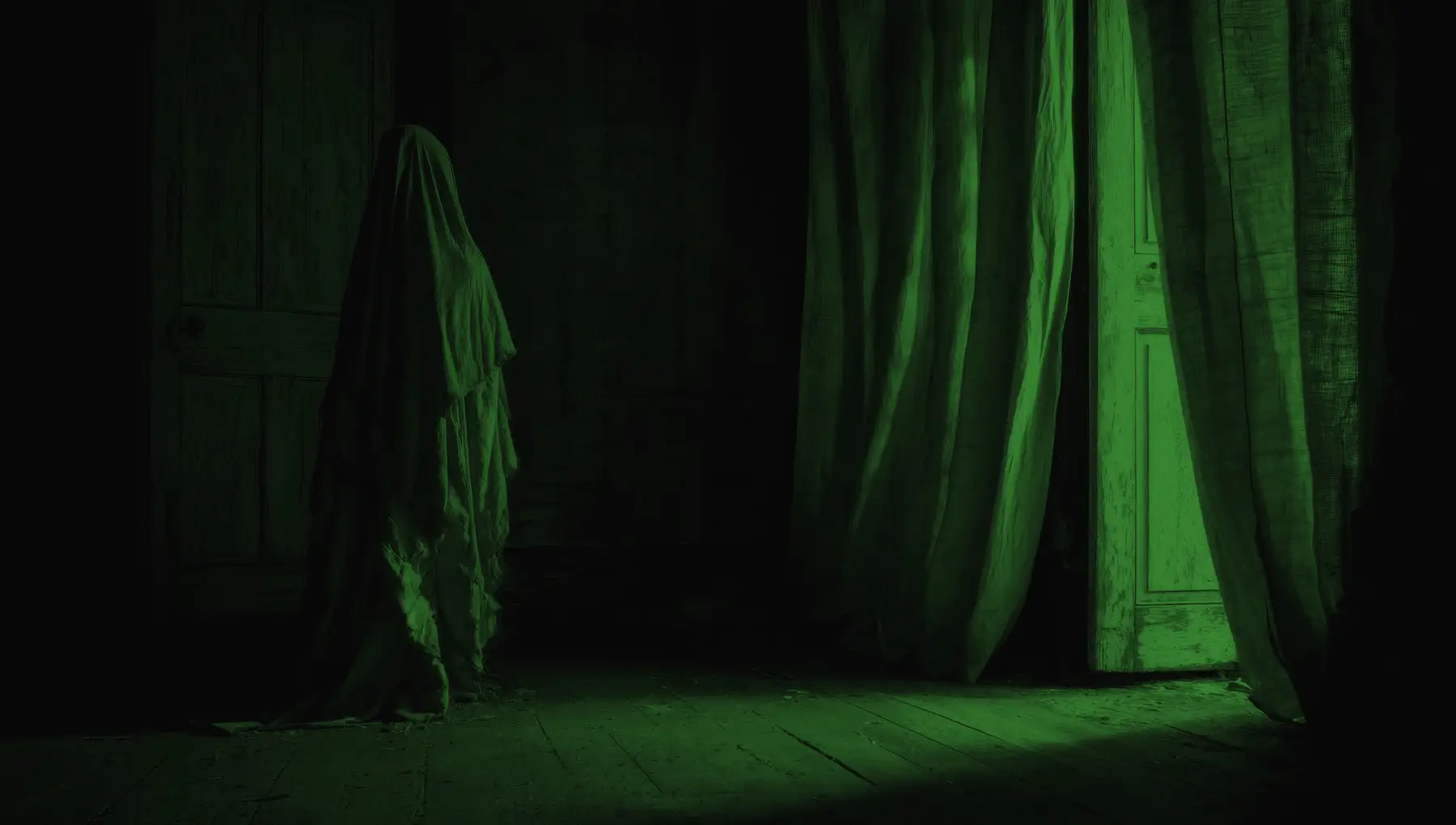
A shipwrecked stranger, a card game, cloven hooves, and an infant's skeleton in the wall: the dark legend of Ireland's Loftus Hall.

Mar 22, 20241h 18m
00:00 / 1:18:01
Or listen to this episode onApple PodcastsSpotifyYouTube
Share this episode

In this episode

  • Why Rome decided the druids had to go, and why it had nothing to do with calling them savages
  • A card on the drawing-room floor, and what Anne Tottenham saw when she bent to pick it up
  • Father Thomas Broaders, the exorcist who had his proudest job carved onto his headstone
  • What renovators found behind the plaster of the tapestry room in the 1870s
  • A crucifix and a statue of Christ the nuns left behind, and where they kept turning up

“Here lies the body of Thomas Broaders who did good and prayed for all and banished the devil from Loftus Hall.”

The story

On a stormy night in 1770, a half-drowned young sailor pounded on the door of Loftus Hall on Ireland's Hook Peninsula. The family took him in, dried him off and let him stay. A few weeks later, according to the family's own account, he revealed himself at the card table as the devil and blasted out through the roof in a ball of fire.

Strange things had been happening on that patch of County Wexford for a very long time before he arrived, and they kept happening long after he left.

Sacred ground, then stone walls

Long before any house stood there, the land belonged to the druids, the priest class of the ancient Celts. They left no writing of their own, so most of what's known about them comes from their enemies, the Romans. Julius Caesar wrote that the druids were "engaged in things sacred, conduct the public and private sacrifices and interpret all matters of religion." He also described wicker men, giant human figures woven from sticks, stuffed with living people and set on fire. Still, Rome didn't turn on the druids because it thought they were savages. It went after them because they were brilliant: astronomers, engineers, healers and leaders who held the loyalty of the Celtic people. Wexford is dotted with what they left behind, including the Robinstown Great Stone Circle and a shrine at Carnsore Point in a place whose Gaelic name means the Meadow of the Women.

Christianity pushed the druids aside, and around 1200 a Norman knight named Raymond Le Gros laid the first foundation stones on their ground. (Le Gros means "the fat," which is a rough thing to be known for eight centuries later.) When the Black Death reached his family's door in 1350, they tore the house down, moved farther down the peninsula and built Redmond Hall. Then came the civil wars of the 1640s. Alexander Redmond, a 68-year-old rebel sympathizer, held off English forces with only nine men, one of them a wandering tailor who happened to be visiting. Redmond managed to stay on until he died, but his heirs lost the land. An English aristocrat, Nicholas Loftus, got hold of the battered house, and in 1666 his son Henry moved in to make it the family seat. From then on it was Loftus Hall.

The stranger at the card table

Charles Tottenham married Anne Loftus and took her family's name to secure the inheritance. Anne died suddenly, leaving six children, and Charles later married his cousin, Jane Cliffe. On the night of the storm, the only people at home were Charles, Jane and his youngest daughter, also named Anne.

The sailor was beautiful, with large, dark, almost magnetic eyes, and young Anne was transfixed. For days they walked the gardens and browsed the library, nearly always with a chaperone watching. Then, during an after-dinner card game, Anne found she'd been dealt only two cards. She bent to pick up the third from the floor and saw that the guest's legs ended not in polished boots but in two cloven hooves. She screamed, and he laughed. According to the story, he told the room that they knew him by another name, "Lucifer," then turned into a ball of fire and shot through the ceiling.

Anne never recovered. She stopped eating and sleeping and kept insisting her lover would come back for her. Her family shut her away in the tapestry room, where she sat with her knees tucked under her chin and watched the sea. She died there. Her body had stiffened so badly that, supposedly, she had to be buried sitting up. When the family mausoleum was broken into in the 1940s, police noticed one oddly shaped coffin. Her father sealed the tomb in cement, officially to keep out grave robbers. Locals whispered that it was really to keep Anne from rising to rejoin her demon lover.

The weird part

The family's own story was that Satan had courted their daughter. A century later, workers found an infant's skeleton sealed inside the wall of the room where she'd been locked away, which suggests the family preferred saying they'd hosted the devil to admitting she was pregnant.

What was in the wall

Not everyone believed the family. Some said the sailor was just a sailor whom Lord Charles judged too lowborn to marry his daughter. Others said the stranger got Anne pregnant and left, and that the tapestry room was really a place to hide her.

After her death, furniture turned up overturned and objects flew through the air. The burned hole in the drawing-room ceiling wouldn't stay patched, no matter what the carpenters tried. A priest, Father Thomas Broaders, performed an exorcism, a religious rite to drive out demons, and was so proud of it that his tombstone reads: "Here lies the body of Thomas Broaders who did good and prayed for all and banished the devil from Loftus Hall."

The house stayed haunted anyway. In 1790 a guest named Mr. Reed woke to growling as unseen hands ripped away his bed curtains and blankets. A manservant saw a young woman in a silk gown appear beside his bed and refused to go back into the room. Then, during repairs in the 1870s, workers opening a plaster wall in the tapestry room found the tiny skeleton of an infant.

The family kept it quiet. One likely reason for the wall: under older Catholic teaching, a stillborn baby had never drawn breath, so it wasn't considered to have a soul and couldn't be baptized or given a funeral. Burying a bundle in the garden meant the gardeners might see. Sealing it inside a wall meant nobody would ever know Anne had given birth. The family found a devil in the drawing room easier to live with than an unwed pregnancy.

Nuns, a hotel, a new name

Lady Jane Loftus later poured money into renovations to lure Queen Victoria for a visit. The queen never came, and the debt bankrupted the family. The 22-bedroom house sat empty until Benedictine nuns bought it in 1917. The Sisters of Providence came after them and later left in such a hurry that they didn't pack everything. Michael Devereaux opened a hotel there in 1983 and died on the property. His widow tried to run it alone, then left one night and abandoned everything she owned.

Aidan Quigley and his siblings bought it in 2011 and turned it into a ghost-tour attraction. Quigley had been a skeptic until he moved in and found that a crucifix and a massive statue of Christ, both left behind by the nuns, kept showing up in different places. "There's far more dead than living around there," he told the Irish Independent. In 2015 a tourist named Thomas Beavis photographed the house and later spotted a young girl and an older woman standing in a window. Nobody has debunked the photo.

The new owners are renaming the place Ladyville House, a luxury hotel. Its website talks up old-world charm and says nothing about Anne Tottenham, her suitor or the hole in the roof that won't stay fixed.

The transcript

Chapters & full transcript11,607 words
Chapters
  1. 01:29The druids' sacred ground
  2. 06:42Plague, war and a new name
  3. 12:46A stranger out of the storm
  4. 24:50The exorcist and the wall
  5. 32:45Nuns, hotels and a haunted photo
  6. 38:16A tombstone starts it all

This transcript was generated automatically from the episode audio and may contain errors. Times are approximate, since ad breaks can shift them by a minute or two.

00:00

Hey, true weirdos, at the end of this episode, stick around if you want for a little bonus content and conversation. If a house can be haunted, what about the land it sits on? Are there places on this earth where let's call it energies, places where energies might converge, places where power collects and surges, where the membrane between worlds is thinner?

00:30

Maybe one of those places is in Ireland in County Wexford. Things have happened on a patch of land there. Tragic things, mysterious things. Some say it's all superstition. But others say it's as real as you and me. As real as that terrible storm. The one that sent ships spinning to the bottom of the sea and a stranger to the shore. A stranger, they say, who turned out to be the devil himself.

01:29

You hear the word druid, and you might be picturing a group of people in hooded robes standing in a circle in the forest at night, worshipping nature spirits. The real story of the druids is a whole lot more complex. For starters, we don't really know all that much about the origins of the druids. The ancient Celtic people didn't have a written language, which means most of what we know about the ancient druids comes from the stories and accounts told by others. And in this case, the others tended to be the ancient Romans. The Romans dearly loved committing their thoughts to paper. And it's Julius Caesar himself who tells us that the druids are engaged in things sacred, conduct the public and private sacrifices and interpret all matters of religion.

02:23

Caesar went on to note that the druids were also keenly focused on valor and deeply engaged in astronomy and scholarship. Here's a bloodthirsty fun fact straight from Caesar's writings. The druids had a very particular means of winning the favor of their gods. They built enormous wicker men structures woven of sticks and shaped like a person. Then they'd stuff that wicker man with living people and set the whole thing on fire. As fellow Roman Pliny the Elder observed of the druids to murder a man was to the act of highest devoutness and to eat his flesh was to secure the highest blessings of health. The ancient Romans who were like professionals in the business of invading and conquering had done enough battle with the druids and what is now France, England and Ireland, to know that the druids wielded near complete power over the hearts and minds and souls of the Celtic people. And that the druids had a taste for blood, the blood of their enemies, something they were known to splash on their altars. The Romans assess the situation and were like, Nope, these druids have to go. And not because the Romans thought the druids were pagan savages.

03:47

Pagan, yes, but brilliant and visionary. The Iron Age druids were leaders and healers, and Rome saw them as a real threat to the Empire. In County Wexford, Ireland, where our story takes place, the druids had a long and rich relationship with the land. They'd come to Ireland in prehistory, migrating across Europe as the Ice Age retreated. These people, such a vast mystery to us, possessed extraordinary skills in mathematics and astronomy. They were engineers capable of constructing megaliths, some of which still stand today, structures like Stonehenge in England, and the great mound called Newgrange in Ireland. While the land and nature itself was sacred to the druids, certain places were very important. Perhaps there was the power emanating from the land itself, or it was a place of symbolic or ritual meaning.

04:54

Seems like County Wexford was one of those places. The evidence of a large population of druids is everywhere. There's the Robinstown Great Stone Circle, and the famous shrine at Carnsor Point. That one is thought to be a druidic altar. And here's a cool little nugget. The Gaelic name for the place where the altar is located translates to the Meadow of the Women. Was it once a sacred place inhabited by only female druids?

05:35

Mounds, tombs, standing stones, and the remnants of stone circles dot the landscape of County Wexford. The visible remains of the druids who found themselves no match for Patrick, the first Bishop of Armagh, and the man credited with bringing Christianity to Ireland. We call this dude St. Patrick and celebrate him every March with the wearing of the green and the drinking of the beer. So by the fifth century, the Celtic pagan religions were giving way to Christianity. The druids already oppressed by the Romans no longer served as priests.

06:14

Instead, they were writers, poets, judges and historians. Julius Caesar called them the repositories of traditional knowledge, and they were. But their time was over, and the lands they had once venerated found new uses. Buildings were erected on once sacred soil, holy trees were felled, altars and mounds and even tombs all swept aside in the name of progress. A Norman knight named Raymond Legros was the first to lay foundation stones on that pristine land in County Wexford that was once home to the druids. It was right around the year 1200. And Legros named the place the Hall at Houseland. Now Raymond had got the name Legros by the way, because of his appearance. Legros means the fat, medieval bullies. The Hall at Houseland stood until the year 1350 when the Black Death finally crept to its door. The bubonic plague had devastated Europe starting in 1346 until it finally burned itself out in 1353. The death toll was obscene. Half the population of Europe succumbed to the plague. That was nearly 50 million people. Raymond Legros' family believed that they were no longer safe in the Hall at Houseland, that the sickness had found them at last. They demolished the property and moved themselves farther down the peninsula away and away from the Black Death. They built a new home and called this one Redmond Hall. It's still standing today, centuries later, with a new and now infamous name, Loftus Hall. There are many people who believe that Loftus Hall is one of the most haunted houses in the world. A few centuries after the Black Death decimated Europe, war came to Redmond Hall. From 1641 to 1653, civil wars raged in Ireland, Scotland and England.

08:17

In all of Irish history, there was never so deadly a time. The Irish Catholics had had enough discrimination and disrespect, thank you very much, and also one at no part of the Pope hating English parliamentarians and Scottish Covenanters who were in open rebellion against the king. It was Irish Catholics versus English and Scottish Protestants in a bloody game of ethnic cleansing. And by 1643, the fight found its way to County Wexford. The 68 year old owner of Redmond Hall, Alexander Redmond was a rebel sympathizer. And Redmond Hall was thought by the English to be an easy mark, which is why in 1642, they attacked it with only nine men at his side. And one of them was a wandering tailor who just happened to be on site when the English forces showed up. Alexander Redmond defended Redmond Hall, a nearby rebel encampment rushed to his aid.

09:30

When the fog receded, the leader of the English troops was dead. Two officers had been captured, and a number of others were promptly hanged. Only 30 English soldiers managed to escape. In hindsight, this would have been a really good moment for the English to realize that they really, really, really ought to just leave the Irish the hell alone. But no. Anyhow, in 1694, Redmond again had to defend his home in the ancient enchanted blood soaked earth it stood upon, this time from Oliver Cromwell's armies. Now it looks like Redmond cut some kind of dark deal with Cromwell, because he was allowed to remain at Redmond Hall until his death about a year later. And no sooner the old man quit breathing than his heirs were And two thirds of their land in County Wexford was seized. Enter the English aristocrat Nicholas Loftus. He'd been granted all sorts of property in Wexford by Cromwell, and later claimed that he bought Redmond Hall from a group of soldiers. The place was in bad shape. Cannon fire takes a toll on a house. But in 1666, his son Henry rolled up intending to renovate the place and make it the principal home of the Loftus family, which is exactly what he did. And if you're wondering how the Redmond clan felt about this, well, they tried hard to regain control of their home and lands with no success. It was Loftus Hall now, and that's the name that stuck. And eventually a new family settled into Loftus Hall. Impressive as the place was, it definitely had a forbidding air about it. It loomed over the stark windswept landscape of the Hook Peninsula. The thick stone walls had weathered battles and the plague had been silent witness to death upon death. This was a place where the very land was steeped in ancient ritual. But the new residents of Loftus Hall knew none of that. And they saw only the beautiful bones of the old building. So when Charles Tottenham married Anne Loftus, he understood that the couple had any hopes of inheriting land or being addressed as Lord and Lady.

11:47

Charles was required to adopt the Loftus name, which he did no problem. Why not? If the deal involved a giant stone mansion on the Irish coast, you can call me Lady Rancid Hot Dog Water. Okay, whatever, just give me the keys. Now, you could say that it was just pure bad luck when tragedy again struck the residents of Loftus Hall. Not everything has an explanation, much less a spooky or supernatural explanation. The lady of the house, Anne, died suddenly, leaving her six children motherless. It happens, right? Awful and sad beyond words, but that doesn't make it anything sinister. Just tragic misfortune. Her four sons and two daughters grieved and made do as best they could until their father remarried two years later. It was his cousin, Jane Cliffe, who became stepmother to the children, and the new Lady of Loftus Hall. One evening in 1770, Charles and Jane found themselves home alone with only their youngest daughter, Anne, named, of course, for her late mother. The rest of the family was away, and there was no chance of them making it home that night. A fierce storm was battering the Hook Peninsula where Loftus Hall stood. Roaring winds, jagged streaks of lightning, and rain sluicing off the roof and streaming down the windows and sheets. Between the shrieking of the wind and the constant pounding of rain on every surface, the first wraps on the heavy wooden door were swallowed whole by the fury of the storm. But then it came again, this time unmistakable. Who could be out this terrible night? How could anyone have found their way to the door of Loftus Hall? It was a young man standing on the threshold, so wet and bedraggled that he first could not even speak. Servants hurried to boil water for a hot bath. Blankets were fetched, and as their soaking guests huddled by the fire, a glass of brandy was pushed into his trembling hand. He said that he was a sailor, but his ship was gone, wrecked by the storm, dragged to the bottom of the Irish Sea. Of his shipmates, he knew nothing.

14:08

He could scarcely describe the events that brought him to Loftus Hall. His hosts were sympathetic. They knew well how merciless the sea could be. The young man clearly had suffered a terrible fright, had very nearly drowned, and now found himself alone and at the mercy of strangers. The Lord of the House assured the young sailor that he was welcome for as long as he cared to stay. And really, there was something about the man. Even in his wretched state, he was beautiful. That was the only word for it. He had large, dark eyes that seemed almost magnetic. Lord Tottenham found himself unable to look away. As for his daughter Anne, she was transfixed by the stranger, by this unexpected turn of events, this welcome jolt of novelty in what was her otherwise too quiet and too predictable life. It was soon obvious to all that their houseguest was very taken with young Anne Tottenham. The pair were soon spending a considerable amount of time together, though usually under one pair of watchful eyes or another. As the days passed, though, the young stranger seemed more and more a part of the household at Loftus Hall. He had a very winning way about him, a kind of effortless charm that disarmed everyone, even Anne's father, Lord Charles. And besides, what harm could come of Anne showing their guest the gardens or helping him find a book in the family's library? What That's exactly what Anne was doing the night it happened. A small group have retired to the drawing room after dinner, as rich people back in the day so enjoyed doing. Brandy, cigars, a game of cards. History doesn't tell us what the game was. Maybe some antiquated version of rummy. The shipwreck stranger was the dealer, carefully shuffling and sliding three cards to each of the players at the table. As the players picked up their cards and studied them, Anne realized that she'd only been dealt two cards.

16:28

As she opened her mouth to ask for a third card, her eye caught a flash of color. There it was a pasteboard playing card lying face down on the floor and bent to retrieve the card. And that's when she saw it. protruding from the trouser legs of the family's houseguest was a sight right out of a nightmare. Where human feet should have been human feet and polished boots. There were instead, two large cloven hooves, cold black and gleaming in the candlelight. Anne screamed in terror, a high piercing scream. The stranger's response was laughter. Cold laughter. His handsome face with those large dark eyes and that chiseled jaw was suddenly not so handsome at all. The curve of his mouth, Anne realized now was a cruel line, harsh as a freshly sharpened blade. Anne cowered in her seat, the other guests frozen in fear and shock. Then the stranger spoke, his eyes locked on hers.

17:40

Gone from his voice was any trace of warmth or good humor. My sweet, innocent and I am not the man you think I am. A sudden chill cut through the drawing room so cozy and comfortable only a moment ago. The abrupt transformation was incomprehensible for the creature seated at the card table beside and was no shipwrecked sailor. He wasn't even a human man rising to his full height. This is being declared in a ringing, mocking voice that he was none other than the devil himself. I am he who was Samuel, but you know me by another name, Lucifer. And with that, the Tottenham family's mysterious guest transformed into a ball of fire and shot into the air, blasting a charred and jagged hole in the roof of Loftus Hall.

18:46

Well, that is exactly the kind of get together the sparks gossip, isn't it? No stopping the neighbors from spreading the story far and wide. And Tottenham's reputation was sure to be ruined. Along with that of her entire family. The strangers devoted attentions to and had already been the subject of much talk. And now it was revealed that the Tottenham's guest was Lucifer Beelzebub Mephistopheles old scratch the deceiver Satan himself. It was worse than any scandal. Hell had come to County Wexford and left its mark on Loftus Hall. It was unbelievable and horrific. For all present. Hello, playing cards with the devil is seriously bad news, especially for devout Christians like these. But no one suffered like and Tottenham. She was frantic, terrified, and utterly heartbroken. Her behavior became increasingly worrisome. She was manic. Back then they called it area. And could not sleep, would not eat, wept constantly and grew paler and weaker by the day. She talked incessantly long discourses on how he would return for her how he would never abandon her how it had all been an awful, terrible misunderstanding. Her family was both worried and mortified by outbursts and fits of grief. They feared for and mortal soul feared that it was already too late that their daughter and sister somehow belong now to the dark one. This was unreachable, except by God. In hopes that time and prayer would resolve whatever this was. They can find and her favorite room at Loftus Hall, the tapestry room. There she sat day in and day out, knees tucked up under her chin, gazing through the tall windows at the Irish Sea, waiting for a stranger to return. That great theologian and star quarterback of the Protestant Reformation, Martin Luther said this about the devil, the devil can so completely assume the human form when he wants to deceive us, that we may well lie with what seems to be a woman of real flesh and blood. Yet all the while, tis only the devil in the shape of a woman. Tis the same with women who may think that a man is in bed with them yet tis only the devil. And the result of this connection is oftentimes an imp of darkness, half mortal, half devil. Was this what happened to Anne Tottenham? Had she been seduced by the devil then cast aside? Ann died not long after that strange and terrifying night in the drawing room. When her body was discovered, she was in her usual position at the window. Her limbs and rigor mortis were so stiff, so frozen into place, that it said that Ann had to be buried in that same seated posture, which was unsettling at best. And you should know that this detail might have been eerily confirmed in the 1940s when the Tottenham family mausoleum was broken into. Police investigating the crime scene were taken aback by one very unusually shaped coffin. Now if you're wondering how Anne's death was received by the locals, the answer is with terror and superstition. I mean, the girl was widely believed to be in love with Satan, and to have literally died while pining for the devil's return. I think we can cut the villagers some slack here because hello, every single

22:53

belief they held dear was in stark opposition to having Lucifer for a suitor. It was foul, unclean, and a front to God. Lord Charles was no doubt very aware of this gossip. And oh, for that reason, and other reasons of his own, he agreed to seal his daughter's tomb with cement. They said it was to prevent grave robbers from violating her final resting place. But whispers that Ann might rise from her grave to return to her demon lover, or that he might return to fetch her straight to hell. Those were the real reasons for the cement.

23:32

Now, of course, there were plenty of folks who didn't buy this story. People who thought Lord Charles had good reason to make up such an outlandish tale about his daughter and the devil. Some said that the shipwrecked sailor had been just that, and that he and Ann had fallen wildly in love. But Lord Charles refused the man's request for his daughter's hand and marriage on the grounds that the sailor's social status was far too low to even consider such a thing. Ann was so destroyed by her father's decision, that she simply could not recover and had a nervous breakdown. The shame of that led Lord Charles and his wife to cook up the whole Satan angle to save face, which I have to question if for no other reason than the fact that they welcomed the devil in. So who's ever inviting them over for dinner again? Like talk about social suicide. Then there were the rumors that the stranger had seduced Ann with no intention of marriage, and abandoned her when she became pregnant. That was the real reason for locking Ann away in the tapestry room, to conceal her condition from prying eyes, to hide her shame, and the family's shame. They just never meant for her to die in that room. And it was after Anne's death, that odd things began occurring at Loftus Hall.

24:55

Objects seemingly hurled themselves through the air. Furniture would be found overturned in rooms where no one had been. Peculiar noises and disturbances at all hours. The sort of thing that a person inclined toward belief in the paranormal might call poltergeist activity. Supernatural weirdness or not, repairs were underway in the drawing room at Loftus Hall. It was the strangest thing. The way that burnt hole in the ceiling just would not stay mended. No amount of carpentry or plasterwork seemed to make any difference.

25:34

No patch was strong enough, sturdy enough. It was a hole that would not be sealed. Despite their calamitous brush with scandal and the supernatural, the Loftus family remained at their home in County Wexford. Loftus Hall's dark reputation as a haunted place apparently didn't slow the family's climb up the aristocratic ladder. Over the generations, Anne's story was, if not forgotten, then relegated to a colorful ancestral tale. The sort of thing that only a very old, very storied family might lay claim to. Like a drafty country mansion with the remnants of cannonball damage. A family ghost or two was all just part of having noble blood. From the late 1700s through the early 1800s, the stories that came out of Loftus Hall defied belief. Family, guests and servants all reported strange occurrences, events they called the work of demons, ghostly apparitions, eerie sounds, all inexplicable. A Catholic priest was summoned to investigate. Father Thomas Broaders found that Loftus Hall was indeed in the grip of possession. He performed an exorcism, a sacramental rite that depends very much on the faith of the exorcist. Father Broaders faith was strong and unshakable. And he eventually pronounced Loftus Hall free from Satan's grip. Not only was his faith profound, the man clearly took pride in his work. When Father Broaders died in 1773, he was laid to rest in the cemetery at St. James Church in County Wexford, and his tombstone was engraved. Here lies the body of Thomas Broaders who did good and prayed for all and banished the devil from Loftus Hall. Problem was, Loftus Hall was still, according to witnesses, very much haunted. And the old place was also very good at keeping its secrets. Until the 1870s, when much needed renovations were being done to the property. Loftus Hall suffered from the usual indignities of old age that houses are prone to water damage, holes in the plaster walls, broken windows. One of those plaster walls was under repair when they found it. The achingly small skeleton, the skeleton of an infant. The remains were found in the room they once called the tapestry room. The room where young and Tottenham had been locked away until her sudden and untimely death. There was no DNA testing back then, no real forensic science, and no urgency for answers or justice. It was no one's business, but the owners of Loftus Hall, and they were not inclined to make private family matters public. But the discovery of the skeletal remains did awaken questions that were nearly 100 years old. Did Anne Tottenham die giving birth to the child? Or was she and the baby murdered to protect the family name? And if so, would this be the reason that the tapestry room was so dreadfully haunted, that no one would or could remain in that space for very long? Maybe one reason that the extremely rich, you know, people with generational wealth can be so incredibly entitled and obnoxious, is because they're salty that their ancestors could get away with murder, and they're stuck having to pay some taxes. And also, they're not allowed to just kill anyone who becomes problematic. Because heads up comrades, that looks exactly like what might have gone down on Lord Charles's watch. The stigma of an unwed pregnancy, his youngest daughter's virtue stolen while under his watchful eye, under his gracious roof? Was it decided by her family that

29:41

death was the kinder fate for Anne? And if so, Lord Charles wasn't the first man to make that grievous choice. And Anne wasn't the first young woman to pay for a pregnancy with her life. You know how family stories are. It only takes a handful of years for even the most dramatic events to fade into memory. Sure, there were all these unexplained phenomena happening at Loftus Hall, but old houses are like that, aren't they? Old houses settle and are drafty and make noises sometimes, don't they? Overnight guests at Loftus Hall were often put up in the tapestry room, where they reportedly had all sorts of strange and horrific experiences. In 1790, a gentleman named Mr. Reed was awakened in the night by a fierce growling sound. The bed curtains were violently yanked aside, the blankets torn from the bed by unseen hands. Reed searched the room, fully expecting that he'd been pranked. But there was no one, no sign of entry. And the rest of the house was quiet and asleep. A manservant to a visiting noble called the Marquise of Ely settled himself in the bed in the tapestry room, only to have the shimmering apparition of a young woman wearing a silk gown suddenly appear before him. His screams woke the entire house, and nothing would persuade the man to reenter that room. Other guests described waking to find their belongings ransacked.

31:21

Servants balked at entering the tapestry room and told of wretched noises coming from there in the night. But the Loftus family had far bigger ambitions than any mere ghost could derail. It was Lady Jane Loftus who had the idea of completely updating the hall in hopes of coaxing Queen Victoria to pay a visit. Yet after all the work was completed, the Queen never showed. The family was crushed by the mountain of debt from those renovations made to impress Her Majesty. And one by one, the gracious rooms were sealed off, their contents draped in ghostly white dust covers. One by one, the Loftus family left for Dublin or London or who knows where. And in time, Loftus Hall stood empty. The Loftus family was bankrupt.

32:14

Loftus Hall, with its 22 bedrooms and private beach remained empty and abandoned for years. At dusk, it was a bleak silhouette towering over the Hook Peninsula. Its reputation for being one of the most haunted places in all of Ireland only grew. But the new owners of Loftus Hall felt sure they could put a swift end to that. And if ever human creature could scare off the devil, it would be a Catholic nun. In 1917, Loftus Hall was purchased by the Benedictine Sisterhood to serve as a convent. The Benedictine nuns called the place home for 18 years. Then the Sisters of Providence moved in, transforming the hall into a school for girls hoping to join their religious order. If the sisters witnessed anything paranormal or demonic, they didn't say. But they also didn't stay. And they did leave in kind of a hurry. Because not everything was packed up and taken. And eventually, the property was sold yet again, this time to a man named Michael Devereaux, who opened it as the Loftus Hall Hotel in 1983. Unfortunately, Michael died on the property. His widow tried to go on to manage the place on her own, but could not. One night, she just left, leaving everything she owned behind, just vanished. Once again, the hall was abandoned. Once again, it fell into disrepair. Until 2011, when new owners signed the paperwork, Aidan Quigley and his siblings reopened Loftus Hall as a tourist attraction in 2012. Aidan Quigley lived on the property for roughly five months while repairs were being made. He'd been a skeptic thinking that the ghost stories were just in fun, that the workmen telling him the things they'd experienced, were just pulling his leg. And then he moved in. The two religious orders of nuns that once occupied Loftus Hall, remember had left a few things behind. The kinds of things you'd expect the Holy Sisters to pack first, a large hanging crucifix, and a massive statue of Christ on the cross.

34:39

Sometimes Quigley said, the crucifix could be found hanging in an alcove on the stairs, or not. Quigley told a reporter with the Irish Independent, that the crucifix could turn up anywhere. Ditto for the massive statue, a thing far too large and heavy to be easily moved for a prank, Quigley said. There's far more dead than living around there.

35:05

Not too surprising then when the Quigleys put Loftus Hall on the market in 2020. It languished for a year before finding a buyer. Aidan Quigley seemed more relieved than regretful to see it go. He said that more than half a million people have visited the hall in the last decade. Ghost hunters, fans of the paranormal, the morbidly curious, and film crews had all walked the floors of Loftus Hall. In 2015, an English tourist named Thomas Beavis took a photograph of the building. Later, when that film was developed, he saw the spectral but unmistakable form of a young girl standing at a window, an older woman beside her.

35:47

The girl could be the spirit of Anne Tottenham still walking around in Loftus Hall. It could have been some strange occurrence because of a supernatural power, but I don't know. Normally, I'm a guy that believes in what he sees. But with this, I still don't understand what's going on in that photo. Nine years later, that photo has yet to be debunked. Aidan Quigley hinted that the new owners had plans for Loftus Hall that would be grander than anything so far in the property's 800 year history. The new owners are calling it Ladyville House, a luxury destination hotel located on the rugged coast of Ireland's County Wexford. The website for Ladyville House boasts that the stately country home dates back to 1170 and has a rich history, architectural significance, lots of talk of old world charm meeting modern amenities against the backdrop of breathtaking beauty opening soon, blah, blah, blah. Looks like the ghost horse will be a thing of the past. No mention of Anne Tottenham or her mysterious suitor. Not a peep about that hole in the roof, the one that defies repair. If workers at Ladyville House notice that crucifixes could seemingly move on their own, or that statues might walk in the night, they kept it to themselves. The new owners promise that in bringing this magnificent property back to life, they have not overlooked a single detail. But you know what they say, the devil is in the details. Let's just hope for the sake of the staff and guests at Loftus Hall, oh, I mean Ladyville House, that the devil stays in the details and out of your room.

37:47

Next time on True Weird Stuff, we have a story that has it all cattle rustling, murder, mayhem, public hangings, a lifelike wax figure display and even a ghost. That's next time on True Weird Stuff. Sherry, this is such a fascinating story. And once again, you found something I'd never heard of before. How did you stumble upon this?

38:14

It's so weird and so random. So I was looking for a grave. Really? Really? That's so unlike you. I know it's completely just another Saturday night. But I was looking for someone else's grave so that I could confirm birth and death dates. And I fell down a little bit of a rabbit hole in in this part of Ireland. And I came upon Father Broaders' tombstone. Here lies Father Broaders' who prayed for all and chased the devil out of Loftus Hall. And I went, now, is that like allegorical? So or like, what is this? I mean, I had never seen I love a funny we've talked about this like I love a funny epigraph, a funny tombstone. And Max, if he if he were to be buried, which he doesn't want to be his is going to say finally, I've got some depth. But I had never seen a clergy making a joke on their tombstone. So I, I researched Father Broaders'. And I and then I thought, wait a minute, I have heard of this Loftus Hall place. And so that's how the story all came together. But it really started with that priest who was an exorcist. And not every by the way, not every Catholic priest can perform the sacrament of exorcism. I think there's some extra training that's involved in that.

39:45

Generally, it's a specialty. Yeah, and it's it's not an it's not an ancient or obscure specialty. Like you'd be amazed at the number of exorcisms that are performed now, in this moment in the modern world. But yeah, that's how I found the story. And the thing that really grabbed me about it was one the patch of land that this house that's now a hotel that still isn't open yet, is built on is really an unbelievable piece of soil. Like the history of this patch of ground that goes back to prehistory, you know, to pre written language, peoples that have migrated across the European landmass as the Ice Age receded. And the the amount of ritual and sacred practice on this piece of soil, then they build these houses first one, then the next. And they're just beset by tragedy and misfortune. But for me, it all really comes down to an unmarried young woman got pregnant. And something had to be done about it. And there's a part of me, you know, I believe in like, pretty much everything, except that I'll ever be able to retire. I believe in everything else, right? Right.

41:06

Um, I'm looking at this through the lens of Catholicism and patriarchy and tradition. And I'm going, I'm not sure if the devil came to loft us all but I do think that and and that mysterious shipwrecked sailor conceived a child together. That did happen. Yeah. I mean, and then they found that they found the remains. It is a shame that you're not able to go back and test the DNA to see what was going on with that. That would be kind of interesting.

41:39

Well, the the property once the Redmond family law had so the Redmonds were rebels, they were Irish sympathizers. And they lost that fight and the loft is family British aristocrats were granted ownership of their lands and property. So once the loft is family got a hold of that, it stayed in the family for a long time. And the people that found this skeletal remains of the human infant were members of the loft is family who had absolutely zero interest in casting shame on the family name. Like they it was this is this tells you a lot about the stranglehold that religion had on these people. They found it preferable to host the devil as a houseguest than to have an unwed unmarried daughter. So think about that for a second. When the devil is preferable to an unwed pregnancy.

42:45

It's very funny. I asked a Roman Catholic priest, you know, I was my first few years of high school, I was at a high school seminary. So I went away from home. And so you get more familiar with the priests who were working at the school. And so I remember asking him, I went, so this exorcism thing and the devil and all that, what's the deal with this? And I remember, he was very serious about it. He didn't say, Oh, that's just a bunch of nonsense. He said, Don't fool with it.

43:18

That's what he said. Because if you fool with it, you're inviting something into your life. So he didn't. I thought it was an interesting way that he looked at it. But he took a very, I don't disagree with that. How about you? Oh, I listen, I'm with you on that. He didn't. He took a serious tone with it. He he you could tell that when I talked to him about this, you know, we had had a friendly relationship. He kind of went dark on it a little bit. And it was just like, he knew things, he'd heard things. And it's just like, I'll just tell you something. He said, Don't play with this. Don't don't ever fool around with it. So I believe that there is, there is something to this. And it's like, like trying to explain God, sometimes it's different. There are certain things that are just difficult to to explain that happen.

44:09

That, yeah, that require faith. And so let me be clear, I think that something paranormal or supernatural, something, you know, like, you know, the if you look at the house in loft is hall, there are too many odd things, like the their inability to repair the hole where they, the sailor allegedly transformed into a ball of fire and shot through, right? That like, you know, you never know, when you're when you're dealing with a story like this, because you can find you can find documentation, right, you can find people telling the story and sharing the story, you can trace it back. Here we are, we're in 1600 1718 1900. Right. But what you're what you're seeing documented is an oral tradition. My father's brother was a carpenter who, right, right. So you know, you don't have, like hard empirical proof that they can't repair the hole in the ceiling. What you have is hundreds of years of people telling the story about how they couldn't do it. And you also have a lot of people who reported very unsettling, frightening experiences in the house. So, you know, even though I think that a lot of what this is about is an unwed pregnancy, that doesn't mean that that there wasn't something else going on. At the same time, maybe with the sailor, you know, for all we know, maybe shitty wasn't the devil himself. I don't know. I wasn't there. Right. We don't know. You can't say he wasn't. This podcast isn't called warm, friendly, explainable stuff. Yeah. I mean, if you want, you know, this is these are true stories that have a weird, super weird, inexplicable twist sometimes. And this is one of those. The place exists all over the history that I told you going back to Raymond LaGrosse.

46:13

All of it you can find, you can find Father Broaders' tombstone in the cemetery in County Wexford. All of that is real and true. And you can touch it with your hand. It's this other stuff that spins around it that we that we have to go. I don't know. I mean, that's a little bit where you take it on faith, right? Right. But but like you so Max and I disclosure, as we've mentioned before, both of us were raised in pretty hardcore Catholic families. And you know, Max even went to seminary school as a teenager. So you know, this idea that you don't invite these dark forces into your life is something that I don't remember ever being taught because it was just something that I always understood. Like we weren't allowed to have a Ouija board in our house. Are you kidding me? I don't know where my family took a turn and headed into tarot card readings and psychics and all of that they did, for sure. But they you know, for some reason, they like the Ouija board open to help portal, but reading your tarot cards was just a fun way to find out whether or not you know, that boy was going to call you for a second date. Very strange. But there's a lot in this story that makes you just pause and go, huh. And one of the more fascinating aspects of this story for me is all of the stuff that happened before Raymond LaGrosse showed up on the scene and laid that first foundation stone. Because all of that has fallen into the land of myth and legend. This idea the Druids and when you think again, like our understanding of the Druids is not at all really who the Druids were. The Druids were brilliant.

47:58

They were like scientists and teachers and historians, which is not at all what you grew up thinking, right? Yeah, and I've watched stuff about Stonehenge. There's a lot they still don't know about that. It's still a mystery as to what the connection between the Druids and Stonehenge and the different things that have been built there through the years that they found remains of under the ground.

48:24

I think part of it, you know, Max, is that as human beings, we simply can't, our brains are not built to comprehend deep time. We just can't do it. You know, like, we think, oh my god, the 70s were a long time ago. Yeah, we'll try the 1070s. Can I tell you? We're 70 BCE, right? Like, we can't do it. So you did the year 1666. I can tell you about a big event that happened in 1666 that I remember from school. It was the Great Fire of London was 1666.

49:00

Yeah. So let's talk about that for a second. The powerful symbolism of the number 666. I thought it was super interesting that it featured in this episode. So I'll remind you that Nicholas Loftus, his son Henry, came to County Wexford in 1666 to make that property the home of the Loftus family. And then, of course, not that long after, you know, 50 years later, 60 years later, the devil pays a visit. So it was just interesting the way some of the ancient symbols that we ascribe all this meaning to really do appear woven in and out of the way that Loftus Hall became like a modern, like haunted place that you could buy a ticket and visit. There's a jail in Charleston, South Carolina that's haunted. And it's you can buy a ticket and go on a ghost tour of the haunted Charleston jail. And I did that with my family while back and I have an incredible photo. You can't use a flash, right?

50:25

Because the rooms are dark and you blind other people with your flash. So I turned the flash on my iPhone off and I took a picture and it is the most incredible orb. Like I, I'm looking at the picture, it looks like a big blue balloon next to my kid's head. And I show it to people and they're like, you just leave it. I'm like, Oh, okay, it's a death. It's a dust speck on my camera lens. Okay. But the the 10 pictures before and after it, that dust speck isn't there. Well, you must have wiped it off. Oh, okay. Wow. Boy, am I busy? Right? So I think that there are haunted places and I think Loftus Hall was one and the Quigley family made a lot of money walking ghost tours and like, you know, the Discovery Channel and the Travel Channel through there. Looking for signs of a haunting.

51:23

But like I said in the beginning of the episode, who knows? Who knows what creates that dynamic in a place? You know, is that the accumulation of energy? Is it on a ley line? There's a shout out from my tinfoil hat wearing weirdos that are like, oh, ley lines. Yay. Is it you know, a swirling vortex? Is it a place where the membrane between worlds is thin? That's from my multiverse believing tinfoil hat people. What is it? And we can't definitively answer it for any place much less for this place.

51:58

I've been to what they say is one of the most haunted places in America. And that's Gettysburg. And I mean, that was the I believe it was the bloodiest battle of the Civil War. If not, it was one of the I'm sure somebody has, you know, actual numbers on it. But it was certainly it was the turning point. So I had to meet a friend at Gettysburg. This is probably about 10 years ago. And we were so I thought, well, I've arrived early, I'll just go and sit by this little cemetery because there was nothing around. And it was nice and quiet. And I just thought that I would sit there. Sherry, as I'm sitting there by this cemetery, I have on my arms, I have goosebumps. I'm just sitting there. And so when you say do you believe that there's things do you believe the air is thick with spirits or whatever? The answer to that is absolutely.

52:57

Well, you know, more than if I'm if my memory is correct, more than 20,000 soldiers were killed at Gettysburg. Yeah. And I'm fascinated by stories of time slips, which is not the same thing as time travel. So a time slip is when like, there you are, bopping along your Civil War history buff, and you're visiting the battlefield at Gettysburg, and you're walking along. And then suddenly, you're seeing things and hearing things and smelling things that can't possibly be real. And you've slipped out of your own time and into a different time. People report time slips in all sorts of crazy ways. We're going to do an episode coming up on one of my favorite, it's one of the most famous time slip stories of all. And it involves Versailles and Marie Antoinette. It's just an incredibly interesting story.

53:50

But this idea that you can slip through time, and people often have time slips in places where extraordinary amounts of human suffering have happened like at Gettysburg. Yes. So can you imagine there you are, Max, you're you're walking through the battlefield, and you're already feeling something, right? And then suddenly, there are Union soldiers, and cooking fires. You would, how do you stay sane? Right. And of course, there are plenty of skeptics in the bunkers who were like, none of it's real people just making up that crap. And I just lied for attention. Yeah, okay. All right. That's fine. You're allowed to believe that. It has to be absolutely terrifying to slip through time. Absolutely terrifying, especially at Gettysburg. You can see how it can happen there. Because Gettysburg, 160 years later, or thereabouts, is still pretty much the same as it was during the Civil War. It's rolling farming countryside there. So I didn't mean to divert us too much away from the story. No, I'm glad. I'm glad you did.

55:07

Because I know very few people that have been to Gettysburg that have not been shaken by not just the magnitude of death and ruination, but there's something else happening there. My weird fascination with the Civil War in Gettysburg as a child. In fact, I built a model for a school project of where the Pickett's Charge took place. And I built the little stone wall. And I had all the soldiers and I painted each of the soldiers individually. It took me forever. But I have just been like weirdly fascinated with that. So this may be another past life thing.

55:53

You know, seriously, because your fixations are so finely tuned and highly specific. Like Max has a couple of things that he just cannot escape from. One of them is Gettysburg. And the other is the 1930s. Yeah, like, there's just some stuff happening for you. And of course, you know, like, who knows, we're not supposed to know, I guess, which is frustrating as I'll get out because you really want to. But I think that Loftus Hall, which is again, it's the most haunted place in Ireland and one of the most haunted places in the world. From a experiential and documentary standpoint, and how about that photo taken by the English tourists, that they've been trying for nine years to debunk and they can't Hey, Sherry, let's do a true weird stuff trip to Loftus Hall.

56:43

Wouldn't that be so fun? Can I just tell you, they can't debunk this guy's photo of Loftus Hall. And we're living in a time when the royal family is now considered an of Great Britain is now considered an untrustworthy news source because they doctor photographs. If they could debunk his photo, they would. Right? Yeah. Oh, yeah. Just like if the royal family could clean up their mess about where the hell is the Princess of Wales, they would. The reason that they don't is because they can't. Now that the why they can't, I have no idea. Why can't they debunk Beavis's photo? And it's unfortunate that his name is Beavis because I know your brain immediately went and butthead. I know. I know. Yes, I'm here to Sherry. I know.

57:30

When we record whenever we record the initial and sometimes there's voices in there. I do the voice just as a placeholder. Sometimes it is me. Sometimes it's somebody else. I almost did it. But I did not want to screw up the mood of you right while you were reading. Sure. By the way is really haunting. I mean, yeah, it really is. Yeah. And they nine we've had nine years to debunk it. It took the Associated Press what a couple of hours to break down that bullshit photo of the Princess of Wales and her children. Um, yeah, it's just it. You just you sit there and go, Okay, I don't know. Like what? I don't know what it is. I can't tell you that the devil really came to us all and seduced and Tottenham and got her pregnant.

58:24

Somebody did. And they hid the idea of hiding the body of an infant in the walls. We didn't even discuss that. We talked about finding it. But my dude, somebody hid that body. Whoever and why ever somebody picked up a dead human infant, and crammed it in the walls and plastered over it. That's a story that will never be told. How about that for a true weird tale? To it's unthinkable. It's just it's so horrifying. There's it's just as horrifying as it can be. And that listen, you can disbelieve in the devil. You cannot believe in ghosts. You can call the whole thing BS. But let's figure out who had the cold heart to put a baby in a wall. And listen, I'm hoping the baby was deceased when they sealed it up. Well, I was gonna say that I thought maybe that would be too macabre. So I just decided I'm giving these people the benefit of the doubt and going, well, the baby is maybe stillborn. And they put in they didn't know what to do. But here's the thing, Max, why is the baby in the wall? Take the baby outside and buried in the garden? Like what? What? What in the world? Unless now follow stay with me. Unless you didn't even want the servants to know that and had given birth.

59:59

Would they not have known she was pregnant, though? I mean, you didn't want the gardeners, you didn't want that fewer the people who knew that and Tottenham had given birth, the better. You couldn't even risk being seen putting a bundle in the ground you buried that you sealed that child in the wall. You people Yeah, even if the baby was born stillborn, they probably still wouldn't want people to know. So yet the pregnancy was the disgrace. Right? More disgraceful than entertaining the devil. Oh, the devil. Yeah. So I want to say one last thing before we wrap this episode up about babies and Catholicism, that a lot of our non Catholic listeners will not be familiar with. So in the Catholic doctrine, it is believed that the child has to have the breath of life in order to have counted as a living soul. So and there's even a word in it that's used here called ensoulment. Like when we were growing up, Catholics did not believe that life began at the moment of conception. No, life began with the first breath. And that ensoulment the soul entering the body of the soon to be born human child did also not happen at conception. And so for especially pre Vatican two, if you delivered a stillborn child, they would not baptize that dead infant nor allow you to have a Catholic funeral mass. Because the child had not had the breath of life. Right. And I know this very intimately, because my mother, before I was born delivered twin boys, one of whom was a stillbirth and the other died, like within hours of being born. And my mother had been raised in a very strict devout Catholic family had gone to an all girls Catholic school, like she believed with a capital B, and her and begged for her parish priest to come to the hospital. And the priest told her, she said, I just need to know father that my babies, my mother, my mother delivered twins who died. Okay, take that in for a second. She's laying in that hospital bed. And she said, Father, I just need to know that my babies are in heaven with God. And that priest told my mother, they're not in heaven. They're in limbo. Yeah, I was gonna say, and he would not baptize either of the babies. And there was no Catholic funeral mass, it was forbidden. My mother's a member of the Church of the Latter Day Saints today, if anyone's wondering how the rest of that story went, my mother, that was, that was the end for my mother. It near it destroyed her faith in Catholicism. And it nearly destroyed her faith in God. It was so dark night of the soul for her for a very, very long time. So the reason I think that and child was a stillbirth is that they didn't have to worry about treating that infant like a human being. Because in their belief system, it kind of wasn't right. That makes sense. Yep, it does. But still, in the wall, it's savage and, and grotesque. I'll get you get you with all that. It's been super interesting as someone that because I was raised by older people, you know, pre Vatican two, older Catholics who never got with the modernization of the Catholic Church, like they were so pissed off and sideways that Matt that mass was in English and not in Latin, they contained themselves, right? These are very, very old world old country, fresh off the boat, Catholics. And so this whole discourse around abortion and Roe v. Wade, and at what point

1:04:06

does life begin, has been fascinating for me as an adult because I grew up in a world where, well, I mean, Catholics are anti abortion. That's, that's goes without saying Catholics are very pro life. All the Catholics in my family were very pro life. But not one of them, not one of them thought life began at conception. Life was this miraculous thing that happened when a soul entered the body, which is so mystical, like I can't even comprehend it. How about you? Like, did you not grow up in that world? Or were your parents post Vatican two people?

1:04:41

So my parents rolled with the times when Vatican two happened and the changes happened. They were very much all about it. They really were. But I can remember there was a time that I learned things in school that when you died, there was there were you went to one of four places. It was hell, heaven, purgatory, or limbo. And then even in heaven, at that time, they used to teach that there were different levels of heaven.

1:05:06

So let's just say you let a virtuous life your entire life, and you died, you'd go to heaven. Let's just say you read a terrible life, but you you had faith at the very end and became virtuous at the end, you wouldn't achieve the same level of heaven. And you and you might have to clock some real time in which is really, I gotta tell you it all. It's kind of, you know, yeah, I just, it's some of that stuff that I go, I'm sorry, did we get far away from the message here? So sorry, I don't mean to offend anybody. But I just kind of feel like we've gotten so far away from whatever the message was that it's just it's kind of crazy.

1:05:49

So many odd layers of what feel like man made, you know, sort of political structures like purgatory, that whole the levels of heaven and hell and purgatory felt very human created, you know, and I often think, like, wow, religion is fascinating. Because for people that profess to be Christian, gosh, Jesus laid out a pretty clear blueprint that none of y'all seem to be following. I'm confused.

1:06:23

I tell you what my mother used to say to me, if I complained about anything, we would go on a family hike, and I would complain that I was hot and tired, offer it up for the poor souls in purgatory. We'd be in the car, I'd be thirsty. Mom, thirsty, offer it up for the poor souls in purgatory. It's exhausting to be a little Catholic, isn't it? So you're, you and I are too young for this. But our parents when they were children, they would, they would save up like their milk money at school, like they would take a little bit, they would pack your lunch from home, and then you could buy a little carton of milk or whatever, at school. My mom was such a devout Catholic child, that she would save her milk money so that she could buy and some of y'all gonna think I'm making this up so that she could buy pagan babies, so that they could be baptized and kept out of limbo. Now, pagan babies, in case you're wondering, are the offspring of people who are not Roman Catholic. So my mother, as a child was contributing her pocket money and her milk money for the purchase of pagan babies. And that's what they called them pagan babies. And what I first heard about this. I mean, I had to take a whole seat and be like, so wait, how was this presented to you? And my mother told me that the sisters would say, these are pagan babies, these are the babies pagans, and their souls are, you know, going to go to limbo. But if we can raise enough money to, we can get to, I'm not really sure what, where the how, how we got from milk money to getting these kids into heaven.

1:08:06

I don't know how we got from Loftus Hall to pagan babies. To pagan babies. We did. But listen, listen, my mom, like you will not be surprised to learn that my mother was a goody two shoes, do the extra credit overachiever, like apple meat tree. My mother led the class in the purchase of pagan babies. My mother had so many pagan babies, because she was willing to drink lukewarm tap water instead of milk in order to buy an extra pagan baby. So when I when I look at a story like what happened to and Tottenham, I don't have as big a leap as some of y'all do, to understand how locking this girl away and putting her stillborn infant in the walls seem to be a set of decisions that made sense to those people back then.

1:09:02

Can I just say something about the Irish people, the Irish people have a way of looking at the world. There's almost a poetic way that they look at the world. I can tell you a trip, I took a trip to Wales. And so I'm, I met, there was a group of us that met. And at the end of the weekend, one of the guys had to go from Wales back to Ireland, and you do that on the ferry. So my friend David and I, we took him down to the port where he was going to go on the ferry. And before he went across the gangplank to get to the ferry, he turned around, brought out a balled up piece of paper that was in his pocket. And he read a poem that he had written about the weekend we'd all spent together. He got to the end of the poem, folded it up, gave us a hug and went off on his way. And I'm going, where are the cameras?

1:09:52

That's like a movie. It is like a movie. But only, but only Irish, somebody who was Irish would do that, would think to do that. Ireland is such a wild and beautiful place. And the legends of the ancient Celtic people are spectacular. There is so much magic in the air and in the ground in Ireland. And, you know, the Irish people have been fending off conquerors from the jump. Like, it's ridiculous how oppressed and besieged the Irish people have been. And my husband asked me, not too long ago, because I'm, my last name is Lynch. He's like, why is your family so Italian, you're Lynch's? I was like, well, because my grandmother married a Lynch, but he was the only one that got in. And because, you know, very often, like, there's an old saying that goes, a son is a son till he takes him a wife, a daughter's a daughter all of her life. It's very easy for men to marry into and become absorbed by the, their wife's family, their wife's family, right? Right. That's who they become. And so my pup pup, who, you know, was Irish through and through, he and my grandma fell in love, and he married into this immigrant Italian family, and God bless his poor heart. He, you know, his whole everything, his whole identity kind of got swallowed whole, by the that side, that ethnic side. So that's why, and Kevin doesn't understand that. I'm like, yeah, I'm a Lynch. I'm, my people come from Galway. I've done my genealogy. I've been to Ireland handful of times. And, but you know, we grew up eating ravioli, not corned beef and cabbage.

1:11:40

Like, we're just, you know, our family was dominated by all the Italian Catholic women that ran the ship. So Ireland is a truly enchanted place. And what the Irish have suffered, you know, until fairly recently, the British had outlawed the Irish language. You weren't allowed to speak it or learn it. It couldn't be taught in schools. The English have done everything in their power to completely eradicate Irish culture and to give the people of Ireland amnesia about their own history.

1:12:18

And the Irish have been like, hold me Guinness, and have fought back every step of the way on that. And with when they're that whole Princess of Wales drama was happening just a few weeks ago, if you're listening to this one released at St. Patrick's Day 2024. My social media was nothing but memes about how if King Charles died on St. Patrick's Day, it would be the greatest holiday ever for the Irish because they're just so sick of the British rule and British oppression. And the English trying to erase their culture.

1:12:52

Like you could totally see it. I don't know if you saw any of those. Like people, there was a thing that went viral on Twitter. One of those Irish dance troops dancing to Queen's Another One Bites the Dust at the very idea that King Charles would die on St. Patrick's Day. So it's a long, rich, bloody history of conflict and antagonism. And you see that in this story as well. And maybe part of what laid a curse on Loftus Hall for all time, was the way that it was wrenched from its owners and given to the occupying British. And it just, went to hell from there. So there's just a lot to this story that's super fun, interesting to think about, including whether or not the devil was the daddy of Anne Tottenham's mysterious baby. So on the next True Weird Stuff, I love a good cattle rustling story. And as y'all know, we love a good bloody murder and mayhem story. But we've got a story for you next week that involves cattle rustling, murder, lies, lies and lying liars who lie, a public execution, an angry bloodthirsty mob, a local museum capitalizing on it by creating life size wax figures reenacting the entire thing. And a ghost that haunts the place to this day. All in story.

1:14:34

These are a few of my favorite things. Can't wait. So hopefully you'll join us for the next True Weird Stuff. And if you've hung with us for this long, thank you. And now for all of you non Catholics, boy, have you gotten an earful of what goes on behind closed doors in some pre Vatican II Catholic family. I think we're going to get to the highest level of heaven I think we're going to be on lower levels.

1:15:00

But you know, Max, oh, this I meant to tell you this one last thing. So I have a friend who, very, you know, her family is very devout, very faithfully practicing Catholics, they don't even eat meat on Fridays. Which is the thing that a lot of Catholics have tossed to the wayside, right? So I met a get together a couple weekends ago. And it's Friday. And someone offers my friend something to eat. And it had meat in it. And she said, Oh, that looks so good. But I'm gonna have to pass. We don't eat meat on Fridays. And another person there said, What do you mean? Are you a vegetarian? No, no, we just don't. I'm Catholic. We just don't eat meat on Fridays.

1:15:36

And the woman said, Oh, I didn't realize you were Catholic. I'm a Christian. Oh, I haven't heard that in a while. Somebody I said it was Catholic. And somebody said to me one time, I'm sorry, would you believe in Jesus? And I told them, I said, Well, we were very early to the Jesus party. Very early. I have not heard someone do that in so long. And my friend was like, my friend Tina, my friend Tina was like, um, yes, you are. And Catholics are too. And this person actually said, Oh, I didn't know Catholics believed in Christ.

1:16:19

And the room you could have like it was you could have cut the tension with a knife. It was so quiet. You could hear a pagan baby screaming. I mean, it was so uncomfortable. And so I texted Tina later, I was like, girl, I know you were upset. I just want you know, I'm going to pray to some statues for you later. And we had a really good laugh about it. But yeah, we're all one people all under this one sky. And if we're lucky, the devil won't come a knocking. We'll see you on the next true weird stuff. And if you listen to us on Apple podcasts, hit the plus button in the top right corner. And now it helps an independent podcast like ours to get discovered. And we really appreciate it. If you subscribe, rate and review true weird stuff, hit our website, true weird stuff.com for show notes and photos and videos when we have it and bonus content.

1:17:12

Everything true weird is waiting for you at true weird stuff.com and follow true weird stuff on Instagram and Twitter. True weird stuff is in Now! Media production. Our executive producer is Anthony Garcia. The show is written and hosted by me Sheri Lynch, along with my deeply weird director Max Sweeten. Our equally odd producer is Kary Bowser.

1:17:33

Additional production by the mysterious Stephen Call. Our digital witch and social media cult leader is Heather Furr. Original graphics by Kevin Nash. Original artworks by Olivia Axland. True weird original music composed and performed by Jack Griffin and Zane Nash. Copyright 2024 Now! Media all rights reserved. All wrongs remembered.

One new weird tale a week.

The strangest true stories in history, in your inbox.

Unsubscribe anytime. Privacy policy.