Case file 053Ghosts, Curses & the ParanormalModern (1980–today)

The Boy From Mars

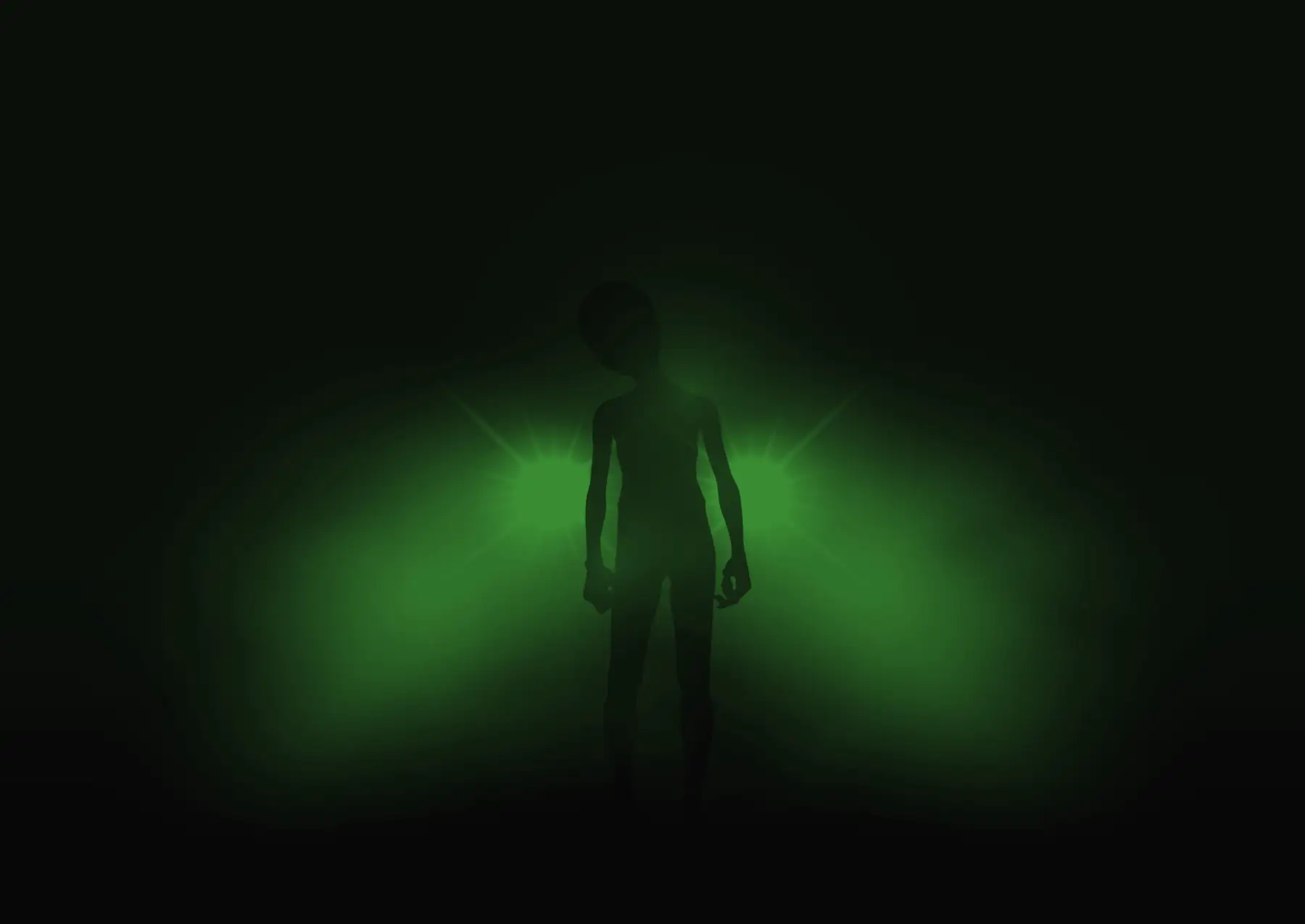
Boriska Kipriyanovich read headlines at one. At seven, he said his past life was spent on Mars, flying spaceships over a world ruined by nuclear war.

Feb 10, 20241h 21m
00:00 / 1:21:05
Or listen to this episode onApple PodcastsSpotifyYouTube
Share this episode

In this episode

  • Why a Corsair, a boat called Natoma and a buddy named Jack sent one family digging through World War II records
  • A table full of photographs, and the woman a six-year-old picked out as his fourth wife
  • The Moscow vault where a recording of a seven-year-old's Mars story disappeared
  • What Boriska told Russian researchers when they pointed out that Mars has almost no oxygen
  • The Great Sphinx, a mechanism behind its ears, and what he said happens the day it opens

“Martians, he patiently explained, can’t breathe oxygen at all.”

The story

Plenty of small children talk about the lives they lived before this one. Boriska Kipriyanovich, born in the Russian city of Volgograd in 1996, said his last life had been lived on Mars, and that he had flown the spaceships.

His story lands harder once you know how seriously researchers take the more earthbound cases.

Two American boys remember

For more than 20 years, Dr. Jim Tucker and his colleagues at the University of Virginia have studied children, usually between two and five, who describe memories of a previous life. Tucker focuses on North America, where reincarnation, the belief that the soul is reborn again and again, is not the cultural norm. His book Return to Life covers two famous cases.

At age four, Ryan Hammons began remembering life as a Hollywood talent agent and movie extra. He wanted to wear suits and ties, tap-danced without ever taking a lesson, and worried about the three adopted sons he'd left behind. His mother kept a journal, and a dig through Hollywood archives turned up a man named Marty Martyn. Nearly 50 of Ryan's claims matched Martyn's life. At six, the boy picked Martyn's fourth wife out of a collection of photos. His recall had holes: 15 statements were wrong or confusing, including a watchdog that turned out to be a Yorkie. Then again, who hasn't met a snarling, gangster Yorkie? On a trip to Los Angeles, Ryan met Martyn's daughter, now 57, and was upset that she hadn't waited for him.

James Leininger was two when the nightmares started. He thrashed and screamed, "plane on fire, little man can't get out." He said he had flown a Corsair off a boat called Natoma, that his friend was Jack Larsen, and he pointed to Iwo Jima in a book as the place he was shot down. Asked the little man's name, he answered, "James, me." His parents found the USS Natoma Bay, a pilot named John M. Larsen, nicknamed Jack, and exactly one Natoma Bay pilot lost at Iwo Jima: James Huston, Jr., a 21-year-old from Pennsylvania. James went on to sign hundreds of air-battle drawings "James III." Tucker considered fraud and found it implausible. The family's book didn't come out until James was 11, and his parents never mentioned Huston when ABC's Primetime: Supernatural Mysteries interviewed them.

A newborn who stared back

Boriska's mother was a doctor, and she knew her son was unusual from the moment he arrived. Her labor was swift and painless. The newborn fixed her with what she called the deep brown eyes of a grown adult. At two weeks he held his head up on his own, something the average baby can't manage until five or six months. He spoke simple words at four months and full sentences at eight. At one, he was reading newspaper headlines.

Preschool teachers, stumped, called him a genius. By three, he chattered about planetary systems the way other three-year-olds chatter about dinosaurs.

A camping-trip confession

At seven, on a family camping trip, Boriska told his parents he had lived before, and not on Earth. He had lived on Mars. He was one of many children reincarnated here, he said, on a mission to help humanity save itself from itself. He had visited Earth many times, including the Lemurian era. Lemuria was a lost continent the zoologist Philip Sclater proposed in 1864 to explain why lemur fossils turned up in India but not in Africa. Theosophy, a spiritual movement founded by Helena Blavatsky, later embraced it as the cradle of humanity, and science dropped it in the 1960s for continental drift.

Word reached Gennady Belimov, a university professor in Volgograd, who was stunned by the boy's command of both obscure geology and rocket science. The boy's account was captured on a dictaphone, a handheld voice recorder, and that recording vanished into a vault in Moscow. Boriska described the craft in detail: "Martian spaceships are very complicated. They're layered, and they can fly all across the universe." He counted six layers, including a magnetic one that, once energized, would let the ships fly anywhere.

The weird part

Other children's past-life memories take them back to earlier lives on Earth. Boriska Kipriyanovich, the son of a doctor, said his previous life was spent on Mars, and he calmly described its nuclear war, its underground survivors and how its spaceships were built.

Survivors underground

At 11, Boriska sat for an interview alongside his mother. A thousand years ago, he said, a nuclear war between two warring factions all but wiped out the people of Mars. He had been a pilot, and the survivors were driven underground to rebuild. Russian researchers pounced: how could anything live in an atmosphere more than 95% carbon dioxide and less than 1% oxygen? Boriska seemed puzzled by the question. "Martians, he patiently explained, can't breathe oxygen at all." Earth's oxygen made Martian bodies age, he said. On Mars, people stopped aging at around 30 to 35. He had opposed crossbreeding experiments as a violation of natural selection. And when Mars lost its water, cylinder-shaped ships came to Earth to collect more.

At five, he had described a planet called Proserpine, sliced in half by a beam while its inhabitants teleported into another dimension. Astronomers do list a Proserpine, classified as an asteroid, circling the sun every 4.33 years. Dr. Vladislav Lugovenko of the Russian Academy of Sciences saw Boriska as a textbook indigo child, one of the children some believe were born with high IQs, sharp intuition and a resistance to authority to transform human consciousness.

Waiting on the Sphinx

Boriska warned that Earth's troubles would begin when the Great Sphinx was opened, and he spoke of a mechanism behind its ears. He predicted the planet's magnetic poles would flip, which hasn't happened yet, and global flooding in 2013, which didn't happen either. He and his mother are thought to be under the protection of the Russian government. His father, long divorced, has been out of the picture for years.

What he left behind is simpler than any spaceship. People suffer, he said, because they can't be kind and let others live their own fate. "He said that the only true magic in the universe is love."

The transcript

Chapters & full transcript11,880 words
Chapters
  1. 00:08Children who remember
  2. 08:06The Hollywood agent
  3. 10:55Shot down over Iwo Jima
  4. 15:50A baby unlike the others
  5. 19:57A past life on Mars
  6. 34:42Where Boriska is now

This transcript was generated automatically from the episode audio and may contain errors. Times are approximate, since ad breaks can shift them by a minute or two.

00:00

Hey, true weirdos, at the end of this episode, stick around if you want for a little bonus content and conversation. Little kids tell the wildest stories. The world hasn't beaten them down yet. It hasn't made them self conscious or embarrassed. Because when you don't yet know the rules, you don't realize you're breaking them. You don't get that what feels completely ordinary and true to your little self might be a reality bending, mind blowing revelation to the adults around you. Lots and lots of young children, more than you know, tell stories about who they used to be, where they used to live, what they used to do in the life they lived.

00:47

Before this one, you can dismiss it, call it all just a big imagination. But what if the story a child is telling you isn't a story at all? What if instead, it's a memory? Reincarnation, the belief that our souls are immortal, born and reborn over and over again, living lifetime after lifetime, a cycle of existence that transcends physical death. In some belief systems, that cycle ends only when the soul has been so perfected by earthly suffering that achieves a state of oneness with the Creator. Think of it like the flicker of a single candle, finally returning to the source, to the Creator, to the one eternal flame. No one knows where the philosophy of reincarnation began, though it's been with humanity for as far back as our histories can trace. Ancient India, ancient Greece, even the Celtic Druids embrace the idea.

02:19

Hinduism, Buddhism, Jainism, all share a belief in an eternal soul engaged in the cycle of near endless rebirth. But that doesn't mean that there aren't also ancient texts that describe the life of the soul in terms that might seem a little closer to what you learned in Sunday school, as in earthly life, followed by an eternal afterlife in either heaven for the righteous, or hell for the wicked. The very earliest Vedic texts, the Rig Veda, describe something a lot like that. But let's take one step back and talk about the Vedas and what the heck that even means. So jump in the Wayback Machine with us and journey all the way back to roughly 1500 to 500 BCE, when the Aryan nomads made their long arduous journey from the Middle East to ancient India. They brought with them an oral tradition of hymns, chants and stories called the Vedas. It's a word that means wisdom, knowledge and vision. Once transcribed, the Vedas became known as the language of the gods. And interestingly, the Vedas have no human author or intermediary. Like the Bible, the Vedas were divinely inspired.

03:41

It's said that the Vedas came to the people from the breath of Paramatman, or the source itself. Though the Vedas did form the foundation of Hinduism, they aren't one and the same. The Hindu religion has evolved over the millennia, and the Vedic religion remained its own separate thing. And a big point of difference involves the concept of reincarnation. The early Rig Veda make no mention of rebirth or karma. That came later as these nomads were influenced by the people and cultures of the regions they traveled through and settled in.

04:17

Today, anywhere from 10 to 44% of people worldwide believe in some form or flavor of reincarnation. Neither the Christian nor Islamic faiths hold a belief in reincarnation, though you can find offshoots of both that do at least consider the possibility. It's a beautiful idea. And whether you insist that humans are one life and done and then offer eternal judgment, or one life and done and that's it lights out your fertilizer, the revered Hindu scripture, the Bhagavad Gita offers this bit of food for thought.

04:52

Never was there a time when I did not exist, nor you, nor all the kings, nor in the future shall any of us cease to be. As the embodied soul continuously passes in this body, from childhood to youth to old age, the soul similarly passes into another body at death, and worn out garments are shed by the body. Worn out bodies are shed by the dweller within the body.

05:20

New bodies are done by the dweller like garments. You have to admit, reincarnation does seem kind of awesome, especially if you're someone who grieves that one life can never be enough to see and do and be all the things you've yearned to see and do and be. And you'd think that a belief in reincarnation would be soothing and empowering for anyone with a real and terrible fear of death. But here's the catch. It's the soul that is eternal, not the ego. It's your soul that tastes immortality, not this version of you who loves tacos and anime and your beautiful children. Do you even want to live forever?

06:12

If it means the death of yourself, this self, over and over again. Reincarnation is a tough concept for a lot of people. It's unsettling, it's frightening even. Now imagine that you're the parent of a small child who has begun stories of who they used to be. Would you listen? Or would you shut it down? Would you believe? Could you believe? Maybe this all sounds like science fiction, but it isn't. Research into the accounts of children from all over the world who report past life memories has been going on for more than half a century.

06:53

For the last 20 plus years, researchers at the University of led by Dr. Jim Tucker, have been focusing on cases of kids with these kinds of recollections right here in North America, where a belief in reincarnation is not the cultural norm. Here's how Dr. Tucker describes the phenomenon. Some young children, usually between the ages of two and five, speak about memories of a previous life they claim to have lived. At the same time, they often show behaviors such as phobias or preferences that are unusual within the context of their particular family and cannot be explained by any current life events. These memories appear to be concordant with the child's statements about a previous life. Tucker's book, Return to Life, deals primarily with children right here in the US, and it covers a handful of cases you might already be super familiar with, like Ryan Hammons, who had memories of being a Hollywood talent agent and an extra in the movies, and James Leininger, who recalled his past life as a pilot in World War II. Tucker's investigations into both cases verified the boy's memories, as hard as that may be for you to believe. In the case of Ryan Hammons, the child didn't just recount memories of his former life, beginning at age four. He wanted to dress in suits and ties like an agent. He would pretend to make movies. He could tap dance without having had lessons. He was upset and concerned for his three adopted sons, his other mother, and the sister he'd had in that former life. Deep digging in the Hollywood archives turned up a man named Marty Martyn, who fit Ryan's descriptions. Ryan's mother had kept a journal of Ryan's statements, and nearly 50 of the child's claims matched facts of Martyn's life. At age six, the boy correctly identified Martyn's fourth wife from a collection of photos. He identified a photo of Martyn as a young man. It was all very compelling, even if the boy's recall was imperfect. He made 15 statements that were either incorrect or confusing. For example, he recalled that in his life as Marty Martyn, he'd given his daughter a watchdog. The dog part was accurate, but it was a Yorkie. Not exactly a watchdog in the traditional sense, though. Who hasn't met a snarling, gangster Yorkie at once? Ryan was so homesick, so upset to have lost his life as Martyn, that his parents ultimately took him on a trip to Los Angeles. It was eerie the way the boy recognized and responded to the places connected to the deceased Marty Martyn. The child wanted desperately to see his three sons. Something that didn't happen. He did meet Martyn's daughter, who was eight when her father passed. Ryan's upset. The daughter, now 57 years old, hadn't waited for him, he said. The woman, who had to be about as deeply freaked out as a person can be, confirmed many of the details that Ryan had reported regarding his former life, as many as she could, given her young age at the time of Marty Martyn's death. The TV show, The Unexplained, did an episode about Ryan's case in April 2011. If you haven't seen it, it is absolutely worth a watch. And about six months after it aired, Ryan took down the pictures and photos hanging in his room that related to Martyn's life and the time period in which he lived, telling his mom that it was time now for him to be a regular kid. And that's what he did. Even if many of Marty Martyn's tastes and preferences continued to be his own, like music from the 1950s, Judaism, even a dislike for cats, all stayed with the boy as his memories of this past life slowly faded. The case of James Leininger is every bit as compelling. The boy was just two

10:59

years old when he began having intense nightmares of dying in a plane crash. And not just that, the toddler said that he'd been an American pilot shot down by the Japanese in the Pacific Theater during World War II. Then he upped the ante by naming the aircraft carrier he'd flown from, threw in the first and last names of a buddy he'd served with, and added a few details about the way his plane went down. In the grip of the nightmare, James would thrash and scream, plane on fire, little man can't get out. And then the traumatic dream became part of the boy's waking life. He told his parents that it wasn't just a bad dream. He said he was remembering his other life. He talked about flying a Corsair. He said the plane flew off a big boat called Natoma. When asked what the little man in the airplane's name was, the child said, James, me. He said that he had a friend on the boat called Jack Larsen. And upon seeing a photo of Iwo Jima in a book, he pointed to the island and said that was the place where his plane was shot down.

12:16

James was just two and a half years old when he casually mentioned that. By now, James' parents were hunting for any factual details that matched their son's stories. Who knows what they were hoping to find, but what they found is jaw-dropping. The Corsair, a type of aircraft developed during World War II. The boat called Natoma. There was a USS Natoma Bay in the Pacific during the war. Jack Larsen, a pilot by the name John M. Larsen served on the Natoma Bay. And a pilot in a Corsair, first named James, who was shot down by the Japanese over Iwo Jima. Was there a man who fit that description, stationed on that ship? James' father attended a reunion for the men who served on the Natoma Bay. He was able to track down John M. Larsen, nicknamed Jack, and he learned something else. There was only one pilot from the Natoma Bay who was lost in the Battle of Iwo Jima. A 21-year-old from Pennsylvania named James Huston, Jr. James' parents had contacted Dr. Carol Bowman, who's written extensively about children and past life memories. They took her guidance and told James that he was safe now, that this terrible experience in the plane was in the past. And over time, he had fewer nightmares and the dreams became less intense. But as the boy grew, he began making drawings of air battles, hundreds of drawings. He signed every drawing the same puzzling way. James III. James Huston, Sr. James Huston, Jr. James Leininger. The little boy clearly thought of himself as the third James. And if that gives you the whoahs, imagine how his parents felt. It's one thing to casually believe that reincarnation might be possible. It's another thing to be with it in the form of your own child claiming that he used to be someone else. Dr. Tucker examined the possibility that James Leininger's parents were guilty of fraud of, you know, making the whole thing up so they could profit by writing a book. But when you consider that the book they did write wasn't published until James was 11, that the parents had been interviewed for the ABC TV show Primetime: Supernatural Mysteries and didn't discuss James Huston, Jr., something that would have for sure sold some books. Well, it seemed unlikely and implausible to Tucker that this was a case of fraud. These two famous cases of American children reporting past life memories might seem dramatic. And they are. A Hollywood agent, a World War II fighter pilot. Yet, when you dive into the enormous body of research that's been compiled for decades now, the basic framework of the stories that Ryan and James tell appears over and over and over and over again with children from nearly every corner of the world. Except for this child. His past life memories feature a truly bizarre and shocking twist. Boriska Kipriyanovich was born on January 11, 1996, in the Russian city of Volgograd. There was something profoundly unusual about the boy from the start.

16:02

His birth was atypical. Labor, according to his mother, was swift and utterly painless and more. The newborn stared at her fixedly with what she described as the deep brown eyes of a grown adult. Before you dismiss this as the besotted ravings of a lovestruck mother, listen. The infant, Boriska, was also able to focus his gaze on objects. This is widely held to be impossible for a newborn. And more, at just two weeks old, he could hold his head up unsupported. A very unusual feat, given that the average infant can't even pull that off till somewhere between five and six months of age. And if you're thinking, oh, mothers say their babies are special. And mother was probably some superstitious peasant woman from the back of the beyonds. But hello, Boriska was born in 1996, not 1596. And his mother was a doctor herself. She knew full well that her newborn was unusual. Boriska's mother reported the baby began speaking simple words at just four months old. By eight months of age, he was speaking in sentences. Compare that to the norm, most babies will say their first word between 12 and 18 months of age. Though of course you'll hear babbling and strings of sound, you know, mama, dada, baba. If you look at standard guidelines for early childhood development, you'll see that an 18 month old is expected to have a vocabulary of anywhere between maybe 10 and 50 words.

17:40

Boriska clearly blew that target right out of the water. Now, none of this is proof of anything supernatural or paranormal or miraculous. Some children are incredibly precocious, just like some are late bloomers. And yet, nothing about Boriska's development was even remotely typical. I mean, have you ever met a one year old child who could read headlines in a newspaper and wanted to do that? Boriska could and did.

18:10

By this point, it's not surprising to hear that two year old Boriska demonstrated what can only be described as astonishing language fluency, a sophistication of vocabulary and sentence structure that was downright trippy coming from a toddler. And like his fellow toddlers, the boy loved to draw and paint. Except, Boriska's artwork, like a speech, didn't have much in common with his peers. Where other toddlers produced looping smears and blobs of color, Boriska's drawings were far more refined, controlled and oddly specific.

18:49

When the boy started preschool, his teachers were like, um, what? The child was reading, writing and drawing at a level so far beyond his chronological age that it was nearly unbelievable. And his memory skills, too, were unlike anything these preschool educators had ever seen in a child so young. Not knowing any other way to describe the boy, they called him a genius. It was the only description that made sense to anyone in Boriska's orbit. How else to explain why at age three, Boriska began talking about the universe. He demonstrated a knowledge and understanding of astronomy that couldn't be accounted for. He was fascinated by all celestial objects and would talk in detailed terms about planetary systems and unusual astronomical phenomena the way another three-year-old might chatter about dinosaurs or Bluey or Peppa Pig. And then came the revelation that absolutely no one could have expected or prepared for. At age seven, while on a family camping trip, Boriska Kipriyanovich told his parents that he had lived another life before being born as their son. And that life, Boriska said, had taken place not here on Earth, but on Mars. Mars, the red planet, that orangey, barren, lifeless world that NASA's Mars rovers are cheerfully trundling across, and what so far appears to be the most staggering solitude imaginable. Mars, a planet that humanity has been fixated on for millennia, from the ancient Romans, to Orson Welles, to Bugs Bunny, to Elon Musk. If you think your kid telling you that he died when his plane was shot down over Iwo Jima is a mind bender, try processing your kid telling you he lived on Mars in his past life. But wait, there's more, so much more. To begin, Boriska shared that he was just one of many children reincarnated into earthly lives. So calm down already, why don't you? Because he's not like all that unusual.

21:11

As for why the souls of he and the others have been chosen to take human form on this planet? Well, that was a big deal. Boriska was here on Earth this time as part of a mission to help humanity save itself from itself. Wait, this time? Yes. Boriska claimed that he had visited Earth before, many times, including during various prehistoric eras. He described coming to Earth during the Lemurian era, for one example.

21:42

And if you're racking your brain trying to remember where that falls, is it after the Cambrian, but before the Triassic? Or is it after the Jurassic? Give yourself a break. You don't remember the Lemurian era, because you didn't learn about it in school. Real quick, back in 1864, the zoologist Philip Sclater presented his argument for a missing continent, one that had been swallowed by the Indian Ocean. His theory was meant to explain why it was that lemur fossils could be found in and on the subcontinent of India, but never in the Middle East or continental Africa. A few years later, a biologist named Ernst Haeckel jumped on board and offered his hypothesis that this lost continent of Lemuria might just be the ancestral home of human beings. This caught fire in the public imagination. And you can see why, because it is just exactly the kind of delicious and mysterious idea that people love to ponder. And this lost continent of Lemuria featured prominently in Theosophy, a religion that exploded in the United States in the late 19th century. In a nutshell, Theosophists believe in an ancient, highly secret fellowship of spiritual masters who possess both deep wisdom and what we might call supernatural powers. These ancient world religion that will completely eclipse our stewpot of various modern world religions. Theosophists believe in one divine absolute, that the entire reason for human life is spiritual growth and emancipation, and they believe in the reincarnation of the soul. It was the founder of Theosophy, a woman named Helena Blavatsky, who wrote that this lost continent was the true cradle of our ancestors, a people she called Lemurians. Then, in the 1960s, science embraced a whole different theory to account for anomalies in the fossil record and to explain the geological history of our planet, continental drift, that you did learn about in school. And with that, the idea of Lemuria was relegated to the mythical and the mystical. And yet, here's a young boy in Russia, claiming in a very matter-of-fact way to have visited Lemuria. One of the guests on that family camping trip, where Boriska casually shared this fantastical revelation that he had been a Martian in a prior life, was the colleague of a man named Gennady Belimov.

24:28

Belimov was a university professor in Volgograd, and when he heard this story of a seven-year-old child discussing space travel, Lemuria, nuclear conflict, and Martian biology, Belimov was very intrigued. He later wrote that Boriska's tale was captured that night on a device called a dictaphone, though that recording disappeared into a vault in Moscow, and Belimov had no idea if or when it might ever be released. Belimov was shocked by the boy's story. For one, the child possessed a knowledge of Lemuria that went far beyond any reasonable explanation, because it certainly wasn't a subject being taught at school, and Belimov doubted that even a college student could discuss it in such specific and scientific detail. Then there was Boriska's vocabulary and his easy use of not just far beyond his years, but far beyond that of any lay person. How did this child have such an easy grasp of both arcane geology and literal rocket science? As for how Boriska got from Mars to prehistoric Earth, he had a detailed explanation for that, too. He traveled in a vehicle, of course, a spacecraft. How else was he to get here from his home planet on Mars? We could travel in time and space flying in round spaceships, but we would observe life on Earth on triangular aircraft. Martian spaceships are very complicated.

26:01

They're layered, and they can fly all across the universe. He went on to describe the craft in even more detail. It has six layers with the outer layer made from 25% solid metal. The second layer is 30% something like rubber, while the third layer is 30% metal. The last 4% consists of a special magnetic layer that if we were to energize this magnetic layer, these machines would be able to fly anywhere in the universe.

26:25

Okay, okay. Kids have big imaginations, and a genius kid would maybe have the biggest imagination of all, right? You can say that, no question. Who would argue? But is there more? No, there is. At age 11, Boriska and his mother sat for an interview. The boy seemed hesitant at first, almost reluctant, but eventually opened up. He explained that a thousand years ago, nuclear war ravaged the planet of Mars and all but annihilated its people. His memory of the event was sharp and clear. He had been, he said, a pilot at that time. It was conflict between two warring factions on Mars that led to the nuclear apocalypse that leveled his world. The survivors of that apocalypse, he said, had been forced underground. The remnants of an all but extinct civilization laboring to reconstruct their world, to somehow rebuild enough weaponry to at least defend their small numbers. To the Russian researchers, who were now studying the boy intently, this seemed like a perfect opportunity to punch a Mars rover-sized hole in Boriska's story. They demanded to know how any living thing could survive anywhere on Mars, what with its atmosphere being more than 95% carbon dioxide and less than 1% oxygen. Boriska was as puzzled by this question as the researchers were by him. Martians, he patiently explained, can't breathe oxygen at all. Then he added that Martians hated the air on Earth because the high oxygen content caused their bodies to age. On Mars, Boriska said, people stop aging around what we would call 30 to 35, and so there are no old people in the physical sense, not old in the way humans on Earth experience aging. And while we're on the subject of Martian physiology, the kid also declared that Martians had slightly different branches of DNA from humans, but that information wasn't meant for us to know. Okay, creepy, because why would that knowledge be forbidden? Maybe it was the crossbreeding experiments that Boriska, as a pilot of a Martian research vessel, swore he had been vehemently against on the grounds that those experiments were a violation of natural selection. Yeah, because this is exactly the kind of thing the average 11 year old talks about all the time. Boriska also declared that in the last hundreds of thousands or maybe even millions of years, there was a water crisis on Mars, with the planet catastrophically losing its atmosphere and its water, special collection ships were dispatched to the nearest planet to get water, and that planet was Earth. And the collection ships, they were shaped like cylinders. Well, hello every UAP report ever that described a cigar-shaped vessel. And how about that siphoning of Earth's water? That will sound familiar, too, to anyone who's paid attention to the stories of those who witnessed a UFO hovering over a lake or reservoir or ocean and seemingly drawing water into itself. We just told the story of an encounter like this in the True Weird Stuff episode called Flat Tire, Lonely Road. Again, it's super easy to dismiss every word as pure imagination. But the boy knew other things. And again, with the kind of detail that made it hard to write off as just fantasy. So as an example, when Boriska was five years old, he told his parents that there used to be a planet called Proserpine that was destroyed thousands or maybe millions of years ago. The planet, he said, had been sliced in half by some sort of beam, and that its inhabitants

30:31

had teleported into another dimension, something we would a parallel world. What? Well, there actually is a planet called Proserpine in the far-flung outer neighborhood of our solar system, near poor Pluto, who got demoted to dwarf planet status back in 2006. Proserpine is classified by astronomers as an asteroid. That basically means that it's not a true planet, but it's not a comet either. It has no atmosphere, but Proserpine has an orbit, making a full trip around the sun every 4.33 years. Now, why or how a five-year-old would know any of this? I can't say. When did you learn that Proserpine even existed? Exactly. That was Gennady Belimov's reaction, too. It was the reaction that researchers at the Russian Academy of Sciences had. And one of the researchers there, Dr. Vladislav Lugovenko, was engaged in researching the so-called indigo children, and Bariska struck him as an astonishing example of that phenomenon.

31:42

Best-selling books and documentaries have been made about these kids, with their high IQs, their intensely acute intuition, their resistance to authority and conformity. Maybe you don't hear the phrase indigo children so much these days, but former psychotherapist Doreen Virtue told the New York Times in 2006 that these kids represent an evolutionary leap forward for humanity, and that more, they came to Earth to transform the consciousness of humanity, that they are guided by some sort of higher world. Skeptics then and now say that any parent of a neurodivergent kid would grasp at an idea like this, because the alternative is a diagnosis and maybe medication. But then you could also say that kids like Bariska represent such a stark challenge to the established norms of what a child is, that the only way for science to make sense of them is to pathologize them, label them, call it a learning disorder or ADHD or maybe autism. Our McCrae's culture does love to find a pill for everything. And you know the old saying, if your only tool is a hammer, then every problem looks like a nail, which is not me being anti-medication or anti-psychiatry or psychology, far from it. But it is me saying that we're awfully quick to label what we don't understand, what we struggle to believe, what doesn't fit neatly into our map of reality. And speaking of indigo children, Bariska was very matter of fact about this one detail. Remember, he said he wasn't alone. He said there were many children like him who've been reborn on earth for the same reason, to alter the destructive path that humanity is on. Now it's wild how many strange and mysterious and inexplicable tales seem to circle back to the ancient Egyptians. And Bariska's story is no different. His warnings of cataclysm and disaster for earth, these dire changes to the fate of the people on this planet would begin when, he said, the great Sphinx was opened. He had knowledge of a mechanism behind the statue's ears, though he did not know the precise location or how it operated. Which, go ahead and roll your eyes, but we don't even know who built the Sphinx, much less why. We don't know what it represents or exactly how old it is, or even what happened to its nose. Because it's missing, it has never been found. And no, Napoleon's army did not shoot it off. Whatever mysteries the great Sphinx is keeping, Bariska said those revelations would offer humanity a blueprint for our survival. It's a lot to take in. It is.

34:40

And you might be wondering, where in the world is Boriska Kipriyanovich today? It's a good question. It's thought that he and his mother are both under the protection of the Russian government. Go ahead and interpret what the word protection means in this context. Many believe that the two were relocated to an undisclosed location in Russia where they're closely supervised. Now, there are a handful of psychics who claim that Bariska is safe and has been quietly tucked away out of sight by Vladimir Putin's government. Bariska's father was spared whatever fate this is thanks to divorce. He's been out of the picture for a very long time. As for the predictions made by the boy from Mars, we're still waiting on the Sphinx to be opened. His prediction that the planet's magnetic poles would flip hasn't yet happened. And that's a good thing, given how potentially catastrophic that could be. You know, earthquakes, massive climate change, wholesale extinction of species, the end of the world as we know it. Possibly. And as predictions go, it's not at all far-fetched. The geologic history of Earth shows that its magnetic poles have reversed not once or twice, but hundreds of times. The last time was during the Stone Age, about 78,000 years ago. But don't freak out just yet. It's a slow process and many scientists today dispute just how dramatic the impact will be. Who knows, right? You can't worry about something so vast and out of your control, even if no one disagrees that the Earth's magnetic field has been decreasing at an alarming clip for the last 160 years.

36:30

Briscoe also predicted widespread global flooding would occur in 2013. That didn't happen, though with sea levels rising thanks to warming oceans and melting polar ice, it's a real possibility for the future. In which case you can say the kid made a lucky guess. One that has nothing to do with reincarnation or special indigo children reborn here on Earth to try to save us from ourselves. It could all just be a really fun story. Or it could be true. We could all be immortal souls reborn over and over again on any of the countless worlds in this universe. Or we could be talking meat that's here and then gone in the blink of an eye. Either way, Briscoe did mention something that you could act on no matter what you believe. He said that the reason human beings suffer and are unable to be happy is because we cannot seem to be kind to allow others to live their own fate. He said he was a very small child at the time remember that love, humility and forgiveness is the only path that connects you to your destiny. The only path that allows the soul to finish its cycle of development. He said that the only true magic in the universe is love. And I hate to say it, but when you look at world, it looks like love, humility, and forgiveness. It's way too tall an order for most of us. Oh, well. Next time on true weird stuff. When I say Messiah, do you think of bigamy, white supremacy and violence? No, then it's time you paid a visit to Holy City on the next true weird stuff. So Sherry now the the last story that you did about the Russian child. I had never heard that before the other two kids the one that was a Hollywood agent and the other one who lost his life during World War Two. I had heard those stories before and it is unbelievable how much detail was right about those things. I mean, it's it's mind-blowing. Well, I wanted to I use some Ryan Hammons and Jane Line Lininger stories on purpose because people who are, you know, skeptical and just want to debunk if I had told you the story of a little girl in a small village outside Mumbai, you would go. Well, of course she thinks she's been reincarnated. It's part of her culture. People will cling to debunkers will cling to any foothold to keep from falling into the existential abyss, right? Right. But but what they're doing what Dr. Tucker is doing at the University of Virginia is fascinating because the families like James and Ryan's family not only zero belief in reincarnation. They they never really thought about it. Like I want you to think about how many people you know in your life who have never given one minute's thought to possibility of reincarnation. Now imagine that child with that kind of detail and what they do when they they investigate these stories is they look for as they consider a case solved in quotes when they are able to verify the lion's share of the details as they were in both Ryan and James's case. Fascinating stuff and like my best friend who passed away. She had the same disease that Bruce Willis had she got it really young. It was just terrible. She had two children a boy and a girl and her youngest a daughter came to her one day when the child was 4 years old and said I had

40:36

another mommy before I came to you and my friend was like come what do what what and the child said I had another mommy. Her name was Mary, but we all went into the river and then I came to you and the more that this child Rachel talked the more the story unfolded that she drowned with her mother and siblings in a flooded river and then came was born to my friend who was so freaked out that she just didn't want it.

41:14

She just didn't want to talk about it and of course I'm over here going. Oh no let her tell you the stories let her tell you the stories, but the hair stood up on the back of your neck and my friend was not in any way prepared to wrestle with that idea of reincarnation. It happens so much more than you think and we dismiss these children and maybe we're supposed to you know in the big cosmic wheel.

41:41

Maybe we aren't supposed to carry these memories across lifetimes and we aren't supposed to probe and probe, but one of the things and I mentioned it briefly in the top of this episode. One of the things that that research at the University of Virginia has uncovered is the children who report these past life memories. They're they they died traumatically in the life before the airplane crash right the the massive heart attack. Ryan Hammond's Marty Martyn drowning in a river clinging to your mother. So there's some connection between these kids who report these memories and their description of a traumatic death event in the previous lifetime and maybe that's enough to leave a scar that you carry over into rebirth and that's you know we're acting on the assumption that all of this is real, which you know I kind of think makes sense. Well, and I prefer it to being worm food. You know what I'm saying the thing that you said well when you started to tell the story about the two kids before the Russian kid, but I remember the thought that went through my mind was the only reason we know about these stories is because parents listen to them and then followed through how many kids might be telling stories like this where the parents are going. Well, it's just a kid.

43:02

Yeah. Just an imagination. You know who who did the research who looked into it who says alright fine. This kid seems to be believable. Let me look into this. You know most of the time you just gotta just go outside and play. You know you know well if you if you read return to life and I recommend it, it's a fantastic book. one of the things you'll see with the parents and and it's this is really true in the case of James Leininger when you're 2 year old is having blood curdling nightmares and is reenacting in his little bed dying in a flaming plane. That's plunging toward the sea that is hard to dismiss and I've I've often wondered. I'm fascinated by the phenomenon of night terrors, which are night terrors are not simple nightmares. Night terrors are a whole other separate thing. I've often wondered if night terrors are connected to traumatic memories that masquerade as bad dreams. I mean who knows right who knows, but these kids have knowledge of events and people.

44:14

That that are just hard to account for any other way and Boriska Kipriyanovich and I'll tell you one thing that this podcast does is it teaches you how to pronounce Russian and Slavic. You know, can I tell you did a great job? There are only a couple of places where we had to edit, but you did a great job with a first try. Oh my gosh so many syllables so many consonants. It's so hard for a person who only speaks English, but the deal with Boriska Kipriyanovich is he was he didn't just sit up 1 day at 2 years old and casually drop a bombshell. There was something distinctly different about this child from the moment he was born and I will remind you again that his mother was herself a doctor. This didn't happen in some isolated hut a million years ago. This is in the 90s for God's sakes. I know that seems like ancient history to my kids, but I mean come on now. Let us talk a little bit.

45:15

We're going to do a whole separate episode about Mars because it's fascinating prior to the big UFO flaps of like the 1940s where you know the United States government project Blue Book Roswell all of this like this whole attempt to discredit and mock and humiliate people that reported these kinds of experiences and sightings. Prior to that, our nation's newspapers and magazines were chock full of stories from highly reputable scientists about their belief that Mars had once been populated by an intelligent civilization and one of the things we'll cover in our Mars episode is Tesla's attempt to communicate with the planet Mars using electricity generated by Niagara Falls. Are you familiar with that Max? No, I am not. Oh my God. It's the best story ever. Here is how seriously and I'll save the whole story for the episode, but here's how seriously the entire country and our government and our military took Tesla's attempts to communicate with the remnant civilization on Mars. During this period where Tesla was signaling the red planet, all military and commercial radio stations went silent every hour in order to better hear any incoming transmission from Mars.

46:47

Yeah, take all the seats, right? So fascinating stuff, but back to Boriska being reincarnated. So if you follow like the idea of the multiverse, if you're paying any attention to the talk of interdimensional travel for UAPs as opposed to interstellar travel, this little boy at age five in the city of Volgograd in Russia was talking about interdimensional, not interstellar travel. Right. I mean, what? Even a precocious kid. Talk me off the ledge, Max. How would a kid know those things? I mean, you couldn't. You know, the fact is it's not like he was reading from a prepared statement. They sat him down and were asking questions of him and he was coming up with this stuff. I mean, you know, it's more than a tall tale. It's so intricate.

48:02

It's mind bending. Yeah, it is. So the theory of interdimensional travel, because we always have the problem of the speed of light and the vast distances even inside our own solar system and galaxy, blah, blah, blah, blah, blah. But interdimensional travel, that's a whole different game. That takes the whole problem, the physical problem of distance and time and space out of the equation completely. And there are people who argue. In fact, when we talked to James Van Prague for this show, if you go back and listen to that episode called Talking to Heaven, James talks about how Earth is a soul school, but there are many worlds that we incarnate on. Do you remember that? Yep. So Sherry, have you ever felt like you were reincarnated from something that you feel like you have knowledge of or experience of, something that you have no explanation for that's before your life, before your current life? So that's an interesting question. Whatever happened, I came back too soon. I know that. I made a decision and came back impulsively and too soon. I felt that my whole life. But when I was little, and of course, I don't remember all of the things that I've been told by my family, but when I was little, I would report talking to... I was like one of these indigo kids. I communicated with angels. I had knowledge of things I shouldn't have known. It was creepy. And I was very lucky that my mom was the person that she was. Because my mom was a hippie. My mom was like, Oh, this is fine. I mean, despite, you know, her own very traditional upbringing in an all girls Catholic school, my mom was super, super duper open to alternative ways of thinking. And I was never discouraged from it as a child. And I've always believed that there is more than just this life. And as I've told in a previous episode of True I've had an entire experience with my of lost time and some sort of event with my whole family. And here's something that I haven't talked about because it hadn't happened yet.

50:39

So on Christmas Day, I was FaceTiming my mom. And after everybody, you know, Kevin and the girls and everybody chatted with her, I toted the phone into the kitchen, and it was just the two of us talking. And she interrupted me to say that she wanted to discuss a UFO experience that the two of us had had in a moving car with her friend Sandy, when I was maybe nine years old. And she said, Do you remember that? And of course, I remember it. I remember it vividly. How do you not remember something like that? And I said, Why do you suddenly want to talk about this? Because my mom has been like, you know, she pushes it away. And she said, I don't know, Sherry, I'm haunted by it. And so there it is, it's Christmas morning. And I'm having this UFO conversation with my mom. And the conversation kind of ended when my mom said, Well, there, but you were always not really from here. Which, you know, gives me the willies. But then I kind of love it because it validates my feeling that I'm not really from. How about you? Have I? Yeah, have you ever? So it's, my feelings about this are, they're sort of non non specific, I guess. I, when I was a child, I was near obsessed with old cars from the 20s and 30s. I was to the point that I said to my father, I said, I want an old fashioned car. And he said, I'll just hang on to the one we have, by the time you can drive, it'll be an old fashioned car. But I was obsessed with those cars. In fact, even now, I look, I'm never going to buy one, because I'm never probably going to own, you know, a car other than the one that I drive, I probably never going to own two cars, you know, but I look at them online for sale. And so all of my, all of my, any of the ads that come up are for old cars for sale, you know, and so I was from that specific. Yeah, you're not one of these, like I got a 57 Chevy with whatever on the floor. Yeah. And the other thing is my what looks dress wise, correct to me is people men that I see from the 1930s who wear fedoras and suits and top coats. And if you if you think about me, I love fedoras, I have a collection of them. And if I could dress that way every day, I probably would. So there is some connection that I have to it that I can't quite figure old hotels or another thing. I feel like there was perhaps travel that I did, maybe I was involved with music or on the road with something or something of that nature. I don't know.

53:33

But there is I get little glimmers of something and I go that looks really familiar, but it's not part of my experience. Why would that look familiar to me? Well, it's so true. What you're saying that a lot of times when I'm thinking like this or this or this, I will write a story of that era just for you for this for this podcast, because I know that you really vibe to that I do. And there's something about that that really lights you up. I mean, look there. I've never understood. I have never ever understood people who tell me that they don't believe in reincarnation and that they're because they're devoutly Christian. And I'm like, well, okay. I mean, like, do you believe in an eternal immortal soul? Absolutely. Well, so if you believe in an eternal, immortal soul, why is reincarnation so hard for you?

54:31

Because when I die, I'm going to heaven. Okay, but but you're you're putting your tiny monkey brain into the universe as the all knowing creator consciousness. Yes, you might be going to heaven. I hope you are. But what makes you think that you're one earthly lifetime, this blink in the cosmic clock cycle? What makes you think that that is your is your only trip?

54:59

Like, maybe you are going to heaven, but maybe the Hindu faith, and the Theosophist, maybe they were on to something with, yeah, you're going to rejoin the creator, you will rejoin the eternal flame, but we got to buff off some of this human, selfish, ego driven imperfection. First, like to me, saying I'm a devout Christian does not rule out a belief in reincarnation. I don't understand the rigidity of some people's thinking. Well, you know, what I really don't get are the people that are like, I don't believe in anything. I'm here. I'm gone. I'm fertilizer. God, that must suck.

55:37

Well, read the book proof of heaven. That one. But it was even Alexander was that even Alexander? Yeah, that's, that's a fascinating book about a guy who, who died, and then came back. And what his experience was a guy who was I guess he I want to say he was a neurologist. Yeah, yeah, he was a doctor. So I mean, that's a fascinating, you know, between that and the doctor that said the University of Virginia, it seems Virginia is a real hotbed of some of this stuff. Excuse me. I, you know, like, it just seems to make sense to me. But of course, whatever you believe, right is what makes perfect sense to you. And, and I don't feel in any way disloyal, like we have a mutual friend who's like, if I believe in that, I'm not being loyal to Jesus. Okay, well, Jesus isn't your high school football team, Jim. Like, that is not like a belief in an eternal immortal soul, a belief that you are a flame that was lit from the one flame. How is that disloyal to Jesus like help me here. Um, listen, how could anybody argue with what this Russian child said, humility, forgiveness, love, TV's all sound familiar. They in fact, they all sound like something that came from I don't know the Lord's prayer.

57:01

Yeah, tonight, he Belomoff actually wrote that one of his fears for bariska was, is that he was bringing a message to humanity. That was very similar to the Christian message that the Christ brought. And look what we did to him. Yeah, you know, so that in no way was this kid ever going to be safe. Because people, we are a warlike species, we're violent, and we're aggressive. And we, we crush that which we fear and don't understand. It's exactly fear. Yeah, if there is, if anybody challenges anything that somebody believes they react with anger, which is based in fear, I'm afraid that what I may not be 100% right. And yeah, you know, that's, that's where all that comes from. And, you know, what's what's interesting about that these are not new concepts, but they are certainly as applicable today as they were 1000s of years ago. Well, and we also, with our, our very simplistic brains, we only understand time as moving in one direction, you know, what we struggle with. And this, again, is, you know, your, your quantum physics. But I do believe we had an Oscar movie, Oscar winning movie called everything, everywhere, all at once. Even Einstein, even Einstein said, Ah, folks, we're wrong about time. Time is not linear. Time is circular.

58:36

And everything is always happening all at once. And one of the things that James Van Praag talked about in his episode with us, and again, that one's called talking to heaven, he talked about reincarnation and soul splitting, that the, the soul, your eternal, beautiful, immortal soul that can never be destroyed can only be transformed, maybe in more than one place at a time, which is beyond the Western linear thought pattern, like we, it's so impossible to that the immortal soul that is you, Max, part of you is here, part of you is there. We can't, we can't grasp it. And so rather than go, damn, that's a lot. I don't know, I can't, I don't get it. We what do we do? We mock it, we spit on it. So I can't call it heresy. Two places at one time. Yeah, you might be I mean, these are all like, when you when you when you step away from it, these are beautiful concepts to imagine the idea that this, that you are an eternal being, and that some, some portion of you has breathed life into this particular mound of clay that's walking the world. I thought it was beautiful. So interesting when you talked about what this child, this Russian child had said is that basically, it's the that dies, and it's our souls that go on. And the ego is all that stuff we think is so important. How we look what people think of us, the prestige, the money, any of those kinds of things that we kind of squirrel over here and go, we say that's not important. But we really do care, you know, that that part of us dies. And it's, it's our essential, it's our real selves that continue on. I thought that was fascinating when you when you talked about that.

1:00:35

Well, and let's think about that for a minute. Because again, mutual friends of ours, where we've had this reincarnation conversation, they, the ego death is what's unbearable. Well, I don't want to be born again as someone else. I want to I want to be me for all eternity. Oh my god, I can't think of anything worse. I think that might be hell to be like, right to be Oh, this for all eternity, this hot mess? No, thank you pass.

1:01:06

So you can actually, excuse me, I'm sorry, you can actually have the ego death in this life. You your ego doesn't necessarily have to die when you die. You can you can kill it here. And now and not have it for this life. So you can find what your soul is. I think the people that are able to do that are the people that are just about finished with these cycles. They are getting ready to return to the source. And so I just want to, I want to touch on a couple of kind of big ideas that are bubbling in the zeitgeist right now. And one of them, one of them is this idea of source consciousness, that the world is toward some deep catastrophe, but that we always think that catastrophe is a flood or a fire and earthquake. It's a maybe it's a catastrophe of consciousness. Because that's another thing we don't understand at all. And here's how important the idea of consciousness is, your government, Americans, for decades has been spending your tax money like they're printing it, exploring and investigating consciousness, the CIA, I mean, we touched on that in, in one of the MKUltra things that we did subproject 68. The medicine, none of us know where consciousness comes from. And you'll hear people that are very, sort of, you know, one and done with earthworm food, that'll say consciousness is an artifact manufactured in the brain. And okay, that's one, that's certainly one uplifting way of looking at it. But the truth is, we can't say that's true, because we don't know. And so there's a great account on x slash Twitter, called open minded approach that I recommend that you follow the person who runs that account is deep into the idea of consciousness and sort of the soul, you know, and, and connects, connects it to all of the ancient religions and ancient faith practices. It's very fascinating when you look at the human history, right? And you see the places where, and this is the Tower of Babel metaphor, we all sort of kind of believe something, and then suddenly, we all believe the million different things that could no longer communicate with each other. Isn't that an interesting idea? Because the, like the Vitas, these are ancient, ancient texts, gospels and scriptures, if that's the word you want to use poetry, if you'd rather use that stories and fables, if that makes you feel more comfortable. But the commonality across all cultures and all world religions can very often be traced back to those ancient writings. Yeah. So yeah, I don't know why, like, I don't understand why people are so violently opposed to the idea of the soul being reborn. Like, when when people push me hard on that, I'm like, well, okay, I mean, I guess you're good being talking meat. I don't know. I'm hoping there's a little more to it than that. And I absolutely believe that. I mean, I do believe that. And Boriska. So it's super easy to just write it all off as just a bunch of like, creepy pasta nonsense, bullshit. But there's a lot in his story that kind of sits you down and forces you to reconsider the kid. And yeah, you could say already is a genius. Yes, he's a genius. But even a genius has a genius as someone with the capacity to take in process and synthesize

1:05:12

information in new and original ways. If you're saying that a genius is someone who's just born knowing everything, well, then you're making my case for reincarnation, right? Yeah, because I'm either you're either you're born, not knowing a damn thing. And some of us are able to learn more and process more. Or you're born with a shit ton of knowledge, in which case, that's starting to sound a little bit like reincarnation.

1:05:40

And that was the interesting thing about Boris Kipriyanovich, is that he, in early, early childhood, he sure knew a lot about a lot. Let's just talk about Proserpine. I mean, you know about Pluto, right? Yeah. Have you heard about Planet X? Have you heard about like the ghost planet that we think is out there in our solar system near Pluto, but we can't necessarily see it. We can only detect it by looking at the Have you read any of that? I have only because I'm a weirdo.

1:06:14

But I have I've read that stuff. Yeah, sure. But you never learned about Proserpine in school. How about the how about the, the, the widespread theory until the 1960s, that we had a lost continent called Lemuria? How about that? You ever learned about that? No, didn't hear about that. Not there. They said that they there was one called Atlantis. But that's different. It's a different one. Whole different. And the whole the whole hypothesis for this lost continent of Lemuria was was an attempt to account for this very strange anomaly in the fossil record. But of course, we have tons of strange anomalies in the fossil record that when we can't account for them, we just go dot dot dot and then something happened. We're not sure what and then we leap ahead. And, and until the 1960s, it was kind of widely believed that Oh, yeah, there was some, we had a continent that through all sorts of geological forces, you know, vanished. And that's how we explain the gaps in the fossil record. continental drift is what we go with now. But who's to say that in 100 years, if we haven't killed ourselves, that people will be saying, Oh, and remember when folks thought continental drift was real? Like we have to keep our minds open to the possibility that we're still learning. We don't know jack about our own oceans, who's to say we know everything about the timeline and history of the planet. And we haven't even talked about the freakin Sphinx and the mechanism behind its ear and all that other stuff for us. I just found it something very interesting. And that is that they were doing some digging in the Chesapeake Bay. And they said, Hey, I think we think a meteor may have caused the Chesapeake Bay. And darn if that's not what happened. It was a meteor area on the Chesapeake Bay. And it wasn't until they dug down in there and they found that the evidence of that sort of thing. So I mean, there's all things kinds of things that could could happen through the course of time. And certainly we've we've been having meteors fall on the planet. That's for sure. I mean, um, we're, we're just like, we're very new. It's 2024. And so we think that we've answered a lot of the big questions and that we're operating with established, purely accurate, factual science and history. But of course, we're not. I mean, do you remember the episode we did on the bone wars with the battling paleontologists? Like from a historical perspective? Like we just found the dinosaurs a hot minute ago. Thomas Jefferson didn't know about dinosaurs.

1:08:53

Like we did. None of none of that was known. Like what else don't we know? What else haven't we figured out? What other dots haven't we connected? And there's a ton of and I'll put it in the Martian episode that we're going to have coming up. But there's a ton of really interesting astronomical observations of the red planet that have been sort of brushed aside. And now you know, we're like we poo poo any of those ideas. But it wasn't all that long ago that the greatest scientific minds of their day took it as a matter of course, that some of what they were witnessing through their then very primitive telescopes when they gazed at the planet Mars were clearly structures that had been created by intelligent beings not by the forces of wind and water. Say that today and you're a kook. Right? Yeah. But look at all of the people all of they they call them conspiracy nuts. But look at all of the people that point to some of the much more sophisticated images that we now have from Mars and say that that's not a naturally occurring feature. And what happens to those people?

1:10:17

You know, they get laughed out of the room. So it's a situation where science evolves, and knowledge evolves. And sometimes we have to look back at things that we took as gospel and recognize that we did the best we could with the information we had at the time. And so some of that does get poo pooed like, oh, you know, those aren't really train tracks on Mars, right? Some of that we do know for a certainty was a mistaken assumption. But other things are still questions that we haven't answered. And so for this kid, to talk about how there was a planetary crisis involving depleting atmosphere and loss of Like we know that can happen because we're studying our own atmosphere. Remember when you were a kid max, and everybody was worried about the hole in the ozone layer? Yeah, the thing that makes life possible for us oxygen breathing carbon based life forms on Earth. The thing that makes that possible is the most fragile envelope of atmosphere, the most fragile envelope of atmosphere. If something were to happen to Earth's atmosphere, it's lights out, right? So Boris is saying that's what happened on Mars. Then he talks about this nuclear conflagration that sent the remnant population underground. Well, we know, we know enough about what would happen with a nuclear conflict on this planet to not be terribly surprised by that.

1:11:58

Right? That all adds up. That makes sense. And some of the questions that Boris was asked and answered that are not in this episode include really specific questions about dates and times and names. And the child said, and this is echoed in all of the research that's been done on children reporting past life memories. They are sometimes able to, as in the case of James Leininger, to say my friend was Jack Larsen. But very often those kinds of specific name, date details don't carry over in the same way that you can't necessarily tell me the name of five coworkers you had 22 years ago, right? Like we, we lose that stuff. Very often these children are not able to get hyper, super specific. That's what made James Leininger's case, you know, so fascinating as he knew the name of the ship and his friend and it was all documented. Boris said that, Boriska said that, and Boriska is the nickname, the child nickname for the name Boris.

1:13:10

Isn't that cute, Boriska? So he said that he struggled, but he could not remember, like he couldn't remember the name of one of the people that he befriended in prehistoric Lemuria on earth. He could not remember that individual's name, but he was able to describe in some detail how the craft was constructed, the research vessel. So that, that for again, for debunkers, just so you know, that's pretty common in the past life. Literature is a sort of a dim recollection of dates, names, phone numbers, that kind of thing. But you look at Ryan Hammond who, it's this little boy, it's this little boy and he's, there's a slew of photographs on the table in front of him and he's looking at them. Then he points to one and he goes, oh yeah, that was my fourth wife. Like what?

1:14:14

And by the way, Sherry, can I just tell you that Jack Larsen, and I don't think it was this Jack Larsen, Jack Larsen was the real name of Jimmy Olsen on the old Superman TV show. That is a weird piece of trivia that I just happened to know. Nuh-uh. Right. Sorry. I'm sorry it took us there. But I mean, yeah, like the fact that they, did it not give you, when you first encountered Ryan Hammond's case, the fact that the kid knew the aircraft, he's two and a half years old.

1:14:51

That is beyond astonishing. And I'm so glad that his parents pursued this because it gives us something to think about. I'm really glad that they pursued it. They listened to the kid. They did. And if you're sad because maybe you're a parent and your child never said anything like this to you or you yourself never reported this kind of stuff, in a way like that may be something to be grateful for. Because if you, again, if you look at the literature around the world, not just in the United States, these kids, it was like, their past life ended terribly. Like something terrible happened that carried over that trauma. And some of these kids have birth marks that are reflective of the reported past life trauma.

1:15:47

Give me chills. Not all, you know, that's not a super duper common thing, but it does, it does happen. So maybe be glad that whatever life you lived before was a quiet one, you know, and you, you died the way you died and not in a flaming twisted heap of metal plummeting toward the sea. Maybe be glad about that. Because the alternative, if we all walked around carrying past life traumas, man, isn't the life you're living right now hard enough. So, y'all believe whatever you believe. I just don't see how it's a conflict to be like, like I was raised, Max was raised, we were raised Roman Catholic. Hell, Max went to seminary and I was raised by my grandmother who kept a piece of the carpet Pope John Paul VI walked on as a holy relic. I mean, we were raised in the Catholic Church. At no point in my life, and I've always been a weirdo, at no point in my life did I think it was in any way a conflict or disloyal to Jesus to think that my soul might have been here before or somewhere.

1:17:07

How about you? No, not in any way. So yeah, don't be in any hurry to die. Right? But maybe between this episode and James Van Praag's Talking to Heaven, maybe don't be in any hurry to die. But don't spend one more minute of this life being terrified of it. Because one, you can't dodge it. And two, it's not really the end. It's just the end of this version of you. And if you're like me, and this version of you is allergic to cow's milk, maybe in the next life, you can have ice cream like the other kids.

1:17:46

I want a different spine in the next life. Yeah. Hey, in the next life, maybe I could carry a tune. Sure as hell can't carry one in this one. But sometimes I think about it, and it's exciting. It's exciting to imagine what might come next. But listen, you better do what Boris said. Boris said that the only magic in the universe is love, humility, and forgiveness. So if you want to come back as an ice cream eating, tune carrying, awesome creature, maybe stop being such a dick in this incarnation.

1:18:26

You ain't going to hear that in church, but it is not bad advice. Nobody is disputing what you're saying. Nobody is misunderstanding what you're saying by that. Our episode next week, we pay a visit to a town that was built by a man who claimed to be a messiah. He formed his own religion. Now, he was a lying, cheating, racist, white supremacist, bigamist who may or may not have gotten away with murder. But he built his very own town, and we're going to pay a visit to that place. And if you're willing to believe that kind of thing can happen, then maybe go ahead and believe this kind of thing can happen, right?

1:19:18

Because that man, that man did not preach, you shouldn't be a dick. Instead, he preached that you should be the most vile, racist imaginable, while also treating women like house pets. You'd have been better off just not being a dick. We'll see you next time on True Weird Stuff. And if you listen to us on Apple Podcasts, hit the plus button in the top right corner and now it helps an independent podcast like ours to get discovered. And we really appreciate it if you subscribe, rate, and review True Weird Stuff.

1:19:57

Hit our website trueweirdstuff.com for show notes and photos and videos when we have it and bonus content. Everything True Weird is waiting for you at trueweirdstuff.com. And follow True Weird Stuff on Instagram and Twitter. True Weird Stuff is a Now! Media production. Our executive producer is Anthony Garcia. The show is written and hosted by me, Sheri Lynch, along with my deeply weird director, Max Sweeten. Our equally odd producer is Kary Bowser. Additional production by the mysterious Stephen Call. Our digital witch and social media cult leader is Heather Furr. Original graphics by Kevin Nash. Original artworks by Olivia Axland. True Weird original music composed and performed by Jack Griffin and Zane Nash. Copyright 2024 Now! Media.

1:20:48

All rights reserved. All wrongs remembered.

One new weird tale a week.

The strangest true stories in history, in your inbox.

Unsubscribe anytime. Privacy policy.