Case file 088Ghosts, Curses & the ParanormalThe 1800s

Hammersmith Ghost

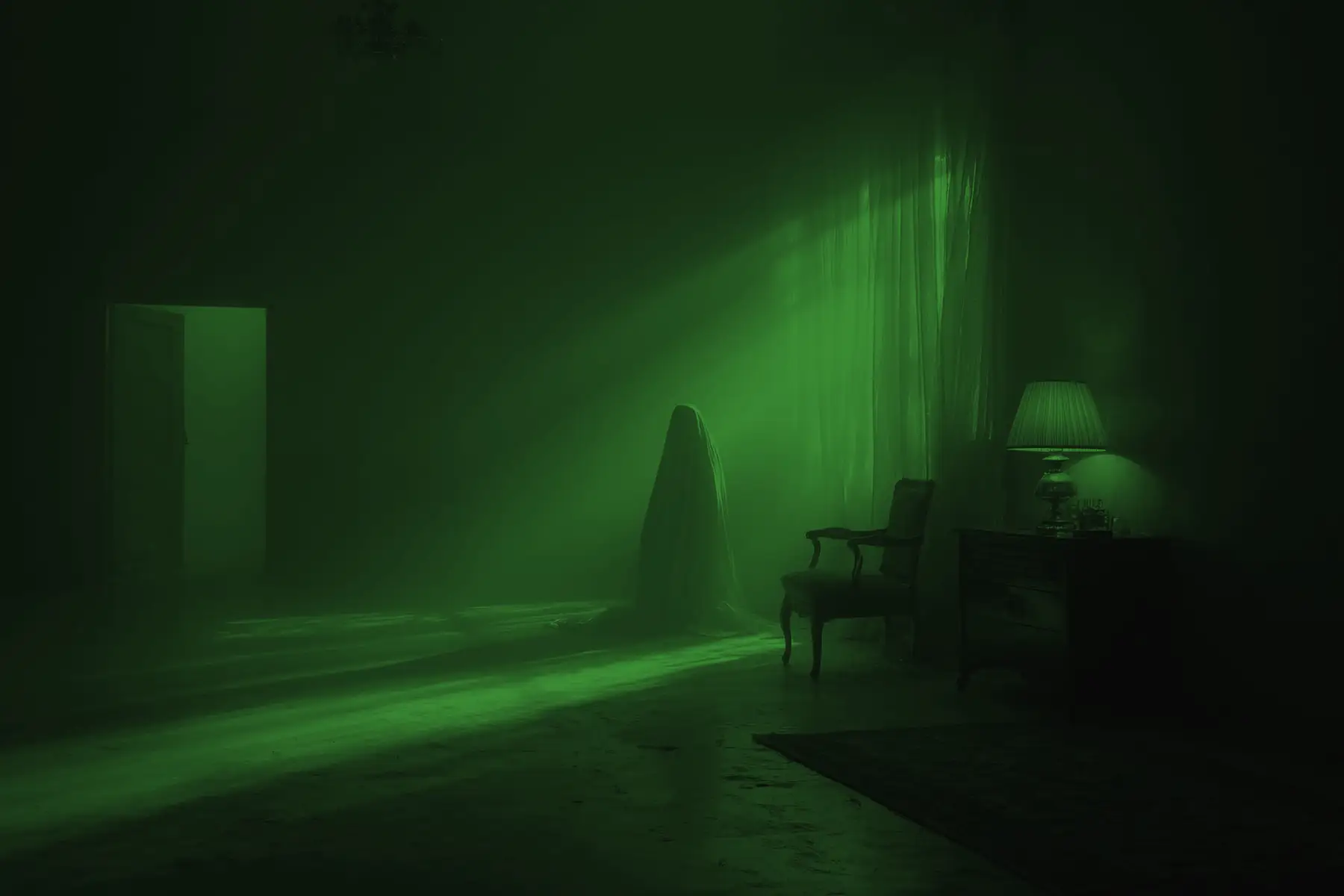
In 1804, a ghost hunter shot a Hammersmith bricklayer walking home in his work whites. The real ghost was a shoemaker hiding under a blanket.

Nov 16, 20241h 17m
00:00 / 1:17:13
Or listen to this episode onApple PodcastsSpotifyYouTube
Share this episode

In this episode

  • Why a suicide in Hammersmith meant a wooden stake, and why villagers thought his ghost had a grudge
  • Mr. Russell's wagon: 16 passengers, eight horses, and one driver who didn't stick around
  • Seven words shouted into the dark on Black Lion Lane, heard by the victim's own sister
  • The jury's verdict that the judge flatly refused to accept, and what they came back with instead
  • What King George III decided, and why it took British law until 1983 to catch up

“A protective father draped a blanket over his head and caused a panic that ended in one man’s death, the imprisonment of another, and a legal quandary that dogged Great Britain for nearly two centuries.”

The story

London, January 1804, three years before the gas streetlamp. On the lanes of Hammersmith, a straggling village on the edge of what was then the biggest city in the world, people had stopped walking home alone after dark. Something tall and white was waiting for them.

A ghost with hands

The sightings began in December 1803. Villagers described an apparition in white that seemed to flit or float. It showed up most often around 1 a.m., at the edges of the fields along Black Lion Lane. Word spread that it was the restless soul of a local man who had slit his own throat the year before. In Britain then, people who died by suicide were denied burial in sanctified ground. Their bodies were often buried at a crossroads with a wooden stake driven through the heart, a practice called staking. A spirit treated like that, the thinking went, might well hold a grudge.

This was no shy ghost. It stepped into the road in front of a wagon driven by a Mr. Russell, who leapt down and ran, leaving 16 panicked passengers and a team of eight horses to fend for themselves. A servant named Thomas Groom was crossing the churchyard when someone came from behind a tombstone and "caught me fast by the throat with both hands and held me fast." When he shoved back, he "felt something soft like a great coat."

Then came the worst of it. Near that same churchyard, around 10 at night, a heavily pregnant woman saw a very tall, very white figure rise from among the graves. She ran, cupping her belly. The ghost caught her and seized her in its arms. She fainted and lay on the cold ground for hours until neighbors found her and put her to bed. She never got up again, and she and her unborn child both died.

A man under the sheet

The villagers started hunting the ghost across a tangle of rough paths, winding lanes and dead ends. Then a night watchman, William Girdler, reported chasing it and seeing an ordinary man yank off a great length of white fabric as he fled. If the ghost was a person, then the haunting was a crime.

Thomas Millwood was a bricklayer, a skilled trade that could take up to eight years of apprenticeship. Bricklayers wore their uniform with pride: white linen trousers, a white flannel waistcoat, white shoes and a white apron. Millwood was a big man who came home late and covered in mortar dust, and people had reportedly mistaken him for the ghost at least twice. His mother-in-law, Phoebe Fulbrooke, begged him: "Pray do put on your coat that you may not run any danger." He waved off the worry. He'd lived among these people all his life, and they knew him.

Francis Smith, 29, was a customs officer, the official charged with stopping smugglers and enforcing maritime law. He considered the villagers a pack of superstitious fools, and the town watch's failure to catch a ghost, or a man playing one, made him furious. So he made a plan: lie in wait, and shoot it.

Black Lion Lane, 11 p.m.

On January 3, 1804, Smith, carrying a shotgun, ran into Girdler at the corner of Beavor Lane and told him what he meant to do. They agreed to meet at 11 p.m., when Girdler's shift ended. That same night, Millwood stopped by late to see his father and sister. When the watchman called 11, he got up and started home along Black Lion Lane in his whites.

Smith stepped out of the shadows with his gun raised. "Damn you! Who are you and what are you? Damn you! I'll shoot you!" Millwood never got the chance to answer. Smith shot him in the head, the bullet tearing through his lower jaw and killing him instantly. His sister Ann heard the blast and the shouting, raced into the dark, and found her brother lying still in the lane. Neighbors carried his body to the nearby White Heart Inn. Smith ran, and he couldn't stop talking. He told his neighbor, a wine merchant named John Locke, that he had shot a man he believed was pretending to be the ghost.

The weird part

The Hammersmith ghost was a shoemaker in blankets trying to scare the apprentices who had frightened his children. The man shot dead for being the ghost was an innocent bricklayer walking home in his work clothes.

Murder, or nothing

Smith went on trial at the Old Bailey, England's central criminal court, on January 13, just ten days after the shooting. Girdler testified that Smith had come to him that night and said, "I hurt the man. I feel very bad." Smith spoke in his own defense: "My lord, I went out with a good intention." His lawyers asked Ann why she had never warned her brother about dressing in white. The question baffled her. What did a bricklayer have to do with a ghost?

After 45 minutes, the jury came back with manslaughter. The judge, who held the title of Lord Chief Baron, refused to accept it. The jury's only choices were guilty or not guilty of murder. Even pretending to be a ghost was only a misdemeanor, he told them, and nothing suggested Millwood had been pretending to be anything but a bricklayer. Smith had carried a loaded gun, announced his hunt and fired with a "rashness that the law does not excuse." The jury huddled for a few moments and returned a new verdict: guilty. Smith was sentenced to hang and then be dissected in front of a crowd. The dissection was part of the punishment, violence done to the body of a violent criminal.

Public sympathy sided with Smith, not his victim. The case went to King George III, who commuted the death sentence to a single year in prison. The case also exposed a hole in English law. It had no room for someone who killed while honestly believing he was defending himself or his community. That question stayed open until 1983, when an appeal called R versus Williams held that a defendant who genuinely held that belief, even an unreasonable one, was entitled to rely on it. It took 179 years.

The shoemaker's blanket

Millwood's death didn't end the haunting, because he had never been the ghost. The uproar over the case left the real one no peace. John Graham, a shoemaker, went to the magistrate and confessed. His apprentices had been filling his children's heads with stories of spirits and hauntings. So he wrapped himself in blankets and waited in the dark, meaning only to scare the apprentices the way they had scared his kids.

A fake ghost may have made a real one. Millwood is said to haunt the old White Heart, since renamed, where employees report strange goings-on. Every 50 years, the story goes, he walks the lane again in his white trousers, white waistcoat and white apron.

The transcript

Chapters & full transcript11,020 words
Chapters
  1. 00:27A moonless night in 1804
  2. 06:30The ghost of Black Lion Lane
  3. 15:08The bricklayer in white
  4. 17:32A customs officer with a shotgun
  5. 22:29Trial at the Old Bailey
  6. 38:09The real ghost confesses

This transcript was generated automatically from the episode audio and may contain errors. Times are approximate, since ad breaks can shift them by a minute or two.

00:00

Hey, true weirdos, we just wanted to take a minute and thank you so much for your support. True Weird Stuff has won Best History Podcast in the Women and Podcasting Awards. And we have also won a Signal Award in the Paranormal category. And that has only happened because of you, our fellow strange people. Stick around if you want after the episode for a little bonus content and conversation.

00:27

Picture it a moonless night, a narrow city street, not a soul to be seen. London, January 1804. The invention of the gas streetlamp is still three years away. So between the fog slicked and uneven cobblestones, and the ever present danger of lurkers pickpockets and cutthroats. It's a terrible idea to be out and out after dark. Still, it can't always be helped. You're hurrying as fast as you dare trying not to stumble so close to home so close. And then suddenly, a figure right in front of you blocking your way. It has no face no form it just is the shock of it. The scream torn from your throat, your knees buckling as you realize to your horror and terror that it wears the winding shroud of the dead. Then in one blurred motion, it's gone. The sound of its footsteps striking the cobblestones as it disappears into the crooked alleyway not 10 feet from where you rock on your knees in the filthy gutter, shaking in shock and fear. Of course, you heard stories, but you didn't believe them. Not really. You called it a figment of a drunken imagination. But you don't think that now. Not now. Not after you've seen it with your own eyes. The Hammersmith ghost.

02:23

Weird stuff. Today, Hammersmith is a thriving neighborhood in West London, a little quieter than some but with its old mansions and factories converted to apartments, its restaurants and music venues and art galleries and parks. It's a desirable location as realtors say, commutes are easy thanks to transit hubs and the vibe is laid back. But it wasn't always that way. Back when our story takes place, Hammersmith was home to about 45,000 people, many of whom were English Roman Catholics. One of the most famous Catholic institutions in Hammersmith was the three-story Gothic building that was home to the Little Sisters of the Poor. The magistrate of the London Police, a gentleman named Thomas Walker, who was as solid a Protestant as could be found anywhere in England, wrote this about the convent. We are under the roof of the Little Sisters of the Poor. The house is full of old folk, men and women. It is death's vestibule governed by the gentlest charity I have ever seen acting on the broken fortunes of mankind. The sisters are so many gentlewomen who have put aside all those worldly vanities so dear in these days of hoops and paint to the majority of their sisters and have dedicated their lives to the menial service of destitute old age. They beg crusts and bones from door to door and spread the daily board for their proteges with the crumbs from the rich men's tables. And it is only after the old men and women have feasted on the best of the crumbs that the noble sisters break their fast. I stepped into the Little Sisters refectory. The dishes were heaps of hard crusts and scraps of cheese. And at the ends of the table were jugs of water. The table was as clean as that of the premised epicure. And the sisters sit daily are sitting today will sit tomorrow with perfect cheerfulness, their banquet, the crumbs from pauper tables. You'd never guess from Thomas Walker's glowing description that the Catholics of Hammersmith had been harassed and attacked centuries earlier.

04:37

Their monasteries and convents disbanded their shrines and altars destroyed. It was all down to King Henry VIII desire to divorce his first wife Catherine of Aragon. Henry VIII practicing Catholic that he was asked the Pope to grant the divorce, something the Catholic Church was still violently opposed to back then. Well, also now though, maybe just a little bit less violently. Anyway, when the Pope said nope, the King's advisor offered up a new plan. Just form your own religion, Henry, you're the king for crying out loud. You can do whatever you want. So that's what Henry VIII did, which among many other things, most of them awful, led to the Bible being printed in English for the very first time. They call this the Reformation. And now that he was head of his very own religion, King Henry VIII went on to marry again, and again, and again, and again. The trick to remembering how all of his six marriages turned out is this. Divorced, beheaded, died. Divorced, beheaded, survived. Divorced, beheaded, died. Divorced, beheaded, survived. Anyway, Hammersmith, it is a very old settlement. The first mention of it dates all the way back to the year 1294. Between just the, you know, basic harshness of life in the Middle Ages, and then the terrors of the Reformation, Hammersmith had known plenty of hardship and horror. By the year 1804, when our story begins, it was just a straggling sort of place, a little village on the outskirts of London, which at the time was the biggest city in the whole world.

06:30

The sightings began in December 1803. Villagers reported seeing a ghost, but not just seeing it, interacting with it in fearsome and terrible ways. This ghost, they said, was an apparition in white, seeming to flit or float, and appearing most often when the bells of the church clock chimed the hour 1am. This ghostly creature seemed to appear most often at the edges of the fields that border Black Lion Lane. It was nothing to be trifled with this being from beyond the veil. It was first whispered and then loudly declared that the specter was surely the restless soul of a man who committed the gravest of sins. A man who, the year before, had taken his own life by slitting his own throat.

07:27

Blocked from entering heaven, the soul of the dead man was forced forever to wander the earth in regret and remorse. Or so people believed back then. Some people still believe this today, but cope with it in a much less grisly manner. And what do we mean by grisly? Okay. At that time in Great Britain, people who died by suicide were not permitted a burial and sanctified ground. Instead, their bodies were often buried at a crossroads with a wooden stake plunged through the heart.

08:05

The practice was called staking. Take all the time you need with that. Because as far as any of us knew, only vampires get staked through the heart, right? Whether vampires are real or not, that's the story as we've been told it. Who knew that this is a thing that happened to people who took their own lives. Now, to be fair, staking a suicide victim through the heart wasn't the law of the land. Just something that happened in certain communities to certain people. The living use staking selectively to punish the dead that they decided deserved it the most. But surely this wasn't a common thing, or was it?

08:47

Well, it was common enough that Parliament had to pass a law condemning it in 1822, about 15 years after the ghost of Black Lion Lane began troubling the living in Hammersmith. And then it took another year till 1823 for Parliament to pass an act that allowed people who died by suicide to be buried in the night, and a Christian funeral service was forbidden. And one more thing, it took Parliament another 138 years to decriminalize suicide. That finally went down in 1961. But hey, good news, if your ancestors are Scottish, the Scots did not plunge wooden stakes through the hearts of their dead. So there's that to feel cheerful about. Now back we go to Black Lion Lane and the ghostly apparition haunting it. And now that you know how suicides were treated, perhaps it's easier to understand why a bitter ghost might hold a grudge.

09:54

Those unlucky enough to encounter the ghost said it was large and glowed eerily white in the darkness. As more and more witnesses came forward, it was clear that the ghost of Hammersmith didn't restrict itself to Black Lion Lane, as was hoped. There was no safe place, no path, no field, no shadowed corner where the living might avoid the apparition. There was one dreadful evening when it appeared on the road directly in front of a wagon being driven by a gentleman named Mr. Russell.

10:28

The man was so stunned and terrified that he leapt down from the seat of his wagon and ran, leaving 16 panicked passengers and a team of eight startled horses to fend for themselves. A servant named Thomas Groom learned for himself that the Hammersmith ghost wasn't content to merely drift about in the night and scare people simply by showing up.

10:55

This was a much more hands on sort of a ghost, as Thomas Groom discovered to his terror. I was going through the churchyard between eight and nine o'clock with my jacket under my arm and my hands in my pocket when some person came from behind a tombstone, which there are four square in the yard and caught me fast by the throat with both hands and held me fast. My fellow servant, who was going on before hearing me scuffling, asked what was the matter. Then whatever it was, gave me a twist round and I saw nothing. I gave a bit of a push out and felt something soft like a great coat.

11:34

The village was shattered by a terrible encounter that also took place near that churchyard. It was close to 10 o'clock at night when a woman heavily pregnant with her second child hurried past the silent tombstones, rushing to the safety of her home nearby. She later described a figure rising from amidst the grave markers, a figure that she said was both very tall and very, very white.

12:04

The woman broke into a run or or tried cupping her belly as she stumbled on the uneven ground. It was no use. The ghost rapidly overtook her and seized her in its arms. The woman fainted dead away from the shock. She lay on the ground unconscious for many hours. That's where the neighbors found her. Her clothing damp, her skin chilled.

12:28

They led her home and carefully settled her into a bed. She never got up again. Her death and the death of her unborn child terrified the villagers. They declared that it was the fright and the horror inflicted on her by the Hammersmith ghost that had caused her death. Something needed to be done. The people began hunting the ghost, which was not an easy task. For starters, these people were scared out of their minds and the terrain was surprisingly challenging.

13:08

Hammersmith was a hodgepodge of rough paths that crisscrossed the many roads leading in and out of the high street paths that cut across fields and woods, lanes that meandered and then ended abruptly. It was hard, if not nearly impossible for the small handful of ghost hunters to be everywhere at once in the dark of night, in all kinds of weather, but they refused to give up. And then an unexpected report came from a night watchman named William Gardler.

13:41

He said he'd seen the ghost and pursued it. Only to be shocked by what happened next. The ghost, he said, wasn't a ghost at all. It was a man, a regular mortal man like any other, but draped in some huge length of white fabric. Was it a sheet or maybe a tablecloth? Whatever it was, it seemed that the ghost got a bit tangled up in it during the pursuit and yanked it off. The man on patrol didn't succeed in catching the ghost. But what he reportedly saw turned Hammersmith upside down. Could it be true? Could it be that the ghost was just a person, maybe even one of their own? It was impossible for the people to dismiss any of it as a prank or hijinks. The village was terrorized. A woman and her baby were dead. Her surviving child left motherless. If this was no haunting, then it was something worse. It was a crime. When a group becomes a crowd and a crowd becomes a mob, fear and suspicion and paranoia push logic and reason aside. That's what happened in Hammersmith. It would cost an innocent man his life.

15:08

Thomas Millwood was a bricklayer. It was a serious occupation, one that required up to eight years of apprenticeship. It was a dirty job and a dangerous one too, since most bricklayers at that time made their own mortar, which maybe doesn't sound like all that bad, but it called for the burning of lime, the stone, not the fruit. It's hard, nasty work. And the lung cancer could be the worst of it. Now a bricklayer could easily be identified by their distinctive attire. White linen trousers, a white flannel waistcoat, white shoes, and a white apron. Very formal. It was a point of honor, you know. Many skilled workers at the time belonged to guilds representing their crafts. Bricklayers were highly skilled artisans who paid their dues with years of apprenticeship. They wore that experience with pride. And if you're wondering, yeah, but why wear all white? Wasn't it hard to keep clean? That's a fair point. But bricklayers didn't make bricks, which was a filthy job for sure. Bricklayers got dirty too, but were more likely to come home covered in white dust than in the mud or clay of a brickyard. They say that Thomas Millwood had been mistaken for the ghost of Hammersmith on at least two occasions. He was a big man, dressed entirely in white, and in the habit of returning to his home well after dark. His family was concerned and pleaded with him to at least put on a dark overcoat over his bricklayer whites. He dismissed their worries. Thomas was a practical man. These wild stories of ghosts had nothing to do with him. He was no stranger to Hammersmith. He knew these people, and they knew him. And yes, the sight of him ambling home in the dark and fog covered in mortar dust might have startled a neighbor or two. But no one would mistake Thomas Millwood the bricklayer for a disembodied spirit. It was nonsense. End of story. Pure nonsense. Until it wasn't. Francis Smith was beyond frustrated by the inability of the town watch to capture the ghost of Hammersmith. Incensed might be the better word. He was a customs officer. It was the job of a customs officer to stop smugglers and enforce maritime laws and make sure that no criminal was able to sneak in or out of the country. Important stuff like that. How in the world, something as ridiculous as a ghost or a man pretending to be a ghost had managed to cause this much mayhem was beyond Smith's comprehension. He thought the villagers were a pack of superstitious fools. He was disgusted and ready to take matters into his own hands. So Francis Smith, age 29 made a plan. He would lie and wait for the ghost and then he would shoot it. On the evening of January 3, 1804, Francis Smith was at the corner of Beavor Lane when he spotted night watchman William Girdler. Smith carrying a shotgun informed Girdler of his plan to put an end to this ghost once and for all. Girdler agreed that the ghost needed to be caught. The two men arranged to meet at 11pm. The end of Girdler's shift. It was Thomas Millwood's great misfortune to have picked that night of all nights to pay a late visit to his father and sister. He stayed for about half an hour according to his sister Ann Millwood. And upon hearing the watchman call the hour of 11pm, Thomas Millwood rose to make his way

19:16

home. He was walking along Black Lion Lane, wearing his usual white trousers, waistcoat and apron. Francis Smith stepped out of the shadows, shotgun raised. Damn you! Who are you and what are you? Damn you! I'll shoot you! Thomas Millwood never had the chance to answer. Smith pulled the trigger and shot the bricklayer in the head. Ann Millwood heard the deafening boom of Smith's gunfire. She also heard as she later testified, the sound of a man's voice calling out. Damn you! Who are you and what are you? Damn you! I'll shoot you! She screamed to her mother and father that Thomas had been shot. Then she ran from the house into the darkness and found it. The body of her brother lying so terribly still in Black Lion Lane. His white apron and waistcoat. Her screams brought others and soon a circle of shocked and horrified residents of Hammersmith were gathered around the body of the dead bricklayer. The constable arrived. The coroner was summoned. Thomas Millwood's body was carefully lifted from the ground and carried to the nearby White Heart Inn. A surgeon who lived in Hammersmith, Mr. Flower, was awakened and asked to examine the body. As for Francis Smith, he took off running and was running his mouth too. A wine merchant named John Locke encountered him not long after the murder. Smith told Locke that he had shot a man. The man he believed was pretending to be the ghost of Hammersmith. So, he's reckless and a sloppy killer. A man armed with bullets and bravado looking for an excuse to take a life. There are more people like this out there than any of us want to believe. People who secretly nurse a dark and violent fantasy. I wonder what it feels like to kill a man. You could say that Francis Smith went looking for trouble that night and he found it. More trouble than he'd ever dreamed because it took no time for the coroner's inquest to find that Thomas Millwood's death was no accident. Francis Smith was charged with willful murder and jailed to await trial. Today, it's not uncommon for an accused killer to have a nice long wait before facing a jury of his or her peers. Look at Brian Kohlberger. He's charged with brutally murdering four students in Moscow, Idaho on November 12th, 2022. It's looking like he won't stand trial till June 2025. The wheels of justice didn't used to turn this slowly, especially not in early 19th century England. Francis Smith had barely settled into his jail cell when he was hauled to the Old Bailey.

22:26

That's the nickname given to England's central criminal court. Smith's trial began on January 13th, just 10 days after he'd shot Thomas Millwood dead. The trial began with testimony from the wine merchant, John Locke. Locke said that he was acquainted with Smith as the two men were neighbors. Locke instructed Smith to return home at once.

22:49

He said that Smith wanted to surrender, that it was all a terribly unfortunate accident, that Smith was a mild person who was generally well-liked and the ghostly sight of the white apparition moving toward him on Black Lion Lane had, quote, irritated his fears. Next up on the stand was night watchman William Girdler. He testified to having been called to the inn and that Francis Smith arrived not long after. He said that Smith approached him and said, I hurt the man. I feel very bad. Girdler testified that he had encountered Smith earlier that night on Beavor Lane at roughly 1030 p.m. and that Smith informed him that he was out hunting the ghost. I said I would come round after I had tried the hour and searched the lanes. We would take him if possible. We agreed if we met in the lane to say, who comes there, friend? Advance friend.

23:50

Prosecution asked if Girdler had heard a gunshot. He said he had, but took no real notice since he frequently heard gunfire in the night as he patrolled Hammersmith. Under cross-examination, Girdler declared that the neighborhood had been much alarmed and frightened by the ghost for six weeks to two months, and while he personally was unaware of the ghost doing any mischief to women, what a quaint euphemism for sexual assault that is, he'd certainly heard rumors. The victim's sister, Anne, gave heartbreaking testimony describing how she dropped to her knees beside her brother's body, how she took his right hand, squeezing it and pleading with him to speak, but it was no use. Smith's bullet had torn through Thomas Millwood's lower jaw, killing him instantly. Anne told the court that she saw no one else near the body. Her grief was palpable. Counsel for the defense cross-examined Anne asking if she'd heard talk of the ghost of Hammersmith, and if so, how had the ghost been described to her? Anne said that the people told of the ghost sometimes wearing a white sheet, sometimes a white calfskin with horns and glass eyes. The defense wondered if Anne had ever thought to mention to her brother that perhaps he should be more cautious about dressing in his usual white. Why had she not talked to him about that?

25:23

Anne Millwood took that question in with complete bewilderment. What did a bricklayer have to do with a ghost? It had never occurred to her that anyone could see her brother as anything other than himself. Hey, nice work on the part of the defense, by the way, just in case she thought blaming the victim is anything new. Francis Smith had no intention of testifying. He was content to leave that to But the rules at the Old Bailey only permitted defense counsel to question witnesses. And so Francis Smith had no choice but to speak for himself. My lord, I went out with a good intention. And when this unhappy affair took place, I did not know what I did. Speaking to the deceased wife and he not answering. I was so much agitated. I did not know what I did. I solemnly declare my innocence and that I had no intention to take away the life of the unfortunate deceased or any other man whatever in a plot twist worthy of a lifetime movie. You won't believe who testified for the defense. None other than the dead man's own mother in law with a name straight out of Hogwarts. Phoebe Fulbrooke. Mrs. Fulbrooke informed the court that she was very much aware of the ghost of Hammersmith and had cautioned Thomas to rethink his attire. On Saturday evening, he and I were at home for he lived with me. He said he had frightened two ladies and a gentleman who were coming along the terrace in a carriage for that the man said he dared to say there goes the ghost that he said he was no more ghost than he was and asked him using a bad word. Did he want to punch at the head? I begged of to change his dress. Thomas says I as there is a piece of work about the ghost and your clothes look white. Pray do put on your coat that you may not run any danger. I don't know what answer he made. He said he wished the ghost was catched or something of that sort. Phoebe Fulbrooke was one of 12 witnesses called by Francis Smith. Another, a man named Thomas Groom swore under oath that he'd been attacked by the Hammersmith ghost. Groom said he'd been seized by the throat from behind that he only lived to tell because the ghost released him. Remember, he testified that he reached out and felt something soft like a coat. Now, you'll notice that nothing in his testimony pointed to Thomas Millwood being the man who choked him. But it looks like this might have been a case of not letting the truth ruin a good story. It took the jury 45 minutes to arrive at a verdict. Manslaughter. Except oops, the judge in this case who rocked the very impressive title of the Lord Chief Baron sighed and explained that no manslaughter was not an option. The court could not accept their verdict because hello, the instructions were to find the accused either guilty or not guilty. Okay, if they believe Smith to be innocent as charged, then render a not guilty verdict. If they couldn't do that, then call the man guilty and let the crown decide whether or not he deserved mercy. It was clear that the jury was either deeply sympathetic to Francis Smith and or incapable of following directions. The Lord Chief Baron declared that even if a man was pretending to be a ghost, that action will be a misdemeanor and no justification for murder. And there had been no evidence to suggest that Thomas Millwood was pretending to be anything other than a bricklayer. The Lord Chief Baron explained that Francis Smith had no right to decide that a man dressed in white was posing as a ghost, nor that doing so was a

29:29

capital offense. He pointed out that Francis Smith by his own had deliberately carried a loaded gun, had announced his intentions to hunt down the ghost. And when he did encounter what he believed to be a ghost, was so terrified that he pulled the trigger with a quote rashness that the law does not excuse. And that was murder, full stop. And more, the accused was an officer of the law himself. The Lord Chief Baron was like, what are we doing here people? And he shook his head with such frustration that powder flew from his wig like a tiny snowstorm. Okay, I did just make that bit up, but you can totally see it, right? No one likes to be scolded, not even a jury. Jason, the jury immediately huddled up. After just a few moments, they announced their new verdict.

30:28

Guilty. Francis Smith, age 29, was sentenced to death for the murder of bricklayer Thomas Millwood. He was to be hanged, and then dissect it, which is exactly what it sounds like. The corpse dissected in front of an audience, crowds of thousands would jostle and shove for a better view. And if you're thinking, oh, that's awful, but I don't know, maybe it's for science. Think again. The dissection was part of the punishment, a reflection of English common law ideas about retaliation. If the crime was violent, then the perpetrator should suffer that same kind of violence. You have a lot of neighbors who'd like to see this sort of thing come back here now. That's a cozy thought. Like, can we please ever What's that? No. Got it. Anyways, public sympathy was not on victim Thomas Millwood side. The people mostly supported Francis Smith, so much so that with a guilty verdict in hand and a death sentence as well. The Lord Chief Baron felt some gesture had to be made to appease the public. He announced that he would immediately report the outcome of this most peculiar and tragic case of the Hammersmith ghost to his majesty, King George III. Two things to know about King George III. He was on the throne when the ragtag American colonists demanded and won their independence from British rule.

32:09

Also, he went completely bonkers, stark raving mad and was found unfit to rule for the last 10 years of his reign. Bless. That's how we, the descendants of those ragtag colonists know him, which is kind of a shame since he was intelligent, passionate about science and the arts and agriculture and was apparently a devoted family man. As for his insanity, many medical historians believe that he may have suffered from a disease called acute porphyria, which among many other terrible symptoms can include behavior that looks a lot like paranoid schizophrenia. Other historians made a strong case for bipolar disorder. What happened next is why this case can be found in law school textbooks today. Why it was still being debated more than a century later when the verdict and death sentence given to Francis Smith was presented to His Majesty King George, the king promptly commuted Francis Smith's death sentence, giving him a pardon actually, provided he serve a single year in prison, which had to feel like an outrage to Thomas Millwood's grieving family. So, remember how the Lord Chief Baron explained to the jury that they had only two options for a guilty of murder or not guilty of murder. That's it, black and white. But real life is seldom that simple or clear and the killing of Thomas Millwood left a gaping hole in the British system of justice. There was simply no defense possible in the case of a person who committed an act of violence in either self-defense or in defense of the community. If force was necessary to protect himself and his neighbors, was justice served to call that willful murder? King George III thought not. That's why Francis Smith served one year in prison before walking away a free man instead of being publicly hanged and gutted. None of this was resolved in Smith's or the law to get sorted out. When an appeal in a case called R versus Williams came before the excellently named Lord Chief Justice of England, Justice Skinner and Mr. Justice McCowan in 1983, it was a chance finally to figure the whole mess out and resolve it once and for all. Could a person charged with an act of violence argue that their actions were taken in good faith? It might sound like hair splitting, but if you took a life convinced that you were acting in self-defense, I bet you'd appreciate your convictions at least being considered even if those convictions sound ludicrous in the light of day. Your honor, I thought it was a ghost. The justices still wearing those fabulous powdered wigs wrestled with the law and all its implications before finally issuing their ruling. In the case of self-defense where self-defense or the prevention of crime is concerned, if the jury came to the conclusion that the defendant believed or they have believed that he was being attacked or that a crime was being committed and that force was necessary to protect himself or to prevent the crime, then the prosecution have not proved their case of murder. If however, the defendant's alleged belief was

36:15

mistaken and if the mistake was an unreasonable one, that may be a peaceful reason for coming to the conclusion that the belief was not honestly held and should be rejected. Even if the jury comes to the conclusion that the mistake was an unreasonable one, if the defendant may genuinely have been laboring under it, he is entitled to rely upon it.

36:45

Translation number one, killing a person is very bad, but it's not always or necessarily an act of willful or cold-blooded or premeditated murder. Translation number two, shit happens and it's tragic and all that, but there must be room in the law for nuance. We're not really a civilized society. It may have taken the British courts 179 years to get there, but as the saying goes, the wheels of justice turn slowly, but grind exceedingly fine, meaning it might take forever, but we do get to the right place eventually. A happy ending, unless you're the dead bricklayer Thomas Millwood and his devastated family. There was no justice for them, no royal pardon that could ease their loss or fix their broken hearts. Their only vindication was this, the murder of Thomas Millwood didn't put an end to the Hammersmith ghost, because of course Thomas Millwood hadn't been terrorizing his neighbors. His white clothing was just that, clothing. He was an innocent man who died for no reason other than hysteria. The real Hammersmith ghost turned out to be a shoemaker named John Graham. The outcry over Millwood's murder and Smith's death sentence was so loud and so intense that Graham's conscience would not let him rest. He presented himself to the magistrate and confessed that it was he who had shrouded himself in white to terrorize his own neighbors. Graham was a father and he was furious at the way his apprentices had children's heads with stories of spirits and hauntings. Graham admitted that he'd wrapped himself in blankets and waited in the darkness for his apprentices to approach. He only wanted, he said, to scare them the way they had frightened his children. He could never have dreamed that this one decision would lead to so much tragedy. A protective father draped a blanket over his head and caused a panic that ended in one man's death, the imprisonment of another, and a legal quandary that dogged Great Britain for nearly two centuries. Hysteria is one hell of a drug. And if you think that could never happen today, allow me to direct our attention to the town of Springfield, Ohio, where a recent rumor of people eating cats and dogs led to bomb threats and school closures and terror. The woman who started that rumor came forward and apologized, just like shoemaker John Graham did. But once a rumor starts a panic, no one really has any control over what happens next. That's just facts because we're just people and people are swayed much more easily by an emotional lie than we are by a rational truth. Now, if you are very disappointed that the tale of the Hammersmith ghost turned out to be like an episode of Scooby Doo, where there are no ghosts or monsters at all, just regular bad people wearing a disguise, then cheer up. I have good news, ghost lovers. Thomas Millwood, devoted son and brother and husband, proud bricklayer, upstanding member of his community and profession, has not been able to rest in peace. Can you blame him? They say his spirit haunts Hammersmith to this very day, lingering in the

40:51

white heart in the place where his body was taken that awful January 1804. That pub has a new name now. Strange and spooky things have been reported by employees. It's also whispered that every 50 years, Thomas Millwood returns to the scene of his own violent death. And once again, paces the lane in his white trousers, white waistcoat, and white apron. And if you dare to be out in that thick, foggy darkness, if you can stifle your scream at the sight of the apparition drifting ever closer while seemingly not even touching the ground, you just might hear the ungodly echo of Francis Smith's fateful cry. Damn you. Who are you and what are you? Damn you.

41:56

Next time on True Weird Stuff, identical twin baby boys aren't identical twins, the wildest miracle. These twins grew up to be identical twin doctors, gynecologists, brilliant, successful, and so very close. Maybe too close. Definitely too close on the next True Weird Stuff. Um, Sherry, I had, I was, I was, I write some notes as we're going through this. When we talked about the white sheet, I was like, well, they were just, they were just as uncreative back then as we are now about how we make a ghost. You do it with the white sheet, just a white sheet or a wine. Well, so back then, sometimes people were not buried in coffins. They were wrapped in these winding shrouds and just placed directly in the ground.

43:08

So, you know, if, if that was, if that was part of your day to day, and you saw something white stumbling towards you in the darkness of the graveyard, it doesn't take much to make that leap, right? This is a crazy story, is it not? Yes. Crazy. Can we talk a little bit about the person was hanged. So they were hanged before they were dissected. That's correct. Okay, they weren't dissected before they were hanged, because would have been so horrifying. But so they were dissected. So did you explain you sort of explain why they did that? I'm still a little mystified about that.

43:55

So and of course, this is a period in human history when executions were public events, like you bring a picnic, right? People would play music. I mean, it was like a big deal. So English common law, which very much was driving the scene. And at that point in the 19th century, English common law kind of says, what whatsoever you did to your victim that shall be done unto you. Right? So a violent criminal would have violence done to his or her body was was kind of the general thinking of it. It's pretty, it's pretty savage. But I have a lot of conversations with people on all sorts of like kooky topics. And the number of people that think that if we did this sort of stuff today, it would deter crime is a number higher than you would like to think.

44:54

Yeah, I don't believe. Yeah, I don't believe that. I really don't. I mean, that it would deter. Yeah. I mean, if the death penalty hasn't done much to deter it, right? You know, once you're dead, you're dead. If we, I mean, it'd be different if we said to people, hey, heads up. So listen, if you're found guilty, we're going to dissect you while you live, and then hang you.

45:15

That might be a deterrent. But the idea of doing it after death and the idea of people gathering, like fighting for a front row seat, so that and here is the murderer's liver. I mean, that's what we're talking about here. I'm too soft for that world. I'm me too. Who would who would want to see that? There was no like, I mean, there were limited entertainment options. People. This wasn't all that long ago. So it's not like we've changed all that much. I mean, our laws have changed, our systems may have changed. We as people have not changed all that much. What kind of person would want to see that I'd love to hear your guess on that. I imagine there will be some now I'm not one of them. I mean, the one thing that's true about capital punishment, I don't want to get into a discussion about that. But one of the things that happens is people when they witness it, even if it is the people that are put to death by injection, there's still weird stuff that happens with it, that's really unsettling. That the idea of putting people to death, and I guess you just take a man's life, they go, Well, it's a death penalty, or you know, they tried to do the manslaughter thing. But it's like, it seemed to be okay, death, that's it.

46:46

Well, that's what was so that's why this case never kind of went away. Because it took all the I mean, it took until 1983. To get to get this sorted out to where you could have what we call like, like we have first, second, third degree murder, right? Every state is a little bit different. Yeah. Right. Every state's a little different. But broadly speaking, law and order fans, we have first, second, third degree murder, we also have manslaughter. So we like law has a lot of room for interpretation and nuance. But at the time when Thomas Millwood was killed, murdered, because it was murder. I mean, you have to even if it's murder in the third degree by how we define it, it's murder. So at the time Thomas Millwood was killed, there were there wasn't much nuance in the law, it was, if you killed somebody, that's and or it's not murder, you're guilty of murder, murder, that and the jury, it's so interesting, because the jury in Hammersmith recognized that what happened that night in Black Lion Lane did not really fit the definition of cold blooded premeditated murder. But Francis Smith also was not innocent of any wrongdoing. And and there was no, imagine there's no place in the law to go. So you're and now I guess you would do voluntary or involuntary manslaughter would be would be somewhere in there. And can we talk about manslaughter? The word does that? That's, I mean, it sounds like it sounds like that's a far worse crime. Murder sounds almost charming, manslaughter. Like, well, you know, slaughter is in it. So there's that I agree with you. It sounds pretty rough. Can we talk about King George III? Because this is a fascinating little story. If you ever have a chance, and I don't know where you'd find it. But there's a movie called The Madness of King George that's about King George III.

48:57

And his wife, his wife's name was Queen Charlotte of Mecklenburg. Because they really were all Germans. Yeah, they were all from the house of Hanover. They were really Germans at that point. But he he in that movie, he ends up coming out of it, I think. But I have read some things that they think that his madness was caused by the plates, something that was in the metal on the plates that he ate off of. I mean, I'm Yeah, there's all these really interesting theories about his so called insanity, right?

49:39

Right. And if you follow the movie, and I don't know how much of the movie was fact, but there was a man that was brought in who basically said, I'm you're not the king anymore. I have dominion over you to try to get you straightened out so you can be king again. Here's an interesting thing about King George, because these are like sitting on the British throne. These were these were Okay. King George was the first in his family line to be born in Great Britain, the first to speak English as his first language, and he never visited the family ancestral family home in Germany. So George III was the first of that bloodline to be fully British, I guess, right? How you would say it.

50:25

He had 15 children with Princess Charlotte of Mecklenburg. And his whole reign, it was just, oh my god, it was one battle after another. It was the Americas, of course, and it was parts of Africa and Europe and Asia. Early in his reign, there was the Seven Year War with, you know, Great Britain and France. And then of course, later in his life, this mental illness that they've never really been able to kind of what, what caused it. Now, a lot of people listening, their idea of King George comes from the musical Hamilton, and the incredible song, I'll Be Back and the performance of Jonathan Goff and that. And, you know, so he's kind of a cartoonish figure, right in Hamilton. You know, when you when you read about some of these monarchs, you go, I don't know, Simba, maybe you can't wait to be king. I don't know that it's what it's cracked up to be, right? It's, it seems like an incredibly difficult life. And King George, this, so all of this happened with Francis Smith and the Hammersmith ghost. You know, King George was pretty deep into the madness at this point, but not so much so that he couldn't look at this and go, um, yeah, he killed a man, but there's something, there's something wrong here. Right. And that's why he commuted Francis Smith sentence, because there was no mechanism in the law for Francis Smith to have any anything but not guilty or guilty. And it was King George who looked at the whole case very carefully, as it turned out, and decided, I'm gonna have to act here as the king, because this is, this is not justice. And also, there was a certain wisdom that the collected group as the jury had about what's the right way to go with this. Now they said, No, you can't do that. But they had the right idea before anybody else did, as to which was the best way to go with this. They really did. And, you know, Hammersmith, Hammersmith at that time wasn't, it's a huge suburb now. But it wasn't a small little village, like it wasn't a little patch. But it was small enough where kind of everybody knew everybody. And all of the people involved in this were pretty prominent. You cannot imagine like the high status that Thomas Millwood enjoyed as a bricklayer. In Thomas Millwood's day, a bricklayer was closer to like a would be today, like a builder of homes or courthouses or whatever. So it was a very high status position. He was really proud of his work. He was really proud to be a bricklayer, which is why he was proud to wear the bricklayer whites. But Francis Smith was also a very high status person. He was a customs officer. And, you know, London, there's the River Thames, there's ships coming in and out all the time. There's all sorts of, you know, opportunities for piracy and thievery and whatnot.

53:53

These are very high status people who were very well known in the community. And just so tragic. The part of this that is impressive, is the shoemaker coming forward and confessing. It is. And it does make you wonder if that were to have happened today, and someone died because of it, would he have been charged with any sort of accessory somehow? I can't help but believe he would have ended up being charged with something, although he had no intent in this, but maybe, maybe they get him for like criminal mischief or something. Yeah, like, there's, I think there's a charge called mayhem, causing mayhem. And that's something like what he did. And I was thinking, you know, I had forgotten that that woman came forward about the eating the dogs and the cats, and she came forward because I was thinking, well, they were more honorable back then, but she did come forward. So that's true. So people, people are the same. And the human behavior is the same. There's not enough time between 1804 and 2024, for massive evolutionary leaps in the human brain and nervous system, right? Like, we are pretty much the same as we were then. And there are people, not all people, but there are people who come forward and take responsibility for their actions, even when they know the great harm that their actions caused.

55:31

So the shoemaker came forward, and it would have been easier for him to stay quiet. So you have to recognize that person's integrity, I think. Yes. And the sad part of that is, the dude, he's a shoemaker, who was just trying to be protective of his children. The apprentices had scared the kids, they were having nightmares, they were afraid of the dark, they were afraid of, you know, the wind. And he was an exasperated father, like so relatable, right?

56:02

It's kind of a get off my lawn kind of, you know, we're gonna do something to scare those kids. His choice of how he handled the apprentices scaring his kids, I'm sure he thought later upon reflection, that was stupid. What was I thinking? What was I thinking dressing up? I'm a grown man. What was I thinking dressing up as a ghost and grabbing people? And it was the shoemaker. So the like Thomas who said, you know, I was grabbed from behind, and I felt a coat. That was the shoemaker. Right, right. Not, not the bricklayer. Bricklayer could not have been just more in the wrong place at the wrong time. It is interesting that we're so haughty now that we think just because we have technology that somehow we've evolved in every other way. Yeah, we, you know, kind of haven't. But at the very least, we're not, we're not people and disemboweling them in a public square. So at least we're better that way. But but in the same way that we haven't gotten better, that you can say, but there have always been and there always will be good people who try to do the right thing.

57:19

And there are a handful of good people in this story. One of is the shoemaker, who made a foolish decision, but came forward to do the right thing. King George, you have to say, did the right thing. Because Thomas Millwood, there was no bringing Thomas Millwood back. And Francis Smith needed to experience consequences for his actions and choices. But did those consequences need to be so severe, severe that we hanged him and then gutted him in front of the public? That was that was where George was like, yeah, there got to be got to have some consequences. But this is my mad. I'm not that mad.

58:05

I mean, you did have good, you did have good people here. And because we do enjoy blaming the victim, then wasn't that interesting to see that unfold in the trial where they blamed Thomas Millwood for wearing his bricklayer clothing? Like, it was his fault that he was dead. So blaming the victim isn't new. But isn't it? Isn't it interesting to see that the people of the town, the people of the town rally, not just around Thomas, but they also rallied around Francis. And, and that's the way of it. When you live in a place where you're born, and grow up and work your whole life and die, generation after generation, you got to find a way to have peace amongst yourselves. And once again, there was public opinion, not just the jurors, public opinion. Once again, the group conscience led the way. And they went, we're gonna do something where we're gonna have a, an uproar here.

59:14

Now, something that I couldn't find, it may be out there. But I, I couldn't find it. I mean, I was able to find the original trial transcripts from 1804. Here's what I couldn't find the shoemaker, very protective dad, he made a stupid choice that set in motion a chain of events that led to complete and utter tragedy. Not just the death of Thomas Millwood. Have we already forgotten the pregnant woman who died and her baby died? I do I, I could I could not find if there were consequences for the shoemaker for her death. And you'll notice that it didn't really come up in Francis Smith's trial. Even the defense didn't really try to use that against Thomas Millwood. Probably because back then, you know, women and children were maybe off limits. And you would not have out of respect for her family, maybe they would not have dragged her death into the courtroom and used it against Thomas Millwood to exonerate Francis Smith. It's interesting. It's a really complicated case. And it's wild to me that it took 179 years.

1:00:37

And isn't it interesting that the creation of a fake ghost has led us to the creation of a real ghost of a real ghost? Because if you like depending on what you believe about ghosts, these are souls with unfinished business. Some people say that ghosts are souls who don't understand that they're dead. And they can't and won't move on. That's that one of my movies of all time, the others, the Nicole Kidman movie, right?

1:01:08

You know, you in order for you to move on to whatever comes next, you have to know that you're dead. And so which is it for Thomas Millwood? He's, he worked all day. He paid a visit to his brother, his father, and mother and sister. And then he's walking home down Black Lion Lane, like he's done probably a thousand times. And then he's shot in the head killing him instantly. Does Thomas Millwood know that he's gone?

1:01:41

Maybe not. Maybe not. Maybe that's the kind of ghost that he is the kind that doesn't understand that he's dead. The kind of ghost that is doomed to spend eternity walking that same stretch of path. Because he has no idea that he's not really there. And people do go. People that are into ghosty stuff and, you know, hauntings. People do, tourists even, who are visiting London will go to Hammersmith and track down this pub. There's a little plaque on the outside of it that talks about Thomas Millwood. But they'll track down this pub and go in and have they feel any kind of a vibe. It's so sad for me because I do think, I'm with you, a fake ghost turned into a real ghost.

1:02:40

And it hurts my heart to think that Thomas Millwood doesn't know that he's dead. But I have never in real life encountered such a Scooby-Doo episode as this one. What was funny was last week we were talking about the next Scooby-Doo and you said, Scooby-Doo shows up in this episode. Yeah. I mean, what is every Scooby-Doo? But you know, it's some rich, cranky man in the town. He owns the mill. He owns the bank. He owns the store. Mr. Barker. And, hey, I don't want to spoil every Scooby-Doo for you. The person who is the ghost shows up somewhere at the beginning. And the person who is perceived to be the bad guy is not the person that's going to end up being the ghost that's exposed at the end. Now, I hate to spoil it for you, but I just thought I'd let you know. And Shaggy was high. That's why he wanted to eat all the time. Alright.

1:03:48

Shaggy, I used to as a kid, I'd look at Scooby-Doo and then I'd look at my big brother and his friends and I was like, I know what Shaggy's up to. He also has terrible allergies and that's why his eyes are so red. Yeah, this is like a real life Scooby-Doo episode. And this is one of those stories that would never have survived into the modern age if it didn't have so many tentacles in British law, because they just could not resolve it. And I don't know why it took as long as it did to come up with some sort of nuance and you know, it's either murder or it's not. And I forgot, I looked up what year they stopped dissecting people and I can't remember what it was. It's uncomfortably later than nothing. Wow. That I can't get over. So like I'm creepy and spooky and strange, but I am gory and bloodthirsty. I don't want to go to like if I was a time traveler and accidentally found myself at a public execution where they were going to hang somebody and then dissect them. I don't think so. How about you, Max? No, I didn't know. I'm too squeamish for that. I just and does that really satisfy the bloodlust? You know, does that really satisfy the crowd? No. If the hanging didn't get her done, just waving the man's small intestine around. Does that do it? It's not a deterrent, please. It's I mean, so so it's a it would be a deterrent deterrent. Why? I'm already dead and they're taking my body apart. I'm dead. I'm not there anymore. You know, well, but we have to remember to like let's go back and I mean, this is what I'm about to say is true today. But it was extra triple true. Back in 1804. The sanctity of the human body, like the desecration of the corpse.

1:05:57

So maybe that was part of it too. It was this person is so terrible, that not only are they unfit to live amongst us, but we are going to treat their body the same way we might treat like a meat cow. You know, we're just going to butcher it up. And on that subject, before we forget, staking suicide, people who've died by suicide, staking them through the heart. Yeah. Hello.

1:06:23

We're How are you with that? Yeah, that seems awfully brutal. Yeah. I wish I could do a Scottish accent because the Scots were like, that's crap. They weren't having any part of that, right? The Scots were like, absolutely not. Lassie, you will not be doing that here in Scotland. But that was a fairly it was a folk practice, but it was a it lingered well into well into the modern era. I don't mean modern like our era, but well into the 19th century. And you've heard this before.

1:07:02

There are like pre Vatican two. I think that if you were a buried. I will write I think you're right about that. I think that I think you are right about that. I know that it is considered Do you remember there were mortal sins and venial sins and I can remember learning that cardinal killing yourself was a was a mortal sin. And that was when I was a kid and I had, you know, no idea. As a young adult, I might consider it as an older adult, you might think about it. Yeah, just hypothetically. Because my family was real big on the taking like funerals as social occasions. It wasn't a family member. It was like a neighbor who took his own life. And part of the despair of the parents was that he could not have a funeral. I mean, my I was so little. My grandmother told me about it many years later. He couldn't have a Catholic funeral mass and he wasn't allowed to be buried in the same cemetery as like his grandparents. I that's probably changed now. I think that has changed. I can't I can't imagine that that would be a very popular decision. I know. I think when a person is in so much pain, and has reached a place of such complete hopelessness and despair, that they see no path forward, except to end their life. I think to punish them in death by driving a wooden stake through their heart, and burying them at the crossroads, seems like pardon the expression overkill. Like this was a person who was suffering. And we're going to their suffering, their loved ones, and their loved ones. Yeah, because the people left behind, it wasn't just that, you know, we're going to stake your loved one for taking his or her own life. But the the cloud of shame that then hung over the whole proceeding and the family, like that is one way we've gotten better. I think Max, don't you? Yeah, I think so too. I and you and there's no easy answer as to why people kill themselves, by the way, people want to know. This is this is the down part of social media. Somebody will make a one line statement like it was a selfish act. You don't know. You don't you don't know. Here is the thing that's true. None of us really knows what's going on inside anybody. Period. You just don't know.

1:09:58

And I think it's unless you've been there in that dark place, that place where you just feel like I, I, everyone would be better off without me. I can't do this anymore. I think only people that have been there are really able to speak to it. I was so horrified by the practice of staking people who died by suicide. That I just could not. I couldn't get past it. Like I almost hijacked this episode and and turned it into that. But I thought to myself, because every once in a while, there's a little voice in my head that goes, Hey, girl, are you listening? Do you really want to subject people to an episode about other people having wooden stakes pounded through their hearts? Oh, sure. We did a whole episode about animals. So I don't know. That was fun, though. There was some fun in the end of the episode. It was fun. Like how about the one French aristocrat lady who had a ball gown with giant skirts and she got an animal on the dance floor. Animal on the dance floor, which by the way, sounds like a weird al disco parody. There's some fun in animal on a dance floor, you know, and the Sun King, he was, you know, he had some, there was some stuff in that. There is no fun. There is no way to make a story about let me tell you how folks used to handle their friends and neighbors who died by suicide. So I checked myself before I wrecked myself and stayed on task here. But yeah, it's pretty. We're pretty terrible. You know, we're kind of pretty awful. Even though we're no longer dissecting each other. We're still awful. We just now. Now we just humiliate strangers on on Facebook or Twitter or wherever that you know. Yeah. So we just we disembowel them with our words, which in some ways is worse. Yeah. Right. In some ways, that's worse. That leaves invisible scars that some people are incapable of healing from and we should all think twice before we hit the enter button or the send. Thank you.

1:12:16

Let's talk a little bit about what we're going to do next week. So do you remember it was out in the 1980s? It starred Jeremy Irons. It was directed by David Cronenberg. It was a movie called Dead Ringers. Do you remember that movie? I remember hearing about it. I don't I I never saw the movie. Well, Jeremy Irons plays identical twin brothers. He performs and then recently it got updated again as a limited streaming series on Amazon and they flipped it and cast a woman in the part of the identical twin gynecologist. So the Cronenberg film was very I remember being very stylized like these two twin brother gynecologists. They they you wore like scarlet red scrubs. I mean, it was extremely, extremely dramatic, but it was all based on a true story. The movie and the TV show both kind of jumped the shark a little bit, which they kind of didn't need to because the real story is just maybe even more gripping than what they were able to do and these two brothers. So what's cool about these two brothers before everything went so bad, they actually were rock stars in the early days of fertility treatment and they had like they had a practice in New York City. People who had tried everything else and were just in despair that they could ever conceive a child would come to their practice and they somehow these are the Marcus brothers. They somehow were able to work miracles and above board by the way, in case you're thinking like, oh, is this one where they were using their own sperm? No, they were they were brilliant and they were really doctors, but they were too close and what happened to them in real life is I think even more shocking than the movie or the TV show showed. So that is next week's episode. It's called Dark Twinning and we're going to pay a visit to the famous and infamous Marcus twins who took the world by storm and then took the world down. It's an incredible story. I'll give you one little hint. The person who tried most to prevent this from happening was himself an identical twin. Wow. Yeah. What are the odds, right? It's just one of those just one of those stories. Stuart and Cyril Marcus on the next True Weird Stuff. We sure do thank you for listening and if you want to engage, we have a number you can call 844-52-SHERI or you can shoot us an email. We have all that information on our website and once again, thank you for voting for True Weird Stuff for the Best History Podcast Women in Podcasting Awards and also we'd like to thank the universe because we can't figure out any other way that True Weird Stuff won a Signal Award. Yeah. Thank you universe. Seriously. And we'll see you on the next episode. And if you listen to us on Apple Podcast, hit the plus button in the top right corner and now it helps an independent podcast like ours to get discovered and we really appreciate it. If you subscribe, rate and review True Weird Stuff, hit our website True Weird Stuff.com for show notes and photos and videos when we have it and bonus content.

1:16:22

Everything True Weird is waiting for you at True Weird Stuff.com and follow True Weird Stuff on Instagram and Twitter. True Weird Stuff is a Now! Media production. Our executive producer is Anthony Garcia. The show is written and hosted by me along with my deeply weird director, Max Sweeten. Our equally odd producer is Kary Bowser. Additional production by the mysterious Stephen Call. Our digital witch and social media cult leader is Heather Furr. Original graphics by Kevin Nash. Original artworks by Olivia Axland. True Weird original music composed and performed by Jack Griffin and Zane Nash. Copyright 2024 Now! Media. All rights reserved. All wrongs remembered.

One new weird tale a week.

The strangest true stories in history, in your inbox.

Unsubscribe anytime. Privacy policy.