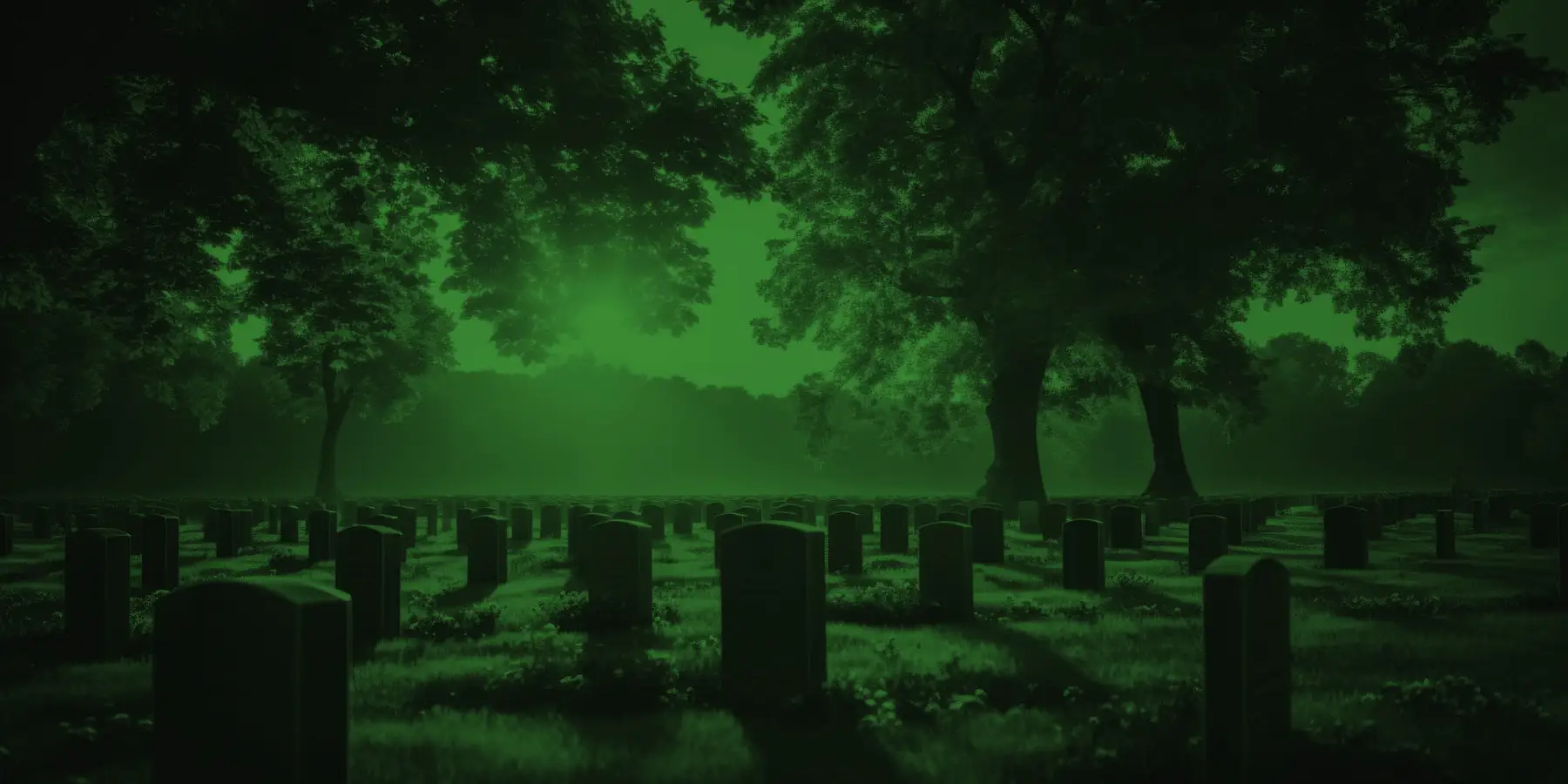
Case file 058Death, Corpses & the MacabreThe 1800s

Turning The Bones

The Malagasy dance with their ancestors' bones. Americans paint and embalm their dead, a habit that began when Lincoln's corpse crossed 1,700 miles by train.

Mar 15, 20241h 18m
00:00 / 1:17:50
Or listen to this episode onApple PodcastsSpotifyYouTube
Share this episode

In this episode

  • Why rum was often the single biggest funeral expense in 17th-century colonial America
  • The Civil War surgeons who found a truly grim way to advertise outside their tents
  • 150,000 mourners in Philadelphia, and what The New York Times saw just a few days later
  • The second day of Famadihana, when the family crypts come open and only good news is allowed
  • Why a body flying home on a commercial plane has to be embalmed by law, and what cemeteries quietly require

“If the Malagasy Famadihana seems weird and superstitious, how do you think putting lipstick on dead grandma’s sewed shut mouth comes off?”

The story

Every five to seven years in the Central Highlands of Madagascar, families unseal their tombs, lift out their ancestors and dance with them. To most Americans that sounds like a horror movie. To the Malagasy, it's a family reunion, and the stranger rituals may be the ones practiced in American funeral homes.

Death in America is a $23 billion-a-year business, spread across roughly 19,000 funeral homes, about 80% of them still in private hands. It wasn't always a business at all. Women washed the body, men built the coffin and dug the grave, and relatives sat with the dead for three days to make certain they were, in fact, truly dead.

Rum, gloves, and silence

Puritan funerals in colonial America were silent. There was no sermon, no eulogy, no hymn. The Puritans believed in predestination, the idea that God had already settled every soul's fate, so no amount of wailing or praying could help the departed. Graves got plain, modest markers.

The wake was another matter. The night before the burial, friends and neighbors crowded into the home of the deceased, feasting and toasting while keeping a sharp eye on the coffin in case its occupant woke up. In an age of primitive medicine, a deeply unconscious person could pass for dead, and that vigil gave the wake its name. Rum was often the single biggest funeral expense in 17th-century colonial America.

As the colonies grew, so did the pageantry. Mourners wrote tributes to the dead and tacked them up, and the papers were gathered and printed in mourning broadsheets, special newspapers for eulogies. Families mailed funeral tickets, one of which read: "You are desired to accompany the corpse of Mrs. Dorothy Wood." Then came funeral gifts: gold rings, scarves and gloves, eventually a new pair of gloves for every mourner. It took a law to stop it. In 1761 the Massachusetts Bay Province passed the "Act to retrench the extraordinary expense at funerals," capping the gloves and banning wine, rum and rings on penalty of 50 pounds. These were, it bears mentioning, the same people who outlawed Christmas.

Standing at attention, dead

The Civil War changed everything. Soldiers in blue and gray agreed on one thing: neither side wanted to be buried on enemy soil. Dr. Thomas Holmes, the father of modern embalming, preserved fallen Union soldiers for the Army Medical Corps, and enterprising physicians spotted a market. Some military surgeons scooped up unidentified bodies from the battlefield, embalmed them, and propped them up standing at attention outside their tents as advertising. They raised prices as casualties mounted, and charged more when the dead man was an officer.

The gouging got so bad that on March 15, 1865, the War Department issued General Orders No. 39, requiring embalmers to be licensed by the Provost Marshal, prove their skill and follow a fixed scale of prices.

Five shades darker

A month later, Abraham Lincoln was assassinated, and his body became something like the country's first viral marketing campaign for embalming. The government sent him home to Springfield, Illinois, on a two-week funeral train with a top speed of 20 miles per hour, and the body was embalmed and re-embalmed at nearly every stop.

Philadelphia went well. More than 150,000 people waited in five-hour lines, and a newspaper praised the president's "natural, placid, peaceful expression." By the time the train left New York City for Albany, The New York Times reported a face "nearly five shades darker." Its verdict: "The dust had gathered upon the features, the lower jaw somewhat dropped, the lips slightly parted and the teeth visible. It was not a pleasant sight."

The Chicago Tribune tried to spin it. Illinois Governor Richard Oglesby, riding the train, telegraphed Springfield to move the funeral up at least two days. In Columbus, the editor of The Crisis saw "A dark, unnatural face whose features were plaintive and pinched and sharp, piteously like death." Mary Todd Lincoln begged for an end to the procession and was ignored. After 1,700 miles, the 16th president arrived essentially mummified, and the modern funeral business was born.

The weird part

Every five to seven years, Malagasy families take their ancestors out of the tomb and dance with them. By Malagasy belief, the dead can't join their ancestors until their bodies turn to dust, so the Americans who embalm their dead and seal them in concrete are the ones keeping grandma from moving on.

Dancing with the ancestors

Famadihana, which means the turning of the bones, is practiced by the Malagasy people of Madagascar. It opens like a multi-day party, with dance music, endless food and drink, and zebu, a humped breed of cattle, roasted for the crowd. Host families dress in matching fabric, and poor families shoulder the cost anyway.

On the second day, the family crypts come open. The dead are lifted out feet first, and their old shrouds are unwound and discarded. Relatives stroke the bones and share the latest news. Only good news, though, so the dead won't be upset and unable to rest. Each body is rewrapped in a fresh lamba, the silk shroud, with the person's name written on it so they'll always be remembered. The lamba dance alone can last two hours.

Then the wrapped dead are hoisted high to join the dance: five steps forward, five steps back, always finished before sunset. The bodies are paraded around the tomb three times, raised three times to joyful shouts, and slid back in headfirst, upside down, sometimes with gifts of tobacco, alcohol or money. No tears are allowed.

The practice has been documented for roughly 400 years. It grows from the belief that spirits stay bound to their bodies until the flesh decays. Only then can the dead join their ancestors. More than 85% of Malagasy people are Christian, yet the ritual survives because it's more cultural than religious.

Lipstick on a sewn mouth

Now picture American customs through Malagasy eyes. A mortician sets the features: a small plastic eye cap under each lid keeps the eyes shut and fills out the sunken eye, and a suture through the lips and septum keeps the mouth closed. The blood is drained and replaced with preservatives like formalin. Embalming is the law if a body flies home on a commercial plane, and in many states if burial comes more than 48 hours after death. Then comes makeup no different from what's sold at Sephora.

The body goes into a steel casket that can last 50 years, sealed inside a concrete grave liner or an asphalt-coated vault, which cemeteries, not the law, require. When Medgar Evers was exhumed in 1991 after 28 years in the grave, he was so well preserved that his son was permitted to view him.

To the Malagasy, all this delay would look cruel: poisoning the dead, painting them like dolls, and keeping them from the spirit world. "If the Malagasy Famadihana seems weird and superstitious, how do you think putting lipstick on dead grandma's sewed shut mouth comes off?" Neither side has the monopoly on strange. The surgeons who propped up dead soldiers outside their tents are another story. "Those dudes are the only real weirdos in this tale."

The transcript

Chapters & full transcript11,819 words
Chapters
  1. 01:19Death as big business
  2. 02:59Puritan wakes and funeral gloves
  3. 09:58Embalmers, war, and Lincoln's last ride
  4. 17:24The turning of the bones
  5. 24:34How Americans treat their dead
  6. 34:15Family funerals, remembered

This transcript was generated automatically from the episode audio and may contain errors. Times are approximate, since ad breaks can shift them by a minute or two.

00:00

Hey, true weirdos at the end of this episode, stick around if you want for a little bonus content and conversation. Death. It's something we don't like to talk about or think about in American culture. So we maybe never stop to consider what giant weirdos we are when it comes to death. We call cemeteries memorial gardens. And then we try hard not to think about what's planted there. We get through our death rituals as best we can. And then we move on. We don't dwell on the specifics, satin lined casket, the embalmed remains, the cold, hard hands folded and what's supposed to be a sign of eternal rest. Because if we did focus on that stuff, we'd realize just how weird it all is.

00:55

And they got a small beam of light. Stuff. Stuff. Death in America is big business. How big? Try $23 billion a year in revenue big. That's spread out across roughly 19,000 funeral homes. And about 80% of those remain in private hands. Family businesses, mom and pops doing the work that was once done by families in the home. Civil War changed all that. Not because that's when embalming was invented. The ancient Egyptians figured that stuff out a long time ago. The Civil War just created an enormous need for the preservation of the dead. And an industry was born. What did people do before there were morticians and undertakers and funeral parlors and crematoriums? How did they handle the death of a loved one in the days before 911 and ambulances and coroners? Death used to be a private personal affair, something that was taken care of at home. The custom was for the body of the deceased to be carefully washed, usually by women. Menfolk were tasked with building a coffin and the digging of a grave. Once the body was cleaned and wrapped in shroud, clothing was far too scarce and valuable to be buried with the deceased. Then it was time to sit vigil. The body was placed in the coffin, which was set up in the home.

02:50

Relatives would sit with the body of their loved one for three days to make certain that they were in fact, truly dead. Going back to this country's earliest days, we see that Puritan funerals in colonial America were silent affairs. There was no sermon and no eulogies, no hymns. The Puritans considered all of that just ghastly Roman Catholic style like dolletry and buddy listen. They hadn't left their homes in England and braved the long seasick Atlantic crossing, only to be stuck doing the very things they rebelled against in the first place. No ma'am. So silent funerals. That makes a lot more sense when you remember that the Puritans believed in predestination. Since there was no amount of wailing or lamenting or even prayer that might help the departed get into heaven at all, much less any quicker, we make a spectacle of it. Kneeling at the coffin and praying was thought to be both superstitious and utterly useless to the deceased.

03:56

A funeral was a necessary ritual, but one best kept simple. Ditto for grave markers. The Puritans didn't go in for elaborately carved tombstones or enormous statues of angels. They kept it plain, and they kept it modest. But do not for one instant think that the Puritans didn't know how to put on a wake. The night before the burial, family and friends and neighbors would gather in the home of the deceased. The body was typically on display in its coffin waiting to be viewed.

04:29

And of course, the sharp eye was kept on that coffin just in case it's occupant awakened. That's where we get the term wake from. Yikes. But this was a real concern in the days when medicine was primitive, and certain diseases might cause a person to appear dead when what they actually were is deeply unconscious, or maybe even comatose.

05:08

The Puritans, those joyless scolds, were still human and the impulse to memorialize their dead, to celebrate that life was something they gave into. Just never at a funeral. Puritan wakes meant feasting and toasting and merriment. Seems like death was the only occasion where merriment was encouraged. And so Puritan wakes were raucous affairs. Maybe that's why rum was often the single biggest funeral expense in 17th century colonial America. The hangovers had to be epic after one of these affairs. And there was no morning after Bloody Mary and a TV nap to look forward to. Now, if the deceased wasn't being interred in a nearby family plot or churchyard, the burial could be a real ordeal. The coffin would be carried to the cemetery by the pallbearers. And if that cemetery was a fair distance away, a second set of pallbearers would relieve the first to finish the job. If the weather was bad, so be it. If the ground was hard and cold as iron, oh well. It was expected that the community would turn out to pay their respects. And Puritans dearly loved minding each other's business. So your absence would most definitely be noticed and judged harshly.

06:32

You've heard the expression, funerals are not for the dead, but for the living. Yeah, well, the Puritans pretty much invented that. And over time, as the population of colonial America grew, the pomp and pageantry of funerals grew too. There were special newspapers called morning broadsheets. This is where the dead were eulogized. It became the custom for attendees at funerals to write their thoughts about the departed and tack those sheets of paper to a designated spot.

07:04

The papers would be gathered up and published in a broadsheet. Next came funeral tickets, a tradition the Puritans brought with them from England, but one that really didn't catch on in a few years. Here's an example of a real funeral ticket. You are desired to accompany the corpse of Mrs. Dorothy Wood, late wife of Thomas Wood, gentleman from his dwelling house in Littleton in the county of Middlesex, to the parish church there on Friday, the 17th of November 1704, at three o'clock in the afternoon precisely, and bring this ticket with you.

07:42

As squeamish as modern Americans are about death, can you imagine inviting the fam to accompany a corpse anywhere? Then came the custom of giving out funeral gifts. This was the most extravagant of all the displays of public grieving. The traditional funeral gifts in colonial America were gold rings, scarves and gloves. So it began with the family of the deceased giving the pallbearers and the minister, each a pair of new white gloves. Eventually, though, everyone in attendance received a pair of gloves. This random and somewhat baffling tradition tended to be confined to the elites. I mean, a poor family could hardly manage the expense of handing out 140 pairs of gloves every time someone died. And it was mercifully short lived. Not because the people looked around and said, well, this is weird and expensive. But because the practice was outlawed. In 1761, the Massachusetts Bay Province passed the Act to retrench the extraordinary expense at funerals.

08:50

No scarves, gloves, except six pair to the bearers and one pair to each minister of the church or congregation where any deceased person belongs. Wine, rum or rings shall be allowed and given at any funeral upon the penalty of 50 pounds to be forfeited by the executor to the will or estate the person interred to be recovered by action in any of His Majesty's courts of record.

09:16

I'll remind you that these are the very same people who passed a law banning the celebration of Christmas. Our Puritan forefathers were most definitely masters at the scratching of what don't itch. A pack of miserable, pinch faced, busy bodies whose freakish insistence on pious authoritarianism laid the foundation for so much of the sanctimony and hypocrisy that dogs us to this very day. But where was I? Death and funerals in America. That's right. Okay, so there we were a people who cared for their dead at home and had silent, sad funerals after a night of slamming tankards full of rum.

09:58

Then came the Civil War. Whether the uniform was blue or gray, soldiers in that terrible war could agree on one thing. Neither side wanted to be buried on enemy soil, which was a real problem, given the limited capabilities at the time for the preservation of dead bodies. Enter the daddy of modern embalming, Dr. Thomas Holmes. He took on the task of embalming fallen Union soldiers for the Army Medical Corps. Other physicians, especially the entrepreneurial types, saw the opportunity to make a few bucks in this game too, and seized it.

10:40

This is extra morbid to imagine. So get ready. Some military surgeons began advertising the service. They'd scoop up an unidentified body left on the battlefield, embalm it, and then pose that dead soldier standing at attention outside their medical tent. As Civil War casualties mounted, those entrepreneurial embalmers upped their prices, which is something they also did when the dead man was an officer of rank. So rampant was this corpse care price gouging that the U.S. government had to step in. On March 15, 1865, the War Department issued General Orders number 39 concerning embalmers.

11:27

Hereafter, no persons will be permitted to embalm or remove the bodies of deceased officers or soldiers unless operating under the special license of the Provost Marshal of the Army. Provost Marshals will restrict disinterment to seasons that can be made without endangering the health of the troops. They will grant license only to such persons as furnished proof of skill and ability as embalmers. They will also establish a scale of prices by which embalmers are to be governed with such other regulations as will protect the friends and relatives of deceased soldiers.

12:04

When they say war is hell, they leave off the part about how some people are just greedy demons. Anywho, if the Civil War jumpstarted the widespread practice of embalming the dead, then what happened to the body of President Abraham Lincoln might be considered one of this country's first viral marketing campaigns. Lincoln's assassination on April 14, 1865, plunged this nation into deep mourning. So intense was the grief of the American people that the US government made the decision to observe Lincoln's death with a two week long national funeral procession, traveling by train with a top speed of only 20 miles per hour. Lincoln's body would depart Washington DC for his final resting place in Springfield, Illinois. The body of the slain president would have to be embalmed, of course, if it were to survive that journey reasonably intact. And with thousands of people thronging every stop the funeral train made, the body would also have to remain presentable, which meant that Lincoln's body was embalmed and re-embalmed at nearly every stop. First handful of stops went well, Baltimore, Harrisburg, Pennsylvania, and Philadelphia. The city of brotherly love turned out huge crowds, more than 150,000 people waited in five hour long lines to view the body of Abraham Lincoln. And it was looking good, according to the newspaper. The dead president, according to the paper, sported a quote, natural, placid, peaceful expression. But alas, this would prove to be unsustainable as the train continued its slow chugging to Illinois. By the time the funeral train departed New York City for Albany, just a few days later, the New York Times offered a far less glowing review.

14:11

Dark as was the face before and unearthly it was at 11 o'clock Monday night, nearly five shades darker. The dust had gathered upon the features, the lower jaw somewhat dropped, the lips slightly parted and the teeth visible. It was not a pleasant sight. The condition of the body made it doubtful that additional public viewings could take place.

14:34

But take place they did. The press and officials aboard the train gamely tried to put a good spin on that whole gruesome enterprise. The Chicago Tribune tossed out a half hearted, well, you know, death has softened the great man's features, probably. But the then governor of Illinois, Richard Oglesby, was on the train, became so concerned about the deterioration of Lincoln's body, that he sent a telegram to Springfield ordering the scheduled presidential funeral to be moved up at least two days. Day after day of exposure to the air, to dust, and to the constant motion of the train had done the body of Honest Abe zero favors. In Columbus, Ohio, as mourners filed past Lincoln's coffin, 14 days after his death, the editor of the paper, The Crisis, was horrified at what he saw.

15:34

A dark, unnatural face whose features were plaintive and pinched and sharp, piteously like death. Lincoln's widow, Mary Todd, wanted an end to this macabre procession. Her pleas were ignored. By the time the funeral train rolled into Springfield, after a journey of 1700 miles, the 16th President of the United States was essentially mummified.

16:00

It's a grim and gross historical footnote. But what an impression it made on the American people. The modern funeral business was born. Today, death is something we deal with at a distance, a job for professionals, the preparation and preservation of the deceased, an invisible task that happens behind closed doors, a task we don't participate in or even really want to talk about. We've made the very act of dying into an impersonal technological event that doesn't happen at home.

16:38

We've made death into an industry. We've sanitized death and separated the end of life completely from the whole process of living. And since we live much longer now than our ancestors, and have access to medical interventions that can prolong our lives beyond the wild imaginings of the people of the United States, it's only a matter of seconds time. Our mortality is a can we keep kicking down the road until the end arrives, often under cold, fluorescent lights, accompanied by the beeping and chiming of medical machinery.

17:16

So it's just a guess, but it seems unlikely that the ritual of Famadihana will ever catch on here in the United States. Famadihana is practiced by the Malagasy people of the Central Highlands of the island nation of Madagascar. Because fear and revulsion dominate our relationship with death, Famadihana is going to sound weird and terrifying. But to the Malagasy people, it's a tradition that shows respect for the dead, and has the power to unite and celebrate families and even heal sometimes broken or strained relationships. So a traditional Famadihana celebration goes down every five to seven years, and starts off feeling kind of like a family reunion. And we're talking a multi day marathon reunion. Loud dance music pumps from speakers, the food is abundant and the drinks never stop flowing. Guests wear their best clothing and the family hosting will, if possible, all wear clothing made of the same fabric. The way many American families wear custom t-shirts made just for their family reunions. Wealthy Malagasy families hire bands and professional dancers. Many Zibu, that's a breed of cattle that have a distinctive hump like a camel, are slaughtered and roasted. Sometimes gifts are handed out. The cost of hosting a Famadihana can be a real burden on poor families. But it's a burden that no one shies away from. Because this ain't just any old party. The word Famadihana means the turning of the bones. And that's a literal description. So what bones exactly will we be turning? Well, on the second day of Famadihana, family crypts are unsealed and bodies of the ancestors interred within are carefully removed. The bodies of the dead are lifted out of their tomb feet first.

19:26

Then the old shroud is unwound from the corpse and discarded. Family members stroke the bones with loving hands, telling all the latest news and gossip, but only happy news, only good news for fear that the deceased might be angry or displeased, then might be unable to rest. Then the dead are rewrapped in fresh shrouds, ideally made of silk. The name of the deceased is carefully written on the shroud, so that this human will always be remembered. A slow ceremonial dance is performed, with the dancers introducing themselves to the dead. Then a dance is performed to the LAMBA, that's what the silken shroud is called, the fresh shroud, in which the bones will be carefully rewrapped. None of this is rushed. The LAMBA dance alone can take as long as two hours. And if the thought of dancing with the remains of your great great grandmother didn't freak you out, maybe the thought of how long this all takes will.

20:26

Our sense of time is rushed and fragmented. The clock is our taskmaster. The time for the Malagasy is a much gentler and more generous thing. There's no rush to wrap the bones and return them to the grave. No rush to end the party and get back to business. The final ceremonial ritual of Famadihana might blow your mind. As the music plays, the newly rewrapped corpses are raised high and carried aloft, so that the dead may once again join the living in the dance. The choreography is slow and measured. Five steps forward, five steps back. The crowd moves in rhythm, surging toward the uplifted dead, and then away, and then forward again. This dance can last anywhere from 20 minutes to two hours, but always always must be completed before sunset. It's traditional then to parade the corpse around the tomb three times. Then to the joyous shouts of all assembled, the shrouded bodies are raised high once, and then twice, and then a third time before being slid back into the tomb headfirst and placed upside down. Sometimes gifts of tobacco or alcohol or money are placed in the tomb as well. Makes you think of all the supplies loaded into the tombs of the ancient Egyptian pharaohs. After all, we mortals have no idea what the shopping situation is like in the afterlife, right? Also, if you're thinking, well, how sad and morbid and terrible is this? Think again. Famadihana is happy and joyful. No tears allowed. Because death for the Malagasy isn't the end of anything. It's just a stage of life. Famadihana isn't an ancient practice, just one that evolved out of ancient beliefs. It's a practice that's only been documented for maybe the last 400 years. It grew out of the belief that the spirits of the dead are bound to their earthly bodies. And only after the flesh is decomposed, and the correct rituals have been observed, can the dead join their ancestors in the spiritual world. Put another way, the dead aren't really dead until their mortal bodies are dust. This process takes time clearly, and requires a big commitment on the part of the living to properly venerate the dead by observing these rituals.

23:10

More than 85% of the Malagasy people identify as members of the Christian faith. Less than 5% follow strictly traditional beliefs. Famadihana persists even today, because loads of have simply found a way to blend their indigenous beliefs with their Christian or Muslim faith. And because the Famadihana ritual is more cultural than it is religious. But it's interesting to note that this mashup of Christianity and traditional beliefs doesn't include the Christian version of heaven or hell. Once the Malagasy bodies are dust, their spirits move on to a second life, a life that resembles this life here on earth. I know there are people who hear this and think, well, that is some primitive, superstitious, unsanitary craziness that needs to be stomped out now. There's a word for that kind of judgment, a word for measuring another culture by the rules and regs of your own. That word is ethnocentrism. Humans are fascinating creatures, but damn if we can't seem to help ourselves when it comes to judging up on each other. You think the Malagasy venerating the bodies of their dead, taking them out to dance is weird.

24:34

Let's imagine what the Malagasy would make of the way we treat our dead. Here, no family member gently washes the body and prepares it for burial or cremation. That's the job of a professional mortician. Out of concern for upsetting the grieving, the mortician typically won't ask you if you'd like your loved one's mouth or eyes closed. That's a hard question for the living to hear. So the mortician will just perform this service as a matter of course. It's called setting the features. See, movies and TV shows have led us to believe that in death, we close our eyes. That is not universally true. That's why morticians have something called an eye cap at their disposal. It's a small plastic half circle that talks under the eyelid, keeps the eye closed. Bonus, it creates the illusion of a full eye under that lid, because the real eye sinks in death. In order to close the mouth and keep it closed, a suture is used to stitch the inside of the bottom lip to the top lip and the septum. Unlike the Malagasy whose dead rest on shelves and mostly above ground tombs with no chemical embalming, we pump our dead full of chemicals.

26:00

First, the blood is drained from the veins and replaced with a preservative solution, like formalin maybe, a mixture of aldehyde and water. Fluids are also drained from the body's cavities and replaced with a preservative. This process though doesn't deliver super permanent results. By the way, it's meant only to keep the body from discoloring and shriveling. It's meant to create a lifelike enough appearance so that the living may view their loved one in a state that appears restful and serene. You can opt out of this process, of course. Maybe in the United States, not only is chemical embalming the norm, it's also the law under certain circumstances. If the deceased must be flown home, for example, and you don't have a private plane, you're legally required to embalm the body. In many states, if the lag between death and burial is more than 48 hours, you're legally required to embalm the body. And what would the Malagasy make of the restorative arts of our mortuary industry? Cosmetics meant to restore the illusion of life and health to the flesh of the dead. The products don't look so different from anything for sale at Sephora, because they aren't.

27:21

And the experts who spend their days devoting painstaking attention to the skin and lips and hair of their silent clientele, not much different from the artists using the same on the living. Then we place that body preserved, buffed and posed in an attitude of peaceful slumber in a fabric lined box and invite the grieving to come have a look. The rooms where this takes place, seem always to have thick carpets, heavy draperies, a cool antiseptic smell, and an aura of somber reflection. We take our turns paying our respects, murmuring things like, she looks so peaceful, or you'd think he was just sleeping. And if you're anything like my ghoulish old aunts, you'll throw in the occasional, they did a good job. You'd never know the cancer ate her alive. Next, we seal the casket, which if it's made of steel or metal, might last as long as 50 years or more underground. And if that casket is placed in a concrete grave line or vault, count on it lasting even longer. What's the difference between the two?

28:37

Comes down to money, if we're being honest. A grave liner is a concrete box with a concrete lid. A vault is made of reinforced concrete, coat it in asphalt or tar, and paint it to look nice. Vaults also include liners and seals meant to keep the casket dry. But it isn't the law that demands that burials include the use of inground liners or vaults. It's the cemeteries. Sealing the casket in a grave liner vault helps prevent the ground above the casket from sinking in, saves the cemetery a load of maintenance, though that's not how they sell it. No one wants to think of their loved one gently steeping in groundwater. And that concrete shell offers a sliver of comfort to the grieving, a little bit of added protection from your own imagination, as much as anything else. How long does it take an embalmed body in a metal casket in a concrete box buried underground to decompose? Great question. Turns out there are a lot of factors at play. Embalming buys you anywhere from five to 10 years longer if the deceased had received antibiotics or chemotherapy prior to death. Both kill off bacteria, and it's bacteria that helps break down a body. Not all embalming jobs are created equal. Some are better than others. Here's a historical fact you may be unaware of.

30:10

Civil Rights leader Medgar Evers was murdered and buried in 1963. In 1991, his body was exhumed as evidence in a murder trial. After 28 years in the grave, Evers' body was so incredibly well preserved that his son was permitted to view it. That's good work on the part of the embalmer, by our standards. Another factor, how acidic is the soil in which the casket is buried? The more acidic the soil, the faster the casket erodes, exposing the body within to insect activity and the elements. Is all this just freaking you out and giving you the creeps? And it's just horrible? And why do we even have to think about any of this? And now you're sorry you even know it? And please, does anybody have a Xanax? Well, can you imagine what the Malagasy people would make of our funeral practices? We transform our dead into waxen effigies, seal them up in as close to an impermeable box as we can find. We sink that box six feet into the earth. And then we walk away. Sure we visit the spot, maybe. Or we take that waxen effigy and we slide it into a locked drawer in a building that resembles a palace. At least it would seem so to the Malagasy. Or we take our dead, burn them to ash and seal those ashes in a jar. Or maybe scatter them in the sea or in the garden. For the Malagasy, the way we treat our dead would seem unspeakably strange and cruel. Why do we insist on delaying decomposition, knowing that doing so delays our ancestors chance to enter the spirit world? Why do we pump our dead full of poisons and paint them like dolls, only to hide them away forever, deep underground? Why do we treat our dead like they no longer have any place in the world of the living? Whether it's hoisting the body of your grandfather aloft and ceremoniously dancing with his bones, or standing beside his open coffin, realizing he's no longer in the body before you. Death is a mystery that humans will never solve. If the Malagasy Famadihana seems weird and superstitious, how do you think putting lipstick on dead grandma's sewed shut mouth comes off? Maybe a little weird and a little superstitious? We're all just people. None of us, as the goes, are going to make it out alive. You opt for burial or cremation. The Malagasy throw a party and turn the bones. They are no more primitive or strange or bizarre or weird than you are. But listen, those Civil War surgeons who scooped up dead soldiers and bombed them, posed them standing at full attention, full salute, propped those poor dead men up just outside their tents to attract business. Like what in all the Saw movie creepiness was that? Those dudes are the only real weirdos in this tale.

33:47

Next time on True Weird Stuff, we are going to pay a visit to one of the most haunted houses in the entire world. And you're never going to guess who got there before us. Well, that would be the devil himself on the next True Weird Stuff. Okay. Hey, podcast living up to its name this week. Am I right? Sorry. I just have to say there were so many points along the line. I wanted to stop you when you were doing this. Because I kept on going. I'm sure what did you just you're like, no, no, I, um, it's kind of funny. And I don't know that I'm facing death. I guess we're all facing death in some way. But I don't know that I'm facing it anytime soon. It's not something that I fear. And the idea that something funny would happen to my corpse, like my corpse is stuck, stuck in an elevator with two nurses. And it's, it's, it's, you know, pushing out gas or something in there giggling, that to me would be the greatest thing in the world. So I, there's a weirdness about all this. But at the same time, I have a very weird, dark sense of humor about it as well.

35:09

I do too. And I think so let me just be clear, like I have the paralyzing, like, oh, I don't want to die as anybody does. And I believe that there's more than just this life, right? Like, I believe we we go beyond this physical realm. I still don't want to die. Even even though I believe in reincarnation, this version of myself has stuff to do here. I have kids and people I love, right? I don't want to die. But when you grow up in an ethnic family, that treats funerals and viewings as prime social occasions, you have a different outlook on death. So you know, my people are Italian American, and they firmly believe that children should be taken to funerals. Like it was weird for me when I grew up and met people that as young adults were going to their first funeral, like, wait, but there's really good cake after a funeral. Like, how have you never been to a funeral? Here is how deeply morbid and macabre my people are. They had a favorite funeral home on Broad Street in South Philly. It's probably still there Monty's. My grandmother would be like, oh, oh, he does such a good job. And then there was another funeral home in that in that section of South Philadelphia, which is like, it was for the longest time an Italian American enclave. But of course, it's so much more diverse now. It's an incredible melting pot. But there's a section of Broad Street down near where the Phillies play the stadium, right? It's just one funeral home after another. It's Monty's and Leonetti's and so on and so on. My grandmother and my aunts would talk such smack about opposing funeral homes. Sam Monty knows what to do with the dead. That was a huge compliment. But you go to you remember when we when they put grace at Leonetti's and she looked like a circus clown.

37:11

So I mean, I've been going to funerals and viewings for a very, very, very long time. And as a result, I would never in a million years consent to any of that like cremate me and do whatever. Do not wax in me up paint me like a harlot and put me in a box. Absolutely not. How about you? I'm the same way. By the way, Monty's is still there.

37:36

It's because he does such a good job. So yeah, I, you know, it's funny when you were talking about this, I can remember going and seeing my cousin's funeral. And my cousin was six foot six. He wasn't just tall, he was big. And he was a great athlete. And he was very strong. And he died from cancer. And I remember going to the funeral home, and they had a viewing. And I remember looking at him. And thinking to myself, this isn't him. Do you know what I mean? I would rather not see this. Because I want to remember him the way he was the same was true of my grandmother, my father's mother. And that was in South Jersey. They did the same thing.

38:23

You know, there was no question as to whether we're going to and I don't know, I think that it would there were religious reasons. I think at one time, the Catholic Church was down on cremation. I don't know that. Oh, yeah. Now. I don't know what the ruling is on that now. But I like you would rather be cremated, have my ashes spread somewhere on a mountain someplace I went hiking or at the sea or some something of that nature. But I will tell you that one of the things we've talked about before is sometimes if you go to now I went to funerals as a kid, I can remember one of my cousins died got hit by a vehicle and died. And I remember, it's a shame they couldn't have an open casket because he was so badly mutilated was the conversation from one of my aunts. I remember that.

39:09

Oh, oh my god, can we please so max, my, my grant, my pop up was killed in a plane crash. So my pop up was a chief in the United Navy. And he was just the greatest. He, I mean, he went to temple, you know, where I got my bachelor's degree. And he, after he retired from active Navy duty, he worked with the CIA in Iran during the regime, the Shah's regime before the Shah was toppled by the Ayatollah. I mean, my father, my grandfather had quite a life and he was a private pilot. When I was a little girl, I used to be his co pilot, he would take me up in his plane. And we would he would buzz my grandmother's house and she would run outside and wave a kitchen towel. And it was just the most wonderful adventure. Well, he flew to Wyoming, and spent about six months with us out there. And when he took off to fly back home, there had been a repair done to the wing of his airplane. And when he hit altitude over Kemmerer, Wyoming, the rivets tore out and his plane crashed to the ground and he was killed. And so of course, you know, the body was flown back east. He was only 56 years old, like he had his whole retirement in front of it was devastating. But he was flown back east and we all piled into the Chevy Malibu and made the trip. And I can remember so vividly like it happened yesterday. Listening into the adults talk about how they couldn't have an open casket viewing. And how and this is this has haunted me and this is why this is why it's not good that we don't talk about death.

40:53

And we're so weird about it. Because our inability to talk about it only feeds the fear. Right? His body was so broken that they couldn't put his naval uniform on him. They just draped it atop the remains. And he had a full Navy have full military funeral 21 gun salute the works was incredibly moving. But as a child, you know, this man who had been so vibrantly, delightfully, wonderfully alive. Now, I'm picturing I don't even know what underneath his uniform. And I'm not, I don't know what the answer to that would be, except like for the gassy people. They would have been just as devastated by that loss as we were. But we would have taken him out five years later and danced with him. You know what I mean? We wouldn't have sent his grandchildren into the future with a lingering horror of what had happened to his body.

42:01

I, you know, when you were talking about that, the only thing that I could think was their memory lives on. And there's something about that, that's kind of nice that somebody would still care for that memory to live on, you know. The other thing that I have never witnessed, but I think you have is at a funeral, the end, this is not at the funeral home, this is at the cemetery, the grave dive. Oh, yeah. Now you have witnessed this, correct?

42:32

Several, several times. My people, my people are as dramatic as an opera. Okay, well, the older generations, I think that like my generation and, and beyond it, like nobody cares. But I've been to several funerals where the grieving widow or the grieving mother went into the grave after the coffin and had to be pulled out and resuscitated. And oh my gosh, it's traumatic. It is that is a traumatic experience of death very different from dancing and singing and feasting. Now I will remind you that you did promise that if I died before you that you would do the grave dive for me just so people would say, Wow, what did he have going on? I just I hope you're not gonna make me jump into the crematorium.

43:25

Sherry, the the Abraham Lincoln story is I have never heard that and I'm surprised that I didn't know it because it's the kind of oddball thing I would know. That's no, I didn't know that. That is so disturbing. I don't know where to begin. For one of the most honorable men this country has ever produced that this is how it ends for him.

43:53

You know, something I say often on this podcast in these episodes is we do not know our own history. We are not taught our own history. We're taught timelines and dates and battles. And we're required to memorize things that nowadays, especially with the internet, you just don't need to memorize unless you're doing a party trick. Right, right. Like you really don't need to have all the presidents memorize. It's kind of cool if you do no slam, but it's, it's an unnecessary use of classroom time. We don't learn our own history. The fact that it took the Civil War, which comes up a lot on this show, sometimes I think that if it wasn't for the ancient Egyptians, those bastard Puritans in the Civil War, we wouldn't even be doing true weird stuff, right? Does it does it trip you out how frequently those three entities are well contact the Civil War, especially was a real turning point in this country, because it was it was a war kind of unlike any up until that time, just because of just lots of things that came along during that time, that was the first one where there was some technology involved with it, that was really kind of different, too. And it really was a turning point for lots of reasons in this country.

45:09

This the Civil War birthed the modern funeral industry. And Abraham Lincoln showed the whole nation that embalming was kind of a cool thing to do. So that the magnitude we had 6 million dead in the United States Civil War 6 million dead is so mind boggling to think that many people lost their lives in that war. It's I saw I saw some jack off on Twitter not too long ago saying that another Civil War is necessary because the only way to correct this country is in bloodshed. And I'm like, Sir, you are what we call an asshole. Because you don't again, you don't understand you don't know your history 6 million dead.

45:55

Without the Civil War. I don't know what American death rituals and the American funeral traditions would look like you realize that all the other wars combined that we have fought as a country don't add up to the number of people who died in the Civil War. Yes, it was brother against brother. Yes, it was within the country. So I understand that. But that's that is an astonishing figure when you think about it. The other thing that happened during that time, because we had photography, and I know we've talked about this on the on the Bob and Sherry show, and that is the fact that people used to take pictures with the corpses. And then afterwards, the photographer would draw the draw the eyes of the deceased in to try to make them look alive, alive. And they were so weird.

46:41

And what they would do is if they didn't sit them in a chair, they would, they would put their their corpse, which I think is a funny word all by itself, they would put their corpse up on a rack so they could stand with the other family members. I mean, and this was, because before this, there wasn't any photography, this became sort of standard procedure where everybody kind of looked at each other and went, Yeah, I guess this is what we're supposed to do. And so they did that for many years. And the thing about like, everything that you're saying, everything we've talked about in this episode, we act like, well, of course, that's just what you do. And then you look at what other cultures do. And you go, ooh, savages, like, sit down. Like, we're freaks, too. We're all freaks. When it comes to this stuff. Like, we're all freaky. I do kind of love it's changing. It's changing, because death, death is big business. And it's recession proof business. And you have no worry that it's going to go out of style, right? The fact that the majority of funeral homes in this country are still mom and pop privately held businesses, I think is really heartening. Of course, that's changing. You know, corporations are coming in. So what happens is corporations come in, but they keep the mom and pop name. So you still think that it's owned by locals?

48:03

I mean, it is. Yeah, it is a big, big business. And cemeteries. Now, America does not have the largest cemetery in the world. The largest cemetery, do you know where the largest cemetery in the world is? It's in Iran, and there's 6 million graves. Oh, my. Yeah, like, whoa, it's like unthinkable what happens when a cemetery gets full, because they do. They do a number of different things when cemeteries get full. They open up a new section. Sometimes they'll remove old, old, old coffins and remains and dispose of them. Like there have been some shady ass things.

48:51

Oh, around the funeral business. It doesn't seem like that there is some incredibly gruesome, selfish behavior by somebody involving this about every two, three years you hear that is so bizarre and so gross what they've done. No, you're not. You're not wrong. And in fact, this time last year on True Weird Stuff, we did a story about the mother-daughter grave robbers. Do you remember?

49:24

Oh, yeah. Yeah. Mommy and Me Body Snatchers. It was March 3rd, 2023, Episode 8. Oh, by the way, y'all, this is Episode 57 of True Weird Stuff. Thank you for hanging with us. I don't know how we got to 57 episodes. I feel like we come skinning into home plate on fire most weeks. Every week. That's what it feels like. Yeah.

49:46

Oh, my gosh. So yeah, we did a whole episode on these two women that were involved in the illegal sale of body parts. They were, instead of giving grieving families, the ashes of their lost loved ones, they were given them like urns filled with cement dust and just the most unscrupulous and horrible behavior that you can imagine. But death, like everything else in human life is cultural. So in our culture, it's unthinkable that every five to seven years, we would take our grandparents and parents out of their graves and dance with them. It's absolutely unthinkable.

50:28

Yeah, you wouldn't do that. No. And yet put yourself in the shoes of one of the Malagasy families in Madagascar. And they're going wait, wait, wait. So you loaded grandma with chemicals, and put lipstick on her and put her in a box and then buried her in the ground and you're never going to venerate her. You people are savages. Like you can, it's so easy to flip it and see is it not? It is very, very strange.

50:59

It is. But you know, if you grow up, whatever you grow up is your normal. And so you just sort of accept certain things along the way. And then it's only as an adult, you turn around and go, this was a little weird. I suspect and I don't know if I'm wrong or right here. But I suspect the viewing of bodies is not done nearly as much as it was 30 4050 years ago.

51:24

I'm with you on that. I think that we are experiencing a big cultural shift. And I think a lot of that has to do with the more mainstream acceptance of cremation. Like it's, of course, and don't ask me how I managed to get to this conversation. But I, I often will ask people, so what do you think? Like, what's your big plan, cremation or burial? So I had a chiropractor's appointment, like, I don't know, two weeks ago. And I'm talking to Dr. Tim. And he said, So you had a big day today. And I was like, Oh, I just finished writing a true weird stuff episode about the death rituals of the Malagasy people of Madagascar. Are you thinking you want to be buried or cremated when I tell you the man went pale and took a step back? He was like, I want to go with cremation.

52:14

The, the only thing that being buried in a cemetery, I could leave like a snappy epitaph, like I finally have depth. And then I could be the funny gravestone people go. Yeah, I know. We're here. We're seeing his grandma's day. Look at this one over here. Look at this one over here. I finally have depth. I, um, I go when I'm when I go up north to visit my brother and his family. I go visit my grandmother's grave. So my grandmother, my pop up who died in a plane crash. So my grandma black hair who raised me and my pop up, and my aunt, their only daughter, they're buried side by side by side in this enormous memorial garden. And if their grave is kind of hard to find, because the rules of the cemetery are you can't have any raised headstones. They're just those stones that are right, you know, embedded in the ground. The grave is always a little bit hard to find. And eventually I find it and I go sit there. And, and it's like, I know you're not here. But I feel like I feel that it's wrong to neglect the grave. But if we're being honest, like it's probably been three years since my last visit there. We do neglect the graves.

53:37

It's, it's funny, we're talking about this. And I have not talked, I haven't done anything on social media. I haven't talked about it on the regular show or anything else. But both of my parents passed away last year within about seven months of each other. And they are buried in a my father was in the Navy during World War Two. So they are buried in a veteran cemetery. But they are buried on top of one another.

54:04

So your mom is crushing him for all eternity. It's kind of beautiful. No, it's the other way around. They because she passed first, they buried her first and my father's being buried on top. And my nephew comes over and he goes, Yeah, yeah, he said, he's being buried on top. He said, I'm sure she's, she's in the in eternity pissed off about this somewhere.

54:26

Don't you know? So get off me, Frank, please. But you know, the thing is, I'm joking about it. Of course, I had the grief and everything else connected with their passing. So I'm not being cavalier about it. I'm not being but but I think that all of these situations when you when I think about going to funerals, there's whispered tones, and then people have humorous things that they say, because you can't stay in that sense of grief constantly. You know what I mean? I can't. And you just can't. And I can. So because my family is so freaky, creepy, and so into, you know, the whole like, Oh, good, there's gonna be a viewing and then we're gonna have a buffet. So into it, that when my grandmom died, and she was my world, my God, she was my everything. When she died, it was just so devastating. And she had told me that she wanted to be buried in this one specific peach colored gown that she'd worn to a wedding. So it was like floor length, and it had some crystal embellishments. And I found it in her closet. And it was so moth eaten that we couldn't do it. So now we've got to find something else to bury my grandmother in. And we're on our way to the funeral home to pick out a casket. And I do not, I want to be really careful that I don't create the impression that I think that the funeral business is predatory.

55:56

Because some of the kindest people that I've ever spent time with in my life work in the funeral industry. But you know, capitalism, they're really, they do try to upsell you. And we all that's true, right? We can say that without being dicks, they do try to upsell you. And, and, you know, my grandmother had very specific wishes for what she wanted. And so we were kind of resistant to the upselling because we were trying to honor her wishes. But on the way to show the casket showroom, to pick out my grandmother's coffin. We're on the Black Horse Pike in New Jersey near Runnymede. And there's a bridal store having a sidewalk sale. And my sister in law said, pull in. And so we pull in. And there in the parking lot of this bridal store in Runnymede, New Jersey is a rack of gowns. And one of them is that gown. The peach gown that was too moth-eaten to bury her in. We got it for like $24 in a parking lot sidewalk sale. And on our way to the coffin thing. So we had, we were crying, we were laughing. And we were like, Grandmom is with us because she loved a bargain so much, right?

57:17

So we were all like, through our tears, there was so much laughter and joy, because A, we got a bargain and B, we were going to be able to bury her in the dress that she wanted to be buried in. So we get the coffin and we give the undertaker who was just the kind of soul, the dress and you know, blah, blah, blah. We have the viewing and everybody comes and says that, oh, she, Sherry, she looks like she's sleeping. No, no, she doesn't. She looks like Weird Al Yankovic. She does not look like she's sleeping.

57:49

Okay, but I but people need to comfort you and you need to accept comfort, right? So now the next day is the funeral, we're going to have a big Catholic mass followed by a graveside service. We're, we're drawing straws on who's going to jump into the grave. And the funeral director invites the family for a private goodbye before they seal the coffin. We sent my grandmother into the afterlife like an Egyptian pharaoh. In her coffin, we stuffed a carton of Miracle 100s, one of those giant Hershey bars, a Whitman sampler, a soap opera digest magazine, a copy of the National Enquirer. I mean, pictures of all of us, pictures of her Schnauzer Heintz, her wedding picture, we sent her sailing into the next world, loaded for bear. And there are people that when I've told them that they've been horrified. But when it comes to when it comes to death, it's what makes sense in your worldview and what gives you comfort, right? And that's going to be different, I think, not just for every culture, but it's even going to be different in different religions, different ethnic groups, different geographical regions, it's just going to be different.

59:12

Sure. This is why you're my people. I thought that was great. There was no part of me that was horrified by that. I just think that that's absolutely perfect. It really is. It you know, Max, thank you. Because when I look back on that, the, the, here's what I remember about my grandmother's death, the devastation of losing her. But then the wild mixture of laughter and tears, as we as a family navigated those final decisions, and that final goodbye. And I was one of the people who spoke at her funeral and eulogized her and I will say and this is why I'm not a fan of burials. I mean, you do you do you. Here's why I'm not a fan of burials. I could not leave the cemetery after her funeral, because I couldn't bear to drive away and leave her behind. Even though I knew she wasn't there.

1:00:10

Right? Yeah. I think had we cremated her, which she was a pre Vatican to Catholic and the Virgin Mary's best friend. She wouldn't consent to cremation. Have we cremated her? We wouldn't have left her behind, we would have taken her home. And, and so I think it was that that that turned me fully and completely between my pop up, and they couldn't put his uniform on what was left of them. And leaving my grandmother alone in that cemetery, I became a person who wants cremation.

1:00:44

How about you? Do you know when you made that shift? I don't know, at some point along the line, I would see people that, you know, the remains were, you know, were scattered in places, and there was something that was kind of fitting that that their remains became a permanent part of something that meant something to them, rather than some cemetery somewhere, you know what I mean? That there was some something physical, that you were actually a part of the sea or part of a mountaintop or part of a trail or something like that.

1:01:18

When my when my best friend died, she wanted to be cremated. She had the same disease that Bruce Willis has. And she was diagnosed really young, and she died really young. It was just freaking awful. Eventually, when her children were older in their 20s, they took her ashes, they left part of her in Alaska, which was a place she and I had gone together on an adventure, and she loved it. They took her part of her to the beach, and they took part of her to the North Carolina mountains where she loved to hike. And when I think about her, I think about her in all of those places. I don't think about her in a funeral rituals. It's because it is for as even the Puritans, oh my god, do I hate the Puritans, but even the Puritans understood, this is for the living. This is not for the dead, right? So there's another Puritans thought it wasn't for the dead, because those bastards just didn't think there was any point in praying for somebody they were born destined for hell. So what was the use? My god, they are so insane, the Puritans. But they did recognize that the the funeral rituals were a necessary thing for the living. And so what gives the comfort, right? In your case, and in my case, it's the idea that this person that you loved is, is part of the ocean now. In the case of the Malagasy people, it's the knowledge that soon, in some set amount of time, we'll see them again, and we'll stroke their bones and tell them all the good news and dance and celebrate who they once were and what they meant to this family and this community. That's kind of beautiful. You know, it is.

1:03:05

And I want to, I want to tell you one more Lynch family death story, because they're all just so good. This is going to make you think of Little House on the Prairie. This is like, what? So my stepfather, who I adored, died of congestive heart failure and lung disease, pulmonary disease. And he had a very traditional funeral, he was embalmed, and we had an open casket viewing. And I have never felt more strongly that whatever was in that box was not my stepdad. And I felt it was so not him that it was ridiculous. They could have put any they could have put a talking horse in that box for as much as it do with Ted. And he wanted to be buried in Star Valley, which is in Wyoming. And it was so cold, winter in Wyoming is real.

1:04:04

And it was so cold, that the custom there is during the winter months, you can have a funeral, but you can't have a burial. So the bodies are stored in refrigerated warehouses until spring, when you can break the soil and open a grave. And when I found out that Ted was going to be stored until perhaps sometime after Mother's Day, I was like, what in the Donner Party pioneer tarnation is this? Like, what do you mean we can't have his funeral? They're like, well, just can't do it. That's just what how we roll here. Max, in this point in human history, does that not shock you? I mean, I guess I thought they had some sort of heat. I don't know. I don't know what I thought. You're grieving. You're out of your mind. Yeah. But I didn't, you know, for months after he died. And he had made me promise, like years before he died that I would speak at his funeral. And I Oh, my God, it was one of the hardest things I've ever had to do. But for months after his death, I was so uneasy. Because we weren't finished with the ritual of letting him go. And all of that was reawakened for me during COVID. When people couldn't have funerals, remember?

1:05:32

Right. So when when my father passed, it was in November of 2023. And so I got in touch with my sister. And I said, so I'm trying to make plans to know when to come up, you know, for the funeral and that sort of thing. And what happened was they were busy at the funeral home, I guess business was good. And so my, here's my dad, even in death, he has to wait in line. You know what I mean? And then they had all this Veterans Day stuff. So he had to wait through all that. So it was many weeks, maybe four weeks. Yeah, it was probably it was probably about four weeks before we actually got to the funeral and the burial.

1:06:19

Which tell me that didn't weigh on you. It felt weird. It felt very weird. Because I guess the feeling that I had was he's my dad, he should be in the front of the line. Here's my dad, who was a veteran, he should be in front of the line. He, you know, I, when I could, I could go on for an entire podcast. And I thought about it, just talking about him and what he's done in his life. It just it just felt weird to me that there was something that was very impersonal about that. Because the most important person in my life should be the most important person in yours. You know what I mean? It's like exactly. You said something when your grandmother passed, and I've never forgotten it. You were in line at the funeral, and everybody else outside of there was going about their business of the day. And here you were in this moment of incredible grief over this woman who loved you so much. And you loved so much. And it was as if it for all these other people, they had no idea what was happening with that.

1:07:22

I couldn't fathom how life could just go on. My grandmother died in June, in mid June. And it was the most her funeral was the most beautiful blue sky, green grass summer day you can imagine. And we my God, we are morbid people like my people would do very well with the Malagasy. Okay. Because we left the church. And we asked the funeral director, if the funeral procession could drive by my grandmom's house one last time.

1:07:59

And so we did. And I can't even imagine what the neighbors made of this, because that's not a typical thing you see coming down your suburban street. But the funeral director was so like I said, I hate when people talk about that industry being predatory, because the industry, capital I may be predatory, but the people who work with the grieving, I've just never encountered anyone but angels walking this earth, any losers.

1:08:25

So, you know, we go by and they had to drag me. They had to they had to take me out of the room in the hospital away from her body. I mean, they had to literally doctor had to come in and literally sedate me so they could get me off of her body, her dead body. Then they had to drag me kicking screaming out of the cemetery. And I went back to her house. And I remember sitting on the front steps of her house, and watching the neighbors go about their business. And, and like the ice cream truck came, you know, down the street playing that stupid song. And I was like, it's like that wh out in poem, you know, that was in for weddings and funerals. You know what I'm talking? I don't have it memorized. I do know which one you're doing. Yeah. Give the dog a juicy bone, you know, stop the clocks. I'm like, how can? How can you like, there's been a hole blown inside us. You could drive a car through like, how do you just keep going? And I think part of the reason I'm so drawn to the turning the bones, the Famadihana ritual is, and maybe it's magical thinking. They're dead, aren't really dead to them. They're just not really gone. And Max, you know, because you've lived it very recently, that hollow feeling of believing that this person that you loved is gone. Yeah. But is that a human thing? Is that a cultural thing? Because the Malagasy don't leave that I, I suppose, I think there are things that whether you're you have religious culture, or the Malagasy is with what what they do, there are certain things that you believe in, I think there's certain things you are to believe. But I always think that there is a bit of questioning inside when you say that somebody we've been told you go to religious and you say that you've been told there's heaven or hell, you know, and that's it, you know, unless you're Catholic, and then there's purgatory and limbo and whatever else there is, the different levels of heaven and the different levels of purgatory and all that other stuff. It's really confusing. You know, my father, I visited with him. Well, it was it was in August of last year. And, of course, my mother had passed at this point. And we're sitting in his room and we're talking and my father was pretty with it. I mean, he was a little in and out at times. But what he said to me, he says, Where do you think we go when we when we die? Well, you would think that a lifelong Catholic who was very devoted would have an answer for that. But here he was with a point in his life. And I said, I don't know, Dad, I said, I guess that's why they call it faith. Because I don't know. And none of us really know. We don't. But I, I'm not telling myself this, I just have this innate feeling inside that what ends up happening is, we go on, we do go on to something else that we are indeed eternal. That it's not just lights out.

1:11:41

That's it. I just I don't believe that. The other thing that was very weird for him, and if people indulge me for saying this, my parents lived to be 101 and 102. They outlived everybody. So when we went to the funeral, my father's funeral, there really weren't very many people there, because they outlived everybody. And the only thought that I had, as I was sitting there in that church was how many times you could fill this very large church over and over again with the people who he touched in his life. And I think when you live your life in that way, and you have an energy that you give to people, that that is the way that we are eternal on this plane. And that continues being given. That person gives it to the next person that gives it to that person. And that's how we ripple through lives.

1:12:34

Totally agree. And it makes me think of one of my favorite books of all time, which is A Brief History of the Dead. The idea that you're never really dead until the last person, the last living person has lost a memory of you. And I think about, you know, obviously, there are certain famous historical figures, Genghis Khan, not a good guy, but certainly remembered here on Earth, right? You know, I was hoping this would be in a positive way, not the Genghis Khan way.

1:13:13

But then I think about my grandmother, who was just this little lady whose parents came to this country did not even speak English. She married her high school sweetheart. She was a foster mom. She was a military wife. She raised her children's children. She never had an education. A lot of the dreams she had did not come true. But she's immortal in a lot of ways.

1:13:42

Because I've told so many stories about her that I'll see sometimes like on one of the social media sites, somebody will make a reference to Grandma Blackhair. That was her nickname. As children, we were very simple minded. We had Grandma Blackhair, we had Grandma Whitehair. They got their names based on guess, guess it, the color of their hair. But I'll see like someone who never met my grandmom say like, Oh, that reminds me of a Grandma Blackhair story. And I smile to myself. And I think, Oh, there's still someone.

1:14:15

There's still a person on this earth who holds your memory. And as long as someone here holds your memory, you're never truly truly gone. So we all I'm, you know, I apologize if this really sent you screaming into the night. But we're all facing this. We're all facing it. And I think that when you have a paralyzing fear of death, it can really drain some of the sweetness out of life. And maybe, maybe if we could talk a little bit more openly, and maybe even laugh in a dark twisted way, we could get some of that sweetness back. And I had no idea you did not know about the Abraham Lincoln. I restrained myself from some of the descriptions I put in this episode about Abraham Lincoln.

1:15:11

But you knew me Sherry, I want the weird stuff. What when I tell you that it was like by the time they got his body to Illinois for his funeral, he looked like a mummified, nightmarish creature, dark skin, sunken features, there was a smell, because of course, this was 1865. And all of this technology was pretty new. And that was Abraham freaking Lincoln, the great emancipator. So if we can turn Abraham Lincoln into a carny sideshow, then you need to accept that death is coming for you. And hope, hope for one shred more of dignity than the 16th President of the United States of America received. And I guess that about wraps us up for this episode. Weird stuff. Really do thank you for listening. And next week, a haunted house story, a true haunted house story. The place still stands. And at the end of the episode, you'll find out how you can visit it, maybe spend a vacation there. But remember, this ain't just any old ghost.

1:16:33

This is the devil himself. We'll see you next time on true weird stuff. And if you listen to us on Apple podcast, hit the plus button in the top right corner. And now it helps an independent podcast like ours to get discovered. And we really appreciate it. If you subscribe, rate and review true weird stuff, hit our website true weird stuff.com for show notes and photos and videos when we have it and bonus content. Everything true weird is waiting for you at true weird stuff.com and follow true weird stuff on Instagram and Twitter.

1:17:07

True weird stuff is a Now! Media production. Our executive producer is Anthony Garcia. The show is written and hosted by me Sheri Lynch, along with my deeply weird director Max Sweeten. Our equally odd producer is Kary Bowser. Additional production by the mysterious Stephen Call. Our digital witch and social media cult leader is Heather Furr. Original graphics by Kevin Nash. Original artworks by Olivia Axland. True weird original music composed and performed by Jack Griffin and Zane Nash.

1:17:39

Copyright 2024 Now! Media all rights reserved. All wrongs remembered.

One new weird tale a week.

The strangest true stories in history, in your inbox.

Unsubscribe anytime. Privacy policy.