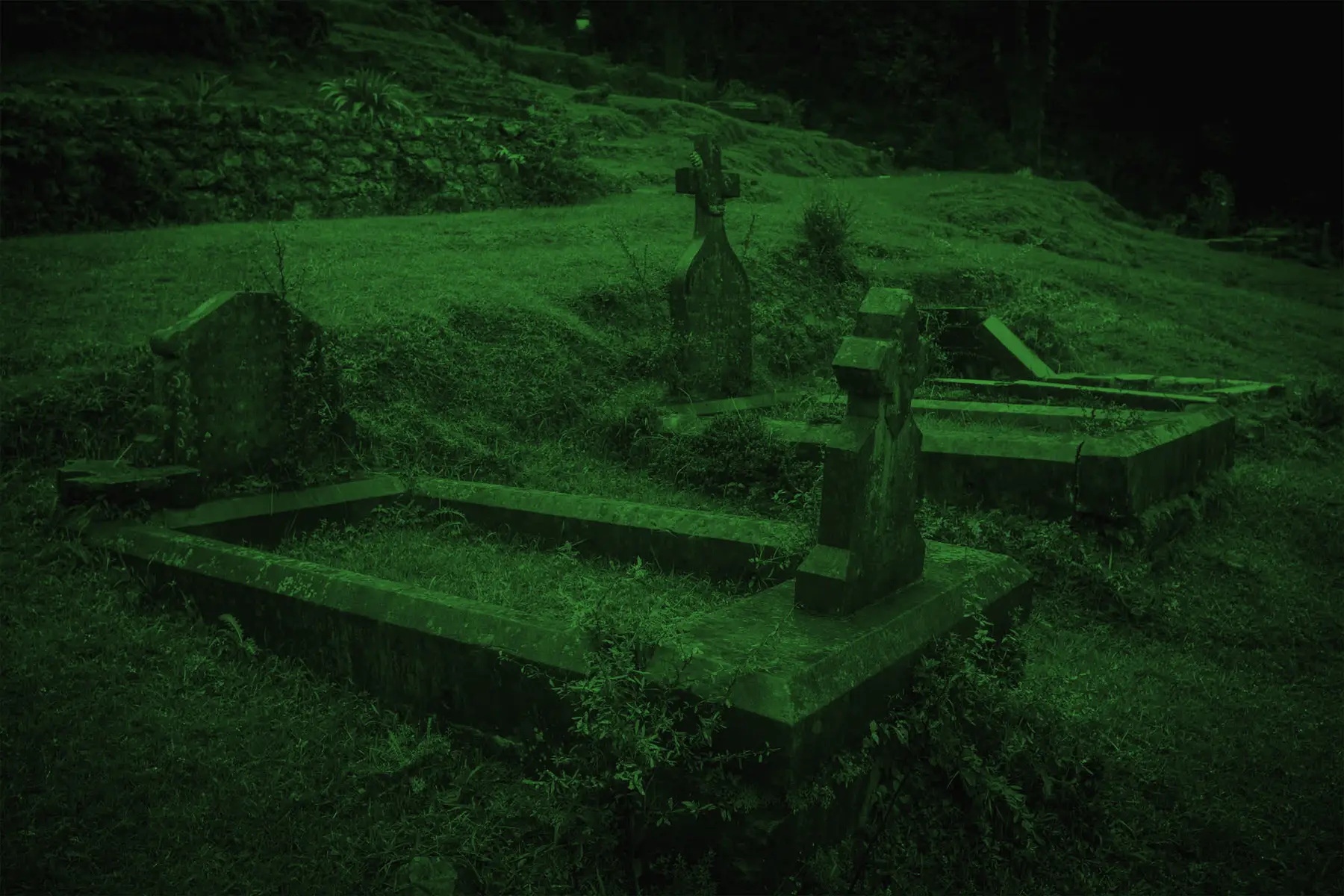
In parts of England, Scotland and Wales, a death in the house meant setting bread on the body. Sometimes the dough was left to rise right on the corpse's chest. Then the family sent for the one person in the village nobody wanted to be seen with, and that person ate the bread, swallowing every sin the dead had ever committed.
It was a bargain struck out of pure terror. The sin eater took the dead person's sins onto their own soul so the dead could skip purgatory and go straight to paradise.
Paying down purgatory
The fear started with the medieval Catholic Church, which ran nearly every part of life in Europe, from education and health care to the Latin mass. Confession and penance could spare a sinner the eternal punishment of hell. But even a truly contrite sinner still owed the temporal punishment for sin, and that debt could mean a long stretch in purgatory, the place between heaven and hell where punishment purifies the soul. In the 11th and 12th centuries, nobody wanted to go there.
The church's answer was the indulgence: not forgiveness of the sin itself, but release from its penalties. It began with pilgrimages and charity. In 1095 the pope offered a full indulgence to any man who signed up to fight in the Crusades. For those who'd rather not pick up a sword, the church worked out an elaborate system for how much purgatory time a cash donation could buy. The wealthy paid up and collected receipts called letters of indulgence, and eventually you could even buy indulgences on behalf of people who were already dead.
That drove the German theologian Martin Luther to launch the Protestant Reformation. "You can't buy your sins away," he thundered. The church, as he saw it, was running a racket, and God's grace wasn't for sale. So what was left for the rich, who were used to buying their way out of trouble?
A crust, a bowl of ale, a stool
Historians think sin eating took hold in the British Isles in this period. The job fell to outcasts, people so desperate for a meal and a few coins that damnation was the least of their worries. Once they'd eaten the sins, they were treated as soiled by them. The people wanted and needed their sin eater, yet shunned them everywhere except at a funeral.
When someone died, a note went to the village sin eater. "Paid only a trifling sum each load of sins," he went to the house and sat on a stool outside the door. He was handed a crust of bread and a bowl of ale, and when he finished, he stood and pronounced rest for the dead. How did the lowliest person in town absorb so much sin without being damned? Sin eaters were believed to have an unlimited supply of souls to spare. Records show some gave up their soul as many as 400 times.
The ritual changed from place to place. In Scotland, a fire lit in the road signaled that the sin eater was needed. In Wales, bread, salt and beer went on the body, the sin eater spoke an incantation over the bread, and he left with sixpence while the dead person's friends and relatives drove him out with sticks. Sin eaters complained about the beatings, and the custom was eventually dropped. That wasn't kindness. Villagers mostly worried the sin eater might not show up when it was their turn to die.
Ghosts the church couldn't kill
The sin eater did one more job: he kept the dead from walking. Both the Catholic Church and the Protestant reformers held that ghosts were impossible. The church ain't afraid of no ghosts.
In England, things got more desperate. Henry VIII split from Rome when the pope wouldn't let him end his marriage to Catherine of Aragon. The long effort to root out Catholic practices that followed took away last rites and the deathbed confession. With purgatory gone too, Protestant teaching left the living believing their loved ones might burn forever, with nothing anyone could do about it. Is it any wonder the poorest villagers found a new line of work?
The people also kept believing in ghosts. After a century of trying, the Church of England was losing that fight and facing a new threat in atheism, so it reversed itself. By the 19th century, ghosts were all the rage in England, and in scattered villages the sin eater still waited for the next call.
Villages paid their most despised outcast to eat bread off a corpse and swallow the dead person's sins, buying that soul a shortcut to heaven. Then they chased their savior out the door with sticks and stones.
The farmer who chose it
Richard Munslow was the last man anyone would expect to take the job. He was a prosperous farmer, baptized in the Church of England, married and the father of seven. Then four of his children died: an infant shortly after birth, and three more in a single week, all of whooping cough.
He had nothing left to live for and nothing left to lose. To honor his children and save their souls, Munslow gave up comfort and standing and became a sin eater, "the last of his kind in all of England." He's remembered only because he'd been so respected before. Most sin eaters worked in secrecy and scorn, and left almost no records.
A grave, mended
Munslow died in 1906 and was buried at St. Margaret's Church in the village of Ratlinghope, under a worn gravestone nobody tended for more than a hundred years. In 2010 the villagers, led by Reverend Norman Morris, raised $1,200 to restore it. Superstition had finally given way to sentiment. The marker now honors Munslow, his wife Ann and their four lost children: George, 11 weeks; Thomas, three; James John, six; and Elizabeth, one.
The custom lasted longer than he did. Emigrants brought it to Kentucky, West Virginia and the Ohio Valley, and in the 1950s a Kentucky woman's obituary mentioned a sin eater, puzzling readers across postwar America. In England the ritual softened into funeral wafers, hard biscuits handed out to mourners. Today the church-hall buffet is more about hospitality than salvation. As one grandmother explained it, "people eat after a funeral to remind themselves that they're still alive."