Case file 136Weird History & Odd Customs1900–1945

Lynnewood Hall

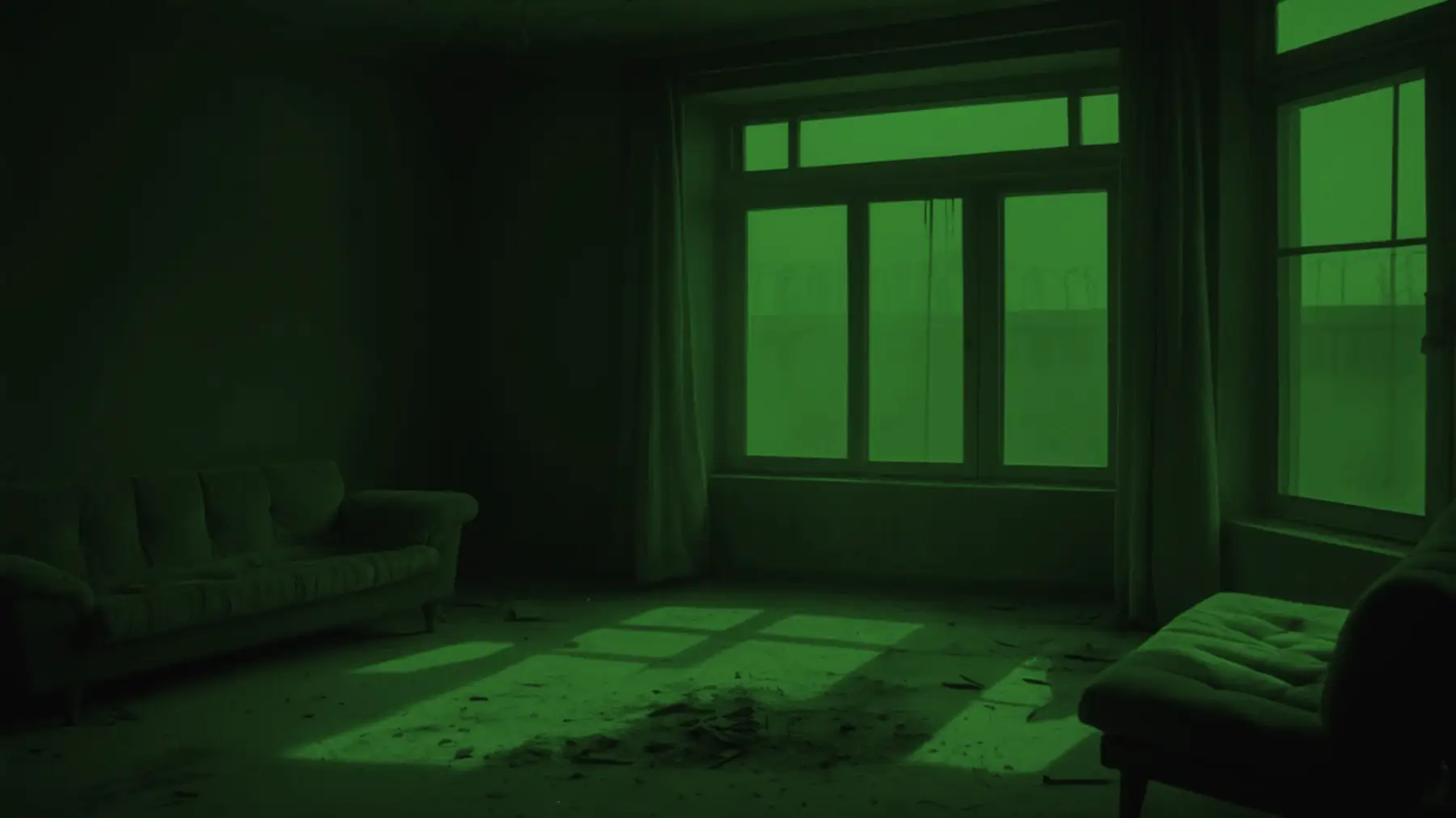
A butcher turned tycoon built America's Versailles outside Philadelphia. Then a ship his own company owned took his son and grandson.

Jan 17, 20261h 16m
00:00 / 1:15:36
Or listen to this episode onApple PodcastsSpotifyYouTube
Share this episode

In this episode

  • Why a butcher kept ten clean aprons in a drawer at all times
  • Fourteen velvet-lined safes, hidden behind a pantry and left off the blueprints
  • The telegram from Halifax that the Widener family never saw coming
  • Why every piece of Widener art went to Washington instead of the museum next door
  • $130,000 on the courthouse steps: how an $8 million palace ended up at a fire-sale price

“Like a great king in a fairy tale, Peter Widener died alone in his castle.”

The story

They called it the last of the American Versailles: 110 rooms, 55 bedrooms, a ballroom built for a thousand guests, and its own electrical plant and farm, spread across 300 acres outside Philadelphia. Peter Widener built it between 1897 and 1899 for more than $300 million in today's dollars. Half a century later, it sold on the courthouse steps for $130,000.

The handsome butcher

Widener started out with a cleaver. He cut meat in Philadelphia's Fifth Street Market, where he was known as "the handsome butcher." He kept at least ten spotless aprons in a drawer, and the moment a drop of blood hit one, he changed into a clean one before he'd wait on the next customer. During the Civil War he won a contract to supply mutton to Union troops. Philadelphia had the biggest Union military hospitals and was a major hub for sending troops out, so that contract turned a chain of meat shops into serious money. He put it into horse-drawn streetcars, and in 1883 he cofounded the Philadelphia Traction Company. It combined the trolley lines of Philadelphia and then spread to New York, Chicago, Pittsburgh and Baltimore. He helped organize U.S. Steel, the American Tobacco Company and the International Mercantile Marine Company. He served seven years as city treasurer. He became a robber baron, one of the Gilded Age tycoons whose fortunes rested on exploited labor and backroom monopolies.

Philadelphia's old-money families never let him forget the sawdust. To them, a butcher's fortune had fresh blood on it. Their own money was no cleaner, just older.

A palace built on grief

Construction began in 1897, a year after Widener's wife, Hannah, died suddenly aboard the couple's yacht off the coast of Maine. The family never said what killed her. Peter couldn't bear to stay in their Broad Street townhouse, so he gave it to the Philadelphia Free Library and threw himself into building the new house.

He spared no expense. The limestone came from Indiana, and the bronze front doors were cast in Florence. The wood paneling came out of a French chateau. Chairs from the Palace of Versailles had once cradled the delicate bottoms of kings. A Louis Comfort Tiffany skylight threw shifting color across one room, and the reception room ceiling was painted as a turquoise sky flecked with tiny clouds. Rembrandts and Vermeers hung on the walls, along with 16 paintings by Raphael. The house had secrets, too. Behind the butler's pantry, left off the blueprints, was a hidden room of fourteen velvet-lined safes. A boarded-up half floor sat above the pantry, tunnels ran under the house for the staff, and a secret passage led from the smoking room to a bathroom.

Lifeboat number four

In 1912, Peter's son George sailed to Paris with his wife, Eleanor, and their son Harry. Officially, they went to hire a proper French chef for the family's Ritz Carlton Hotel in Philadelphia. Eleanor also meant to shop for their daughter's trousseau, a bride's all-new wardrobe, before a spring wedding at the family mansion. For the trip home, they booked passage on the ship everyone was talking about. On April 10 they boarded Titanic at Southampton and settled into cabins C80, C81 and C82.

After the ship hit the iceberg, George waited in the cold for more than an hour in line for lifeboat number four. He watched Eleanor and her maid, Amalie Gieger, get into the boat, then stayed on deck with Harry. Father and son both died. George's name was on the very first list of bodies recovered, and the family arranged a special train car to bring him home. Then the White Star Line sent word that "because of its condition it had been found necessary to bury at sea the body of George D. Widener". The family had no body to bury and no coffin to follow.

The cruelest twist was in Peter Widener's own business dealings. The International Mercantile Marine, which he had helped found, owned the White Star Line, the company that built Titanic. Peter died in his bed on November 6, 1915, at 80. The New York Times reported that he "succumbed to old age and deep sorrow caused by the loss of his son and grandson in the Titanic disaster."

The weird part

The ship that killed Peter Widener's son and grandson was built by the White Star Line, and the White Star Line was owned by the International Mercantile Marine, a company Widener had helped found.

Sold for parts

His will locked the fortune away. Family members could live on the income, but they could never touch the principal. The estate couldn't be divided until every living descendant had been dead for 21 years. Meanwhile, the will opened the house to every child and grandchild who wanted to live there. It set nothing aside to keep the place standing.

His last surviving son, Joseph, inherited the art and his father's grudge. Starting in 1940, he gave more than 2,000 pieces worth over $18 million to the National Gallery in Washington. The Philadelphia Museum of Art was nearly next door, and he made sure it didn't get a thing.

Joseph died in 1943. None of the heirs wanted to take on the house, and by 1944 it stood empty. A developer bought 220 acres of the farmland for a subdivision. Later he bought the mansion and its 36-acre formal French garden at a courthouse-steps auction for $130,000. For years nobody would buy it from him. Then in 1952, fundamentalist preacher Carl McIntire paid $192,000 to turn it into a seminary. The ballroom became a chapel, and the art galleries held a 23,000-volume library. To pay the bills, McIntire stripped off the walnut paneling and sold the marble from the fireplaces and balustrades. One dealer paid him $400,000 for seven statues, then priced the fountains at $2.5 million. "The property is a very heavy burden on us," McIntire said. Most of the decoration had been made in France and put together on site, so it came off easily, like pieces of a Gilded Age Lego set.

In 1996 the house went up for auction again. The only bidder was the Reverend Richard S. Yoon, a urologist and pastor at the First Korean Church of New York. He admitted that $7 million to $10 million worth of property had been hauled out of the house between 1991 and 1996. He evicted McIntire's seminary and then spent about two decades losing fights over tax-exempt status, going all the way to the Supreme Court in 2013. All the while, water kept coming through the roof.

No broken windows

Locked and dark, the house drew urban explorers. They filmed peeling paint, chunks of marble piling up in the indoor pool, and a third floor ruined by water. Their videos never show graffiti. Explorer Liam O'Mara told The Philadelphia Inquirer the mansion was "the only place he's ever been in that has no broken windows and zero graffiti." His theory: "The place has weight, and that weight earns respect."

In 2018, Angie Van Scyoc and Edward Thome started a preservation society to buy the property. It had sat on the market for nearly a decade when they finally bought it in June 2023 for $9 million. They hope to open the doors to the public in 2026.

The transcript

Chapters & full transcript11,196 words
Chapters
  1. 00:15The last American Versailles
  2. 02:57Bodies at Halifax
  3. 06:01From butcher to baron
  4. 09:24Building the castle
  5. 15:06A voyage home on Titanic
  6. 29:07Stripped, sold, saved

This transcript was generated automatically from the episode audio and may contain errors. Times are approximate, since ad breaks can shift them by a minute or two.

00:00

Hey true weirdos, thank you so much for all your support. Because of your support we were able to win some awards with this podcast in the past year. And be sure to stick around for the conversation we have after the episode. They called it the last of the American Versailles. Sprawling on 300 acres just outside Philadelphia, 110 rooms, 55 bedrooms, a ballroom designed to host a thousand guests. There were art galleries, wine cellars, a swimming pool of course.

00:34

The house had its own electrical plant and a farm along with workshops and studios for carpenters and upholsterers. Construction began in 1897 and was completed just two years later for a cost of more than 300 million in today's dollars. The furnishings were opulent. Antiques once owned by royalty, rare Persian carpets, ancient ceramics from China, and valuable artworks from all around the world graced nearly every wall. For all that though, this was a family home. A family marked by a near mythic tragedy. Word has been received by the Widener family in Philadelphia from the White Star Line officials that because of its condition it had been found necessary to bury at sea the body of George D. Widener, a Titanic victim. The news is a crushing blow to the Wideners.

01:35

And they got a small beam of light against the mirror. True. Weird. Stuff. We know the story of the Titanic is much from the James Cameron movie now than from any actual historical account. Maybe more if we're honest. We're sad that there wasn't room for the fictional Jack on the fictional door that kept the fictional Rose from slipping into the frigid waters of the North Atlantic. In the movie, the Titanic story ends with Rose dropping an enormous jewel into the sea, then dying and reuniting with all of her fellow Titanic passengers. Ghosts now.

02:34

Which softens the blow for us. We get a kind of happy ending. One that focuses on true love, not hubris and horror. Not on the terrible loss of life. The grief as cold and deep as that great ship's final resting place. But in real life, you know, Titanic had a different ending. Cable steamer with Titanic dead expected in Halifax early Monday.

03:03

That was the headline on Saturday, April 27th, 1912. Authorities feared the crowds of the curious would stampede the dock in hopes of seeing, well, dead bodies. There's really no way to dress that truth up. Documents giving verdicts of accidental death were prepared here today in readiness for the coroner's jury, which will inspect the bodies of the Titanic dead now on their way here on board the cable ship Macmay Bennett.

03:34

The names of the drowned will be filled in later in cases where names can be ascertained. And where names couldn't be ascertained? Stonecutters were set at work inscribing a number of headstones which will mark the graves of those bodies unidentified or unclaimed. More than 100 bereaved family members of Titanic passengers were arriving in Halifax from all over the United States. Officials with the White Star Line were desperate to control the story and ordered that the coffins containing the bodies remain sealed until they were taken from the ship to the city's morgue. A local funeral company would manage viewings and only those who could prove their right to make an identification would be permitted inside the building. If you can imagine that scene, even Celine Dion couldn't sing away the horror and sorrow of so much death. In that crowd of mourners, representatives from George Widener's family, they'd arranged for a special train car to bring his remains back home to Philadelphia to be laid to rest. They'd had time to plan.

04:42

George Widener's name had appeared in the very first list of bodies recovered by the McKay Bennett. So the news that their loved one's body was in such a state of decomposition that it couldn't even be transported in a coffin to Halifax, it was an awful shock. Funerals, as the saying goes, are for the living. Seeing the body, preparing the body for burial or cremation, these rituals help the living comprehend the finality of death. We need to see. We need to know. We need to believe in order to grieve and go on. The Widener family was denied that. For all of their wealth and influence, here they were powerless. As Titanic herself proved, money and grandeur are no protection at all from the forces of nature and of fate.

05:44

George Widener was the middle son of Hannah and Peter Widener. Their oldest child, Harry, was stricken with typhoid fever and died in 1871. He was just 11 years old. The baby, Joseph, like his brother George, grew up to join the family business. The Wideners had real money, gilded age wealth. Peter Widener built an enormous fortune that began in a butcher shop. Peter went from meat cutter to entrepreneur, launching a successful chain of meat stores. Then he snagged a lucrative government contract. Peter Widener supplied Union troops in the Philadelphia area with mutton during the Civil War. Philadelphia was a prime location for Widener, the biggest Union military hospitals were there, and the city was a major hub for troop deployments, which meant a whole lot of soldiers eating a whole lot of mutton, generating a whole lot of profit for Peter Widener, whose ambitions weren't limited to meat. He invested much of his profits into a line of horse-drawn streetcars. Then in 1883, along with two partners, he founded the Philadelphia Traction Company. The plan? Electric trolley lines. Before long, the partners had managed to consolidate all of the trolley lines in Philadelphia, and then expanding to New York, Chicago, Pittsburgh, and Baltimore. From raw meat to trolley transport to investments in railroads and fossil fuels, Widener's fortune grew. He was a founding organizer of U.S. Steel, the American Tobacco Company, and the International Mercantile Marine Company, and as his bank account swelled, so did his power. He served on the Board of Education in Philly, and was the city treasurer for seven years. He was named the city's park commissioner.

07:41

Peter Widener was like the Monopoly man come to life. Peter Widener was a character. Widener was a button butcher in the Fifth Street Market in Philadelphia. This accounts for the herdsman's instincts, which gave him the power to corral something. Peter Widener is a strong man. When he killed sheep and sold the carcasses in the market, he was known as the handsome butcher. There's a little anecdote about Widener's meat-cutting days that reveals the man's attention to detail, his desire for absolute control, his instinctive grasp of the power of image. He wore the most immaculate aprons. Widener never had less than 10 ready for use in his drawer at all times. The minute a spot got on one, or a drop of blood, he would take it off and put a clean one on before he would wait on another customer.

08:32

Now, Widener may have been an accidental politician, but he was a born lobbyist, a natural at negotiating not just a deal, but all the legalities of a deal, which could be hazy, and sloppy, and not quite on the side of right. But then, don't they say it's just about impossible to build a fortune like Widener's without breaking the law? Which is why dudes as rich as Peter Widener get to the point where they want to not just break the laws, but make the laws too.

09:04

It's the American way. Elect the fox governor of the henhouse. Because after all, who has a bigger interest in the welfare of chickens than the hungry old fox himself? And once you've built the fortune and the kingdom of power, you're going to need a castle. In 1897, before the Titanic was even a rough pencil sketch, Peter Widener began building what would become one of the most spectacular and tragic private homes in the United States. There was already a cloud of grief hanging over the whole process, though. Peter Widener had lost his wife in 1896, a year before construction began. The couple were on their yacht off the coast of Maine when Hannah abruptly passed.

09:49

The family remained silent regarding the cause of death. Peter was distraught. The couple had been living in a townhouse on Broad Street in Philadelphia, but Peter found he just couldn't remain there. So he donated that townhouse to the Philadelphia Free Library and threw himself into the construction of his new home. Little did he know that Hannah's death on the water foreshadowed an even greater tragedy to come. Widener's new home would be called Linwood Hall.

10:21

The characteristics of the exterior that most impress are stateliness, strength, spaciousness, and a certain architectural grace stippled by simplicity. Now, the architect Widener chose was this man named Horace Trumbauer. Widener wasn't Trumbauer's first Gilded Age client, but it was Linwood Hall that would make Trumbauer both famous and wealthy.

10:49

Widener either never had a budget for Linwood Hall or never cared about going over budget because no expense was too high, no material too exotic, because Peter Widener had few money. Every inch of Linwood Hall screams it. He earned it and he would spend it however he pleased. And one of the things that pleased him was a secret, like the secret room of safes that wasn't included in the house's blueprints. Fourteen velvet lined safes tucked in a hidden room behind the butler's pantry. It's assumed now that that's where the servants kept pieces of the Widener family silver. A half floor was discovered above the butler's pantry. Boarded up for at least 60 years, they found it was lined with wooden cabinetry, storage for the Widener family china, and then there was the system of underground tunnels running beneath Linwood Hall, maintenance access, shortcuts for household staff. And of course, there was at least one secret passage that ran from the smoking room to a bathroom. Limestone was brought in from Indiana.

11:58

I-beams were forged of steel. Marble was sourced from around the world. Bricks were handmade. Concrete was mixed. Everything was the highest quality that could be found or made. There are some materials that went into the construction of Linwood Hall that you simply couldn't even begin to replicate today. That exquisite wood paneling? Taken from a chateau in France. The massive front doors? Bronze cast in Florence, Italy. Furniture from the Palace of Versailles. Carved wooden chairs that had once cradled the delicate bottoms of kings. Tapestries that once graced the walls of homes owned by noble European families. One room featured a vast Louis Comfort Tiffany stained glass skylight, a kaleidoscope of color that morphed and danced from hour to hour, season to season. The main hall, 15 by 40 feet, may be compared only in its beauty and stately elegance to the entrance court of a palace of the Montezumas. They can call it the Gilded Age for nothing. The delicate turquoise sky of the ceiling of the reception room is flecked with tiny clouds. The airy height of this mimicked sky overhead and the glimpses of far-off, shadowy but gilded and rose-tinted celestial cities appearing like a mirage or dream castles in the air are incomparable. When Peter Widener moved into the completed and spectacular Linwood Hall, it was the year 1900. Just over half the wealth in America was controlled by the richest one percent of family. And the very richest of the rich, men like Peter Widener, they called them robber barons because so much of their wealth came off the backs of exploited labor and from backroom deals that created lucrative monopolies. The robber barons were ruthless capitalists, unmoved by conscience or mercy or even the law. Because remember, if you make enough money, eventually you can make the laws too. The only real difference between the Gilded Age robber barons of Peter Widener and today's ultra-rich tech broligarchs is philanthropy. The obscenely wealthy of Widener's day built schools, hospitals, museums and libraries. Our modern dollar-deprived demons are building bunkers and snorting the stem cells of third world virgins in the hopes of living forever. They don't care about monuments or posterity. To create something as magnificent as Linwood Hall, Mark Zuckerberg could never. But even the most glorious mansion is ultimately just a house. And even the grandest house can't protect you from heartache. No locked door can ever keep it out, as Peter Widener would soon discover.

15:06

Peter's son George Widener married the daughter of his father's business partner. Her name was Eleanor Elkins and among the many holdings in the Widener empire was the Ritz Carlton Hotel in Philadelphia. It was decided that the Ritz simply must have a proper French chef in its kitchen. And because this was 1912 and there was no such thing as LinkedIn or corporate recruiters on the internet, in order to find a chef in France interested in cooking in a hotel in Philly, one had to actually go to France and ask around. Which sounds charming in a chaotic sort of way. Finding a chef was the official reason for the trip, but Paris had something else the Wideners wanted. Their only daughter was planning her spring 1912 wedding, which would be held at Linwood Hall. Eleanor Widener intended to do a little shopping for the bridal trousseau.

15:57

That's a fancy rich people word for all new clothes. The Wideners set sail for Paris and brought along one of their three children, a son named Harry. They were accompanied by two members of staff, manservant Edwin Keeping and ladies maid Amalie Gieger. When it was time to return to the States, Widener booked passage on the ship that everyone was talking about. A ship they were calling the Queen of the Ocean. The largest, the most luxurious, the safest, the unsinkable Titanic.

16:32

The passenger list was a who's who of the prominent and the wealthy. Widener would have plenty in with industrialists like John Jacob Astor and Benjamin Guggenheim. J.P. Morgan was supposed to be aboard, but canceled. Morgan's first class suite was assigned to another rich American couple who also canceled. White Star Line founder J. Bruce Ismay ended up taking the cabin for himself, strolling the same first class deck as George and Eleanor Widener. It's probably safe to say that the Wideners, while not underwhelmed by the grandeur of Titanic, they were used to wandering through dazzling surroundings. After all, the Widener home was one of the most impressive houses in America. And yes, Titanic was a marvel. But Linwood Hall was home to Rembrandts and Vermeers. Still, if you can afford to buy anything your heart desires, what has value?

17:34

Experiences, opportunities, the chance to make history. And so the three Wideners, along with their two servants, boarded Titanic at Southampton, England on April 10th, 1912. They settled into cabins C80, C81 and C82. Back home in Philadelphia, Peter Widener was now an old man of 78, diabetic and struggling with his health. Widener still lived in the house.

18:04

His sons George and Joseph did as well, each in their own huge, magnificently appointed apartments. Sidebar, much as we all enjoy being lectured by our bettors on the value of self-sufficiency and hard work and never asking for a handout, I think it must also be very nice to be born into the kind of money where you get to live rent free in a house described as an American Versailles, with 16 different paintings by Raphael hanging on the walls.

18:33

But let's don't hate the Wideners because they suffered plenty and at least one of them had a petty streak about as cold and deep as the iceberg that lay in wait for Titanic. And you won't blame him for that a bit when we get there. The first few days of Titanic's maiden voyage were unremarkable. The ship went from Southampton to France where it picked up more passengers and then steamed its way to Ireland.

18:58

April 12th and 13th found her moving swiftly across calm seas. The champagne was flowing, the band was playing, just like in the movie. The 14th of April dawned clear and cold and all day long came warnings of possible ice ahead. You know what happened next. Look out, Frederick Fleet spotted the iceberg and gave the alarm. But there was no time.

19:25

The ship struck the iceberg on the starboard side. Water began pouring in through the gash torn in her hull, rising 14 feet in just 10 minutes in the front of the ship. The great unstinkable Titanic would go under. So the captain gave orders, radio for help, evacuate the passengers to lifeboats, women and children first. George and Eleanor Widener made their way to the deck, their boy Harry shivering and frightened beside them. George had a decision to make, though for him and others like him, it was no decision at all. Because the word decision implies a choice. And from where George Widener stood, there was nothing to choose. Not really.

20:12

He would see his wife to safety as best he could. It's what a man did. Be George Widener now for just a moment. Stand for more than an hour in the biting cold in line for lifeboat number four. Watch as your wife sobbing and shaking is helped into the boat. Next to her is her lady's maid Amelie, pale and visibly terrified. Your son is at your side. Is it courage that makes the boy seem so composed? So still? Or is it shock? While first class passengers like the Wideners did have better and easier access to lifeboats, though it's a fact that there weren't enough, nor were the boats they did have loaded properly to capacity. The death rate for men in first class was high. 118 men perished that night. More in second and third class died, of course, and the crew numbers are devastating. 693 men and three women put duty first and died trying to evacuate their passengers. The wreckage of the great ship had barely settled on the ocean's floor when the myth making began. And you can hardly judge the people of the time for being desperate to comprehend the enormity of the tragedy, for wanting to make meaning out of a disaster that claimed an estimated 1,517 lives. These were people, passengers and crew alike, who knew their death was here. Cold, terrified, all around them the screams and the shrieking of the desperate, the screams and the shrieking of metal tearing itself in two, the sound of heavy objects breaking from their moorings and slamming into other heavy things. And thanks to the survivors and Hollywood, there was another sound and all that madness.

22:16

Colonel John Jacob Astor stood with his knees awash and waved farewell to his girl bride. George Widener and his son stood arms entwined and smiled upon the wife and mother. Isidore Strauss stood with his aged wife in close embrace. She had refused to leave him. John B. Thayer hurled his young son from the vessel side, but himself stood with that gallant line. And so they died.

22:48

When news of Titanic sinking reached Peter Widener at Linwood Hall in Philadelphia, it was almost more than the old man could bear. The strength and sheer force of will that had transformed a young butcher into one of the richest and most powerful men in America was nothing against the colossal grief of losing his son and grandson without a body to bury.

23:16

Their graves lay more than two miles beneath the surface of the North Atlantic in a place so frigid and remote that even sunlight can't penetrate. What comfort could Peter Widener take from his riches now that he had lived into old age only to grieve first one son and then another? Peter Widener died in his bed at Linwood Hall on November 6th, 1915. He was 80 years old. He'd lived an outsized life, a classic American life, all rags to riches and rising to great pinnacles of power. And then the end came. More Greek tragedy, more Shakespearean melancholy than anyone who'd witnessed the streetcar king of Philadelphia's extraordinary success could have ever dreamed. The New York Times declared that Peter Widener succumbed to old age and deep sorrow caused by the loss of his son and grandson in the Titanic disaster. The entire Widener fortune was a sum estimated to be in the 50 million dollar range, which might sound quaint to you since we live in an age of billionaires who wouldn't look twice at 50 mil unless it was offering them a handy. So let's do be sentimental for more rational times when 50 million dollars was an unimaginable fortune. Peter Widener did two things with his will. First, he stipulated that the public would never be privy to the extent of the Widener fortune. And two, the Widener art collection was left entirely to his youngest and only surviving child, Joseph. The will did not contain any provision for the Widener home for crippled children or any other charitable institution. The bulk of the estate was left in trust to Joseph Widener. With a twist, the will permitted Joseph to give or sell any of the Widener artworks to any museum in Philadelphia, New York or Washington. As for the money, the will restricted Joseph and all other living family members to an income derived from the estate, but they would never have access to the funds.

25:31

In fact, all living descendants of Peter Widener would have to be deceased for a period of 21 years. Before the estate could be divided among their heirs. Very rich people stuff, am I right? Can you imagine the reading of that will? Though the old man did specify that Joseph was to receive $100,000 outright. And the house, the exquisite Linwood Hall, which for all of Peter Widener's many accomplishments was his masterpiece. Linwood Hall is to be kept open for the use of all his children and grandchildren, and they are to be permitted to make it their home and use the horses, carriages and motor cars as they may see fit. Widener stipulated that no appraisal of the estate should be filed. And one more detail, a provision for his son, George's widow, Eleanor.

26:28

She remarried in the summer of 1914, but remained close to both Peter and Joseph Widener. His will made it plain that she was as welcome at Linwood Hall as any blood relation. As your robber barons go, Peter Widener seemed as decent a man as could be found among that crew of gilded gangsters. He provided for his kin. He tried hard to put enough restrictions on his fortune that it might not be squandered in one generation. He threw open the doors of his incredible home and declared his family welcome to call it theirs. But you know how it can be with a house and a house like Linwood Hall? A house like that is a world of its own. The biggest, the grandest, the most precious and special built to last the ages. If it were a ship, you might even be tempted to call it unsinkable.

27:27

After his father's death in 1915 and until 1940, Joseph Widener opened the family art collection to the public. It was strictly by appointment and those were only available from June through October. But Joseph, who'd inherited his late father's passion for art, wanted to share their with the world. Then in 1940, he began donating pieces to the National Gallery in Washington, D.C. Sculptures, paintings, porcelains, more than 2,000 items were donated with a value of over $18 million. Remember when we mentioned that one of Peter Widener's heirs had a petty streak as cold as that iceberg that sank Titanic? That was Joseph Widener. Despite the fact that the Philadelphia Museum of Art was a neighbor, Widener made sure that museum didn't get a thing. Here's why. The Widener fortune was new money, that whole rags to riches thing.

28:30

Philadelphia's old money aristocracy looked at Peter Widener with contempt. He was a butcher after all and that meant fresh blood on his money. Not like theirs, which was no purer, it was just older. And the older the money, the more convinced those who have it are that they're literally a better class of human. The snobbery Widener was subjected to was gross and not exactly covert. As far as Joseph Widener was concerned, the Philadelphia Museum of Art would get his family's art over his dead body and not even then. Joseph Widener died in 1943.

29:10

None of the Widener heirs wanted to take on the responsibility of managing Linwood Hall. By 1944, the house stood empty. 220 acres of its farmland was sold to a developer who built houses on the land calling the subdivision Linwood Gardens. Four years went by. This is going to be hard to believe, but that same developer wound up buying not just the storied mansion of Linwood Hall, but the 36-acre formal French garden that went with it. And that whole property was up for auction on the courthouse steps. It was sold for just $130,000.

29:50

The last American Versailles, built for $8 million in 1900 money, sold for pennies at auction. And then what? The developer had big ideas about selling the place at a huge profit. There just weren't any takers. Not for eight years. That's when a fundamentalist preacher named Dr. Carl McIntire rolled up. He was looking for a place to turn into a seminary.

30:16

And in 1952, he snapped up Linwood Hall for $192,000. McIntire wouldn't have described his ministry as Cold War Jesus, but he sure could have. Dr. McIntire will speak on some of the current issues facing the religious world, such as communism in the churches, the Air Force Manual, and modernism, socialism, and the American way of life. It's only the most meager comfort to know that a so-called holy man without a thought to spare for the poor, the hungry, and the oppressed is nothing new. We keep doing this in America because it's easier than doing real Jesus-endorsed activities. Loving your neighbor instead of judging and harassing them. But does that really pay the bills? It didn't for Dr. McIntire, who spent the next four decades financing his mission by gradually stripping Linwood Hall of anything of value. He sold off the marble from the fireplaces and the balustrades. He peeled the walnut paneling off the walls and sold that too.

31:24

McIntire eventually took his message to a radio station in New Jersey, because of course he did. That's what these guys do. But that seminary at Linwood Hall, it was up and running. By 1967, 80 students were in residence, training to be missionaries and ministers. The wine cellar is now a storage bin. What was once the Grand Ballroom, scene of Philadelphia society's greatest wingdings, is now the chapel. Art galleries, on whose walls once hung masterpieces by Rembrandt, now house the seminary's 23,000 volume library. Servants' quarters have become dormitories.

32:07

There was just never enough money to stay ahead of the maintenance at Linwood Hall. And even the most devout prayers couldn't fix the plumbing, or the roof, or the electrical wiring. The house became a little shabby, and then a bit run down, and worse. And by June 1990, McIntire's inability to keep up with the bills meant the threat of another sheriff's auction. Whether the failure to repay the Linwood Hall mortgage is Mr. McIntire's strategy to secure a lower interest rate, or an indication of how depleted his finances have become, it has stirred neighbors to fear they could lose the Grand Mansion, which has fallen into disrepair. McIntire was open about stripping the house and selling it for parts. He pointed out that a dealer had just paid him $400,000 for seven marble and bronze outdoor statues. And that dealer, he turned around and priced the fountains at two and a half million dollars. McIntire shrugged. The property is a very heavy burden on us. We've had water lines break. We put in a brand new heating system.

33:18

To heat that building, no small task. By 1993, the consensus on Linwood Hall seemed to be, yeah, bust it up, sell the pieces. The home wasn't on the state or national historic registry, which was weird, despite the building's clear historic importance. The way it had been built made it easy to pilfer. Most of the ornamentation was made in France, shipped to Philadelphia, and assembled on site. All that beauty could be just peeled right off, which is very different architecturally from like a Frank Lloyd Wright property. Linwood Hall was like a Gilded Age Lego mansion. And McIntire had been cheerfully snapping off pieces right and left.

34:05

Leap ahead to 1996, when Linwood Hall finally went up for auction again. The Reverend McIntire not only didn't try to hang on this time, he didn't even show up for the sale. The only bidder was another religious man, the Reverend Richard S. Yoon, who was also a urologist and a pastor at the First Korean Church of New York. Yoon, who said he hoped to put together the funds to refurbish the mansion, acknowledged that between 1991 and 1996, property worth between seven and ten million dollars had been removed from the house. Then, as soon as Yoon had the keys in hand, he filed papers to evict McIntire's Faith Seminary. McIntire and Yoon ended up duking it out in court. Yoon had no fight with using the property as a church, in that tasty tax-exempt status and all, but he wanted to run the place as his church. What Yoon didn't know then is that he would spend the next couple of decades fighting the township to get that tax exemption, while Linwood Hall continued to gently crumble all around him. There was a small band of Linwood loyalists in Philadelphia who wanted to see the place restored. Hotel, conference center, country club, there were uses for buildings like this. Buildings worth preserving. So in 2004, the numbers were calculated. What would the restoration of Linwood Hall cost? The estimate was 12 million dollars. It was a reasonable price, but getting investors on board, that was the challenge. Meanwhile, the Reverend Yoon was busy losing every single appeal regarding his tax-exempt status. In 2013, Yoon took the fight to the Supreme Court.

35:53

By that point, the gates at Linwood Hall were kept locked. It was empty and dark, with only a single caretaker remaining on the grounds. And that caretaker was no match for the YouTubers and amateur photographers and urban explorers who managed to find their way into Linwood Hall. The videos range from shaky and poorly lit, to stuff that looks pretty polished. All of them capture the fading grandeur and creeping decay. Peeling paint, water damage, ceilings, hunks of marble accumulating in the indoor pool, walls stripped down to the brick. Shots show the first and second floors much better preserved than the third floor, where water damage has slowly chewed through. The ceilings exposing their beams and joists. What you don't see in those videos? Graffiti. Not a single tag. An urban explorer named Leon O'Mara told the Philadelphia Inquirer that Linwood Hall is the only place he's ever been in that has no broken windows and zero graffiti. His theory? Everyone who gets into Linwood Hall sees the significance. The place has weight, and that weight earns respect.

37:16

You don't build a house like this unless you're thinking in terms of generations, legacy. Widener was. Linwood Hall was meant to be the seat of the Widener family for centuries. Peter Widener was a man accustomed to success. A self-made man. We love that in America. We love a winner. But it's easy to get cocky, to forget the part luck plays in life. It's so easy to convince yourself that it's all your hard work, your big ideas, that got you to the top.

37:51

Easy to forget that time, that thief, is not just deaf to your pleadings for more. It's indifferent to your efforts. And fate? That's an even trickier thing for a guy like Peter Widener, a captain of industry, a master of the universe. A man like that doesn't wait for fate to move him. He bends fate to his will, brings it to its knees. And fate will return that favor.

38:20

Always. There's no escaping it. No bargaining. No buying it off. Like a great king in a fairy tale, Peter Widener died alone in his castle. His wealth, his splendid artworks, his good deeds. In the end, he was just an old man, alone with his memories and his grief. Grief that might have been shaded by guilt, however irrational. Because Peter Widener, remember, played a role in the founding of the International Mercantile Marine. He had a big stake in it.

38:59

And one of IMM's holdings happened to be a shipping company called the White Star Line. And the White Star Line? They built the ship that would break Widener's heart. The fastest and safest to float. The grandest, most opulent. A marvel of engineering and luxury. The practically unsinkable Titanic. In 2018, Angie Van Scyoc and Edward Thome formed the Linwood Preservation Society.

39:34

The goal is to raise the funds to purchase the property, restore it, and open it to the public for occasional tours. They finally pulled it off in June 2023 after the property sat on the market for nearly a decade. The sale price? $9 million. And they hope to open the doors to us, the public, this year in 2026. Next time on True Weird Stuff. What a beautiful baby. How many times in your life have you heard those words? For some people, though, those four innocent little words, what a beautiful baby, are enough to trigger a panic. To praise a child's beauty, goes the superstition, is to invite the attention of the evil eye. Is that what happened to little Billy Dancy?

40:35

A magazine called him the perfect baby. And then he vanished. Come out, come out, wherever you are, Billy, on the next True Weird Stuff. Special thanks to our voice talents on this episode, Erin Cox and Don Morgan. Linwood Hall is a legend in Philadelphia. I mean, and I think the thing that I thought about when we started doing this was the Biltmore House, which was built by the Vanderbilts. Maybe not quite as big, Linwood Hall, probably not quite as big as the Biltmore. But I thought about that. And I remember the thought went through my mind because I didn't know what was going on with it. Couldn't they refurbish it and do tours like they do at the Biltmore House? That's how they make their living there. It's kind of crazy, the story of Linwood Hall, because it really would have, should have, could have been like Biltmore Estate.

41:39

But I have a lot of thoughts about Peter Widener, who really came from nothing and built this incredible Gilded Age fortune. Here's one of my thoughts. Tell me what you think about this. As I sat with this story, I think that Linwood Hall met the fate it did because Peter Widener came from nothing. I think he didn't know how to handle this kind of generational wealth.

42:13

And he didn't, I don't, do you understand what I'm saying? Peter Widener was the first Widener to have money. And as anyone who comes from poverty knows, money is a skill, it's a language, it's an ecosystem. Rich people think about money differently than you do. For you, if you have a dollar, you're looking, what can I buy with a dollar? But a rich person goes, I got a dollar, let me put that in my pocket and see what I can buy with your dollar. Does that make sense?

42:45

It does make sense, yeah. They leverage both wealth and debt differently and they think about money in a completely different way than you and I do. And when I look at Peter Widener and the way that he handled his wealth, I see someone who's brilliant and strategic and a terrific negotiator, a great salesman, a born politician. But I also see a guy that came up from nothing wearing a butcher's apron who didn't grow up in a family where you think about money the way that generational wealth thinks about money. When I look at Peter Widener's will, he did some interesting things.

43:31

It was like he understood that the human beings in his family could potentially run through the money really quickly. So he shielded the money from the people but he failed to comprehend that if he wanted Linwood Hall to be his legacy, that he would have to fund the legacy. I think he forgot that his son Joseph wouldn't live forever and in fact he never dreamed Joseph would die as young as he did. So I think he made the kind of money mistakes that you or I would make if we won the lottery. I mean there's a reason why lottery winners will win 30 million and be broke in three years because we think about money differently.

44:13

The one thing about these mansions is they're so highly impractical because I mean you think about it that this has 55 bedrooms. Yeah. I mean how many people you get out and have living there and the upkeep of that. One of the things that you and I have in common, we're both fascinated with abandoned things and what's really interesting is how many abandoned mansions there are where people simply could not keep up with all of the maintenance that's required for such a huge building. I mean the roof and the heating and all of that stuff.

44:49

And I think about that and I think about somebody who does understand money. Couldn't he have seen that? Do you know what I mean? Or did you think in some way this was going to last forever? You know, yeah. A couple of things. I think that whatever Peter Widener wanted, by the time he was putting together his last will and testament, he was surrounded by yes men.

45:21

Because a good lawyer would have been like, dude, we need to create some sort of endowment for your house. But that's not how Peter Widener saw it. And if there's one thing you can guess about Peter Widener, if you look at the trajectory of his life, he did things his way. He didn't suffer fools. And by the time he got to that point in his life, his own prior success had convinced him that he really knew what he was doing. So there were two reasons that I wanted to tell this story. One, Lynnewood Hall is fascinating. It's a fascinating property and hopefully this year, they will succeed in getting it open to the public and you'll be able to go without risking an arrest. So the part of it was, this is truly a spectacular building that's worth saving. And it's legendary in Philly, but outside of Philly, no one seems to know about it.

46:20

So that was one reason for the story. And the other reason was, this is such an incredible American story. This is like American dream propaganda on steroids. But at the same time, it's also this profound human tragedy. Because you have this guy who came from nothing, who absolutely grabbed the world and with sheer brute determination, shaped it into his vision, only to have so much tragedy, only to have the hubris of his magnificent home brush up against the hubris of that magnificent ship.

47:06

The fact that he was involved with that financially too. Yeah. And George Widener, I'm sorry, Peter Widener's story, those of us who don't have wealth, we very correctly assume that it's a great problem solver because it is, right? Nothing will solve the problem of being hungry and cold like a little bit of money, but it doesn't protect you from anything. He lost one child at age 11. He lost his son and grandson to Titanic. In what way was his money? He had enough money to build the grandest house in America and seal himself inside of it like a king. And yet those walls, didn't matter how thick they were or how exquisite, they could not protect him from the same shit that comes for all of us. You know, it's funny you say this, and I've talked jokingly about the great aunt and great uncle that I had that were multimillionaires. And my Uncle Jack and Aunt Freda went on a cruise ship. And I remember we went to New York and actually saw them off and they were going to take a cruise and they were going to go to Europe and it was a big trip for them because they were at this point, I would guess in their seventies, mid seventies. So I'm on the trip, my Aunt Freda dies. So they've got to take the body with them over to Europe and then fly home with the body with my Uncle Jack. So my Uncle Jack is standing in the middle of this opulent home they lived in in Fox Chapel outside of Pittsburgh with my father. And the line that he gave to my father is with all this money, I couldn't have prevented this. And it is something that stuck with my father. And it's a story that he liked to recount because it brings home this very point that you're There's just there, I mean, all the money in the world. It didn't, it didn't protect him from heartbreak and he died alone. He lost his wife, he lost his two sons, he lost his grandson, died alone, devastated and sick with the guilt that his money had in some way brought this tragedy upon his family and the world. And the horror, the horror of being notified that we're bringing George's body back to Halifax, only to then receive a telegram, the condition of the body was such that we had to do a burial at sea. The horror of that, Max, the horror. And this is one of those, because we're all drunk on the movie version of Titanic. And the movie version sort skipped over the part where they brought coffins with dead bodies back to dock, didn't it?

49:51

Yeah, they did. And it skipped over the part that not all of those bodies could make it back to the dock and had to be dumped at sea. So I thought that was a really painful detail in Peter Widener's story. Because Titanic was at its core a love story and not really about the Titanic. That's the problem with it. As much as they got right in that movie about certain specific things about the ship and that sort of thing, that part was glossed over. And when you talked about that, I had never thought about that before, the horror of that.

50:28

Well, because, you know, like we're so... And we also think that all the Titanic stories have been told. Although every once in a while, we'll ferret one up and look at each other and go, I thought we knew everything about Titanic. This is an example of a Titanic story that really, you know, never was told. It's understood if you know the story of Linwood Hall and the Widener family, you know that they lost someone on the ship. What you don't realize is all the connections between the Wideners and that ship.

50:59

I went to a Titanic exhibit in Philadelphia. And I remember that that was talked about, the connection to the Widener family in the exhibit, since it was being displayed in Philadelphia. I really would like to go back up to Philadelphia to be able to take a tour of Linwood Hall. Yeah, I'm looking forward to that the next time I go home to visit my brother.

51:22

I'm hoping it'll be open. Yeah. I love Eastern State Penitentiary up there. You want to go and see Liberty Hall and all that, the Bell and everything else. No, I love these oddball kinds of things when I go there. Well, here's a little fun fact, you know, maybe it'll come up on Jeopardy sometime and you can impress your friends and family. The Widener Library at Harvard University is actually named for Harry Widener, Peter's grandson, who died on Titanic.

51:50

I didn't know that, but I did know. Yeah, just a little fun fact. From having been to the National Gallery of Art in Washington, I knew that a lot of those that are still there at the National Gallery of Art came from the Widener family. Yeah, the pettiness of Joseph Widener, although I don't blame him at all. Peter Widener felt the sting of snobbery his whole life because, again, remember, he was a butcher from the wrong side of town who made good.

52:20

And old money always has contempt for new money. And the only difference between old money and new money, old money is just as bloody and dirty and tainted as new money. It's just had more time to age and lose some of its scandal. You know, behind there's a saying, a guy we used to work with loved this saying, behind every great fortune, there's a crime.

52:44

Well, you know, it's very difficult. It's very difficult to make. Like, for example, this is why you hear the expression, there's no such thing as an ethical billionaire. It's very difficult to make a billion dollars without being guilty of egregious exploitation of resources and human labor. It's just very difficult to do it.

53:04

That's true. The Vanderbilts had built more, too. Because I remember I went there and toured it, and it costs like $100 to tour it. And I remember going, so let me get this straight. These people made this on the labor of others. And I'm paying $100 to go and look at this. And it is impressive. There's no question. However, that does go through your mind as you're going through there.

53:27

Well, poor Peter Widener. And let me tell you a little something about the city of Philadelphia. Yeah, it's rocky running up the steps and, you know, cheesesteaks and pretzels and old ladies punching each other at hockey games. It is that. And booing Santa Claus, if you're an Eagles fan, it is that. But Philadelphia is also the cradle of independence.

53:47

Philadelphia was one of the first cities in America. And the old moneyed families that settled in Philadelphia, who occupy those magnificent houses on the main line and up in Bryn Mawr, the families whose names grace hospitals and museums and highways. You think they wanted to welcome a butcher to their table? No. Because they didn't.

54:16

No, I'm sure not. And Peter Widener. Now, Peter Widener was not rough around the edges by any means, but to old money Philadelphia aristocracy, he was he was crude and rough around the edges. He was brash and loud. He was a butcher, you know, and that's how they're looking at him. Now, the fact that Widener lapped them.

54:38

I mean, this episode, this could have been three episodes. We could have done a whole first part on just on how Peter Widener got from cutting meat to being a robber baron. He was so politically adept and he had he was fearless in terms of his business acumen. He had a good idea. He wasn't afraid to walk into any door and talk that idea out to get partners and funding.

55:04

I mean, he's the daddy of the Philadelphia streetcars and New York and Baltimore and Washington means so much. And they had contempt for him and they they looked down on him. And so here's Joseph Widener. He's lost both of his brothers. He's lost his mother. He's lost his father. And these assholes think they're getting some paintings.

55:27

No, I don't believe that's going to happen. Yeah, Joseph Widener was like, I will carry these paintings in my mouth to Washington, D.C. before I let you have one. And to this day, the Widener art collection is at the National Gallery and not at the Philadelphia Museum of Art. What a petty king. I love it. Thank God for him, though, that he had this petty streak, because we didn't have a National Gallery of Art in this country.

55:56

I think it the 1930s, somewhere around there is when they established the National Gallery of Art, but we didn't have anything like that. And they decided to have it in Washington. And they did get some donations. And thank God that we did, because now it's a really big tourist attraction. And there's great works of art that are there.

56:16

This is stuff the Wideners gave. And then other people donated lots of work of art there as well. Yeah. So Peter Widener gave so much of what he had to the public. Joseph Widener donated so much to the country. Jeff Bezos went for a fucking rocket ship ride. I want you to think about when I talk about the difference between the Gilded Age robber barons of Peter Widener's day and our robber barons, there is a gulf of difference that you cannot even bridge.

56:47

Yeah. I mean, Andrew Carnegie was the one that set up all these libraries around the country. Where's the library, the university, the Children's Hospital? Where's the museum? Where's any of it? I didn't even talk about a lot of what Widener did philanthropically in Philadelphia. The Widener Home for Crippled Children, we don't call things that anymore.

57:09

Just like we don't call things the Institution for the Mentally Deranged. We've changed the names of things. Lunatic Asylum. The Lunatic Asylum. I love that one. So the Widener Home for Crippled Children is today a school that is still in some... I don't know if it's as of this moment, but it was still receiving funding.

57:31

And they endowed the Widener Library at Harvard and Peter Widener and Hannah Widener's home. When I say a townhouse, not a townhouse near Books a Million like you're picturing. A townhouse in the history of Brownstone, four-story townhouse on Broad Street in the heart of Philadelphia's most beautiful old Gilded Age row home architecture.

57:57

When Hannah died, Peter was like, the memories, I can't. He just gave it to the library. Gave it to the Philadelphia Free Library. Peter Widener did a lot of really good things with his wealth that the people have benefited from. Because he came from nothing. Because he came from nothing. But because he came from nothing, I maintain that he had a poor person's understanding of money because a rich person would have structured their last will and their resources.

58:30

I believe it. I'll fight you bare knuckles. I really believe that a person of generational wealth would have had a different idea about how to disperse their fortune. No, I agree with you on that. I agree with you on that. I just think that. That's why Peter Widener is a billionaire for the rest of us. Because he was like we would be maybe.

58:56

You know what I mean? I think about people who are wealthy today. And I'm trying to remember the name of the guy who's the guy. It's the whiz on Wall Street. He's now in his 80s or he's maybe even 90. Warren Buffett. So Warren Buffett lives in the house that he lived in many years ago. He didn't go and buy a grand house because he understands that it's cheaper for him to stay in the Rambler home that he lived in many years ago rather than build an opulent mansion because they cost so much to keep up.

59:31

And Peter Widener, when you grow up with nothing, you look at the symbols of wealth and see them as goals. The big house, the fast car, the designer clothes, right? And you think that if you have those things, not only will you be happier, but there'll be proof that you belong in that room. And oh, that's Sherry. That that is that was profound.

1:00:02

It really is that that. OK, now now I'm going to build this and this proves that I do belong here because you wouldn't think you wouldn't think a man that's that successful would still be battling that demon in his head. But apparently that is the case. I think that this is the once poor, never rich kind of folky saying I think Peter Widener had a chip on his shoulder and it's the kind of chip that you can't almost help but have on your shoulder when you come from working on a sawdust floor butcher shop to being one of the wealthiest and most powerful men in the world.

1:00:40

You you never really leave the butcher shop. You can always smell the blood and sawdust. And and I I love I love this person that I've never met who's done things that I do not agree with or approve of. I love him for that poor boy that lived inside of him, even as he was surrounded by Rembrandts and Vermeers in unspeakable comfort and luxury.

1:01:07

I kind of love that about him. And that is what breaks my heart for him. Yeah, but there's a lesson here for all of us, and I sure wish I could have learned it much sooner. And that is don't chase these externals. You'll catch them, maybe more of them than you think. You might not be Peter Widener, but you can catch a lot of what you chase.

1:01:31

People will and it won't be enough. Yeah, it won't be anything. It'll be hollow. And when when the only thing that the only when the only way you can value yourself or feel valued by others is by what you have or what you've gotten or what you've achieved. That's how you end up all alone, grieving and sorrowful in your castle and blaming yourself for things that weren't your fault.

1:01:58

And so Peter Widener breaks my heart. And, you know, is it so, you know, Philadelphia is my birthplace. I went to college there. And, you know, it's I love Philadelphia so much. And, you know, the Widener's like the name Widener's just in the drinking water. And I only knew the most limited things about Peter Widener or George and the Linwood Hall house.

1:02:23

And the more I knew, the more I grieved because Peter Widener. I swear to God, that's what that's how a lot of us would behave if we got that kind of money. Unfortunately, Sherry, right down to listen, listen. So Peter's writing his will when you come from nothing and you got a lot of chuckleheads on the family tree. OK, so hear me out.

1:02:51

Peter Widener sitting there at the end of his life, the great lion, the great king making his will. And he's saying to his lawyers, these people cannot have this money. They will not. They cannot have the money. But I want anyone who's ever been related to me to feel free to come live in my house. That's what you would do, Max.

1:03:11

You would be like, I want to protect the money so that it doesn't go away. But I want these people to come live here if they want to. That's what you would do. Yeah, you would be Peter Widener. That's the only reason you'd have 55 bedrooms. I'm just wondering how many bathrooms there were for the 55 bedrooms. I did wonder that they didn't say there weren't there were not 55 bathrooms.

1:03:35

That's what's interesting about that. But, you know, back when they built that house, people had different, different ideas about the bathroom. And we like sometimes for fun, I'll be looking at like Zillow gone wild. It's a four bedroom, eight bathroom house. Folks, you might be getting too much fiber. If you need twice as many bathrooms as you do bedrooms.

1:03:57

So yeah, it was just a different time. But like all of the people whose stories we tell, except for like the really, you know, every once in a while, we'll tell a really bad person's story here. We just end up like just, oh, oh, oh, poor, sad Peter. Yeah. Now there, there was some speculation about Hannah's mysterious death on the yacht off the coast of Maine.

1:04:20

I got nothing. Got nothing there. How many stories can I tell in one episode? Too many. As a consultant has informed me. Sure, you told too many stories. Okay, well, and when you start paying me to do it differently, I'll start complying with that. But anyway, he lost his wife to the sea and then his son and then his grandson.

1:04:45

This man who helped found the International Mercantile Marine. This man who had all the money you could have. I'm feeling pretty good about being poor all of a sudden. Well, if you look around today, I think it's better to be not as rich as some of these people. There's something wealth, great wealth seems to make people psychotic.

1:05:18

I don't know how else to say it. It just seems to make them psychotic. And I don't that people, today's billionaires today, the Brolegarks, they don't think about legacy in the way that the Carnegie's and Vanderbilt's and Widener's and Astor's and Strauss's did. They don't. Listen, is that the Strauss family that helped us with our very first affiliate with the radio show?

1:05:49

So the Strauss's that I mentioned in the episode where the wife would not leave her husband and they died together on Titanic. And it's in the movie, the elderly couple that curls up in bed holding each other as the water rises in their cabin. That's based on the Strauss's. So they, the Strauss family found at the Macy's department store chain and the great grandson of the Strauss's who went down on Titanic bought some radio stations and hired us.

1:06:21

It was our second syndicated radio affiliate in our career. And we were on the air there until just last year. I thought it was our first. Was it our first? It was. Or was Martha our first? Was it our first and Martha was our second? Yeah, it was our first. Yeah. Yeah. And the Strauss money that went in, that was in radio.

1:06:46

Eric's a great guy. He's a wonderful person. He was a real mentor to us for a long time. Eric Strauss was born into generational wealth and so he understood money the way generationally wealthy people understood money. And he turned a little bit of money into a lot of money, but he did a lot of wonderful things and was really a force in his community.

1:07:11

Still is. I mean, I'm talking about him like he's not here. That's not the case. But so Max, having worked so closely with him, you see what I mean when I say generational wealth thinks of money differently. They do. And he's a great example. You're right. So back in the early days of, oh, this is inside radio, literally back in the early days of radio consolidation in the 90s when the FCC was like, all bets are off, smoke them if you got them.

1:07:41

And now all these giant radio TV newspaper monopolies are forming. A company came to Eric and offered him, I want to say 24 million, it might have been 28, but let's go with $24 million, offered him $24 million for a couple of these teeny tiny radio stations and he took it. And a lot of us, and by us, like me and Max, would have been like 24 million, see you later alligator.

1:08:08

And we would have been on jet skis in the Caribbean for the rest of our lives. Eric took that 24 million and formed a completely new business. Right. And turned that into a wild success. And sold it. And sold it and is now, he just continues because we think of money, we're like dragons with gold coins. We think of money as this physical commodity that we have to hold onto for fear it might slip through our hands.

1:08:36

Eric thinks of money as a force multiplier. Money is a thing that you can use to do other things. And it doesn't matter if it's your money or somebody else's as long as you know how to make the money interact with other money to multiply itself. We don't have that ability, Max, or we wouldn't be living paycheck to paycheck.

1:08:56

There you go, Cher. We're old enough now and have had enough time in the world that if we had what Peter Widener or Eric had, we wouldn't be going, shit, the rent's due. And that's okay. It's okay to acknowledge that you don't have that particular talent or skill or whatever. But if you think, if this were the story of the Strauss family estate, we wouldn't be telling it because it wouldn't have ended up derelict.

1:09:31

It was sold on the courthouse steps for $130,000. That does not happen to families with multi-generational wealth. The Biltmore estate does not go up on the courthouse steps, does it? No, it does not. In fact, the heirs to that family, to the Vanderbilt family, live on that property. It's just not part of the biggest estate, the Biltmore estate itself.

1:10:07

So the Vanderbilts, like Peter Widener, had a similar idea. This will be, this belongs to our family and our descendants are welcome here. See, they had the same idea as Peter Widener, but Widener didn't understand that he would have to endow the house, that it wasn't enough to protect the money. He just didn't understand that.

1:10:31

If we had any ability or any financial acumen, Max, you and I could cook up a whole BS program called Invest Like Old Money and we would have books and online courses and we would have some BS crap about, this is how the Carnegies did it, this is what you should do. But we don't know anything. So we do true weird stuff.

1:11:02

So next week... We stick with what we know. Yeah. Ooh, Mothman. Bigfoot! So, yeah. And there was a lot more to this story that I could have told. It's so hard, there's so many wonderful little side tangents and it's hard to give them up because Peter Widener was such a colorful, truly American character. Peter Widener is an only in America story.

1:11:39

It couldn't happen anywhere else. And I want to say, not just only in America, but he was born at exactly the right moment and exactly the right place to be able to pull off what he pulled off. And for all of that, he died of a broken heart. With a broken heart, I should say, not of, but with a broken heart. So for next week's true weird stuff, we're going to leave Philadelphia, but we're not going to go too far.

1:12:04

We're just going to go across the Delaware River to New Jersey. We're going to meet a little boy who was declared by Ladies Home Journal to be the perfect baby. So do you remember, we did a couple of episodes around the American eugenics movement, the Better Baby Contest that the state and county fairs all around the country.

1:12:27

Well, this particular New Jersey baby, although he was born in Pittsburgh, his parents moved to New Jersey when he was tiny. This particular baby, boy, he just, the eugenicists loved him. This kid, man, he hit all the marks and he was the perfect baby. He was the perfect baby. But you got to be careful because the evil eye is very jealous.

1:12:48

You do not want to call it to your beautiful child, because then what might happen? The story of Billy Dancy, that might be that story. But the other thing you're going to hear in next week's true weird stuff episode, once upon a time, and maybe it hasn't changed all that much, but we used to just love to arrest people in this country, charge them with heinous crimes, and then never go to trial.

1:13:19

How many times have we heard that? It happens a lot more than you'd like, doesn't it? What's up with that? Because what ends up happening is you arrest these people, you charge them with heinous things, wall to wall, sometimes global press coverage on their heinousness, and then it never goes to trial. So not only do the victim or victims never get anything approaching justice, but you've cheerfully destroyed the lives of other people who in these cases mostly were innocent.

1:13:55

And that's why it never went to trial, because they never had enough to take it to trial. If you think that we do a lousy job today in America, I assure you today is the best of all possible days in America. Yes, by comparison, yeah. Yeah, so next week it is the story of the perfect baby. Whatever happened to little Billy Dancy?

1:14:22

That's on the next true weird stuff. And if you listen to us on Apple Podcasts, hit the plus button in the top right corner, and now it helps an independent podcast like ours to get discovered. And we really appreciate it if you subscribe, rate and review true weird stuff. Hit our website true weird stuff dot com for show notes and photos and videos when we have it, and bonus content.

1:14:45

Everything true weird is waiting for you at true weird stuff dot com. And follow true weird stuff on Instagram. True weird stuff is a Now! Media production. Our executive producer is Anthony Garcia. The show is written and hosted by me, along with my deeply weird director, Max Sweeten. Our equally odd producer is Kary Bowser.

1:15:07

Additional production by the mysterious Stephen Call. Our digital witch and social media cult leader is Heather Furr. Original graphics by Kevin Nash. Original artworks by Livia Axley. True weird original music composed and performed by Jack Griffin and Zane Nash. Copyright 2026. Now! Media. All rights reserved. All wrongs remembered.

Creative Co-Conspirators

Voice talent

One new weird tale a week.

The strangest true stories in history, in your inbox.

Unsubscribe anytime. Privacy policy.