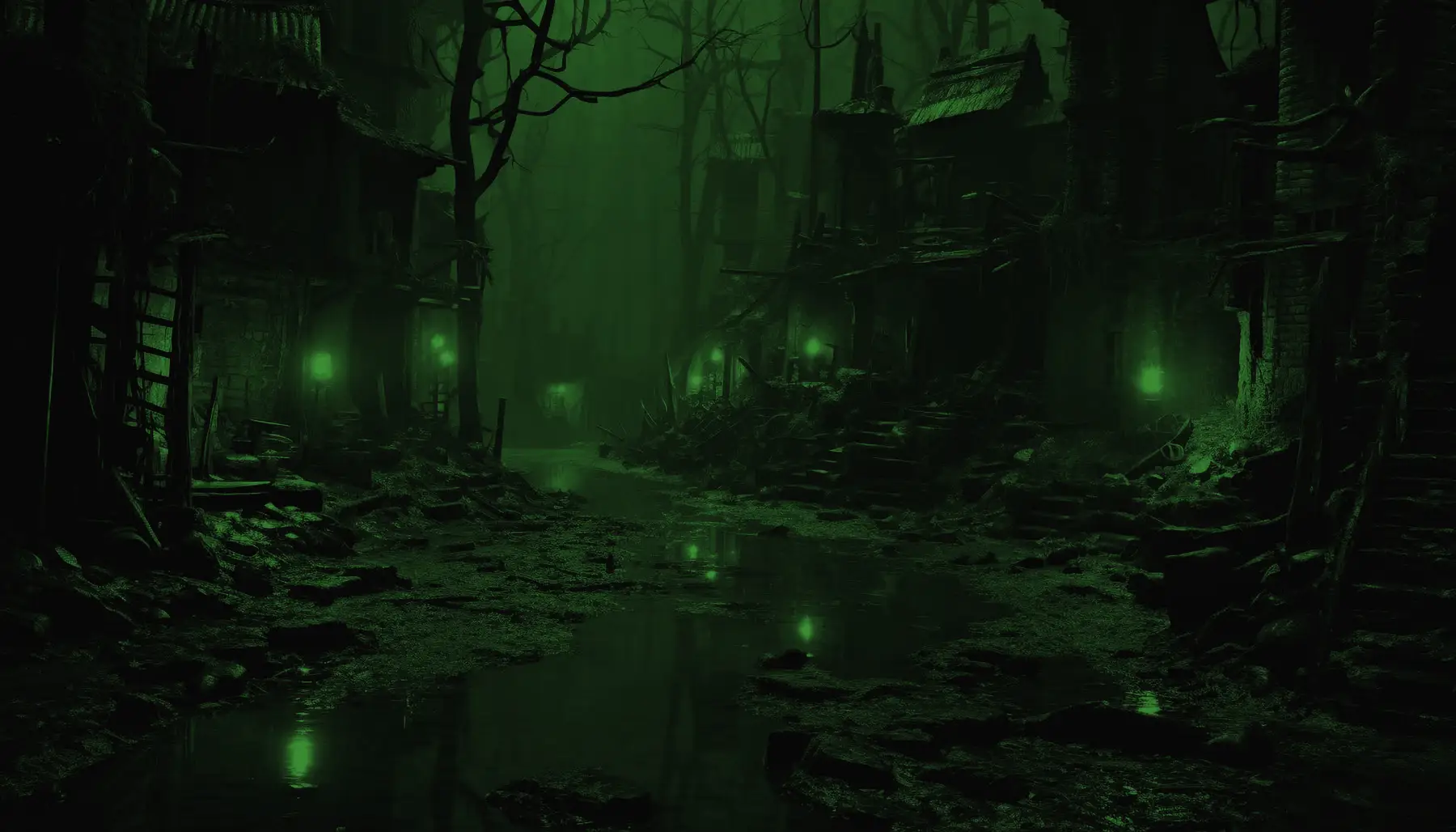
Case file 080Outlaws, Gangsters & ViceBefore 1800

Legend of the Pines

Foot-roasting thieves, a loyalist killer and a dancing Robin Hood: the Revolutionary War outlaws of New Jersey's million-acre Pine Barrens.

Sep 13, 20241h 9m
00:00 / 1:09:20
Or listen to this episode onApple PodcastsSpotifyYouTube
Share this episode

In this episode

  • Why a wilderness bigger than a million acres sits between Newark and Philadelphia, and what a 1940s reporter found at the end of a road marked "no outlet"
  • What the people Jacob Fagan robbed did with him after he was already dead and buried
  • A stranded ship full of Chinese green tea, and the privateers who fell asleep beside the barrels
  • Benjamin Franklin's Tory son, and the parting gift Ben left him in his will
  • The one rule Joe Mulliner's gang swore to keep, and the dance that cost him everything

“His reputation was such that it was like an honor to have been robbed by Joe Mulliner.”

The story

More than a million acres of wilderness sit in the middle of New Jersey, the state best known for Bruce Springsteen, Tony Soprano and Atlantic City. The soil is sugar sand that can turn to quicksand, the pines crowd together as far as the eye can see, and every break in the tree line seems to open onto bog. People have lived in the Pine Barrens for more than 10,000 years, and the place has always sheltered people on the run.

In 2001, The Sopranos sent gangsters Paulie Walnuts and Christopher Moltisanti stumbling through the frozen Pine Barrens, sure they would die out there. That was fiction, but the wilderness is real. In 1978, Congress made more than a million acres of it the first National Reserve in the United States, and the Pines cover about 22% of the state. In the early 1940s, a newspaper reporter and a photographer spent two days in a sliver of it in Ocean County. They passed a crude sign that read "no outlet." They met homes little changed since Abraham Lincoln's time. "We found a child who had never seen a camera." At one house the food was still on the table, but the family had slipped into the woods rather than talk to strangers.

Feet over the coals

During the Revolution, a thief named Jacob Fagan and his gang lived in caves dug into swamp banks. At night they raided the homes of militiamen away fighting the redcoats, where only the elderly, the sick and the families were left. Their favorite trick was to grab the women and roast their feet over live coals until they gave up where the money and jewels were hidden.

Militia troops finally surrounded Fagan and shot him dead, then buried him where he fell. That didn't satisfy the people he'd robbed. They dug him up and hung the body on a gibbet, a crude roadside gallows, on the road to Colts Neck. Birds picked the bones clean. When the skeleton tumbled down, the townspeople nailed his skull to a post as a warning.

Bloody John and the tea

Fagan was small-time next to John Bacon, known as Bloody John, who is said to have started out in the Patriot militia before switching sides. He led the Pine Robbers, a loyalist guerrilla company working under New Jersey's royal governor, William Franklin. William's father was Benjamin Franklin, and the two never made peace. After the war, William was exiled to London, and his father's will left him some worthless land in Nova Scotia.

The Pine Robbers raided Patriot homes as readily as military targets, and whispers held that Bacon shared his loot with loyalist neighbors. Families buried their valuables in the sand, and neighbors stopped trusting neighbors. That suspicion took root in the Pines for generations.

In October 1782, a British ship called the Virginia ran aground in Barnegat Inlet with a hold full of pricey Chinese green tea. Andrew Steelman of Cape May, a privateer (a kind of legal pirate), seized it. His crew spent the day hauling barrels through the surf and collapsed asleep on the beach beside them. Bacon and ten men rowed in under cover of darkness and stabbed and shot the sleepers, killing Steelman and all but a handful. Two months later, Bacon ambushed a Burlington County militia at Cedar Creek. The robbers were close to breaking when local people opened fire on the militia and gave the gang time to escape. Bacon's right-hand man, Ichabod Johnson, died on the spot.

Bacon's luck ran out on April 3, 1783, in a tavern, where he sat alone with his musket between his knees. Militiaman John Stewart tackled him, and Bacon called for quarter, begging for mercy. Stewart granted it. But Joel Cook, whose brother Bacon had killed at Cedar Bridge, drove a bayonet into him. Bacon still bolted for the back door, knocked Stewart flat and caught a musket ball for it. The shot tore through Bacon and bounced harmlessly off Cook's chest. The militia started digging his grave in the middle of a busy road in Jacobstown, where hooves and wagon wheels would trample him forever. Then Bacon's brother arrived and pleaded for a decent burial, and the men gave in.

The weird part

About a fifth of New Jersey, a state packed between Newark, Trenton and Philadelphia, is a million-acre wilderness so remote that a reporter in the 1940s found a child there who had never seen a camera. During the Revolution, it hid outlaws who terrorized their neighbors, and in one case charmed them.

The Robin Hood of the Pines

Joe Mulliner was the most famous of them all. He was over six feet tall, handsome, well educated, a married farmer and landowner. He was also a Tory, loyal to the British crown, surrounded by fiercely Patriot neighbors. In 1779 the tension drove him out of his home. He and 40 men took over an island in the Mullica River, less than a mile from his farm.

His gang of desperadoes swore loyalty to the king, though most of them didn't care who won the war. They lived by one rule: they never killed anyone. Mulliner was jolly with his victims and never robbed the poor. When his men tied the widow Bates and her two boys to a tree and burned her house down, an anonymous $300 turned up a month later. That's nearly $8,000 today, and everyone in the Pines knew who sent it.

He crashed a forced wedding in Washington with a pistol in each hand and told the groom, "You have a choice to make, sir. You may leave at once or you will die where you stand. What say you, friend?" The groom left, and Mulliner danced with every woman in the room. In Quaker Bridge, a husband slapped him for asking his wife to dance. Mulliner just laughed: "So fearless, the little bantam must surely have the best girl present." He danced one song with her and then vanished into the night.

Dancing brought him down. At the Indian Cabin Mill, a man whose partner Mulliner swept onto the floor slipped out and ran for Captain Baylin's Patriot militia. Outnumbered, Mulliner surrendered. On August 7, 1781, he was convicted of high treason and hanged the same day. The New Jersey Gazette called him "the terror of that part of the country." Thousands came to watch, including what one account called an "oxcart full of living curiosities from the interior of the pines."

The laugh on Ghost Island

Mulliner lies on his farm under a marker bearing only his initials. Travelers swore they heard his big laugh ringing through the trees, and others saw a very tall figure pacing near his old hideout. By the 1930s, the island in the Mullica River had a new name: Ghost Island.

The phrase "living curiosities" hinted at worse to come. In the 20th century, the people of the Pines would be branded imbeciles and defectives and threatened with forced sterilization, while a new legend of a creature, half man and half devil, began to grow in the woods.

The transcript

Chapters & full transcript10,147 words
Chapters
  1. 00:08Lost in the pines
  2. 02:18A wilderness in New Jersey
  3. 07:00Jacob Fagan's skull
  4. 09:54Bloody John Bacon
  5. 24:50The Robin Hood of the Pines
  6. 37:52Ghost Island

This transcript was generated automatically from the episode audio and may contain errors. Times are approximate, since ad breaks can shift them by a minute or two.

00:00

Hey, true weirdos, at the end of this episode, stick around if you want for a little bonus content and conversation. It's easy to get lost in the woods, easy to become disoriented. And those woods are more than a million acres. When the soil is sugar sand, a kind of sand that can turn into quicksand. When the trees are thickly crowded together, pines as far as the eye can see. When you can't find the road, can't hear the sounds of traffic. When the only signs of human habitation are ruins, strange, foreboding ruins. Is that fortress or some kind of strange factory? A break in the tree line, a glimpse of daylight fills you with relief until you realize that what lies ahead is bog, a stretch of water and watery mud far too soft for you to even dare try crossing. You have to turn back, turn around, retrace your steps. You're tired now. And the overcast sky tells you nothing, except that the light is slowly slipping away.

01:19

Every tree looks exactly the same. Don't freak out. Tell yourself, don't freak out. Slow down. Breathe. It's easy to get lost in the woods. And it's hard not to panic. Especially when those woods are filled with legends and stories. The left behind traces of people long dead. Especially when those woods might just be home to a monster.

01:53

And they got a small beam of light again. New Jersey, the Garden State, a bud of so many jokes. Most people have no idea how wild and rural so much of New Jersey is. Bruce Springsteen, Tony Soprano, Snooki, The Situation, Atlantic City. That's the New Jersey people have heard about. But there's another side to New Jersey. Lush farmland, long stretches, wild coastline, and more than a million acres of wilderness. People have lived deep in those woods since the first century BCE. That's more than 10,000 years. Countless generations of people who left their mark on the land. It's a place where people on the run found refuge, a place where outcasts and outlaws could hide. Places like that have a way of holding on to echoes, energies, ghosts. In New Jersey, that place is called the Pine Barrens. If all you know about the Pine Barrens comes from the 2001 episode of The Sopranos, where gangsters Polly Walnuts and Christopher Moltisanti got themselves completely lost in the dead of winter after a botched attempt to murder a rival Russian gangster, then you actually have a pretty decent idea about how remote and forbidding the place is. In that episode, Polly and Christopher stumbled around for hours in an icy forest before taking shelter in an abandoned car, fully expecting to die from the cold. Hours of walking, no roads, no towns, no people, just woods as far as the eye can see. An enormous wilderness, utterly indifferent to their smallness or their panic. And that's what the Pine Barrens is. It's an enormous wilderness. Wait, in New Jersey? The state's not even that big. Plus, it's full of people and cities, Newark, Trenton, New York to the east, Philadelphia to the south. How can there be a wilderness in the middle of all that urban sprawl? Oh, there is. And it is vast.

04:39

Over a million acres of the Pine Barrens was designated by Congress, a National Reserve back in 1978. It was the very first National Reserve in the United States. All in, the Pine Barrens make up about 22% of the entire state of New Jersey. A million plus acres is a whole lot of land. And just about every square foot of that land is steeped in history and stories, and some very tall tales.

05:18

In the early 1940s, a newspaper reporter accompanied by a photographer set out on a two day journey to see what and who they might find in just a sliver of the Pine Barrens belonging to Ocean County. An hour and a half after we began our trip into the pines, we came upon a crude sign. It didn't raise our spirits. It read, no outlet. All around us were scrub pine and sky. Not a sound broke the deep silence, except the soft rustling of the wind as it swept through the trees. Once or twice we passed the ruins of long since burned shacks, charred trees to remind one of the scores of forest fires that for years swept across the lonely forests. We found homes that were little different from those of Abraham Lincoln's time. We found a child who had never seen a camera. We found a home where the mother huddled her brood behind her as she spoke through a crack in the door. Another house appeared deserted. Yet there was food on the table and the stove and the residents had disappeared into the woods rather than talk to strangers.

06:30

It was land they said, that was still every bit as wild as the day the very first explorers set foot in America. The legends that have come through the years are numberless. And they are still told in the winter nights when families gather around their firesides. Legends like this one. Back in the days when American colonists were fighting for independence from the tyranny of the British crown, a thief named Jacob Fagan led a band of fellow robbers on a spree in the pines. Fagan and his crew live deep in the swamps in caves they dug into the banks. They came out at night and their prey was the homes of the militiamen who were gone fighting the redcoats. Their families, the elderly, the sick were left behind and no match for Jacob Fagan. These were people scratching out their living in the forest during wartime. They had little enough as it was and to have that little stolen from them. One of their favorite tricks was to seize the women and roast their feet over live coals until in their agony they cried out the hiding places of the family money and jewels. Word of Fagan's raids and the gang's atrocities in the Pine Barrens spread. Militia troops pursued Jacob Fagan and his gang, playing a deadly game of cat and mouse in the dense stands of trees and treacherous expanses of swamp and bog. And then the day came when Fagan found himself surrounded. In that standoff, Fagan was killed by gunfire and buried right where his body had fallen, bleeding out into the thirsty sand. That wasn't satisfaction enough for the people he had robbed and harmed. They hunt it for his body. When they found it, they dug it up and hung the body on a gibbet. It's a primitive kind of gallows they'd hammered together on the side of the road leading to the village of Colts Neck. There, Fagan's body dangled until birds had picked the flesh clean off the bones. But you know what? They were still so enraged that even after Fagan's skeleton had tumbled to the ground, they scooped up his skull and nailed it to a post.

08:57

It's a warning to anyone else foolish enough to dare rob the people of the Pines. As you can see, the people of New Jersey come by their reputation for not taking anyone's s**t honestly. It's clearly their birthright by God. You'd never get the idea today that so much terror once held sway in this silent land. Forgotten towns falling into ruin in the Pines.

09:25

Towns unique if only for their names. Double Trouble. High Bicycle. Ong's Hat. Today, the wind whistles through the houses. Scrub Pine forcing its way through the floorboards. The glass gone from the windows. A scene of desolation. Listen, believe it or not, for all of his foot roasting awfulness, Jacob Fagan was small time compared to another legendary Pines outlaw, John Bacon. Bacon, also known as Bloody John, was a British subject and the leader of a band of loyalist guerrilla fighters. They say that he started out as a member of the Patriot Militia but changed allegiance and joined a the Board of Associated Loyalists. Their organization was chartered by King George III but it was managed by the British Royal Governor of New Jersey, William Franklin.

10:30

William's father was that great big daddy of American independence, Benjamin Franklin. And if you think your family's divided by politics, you should have seen the Franklins. Benjamin tried hard to win his son over to the Patriot cause but William was a devout member of the Church of England and believed that the best system of government was to be found under the rule of a benevolent monarch. Benjamin Franklin was like, look son, any king is a tyrant and rebellion against tyrants is actually obedience to God. William was like, yeah, well, your plan father leads to anarchy, misery, and all the horrors of a civil war. The two men never reconciled, by the way. After the Revolutionary War, William Franklin was exiled to London and Benjamin Franklin cut him out of his will. Well, not entirely out of his will. Benjamin did leave his son, William, some incredibly worthless land in Nova Scotia. But back to bloody John Bacon, Royal Governor William Franklin named Bacon the leader of a guerrilla-style militia company called the Pine Robbers, also sometimes known as the Refugees. Their mission was to conduct raids on Patriot strongholds and steal their stuff. The Pine Robbers didn't draw the line at military targets, you know, ships and encampments and supply depots. The Pine Robbers considered the homes and families of Patriots to be fair game. For the people of the Pine Barrens, the name John Bacon conjured nightmares, a nightmare they couldn't escape. Their forest home was an ideal hiding spot for the Pine Robbers, with its baffling and impenetrable forests. But the Pine Barrens also offered Bacon access to some of New Jersey's barrier beaches and bays, a perfect setup for a smuggling operation.

12:33

Bacon's reputation as a cold-blooded killer and thief took off in 1780 when he shot and killed Patriot Lieutenant John Studson. Then, in December 1781, a Patriot ambush planned for Bacon's Pine Robbers went horribly wrong. The Patriots had staked out a spot on what is now Route 9 near the town of Manahawken, and with 3 a.m. rolled around with no sign of the Pine Robbers, the militia men decided to call it a night. Oops. The rising sun found Bacon's gang heading straight to Manahawken. That was the moment the militia realized that they were outnumbered, dramatically outnumbered by the Pine Robbers, and took off with Bacon and his gang firing their muskets. One Patriot was killed and another severely injured. John Bacon was promptly indicted for high treason, and that only made his legend grow.

13:33

Bacon and the Pine Robbers spent most of 1782 conducting raids on the homes and farms of Patriots. Bacon took what he pleased, food, money, clothing. There was always the threat of violence, the muzzle of a musket pointed at the head, or the tip of a bayonet jabbing tender flesh, the flash of a sharpened blade promising bloodshed. The people of the Pines lived in terrible fear and dread of John Bacon. As word of the Pine Robbers swept through the Barrens, people took to hiding what they had, burying it deep in the sandy soil. That is, people loyal to the Patriot cause. There were other loyalists sheltering in the Pine Barrens, and it was whispered that John Bacon shared some of his spoils with those who supported the British Crown. Neighbor couldn't trust neighbor.

14:30

The whole place was rife with fear and suspicion, and that suspicion, that distrust, it would become entrenched in the Pines, would be passed down through the generations until it became as much a defining feature of the Pine Barrens as the landscape itself. Then things got really bloody. It's called the Long Beach Island Massacre.

14:59

So, October 25th, 1782, a British carter ship called the Virginia loaded with a valuable green tea from China called Heisen tea. It ran aground on a sandbar in the Barnegat Inlet off the coast of northern Long Beach Island. Abandoned by its crew, the ship sat there, its hold packed with barrels of pricey tea. That's when American privateer, that's a kind of a fancy legal pirate, Cape May, New Jersey's own Andrew Steelman arrived on the scene in his own armed ship. His ship was called the Alligator.

15:35

Now, as you know, the American colonists were mad for tea, and this particular tea was the good stuff. Steelman seized the Virginia and her cargo, and a cohort of his men set about unloading the barrels of tea. They had to slog through the surf from sandbar to shore over and over and over again until at last the hold was empty.

15:56

The crew of the Alligator was exhausted from the effort. You can imagine. Steelman and his crew set up camp that night on the beach right next to the plundered barrels of tea. But here's what they didn't know. John Bacon and the pine robbers had also gotten wind of the beach ship. Those men, numbering 10, climbed into their own small boat, which was named Hero's Revenge, and they set a course for Barnegat Bay.

16:24

As the crew of the Alligator snored on the beach, John Bacon's gang silently crept closer and closer. The attack was brutal. The pine robbers threw themselves on the sleeping men and stabbed and shot the sailors, including Andrew Steelman, killing all but a handful. The survivors, some say it was four men, some say five, were ordered to march under a flag of truce to a nearby settlement where a doctor might attend to their wounds.

16:57

Bacon and the pine robbers only withdrew from carnage when crew from Steelman's ship, the Alligator, the ones who had stayed on the ship, suddenly arrived on the scene ready for a fight. Now there was a bounty on John Bacon's head. In December of that year, a patriot militia out of Burlington County was on the hunt for the pine robbers and the bounty.

17:20

But as hard as they searched, it was as if the pine robbers had vanished in a puff of smoke. The militia men returned to their homes, frustrated, determined to resume the search on Christmas Day. Again, no sign of John Bacon or the pine robbers. So the decision was made to give up the hunt. And then on December 27th, 1782, the militia headed for home.

17:49

Arriving at the village of Cedar Creek, the men thought, hey, why don't we stop in the Cedar Bridge Tavern for the night? What they didn't know was that John Bacon and his crew were waiting for them on the south side of the bridge that spans Cedar Creek. The hunted had become the hunter. To borrow a quote from the current Princess of Wales, recollections may vary, but this report of the skirmish published in the New Jersey Gazette sums it up.

18:21

The pine robbers, being on the south side, had greatly the advantage of Captains Shreve and Thomas's Burlington militia in point of situation. It was nevertheless determined to charge them. The onset on the part of the militia was furious and opposed by the robbers with great firmness for a considerable time. Several of them having been guilty of such enormous crimes as to have no expectation of mercy should they surrender.

18:50

They were nevertheless on the point of giving way when the militia were unexpectedly fired on from a party of the inhabitants near that place who had suddenly come to Bacon's assistance. Remember those rumors of Pine Barrens people who were willing to aid and abet John Bacon? This put the militia in some confusion and gave the robbers time to get off.

19:16

Mr. William Cook Jr., son of William Cook Esquire, was unfortunately killed in the attack and Robert Reckless wounded but is likely to recover. On the part of the robbers, Ichabod Johnson, for whom government has offered a reward of 25 pounds, was killed on the spot. Bacon and three more of the party wounded. The slain Ichabod Johnson?

19:40

That was John Bacon's right-hand man, by the way. The militia are still in pursuit of the refugees and having taken seven of the inhabitants' prisoners who were with Bacon in the action at the bridge and are now in Burlington Jail, some of whom have confessed the fact the militia have also taken a considerable quantity of contraband and stolen goods in searching some suspected houses and cabins on the shore.

20:08

So much fear and chaos and death only to have Britain sign a treaty with France and Spain just a few months later in February 1783. That treaty basically handed victory to the patriots which led to a massive exodus of loyalists from the state of New Jersey. They all fled to New York. But not John Bacon. Some say that the Pine Barrens has a way of getting into your very blood, that its mysterious haunting beauty becomes as much a part of you as your flesh and your bones.

20:45

That's as true today as it was hundreds of years ago. Maybe that was the case for John Bacon. Home was a place he was unwilling to leave even if it meant his life. Seven men from Captain Shreve's Burlington Militia, all patriots, devised a plan. They were going to succeed where others had failed. They were going to take out John Bacon once and for all.

21:12

So the pursuit was on. On the night of April 3rd, 1783, John Bacon's extraordinary luck ran out. He was sitting in a pub called the William Rose, his musket propped between his knees. His men were nowhere in sight. Burlington Militia member John Stewart was outside in the darkness peering through the tavern's windows, confirming that Bacon was alone.

21:39

The militia made its move, exploding through the door of the tavern. As Bacon lifted his gun, Stewart tackled him to the ground. Chairs flying, tankards spilling to the floor. Bacon hollered out for quarter, which meant, hey, I totally know I'm defeated here, so how about a little bit of mercy? Stewart granted that mercy, helped Bacon to his feet.

22:01

But what Bacon didn't realize was that Stewart's fellow militia man, a gentleman named Cornette Joel Cook, had no mercy in his heart at all for the leader of the Pine Robbers. John Bacon had killed Cook's brother in the skirmish at Cedar Bridge. Cook plunged his bayonet into John Bacon. Bacon paled and stumbled to the floor, but then somehow righted himself and bolted toward the back door of the tavern.

22:30

Stewart tried to stop Bacon, shoving a table at the door to block the escape. But Bacon dealt Stewart a ferocious blow that knocked him to the ground. The enraged Stewart, adrenaline flooding his body, lurched to his feet and fired. The musket ball tore through John Bacon's body, then ricocheted harmlessly off Cook's chest.

22:52

What a scene that must have been. The tavern lit only by candlelight. The smoke from Stewart's musket fire hanging in the air like a shroud. The blood of the outlaw John Bacon pooling on the rough wooden floor. The fearsome leader of the notorious Pine Robbers was dead at last. The militia threw Bacon's body into the back of a wagon, where it bounced and rolled with all the indignity of a sack of grain.

23:22

All the way to the village of Jacobstown in Burlington County. But the death of John Bacon had not even begun to satisfy the militia. The men began digging a hole right smack in the middle of the road. Bacon's eternal resting place would be a busy thoroughfare. Instead of resting in peace, the outlaw's grave will be trampled by hooves and boots and wagon wheels.

23:47

I am telling you, do not mess with New Jersey. These people are intense. And just as the militia men were about to dump Bacon's bloody and battered corpse into the raw ground, Bacon's brother arrived on the scene. He begged and he pleaded with the militia men to allow the Bacon family the decency of a private burial. He called upon their faith, their morality, their obligations as civilized men.

24:19

Ultimately, the militia relented. They grudgingly granted the man's request, proving that while New Jersey justice do serveth up the savagery, it also sometimes does giveth the grace. But only sometimes. While pine robber John Bacon had his fans deep in the woods, he was far from the most fearsome or famous outlaw in the wilds of New Jersey.

24:46

That honor belongs to Joe Mulliner, the man they called the Robin Hood of the Pines. Mulliner, like John Bacon, was a Tory. Since very little is actually known about Mulliner's early life or the workings of his mind, it's actually never been clear what his true loyalties were. Maybe he really was one of the king's men, or maybe that was just the convenient cover for his criminal enterprise.

25:17

Royal Governor William Franklin described Joe Mulliner as an associated loyalist. This was a fancy way of saying hired bug. The associated loyalists were paid to harass and disrupt the rebel patriots any chance they got. It just so happened that Joe Mulliner was a sailor and a privateer under the command of British General Henry Clinton.

25:40

And remember, a privateer is basically a pirate who picks a side. In this case, Mulliner sided with the British. See, by 1779, the British were feeling very salty about just how much of their stuff rebel privateers had managed to steal or destroy. It was intolerable to the British that such filthy scoundrels as these ungrateful rebel colonists would dare disrespect His Majesty's property in such a blatant way.

26:11

Oh, so rude. Clearly, their only recourse was to do exactly the same thing in return, but without getting their royal hands dirty. Enter the associated loyalists, this time in a whale boat with Joe Mulliner taking the helm. Mulliner was a big man over six feet tall, which was uncommon back then. He was handsome and charismatic.

26:37

The producers over at Dateline would say that he lit up the room. He had the kind of dazzling smile you see on movie stars. He loved a good time, loved to flirt with the ladies, and never shied away from a fight. But he was also from a good family, highly intelligent and well educated beyond what was typical for the times.

27:00

The last man you'd think might turn to a life of crime. A man who would surely know that a choice like that could only end one way, with his own violent and premature death. So what motivated this solid citizen, this married farmer and landowner, to go to the dark side? Mulliner's neighbors were fierce patriots. He alone remained steadfast in his loyalty to the crown.

27:30

The tensions became unbearable and Mulliner left his home in early 1779, radicalized, you might say, by the conflict over independence. But he didn't go far, and he didn't go alone. Mulliner, along with 40 other men committed to the British cause, claimed an island in the middle of the Mullica River as their hideout. It was less than a mile from Mulliner's farm, surrounded by dense thickets of trees and treacherous swamps.

28:01

Only a person born to that terrain could navigate with such easy stealth. And Mulliner's band of merry men could do it blindfolded. Unlike the British troops, who found the Pine Barrens a savage and impenetrable mystery. Mulliner and his crew had a code they lived by. They never killed a living soul. This was pretty astounding given that Mulliner's crew was made up of a motley assortment of bandits and desperados from all over New Jersey.

28:33

Mulliner made them swear their loyalty to the King of England, which they did happily, even though most of them didn't give a damn who won the war. They were loyal only to themselves and to their new chieftain who they clearly saw as a mastermind. Mulliner set the tone for a new kind of marauder in the Pine Barrens. Mulliner was known to be downright jovial with his victims and the poorest among them were never robbed of a penny.

29:03

That's where the Robin Hood comparisons began. It didn't take long for word to spread that Joe Mulliner was a man to be admired. As much as to be feared. His reputation was such that it was like an honor to have been robbed by Joe Mulliner. Even if the stories about him are only half true, it's easy to understand how this farmer became a larger than life folk hero.

29:30

For example, Mulliner's men took it upon themselves to raid the home of a widow by the name of Mrs. Bates. Things took a bad turn when the widow Bates arrived home accompanied by her two boys right smack in the middle of the burglary in progress. Badass pine woman that she was, Mrs. Bates flew into a rage and began hurling rocks at the robbers and you best believe she had one hell of an arm.

29:57

The robbers were like, oh, no, you don't lady. They pinned her down, caught the boys and tied all three of them to a tree. Then they set her house on fire. Only when the little structure was fully ablaze and beyond saving, did they free the woman and her children, leaving the trio to watch in stunned horror as everything they had in the world went up in flames.

30:24

Less than a month later, the widow Bates received another shock, an anonymous gift of $300. That's nearly $8,000 in today's money. but all the people of the pines knew that the money had come from Joe Mulliner, a way of making amends for the brutality of his men. Another story about Joe Mulliner took place in the town of Washington.

30:53

As Mulliner was making his way into the Washington Tavern, he was stopped in his tracks by an unexpected sight. It was a young woman, hardly more than a girl, kneeling in the sand, weeping her face and her hands. When Mulliner spoke to her, she leapt up and bolted into the tavern, wailing. He followed her inside, where it only took a question or two for him to realize the situation.

31:19

A wedding was about to take place. A wedding where the bride had been betrothed by force. Joe Mulliner stepped back into the shadows and waited for the ceremony to begin. What happened next is right out of a movie. As the minister cleared his throat to speak, Mulliner leapt forward, brandishing a pistol in each hand and addressed the groom, his voice low, his tone matter of fact.

31:49

You have a choice to make, sir. You may leave at once or you will die where you stand. What say you, friend? The groom very wisely chose to leave, never to be seen again, according to the legend. Mulliner, however, stuck around, making sure that every woman in attendance had a turn on the dance floor in his big, strong arms, because Joe Mulliner loved to dance.

32:17

It was in another tavern, this time in Quaker Bridge, where Mulliner's enthusiasm for a good two-step nearly came to violence. He strolled through the door that night to a party in full swing. One by one, he pulled each woman there onto the floor, spinning them around the room, their cheeks flushed, giddy to be in the arms of the famous outlaw.

32:41

Normally, no man would dare refuse Joe Mulliner the pleasure of his lady's company for the length of a song, but this night was different. One man there flatly refused to permit his wife to dance with Joe. Joe laughed at this and nudged the man aside. The furious husband hauled off and slapped Joe Mulliner right across the face.

33:04

The entire tavern went silent. Surely, this disrespect would be paid for in blood. But Joe Mulliner only laughed. So fearless, the little bantam must surely have the best girl present. And with that, Mulliner seized the woman's hand and on cue, the music started right back up. After a single dance, he returned her to her man, giving her a gallant kiss on the hand before disappearing into the night.

33:34

If you're going to be an outlaw, be a charming outlaw, right? You can see why the people of the Pine Barrens loved the man, protected him, and shared the stories of his exploits far and wide. And you can also see in Mulliner's brash pleasure, the seeds of his downfall. It was at yet another tavern, the Indian Cabin Mill, where Mulliner's glorious romp through the Pine Barrens came to an end.

34:05

Once again, Mulliner strolled through the door into a crowd of merrymakers. He grabbed the prettiest woman there and swung her onto the dance floor. Her partner seethed, but said nothing. The man waited for the moment when he could slip through the door unseen. Then he ran to the home of one Captain Balin, leader of a patriot militia bent on capturing Mulliner.

34:31

Balin gathered a posse of armed patriots and they surrounded the Indian Cabin Mill. Mulliner saw at once that he was outmanned and outgunned. He surrendered. Mulliner was imprisoned in the town of Woodbury. One by one, his men were hunted, and hanged for their crimes. Soon enough, it was Mulliner's turn to face justice.

35:00

He was taken to Burlington where he stood trial. On August 7th, 1781, the New Jersey Gazette reported, Joseph Mulliner was convicted of high treason and is sentenced to be hanged this very day. This fellow had become the terror of that part of the country. He had made a practice of burning houses, robbing and plundering all who fell in his way so that when he came to trial, it appeared the whole country, both patriots and Tories, were his enemy.

35:32

Convicted and hanged on the same day. Those were some harsh times. 1781, the year that saw the end of the American Revolution with the battle at Yorktown was also the end of the wild career of the Robin Hood of the Pine Barrens. Thousands were said to gather to bear witness to Mulliner's execution, from aristocrats to members of the military to what was described as a, quote, oxcart full of living curiosities from the interior of the pines.

36:11

The Reverend G.A. Raybould recounted the scene in his book, Reminiscences of Methodism in West Jersey. The wagon halted under the fateful tree and the soldiers were arranged around the vicinity of a square. The dense mass of anxious spectators pressed closer and closer. Mulliner rose and gazed upon the crowd. He spoke at some length and acknowledged his guilt and begged the people to pray for him.

36:46

Then, closing his eyes, he appeared to be in an agony of prayer. A few seconds later, Joe Mulliner was a humble Christian in the presence of God. Joe Mulliner's body was cut down from the gallows and returned via wagon to his farm, where he was laid to rest beneath a small and simple grave marker etched with only his initials, J.M. But that wasn't the end of Joe Mulliner's story.

37:19

His ghost haunted the Pine Barrens, they say. They say that Joe Mulliner's restless spirit rides through the night, combing the labyrinth of the Pine Barrens in search of his stolen gold. That big laugh. Travelers on the old road swore they could hear it ringing in the trees. Others claim to have seen a figure of a large man, so much taller than the average man, pacing in and out of the shadows near Mulliner's old island hideout on the Mulliker River.

37:52

By the 1930s, that place had earned a new name, Ghost Island. The people of the Pine Barrens say that the ghost of Joe Mulliner will never, ever find rest. As it turned out, nor would the living in the Pine Barrens. Joe Mulliner's execution marked the end of one era, but an even darker one was on the horizon. Remember how the press described the people of the Pines who attended Mulliner's hanging?

38:26

An ox cart full of living curiosities from the interior of the Pines. Living curiosities. The modern world was coming and it would bring nothing good to the people of the Pine Barrens. They would be scorned and judged. They would be tormented and hunted. They would be labeled imbeciles, inbred, primitive, stupid, dangerous.

38:55

There would be calls for forced sterilization and institutionalization. Stories would be told of witchcraft and bad magic. A new legend would emerge from the Pines. The legend of a terrifying cryptid, half man, half devil. A cryptid that would stalk the nightmares of generations of children to come. This new modern fear and suspicion of the Pine Barrens and its people would begin at the turn of the 20th century.

39:29

And it would continue until, let's see, well, it would continue until right now. They called those people the Pines and their story is on the next episode of True Weird Stuff. Special thanks to our voice talent, Sam Moore, Don Morgan, and Kary "Doc" Bowser. So Sherry, I had heard of the Pine Barrens. I'd heard of it before, but these stories I had never heard before.

40:09

How did you stumble upon these? Well, it's such a beautiful place and people unfamiliar with New Jersey don't understand that New Jersey is not just one endless suburb that starts at Newark and continues until the Delaware River. They call it the Garden State for a reason. So much of it is rural. And my brother, my older brother, Mark, lives in Woodbury with his wife, Nancy.

40:38

They raised their kids there. That's the city. It's a famous city, right near where Washington crossed the Delaware. That legendary story. That's the city where Joe Mulliner was in prison before his trial and execution. So the Revolutionary War, that chapter in American history, is everywhere you turn in the state of New Jersey.

41:00

And the Pine Barrens are one of the most mysterious places in that part of the world. So when I was in college, I had a friend whose dad was a cop. And I think his people were Pine people from the Pines. And he would go to the Barrens every chance he could. He had like a little hunting fishing cabin up there. And he would tell his kids these crazy stories about the Pineys and the Jersey Devil.

41:35

And I don't even know how to express how this was the deliverance of the Northeast. Remember the movie Deliverance? I want you to picture the people that movie had living in the wilderness of the Tallulah Gorge. The Pineys, and it's a very ugly, hateful term. It's an insult. The people of the Pine Barrens were the deliverance people, except in New Jersey.

42:02

And terrible stories would be told. You'd be scared out of your mind as a kid by the Jersey Devil. And, oh, you don't want to get lost in the Pine Barrens because the Pineys will get you. It was so ignorant and so discriminatory and so ugly and so based in nothing real or true that I became sort of borderline obsessed with it.

42:25

And so I went to high school in New Jersey and I went to college in Philadelphia. And I was scared to death of the Pine Barrens as a kid because I had been terrorized in childhood by the Jersey Devil. You better come in before dark or the Jersey Devil will get you. You better not go riding around or camping or hiking in the Pine Barrens because the Pineys will get you.

42:47

Then I make it all the way to college and my friend's father has all these crazy stories about the so-called Pineys. And it just stayed with me. It stayed with me like a make-believe dark fairy tale that turned out to be true and untrue at exactly the same time. There are people who live deep in the Pine Barrens. There have been human settlements in the Pine Barrens for 10,000 years.

43:14

Before the Industrial Revolution, the Pine Barrens were thriving, right? It was the modern world that brought this ugliness to the people of the Pines. And in next week's episode, we jump into the modern world where the governor of New Jersey tried hard to launch a legal campaign of forced sterilization because these people were quote-unquote imbeciles and were not fit human beings.

43:43

They were defective. You hear all those eugenics-oriented words used to describe the people of the Pines. And the only reason that the governor failed in that wretched campaign was the New Jersey State Supreme Court was like, you know what? That's going to be a no from us. You're not going to be rounding these people up and sterilizing them.

44:04

But that didn't stop them from rounding those people up, including the children and institutionalizing them. It's a really ugly chapter. When you were talking about John Bacon and Manahawken, you said, the Patriots staked out a spot on what is now Route 9 and all I can think of is the Bruce Springsteen song Born to Run sprung from cages on Highway 9.

44:32

That's all I can think about. Guess what, my friend? In next week's episode, we're going to meet the Jersey Devil. And one of the hot spots for Jersey Devil sightings is Route 9. So maybe it was the Jersey Devil that was sprung from those cages. Hmm, I wonder. Yeah, it's so, it's so, so, so interesting. And also in next week's episode, this is how contemporary this has been.

45:02

The hatred and fear and suspicion of these people is a politician in New Jersey was forced to resign her elected office for referring to the Pineys as defective. The people of South Jersey reared up as one and were like, not on our watch. So, and so she was forced to resign in disgrace. And you'll hear that as part of next week's episode.

45:28

But the fear, you know, and distrust of these people, when what we should have been doing, instead of looking at these people and going, there's something wrong with them, they're broken, they're defective, they're not fully human. A lot of these people were subsistence farmers. And they were, they were really adept at living off the land.

45:52

They were the, they were the descendants of generations of people who had lived in the Pines. And there was nothing wrong with these people. Other than the fact that they did not buy into the rat race, the nine to five, the put on a suit and tie and buy your food at the grocery store instead of getting it yourself. So, it was, it was just really unfortunate.

46:21

And like so many things, they became kind of politically symbolic for the governor at the time. It became a rallying cry. You know, if he could get people, if he could get constituents worked up that the imbecile, degenerate, crazy Pines were coming for them, he could, you know, whip up a frenzy and then everybody would have a common enemy and he could ride that wave into office.

46:51

Because he had been the second in command when the governor of New Jersey was elected to the presidency. So, he hadn't won the office fair and square. He would have to go up again for re-election and nothing gets you, as I think anybody paying any attention to the world today would agree that nothing gets you votes like drumming up an enemy that everybody can agree is subhuman.

47:16

That's the secret sauce in so many of the atrocities in human history. And the Pine people were that, it was their turn to play the part of degraded and degenerate subhumans fit only to be exterminated. And that's what happened. And, you know, the rule of law, the state supreme court prevented it. But what the courts could not prevent were then decades and generations of fear and mistrust and hatred toward people who honest to God should have been admired.

47:55

You know, for their ability to make their own way and they were minding their own business, like they would go into the Pines looking for these people. These people were not coming out and asking for attention. It was horrific. And there was a ton of industry. There were all sorts of wonderful things that happened inside the Pine Barrens after the war for independence.

48:18

There was iron in the Pine Barrens. So there were these iron mills and there was industry. That, you know, ran its course and then it was replaced by what came next, as is true in so many parts of the country. But these people were hardworking, industrious people that were the descendant of some of the first settlers.

48:42

And they were targeted for these roundups and these brutalities. I had no idea. I mean, I just absolutely had no idea. I think I think you don't unless you unless you live there. Like the number of people that don't even know that the Pine Barrens exists. It's a million acres of when I tell you this is a wilderness unlike any other.

49:09

The soil, the terrain, the trees. One of the big industries in the Pine Barrens for a long time, and even today, is cranberry and blueberry farming because cranberries grow in bogs, right? We've all seen the Ocean Spray commercial. And blueberries are a big crop in that part of the world. It's spectacular. Can we talk about Joe Mulliner for a moment?

49:34

Oh, yeah. Yeah, this guy's this guy's custom made to have a movie done about him. Can you see like Ryan Gosling playing the part? Do you think he would be perfect for that? Perfect for Joe Mulliner. Here's his line. So fearless a little man to most surely have the best girl present. And with that, he grabs her hand and dances with her.

49:58

Like, yeah, I know you're upset. You've got the best girl. Let me just dance with her. And it's like, is there anybody that charming? The charisma that I wanted to do. I like I realized this about myself a long time ago, and it's a habit I can't break. I love things that come in threes. Just love a good. I was about to say, I just love a good threesome.

50:26

I'm not that way, but I like things that come in threes. And so if you look at the evolution of Outlaws and the Pine Barrens, you had Jacob Fagan, who was an absolute monster roasting women's feet. Oh, yeah. Come on. Come on. That's some unhinged, out of pocket stuff. And then you had John Bacon, who was a criminal gangster.

50:48

Like he was just the worst of the worst, right? And then you have Joe Mulliner. Who is charming and charismatic, whose one rule is we don't kill people. Whatever else we do, we don't take people's lives. And there are lots of Joe Mulliner stories, and it's hard to know, you know, with a legend, right? What's true? What isn't?

51:13

But you have that Robin Hood thing. Yeah, I think was real. Yeah. Yeah. There has to be some grain of truth to all that, you know, but he is he not just the most fascinating character? He's so wonderful, and so little is known about him, like his early life, his personal life. He left his wife on the farm, because you know he was married.

51:36

Left his wife on the farm to be the outlaw of the pines. And the thing that we have to remember, and it's hard to do, because we are not products of, we're the descendants of the American Revolution. But we didn't, we weren't there. Just like we weren't there for the Civil War. We don't know what it's like. To be like, I'm pro-king, and then your next door neighbor is pro-patriot.

52:02

Can you imagine how divided that was? Because all of the colonists, or most of the colonists, had been British subjects. Right. When they came to the new world. And it was a lot to ask these people, who came from generations of British subjects, who believed that the king was placed on the throne by God. Now you're asking those people to betray that.

52:29

Can you see how hard that was? I also think there was a lot of bad feelings about what was going on with how they were ruling this country. And I think that that's, you know, those were the seeds of the American Revolution. The idea was, look, we have no voice. You can do whatever you want to us, and we're not going to put up with that.

52:50

So I guess if you were a wealthy person who is well connected, the British crown seemed like a pretty good deal. Because how many of those people who signed the Declaration of Independence ended up going broke because of what happened with the Revolutionary War? I mean, they really sacrificed in order to forge the new country.

53:10

That's what makes the American experiment so profound. And why, like, you want it to continue, because it's unique in history, right? And everything you say is true. The founders, the founding fathers, and the signers of the Declaration, they had everything to lose by fighting for independence. And men like Benjamin Franklin and Thomas Jefferson, these were men of the world.

53:40

Both Franklin and Jefferson spent time at the court of Versailles. They were incredibly sophisticated, well-traveled, educated people who threw their lot in with the colonists because they believed so profoundly in what America could be as an independent nation. And, you know, we see the echoes of some of that today where people with extreme wealth know what the right thing is, but they're protecting their extreme wealth.

54:18

Right. In a way that, like, George Washington, Thomas Jefferson, Benjamin Franklin, John Hancock, and so many more whose names aren't on the Declaration of Independence, understood to be the wrong decision, like, the wrong side of history. It's why it makes me sad when I hear people say, like, oh, this country needs a dictator.

54:41

This country needs things. It does. We're stumbling around and we're, you know, brother against brother again and we're struggling and we're a little bit lost. But this is America. And we don't have kings here. We don't have dictators here. We have the American experiment, which is messy and ugly and oftentimes jacked up.

55:12

But it's still this beautiful, noble little thing that was bought and paid for in blood. And I think that because we don't know our history, and when I say we don't know our history, yeah, you knew that Washington crossed the Delaware and lived in Mount Vernon. But do you know about the people, the blood, sweat, and tears of the people, the regular people, the farmers who left their homes to fight for this country?

55:40

Like, we don't know those stories. We don't hear those stories. You knew about the tea getting dumped in the Boston Harbor, right? That's the famous example of what we thought of the British and their obsession with tea. But that was by far not the only time. Tea was like a really big part of the American fight for independence because it was such a valuable commodity.

56:04

And when you have a valuable commodity, you can weaponize it, right? Like all these amazing stories. And the people inside the Pine Barrens. And I think this is going to be in the next episode. I think I put this in the next episode. But during the American Civil War, the Pine Barrens was a stop on the Underground Railroad.

56:25

Like, not only was the Pine Barrens home to the indigenous people, and then the first wave of settlers from Europe, many of whom their families are still there in those same towns like Ong's Hat, right? Well, you had a lot of slaves escape slavery in the South and come up on the Underground Railroad and find refuge in the Pine Barrens.

56:52

It is such an important little piece of American history. And I'll be damned if I can tell you why nobody knows about it. It's just it doesn't seem to come up anywhere. You know, it's not it's certainly not something you learned in school. It wasn't in a textbook. And unless somebody does a movie about it, you know, you don't know anything about it.

57:14

I mean, you just have no way to be have any kind of exposure to it. But it's nonetheless some fascinating stuff. I had kind of a fight with my first love, my high school boyfriend, our I think it was our senior year. He loved the Pine Barrens. He loved to go camping in the Pine Barrens. And so he and a couple of his bros were going to go camping on this long extended camping trip in the Pine Barrens.

57:42

And it coincided with homecoming at school. And this is my senior homecoming dance. I'm a cheerleader. Like I want to go to the homecoming dance. And my man here wants to go camping in the Pine Barrens. So I was like, OK, why don't you go camping in the Pine Barrens? And I went to homecoming with another boy, one of the high school basketball team stars.

58:06

And my boyfriend was like, you know, a hippie musician who didn't he didn't trifle with all that high school musical bullshit. And so he's he's like, I can't believe you're going with him. And I'm like, well, enjoy your camping trip. So I went to homecoming with this really his I think his name was Kelly, the boy. He was super cute, real tall basketball player kind of dude.

58:26

But of course, in my heart of hearts, I wanted my first love to be my homecoming date. Yeah. And he wanted to cook a fish over an open fire in the middle of freaking nowhere. It's the oldest story ever. So if you live in New Jersey, any part of the state. You know about the Pine Barrens and you know some of these stories.

58:50

But I know a lot of people who've lived their whole lives in New Jersey who've never been to the Pine Barrens. And part of that is you have to be kind of outdoorsy to give a damn. But a big part of it is are the stories that you grow up about the people who live inside the Pine Barrens. And all the ways that you can disappear and get lost and get hurt and never be found again.

59:14

And all of the foul play that can befall you if you stumble upon the cabin of one of the and I hate this term because it's so ugly. One of the so-called pineys and what they might do to you. And I just don't think there's any truth in any of it. Although the Jersey devil, the great cryptid that comes out of the Pine Barrens, which is in next week's episode, we can actually find the historical people involved in that origin, including the woman who gave birth to the Jersey devil.

59:47

And that is such a fun story. And that's what we're going to do in the next episode. I can't wait. It's really, really fun. So I originally set out to do just one episode about the Pine Barrens. But how can you get all of this cool stuff in to just one? And even though I was like, you know, a lot of people don't care about like Joe Mullen or John Bacon or whatever.

1:00:15

I thought a lot of people don't care about that because they don't care about history or what have you. But then I thought maybe they don't care because they don't know. Right. Maybe if they knew about the Robin Hood or the Pine Barrens, then they will care a little bit. What do you think? I care about it because I mean, that's fascinating.

1:00:31

If you're just a bad person and you do bad, mean things, there's no charm to that. There's no interest there. You're just awful. But if you have a person who's, you know, OK, we robbed some things and we stole some things and we gave some things to people, too. And OK, we burn that woman's house. Oops, my man did that.

1:00:51

Here's some money. We'll take care of it for you. I mean, this is right. He was the he was the Ryan Gosling of the garden. He really was. The story of William Franklin, I only knew because of we had talked about this before. It was in a previous episode or something and we talked about off Mike or I can't remember. We were it was a social thing.

1:01:11

We were just chatting. Somehow, Benjamin Franklin came up. We were chatting about it. Yeah, because William. So after we talked about that, I looked up William. William was an extramarital child of Benjamin Franklin. And so there was a bit of an issue with the two of them. You would think being in that position that he would have been an outsider, somebody who would have been more prone to be a part of the revolution rather than a Tory, you know?

1:01:42

I think that it was in part. Well, he was devoutly Church of England, and maybe it was in part a rebellion against his father. So my grandmother, my grandma Black Hair told me we did a unit in school when I was a kid on Benjamin Franklin. Benjamin Benjamin Franklin is a really big part of Philadelphia history and culture.

1:02:03

Like there's a whole giant public artwork on your way to the Benjamin Franklin Bridge that basically is the key in the kite where Benjamin Franklin discovered electricity. Poor poor John's almanac. Benjamin Franklin's poor poor Richards. I'm sorry, poor Richards. I mean, Franklin lived and worked and published in Philadelphia.

1:02:26

Everywhere you turn in Philadelphia, there's the Ben Franklin Bridge and the Franklin Parkway. And I mean, so we did a unit on Benjamin Franklin when I was a kid. And my grandma said to me, Sherry, he's a whore master. And I'm like, wait, what? He was. Can I tell you? I'm so fascinated with him that I've wanted to play him in 1776 or somebody's doing the play.

1:02:52

And I talked to the guy who's a director. So when you have auditions for this and he said, it's coming. I said, what are the show dates? I can't do it. I have another commitment. I am so crushed that I can't audition for this part because he went. He would have been so good. I mean, listen, my grandma was right. He was an old whore master.

1:03:13

And Benjamin Franklin, I don't know if it's true or apocryphal, but he allegedly coined the phrase. It's all the same in the dark. I've heard that. I've heard that. He he was what you call a polymath. I mean, he was just brilliant in so many areas. And he was really, really beloved in the court of Versailles. He he cut quite a swath through London and he was just a very compelling man.

1:03:45

Not much of a husband. He was a bit of a dog in that way. And of course, William Franklin was born outside of Benjamin Franklin's marriage. So maybe he was pissed about that because back then, you know, until very recently, having a child outside of wedlock was anathema in American culture. Oh, yeah. Until very recently, that child was called illegitimate and a bastard.

1:04:13

And oh, my God, like for William Franklin to be the illegitimate child of Benjamin Franklin was the biggest of big deals. And maybe enough to cause him to rebel so forcefully against his dad. How often do we find that many times men and women who are very successful people, we know whether they've made their name in industry or entertainment, whatever it is, and you know who they are, and then you find out they were really crummy parents because they devoted so much of themselves to their careers.

1:04:47

Yeah, like Steve Jobs is a great example of that. Classic example. Classic example of that. I mean, Benjamin Franklin was in the process of helping to birth a nation. It's going to be hard to be much of a husband or father, I guess, not to give not to give the old whoremaster permission. This is the kind of history that I love.

1:05:14

Like if you start droning on about the dates of battles and the names of ships, I have a hard time. I need to know, like I need to know the people. Like I like the stories of the people. But once you understand the people, I think it's easier to understand the events. Because we always think that we forget that we are modern creatures and we always try to put the people of the past into our mindsets in terms of like choices and ethics and opportunities.

1:05:45

And it was very different. It's very different. And what happened to the people of the New Jersey Pine Barrens is a crime. I mean, it's just a crime. And the fact that it was so politicized, it started in 1913. So it was like peak eugenics frenzy in the world. But the fact that it continues to this day. Yeah, no bueno.

1:06:14

So if you ever have the opportunity to visit that part of the world, and it's the kind of thing you could make it like your summer vacation, especially if you're outdoorsy and you like camping and fishing and that sort of thing. You could go and visit the Pine Barrens and be completely changed by the beauty. But it's a specific beauty and the solitude and the weight of the air in the place.

1:06:45

It is a haunted place. That's not necessarily a bad thing. It's a place that is heavy with countless human lives being played out. And there are so many wonderful things to stumble across. Ghost towns, roads that that get narrower and narrower and ultimately lead to nowhere. You'll come through a break in the trees. And as far as you can see, it's a cranberry bog.

1:07:16

But you better know your way around. You better have a compass and a map because you can't just walk into the Pine Barrens and then walk back out even today. Otherwise, you're going to come up to a sign that says, no outlet. And an island and an island in the middle of the Mullica River, an island they call Ghost Island.

1:07:41

And be careful. Be careful about being out in the pines alone at night because you might just hear the laughter of outlaw Joe Mulliner. We'll see you next week for Pine Barrens Part Two, The Pinies. Thank you so much for listening to this. You're the reason we make it. And we're so glad you're here. We'll see you next week on True Weird Stuff.

1:08:09

And if you listen to us on Apple Podcasts, hit the plus button in the top right corner. And now it helps an independent podcast like ours to get discovered. And we really appreciate it if you subscribe, rate and review True Weird Stuff. Hit our website trueweirdstuff.com for show notes and photos and videos when we have it and bonus content.

1:08:30

Everything True Weird is waiting for you at trueweirdstuff.com. And follow True Weird Stuff on Instagram and Twitter. True Weird Stuff is a Now! Media production. Our executive producer is Anthony Garcia. The show is written and hosted by me, Sheri Lynch, along with my deeply weird director, Max Sweeten. Our equally odd producer is Kary Bowser.

1:08:52

Additional production by the mysterious Stephen Call. Our digital witch and social media cult leader is Heather Furr. Original graphics by Kevin Nash. Original artworks by Olivia Axland. True Weird original music composed and performed by Jack Griffin and Zane Nash. Copyright 2024 Now! Media. All rights reserved. All wrongs remembered.

Creative Co-Conspirators

One new weird tale a week.

The strangest true stories in history, in your inbox.

Unsubscribe anytime. Privacy policy.