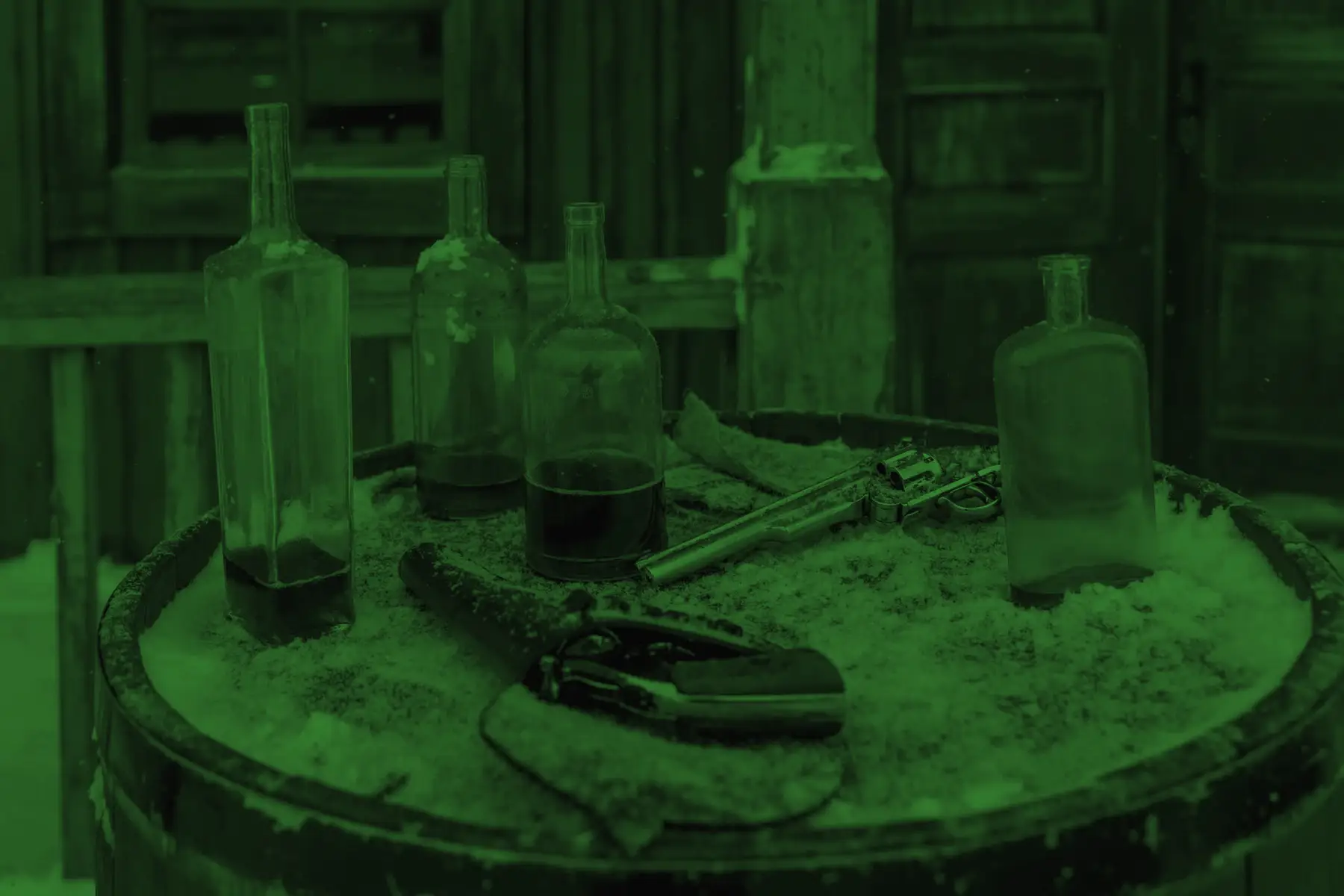
In the summer of 1933, the most wanted gang in America checked into a two-cabin motel in Parkville, Missouri, a town of 636 people ten miles north of Kansas City. They booked both cabins, taped newspapers over every window and paid for their meals in coins. Within days, half the lawmen in the region knew exactly where they were.
The Red Crown Tourist Court came out of a brand-new American idea. The world's first motel opened on December 12, 1925, in San Luis Obispo, California, where architect and developer Arthur Heineman built little bungalows for car travelers, each with its own garage, for a buck and a quarter a night. He coined the word too, by mashing together motor and hotel. The layout that caught on was simple: park at your door, swap cash for a key, and skip the lobby, the bellhops and usually the ID. It was built for tired families. It worked just as well for people who didn't want to be seen.
Two cabins, two garages
Parkville banker Emmett Breen built the Red Crown in 1931. It had a pair of small brick cabins joined by two garages, plus a little restaurant and even a ballroom. The Dust Bowl had left western Missouri's fields bare and its people hungry, but Kansas City was booming on Tom Pendergast's corrupt backroom deals and government-funded construction. The money drew jazz, and it drew gangsters, bootleggers and bank robbers.
It also drew Clyde Barrow. With him were his brother Buck, Buck's wife Blanche, a 17-year-old accomplice named W.D. Jones, and Bonnie Parker, who was barely alive. A car accident in Texas had left her critically burned, and a hospital was out of the question for a gang wanted for robbery and murder.
A string of bad decisions
They had been hiding out in rented cabins in Fort Smith, Arkansas, until the money ran out. Clyde sent Buck and W.D. to raise some more. The pair robbed a grocery store in Fayetteville for about twenty dollars, then tore back toward Fort Smith so fast that Buck slammed into a slower car. At that exact moment, Alma town marshal Henry D. Humphrey and Crawford County deputy Ansel M. Salyers came roaring past. The lawmen stopped to help at the wreck, never realizing the bandits had caused it. Buck grabbed Clyde's sawed-off shotgun and killed Humphrey.
The gang fled north, hauling Bonnie over dirt and gravel roads all the way to Fort Dodge, Iowa. There they pulled a string of sloppy gas station robberies, prying open gumball and vending machines for the coins inside, and came away with $150. Clyde wanted to go to Kansas City. Buck didn't, because it had been only a month since the Kansas City massacre left four officers dead at Union Station. Clyde won, because Buck knew better than anyone how dangerous his little brother was. After that, the brothers stopped speaking. These were outlaws, after all, not the Rotary Club.
Riding pants and a pile of coins
Blanche went in to get the rooms, and she made two mistakes. She was wearing her favorite jodhpurs, the snug breeches worn for horseback riding, at a time when few women wore pants in public at all. And she paid in coins. The manager couldn't stop staring. Over the next few days, newspapers covered every cabin window, and now and then a corner folded down so an eye could peek out.
Then came plain bad luck: the Red Crown's restaurant was a favorite meeting spot for the Missouri State Highway Patrol. Pharmacies across the Midwest had been told to watch for anyone buying burn supplies. Before long, a pharmacist named Louis Bernstein called the sheriff about an attractive young woman in "slinky riding pants" who had just bought bandages, atropine, burn salve and syringes.
Sheriff Holt Coffey knew his little office was badly outgunned. He talked Kansas City into lending him men, Thompson machine guns, steel shields and an armored car. Blanche noticed that conversations died whenever she walked into the restaurant, but Clyde waved off her worries. On July 19, at 10:30 p.m., W.D. went out for five sandwiches and five sodas. He saw men milling around the parking lot, and he never told Clyde.
The most wanted gang in America gave away its hideout with a pair of tight riding pants and coins pried out of gumball machines. With Bonnie barely conscious in the back seat, they still escaped a trap set with machine guns and an armored car.
The horn that blared
Around 1 a.m., with the armored car blocking the garage doors, the sheriff's men knocked. Blanche called out that she wasn't dressed, and that the men were all in the other cabin. That was when Clyde opened fire.
Clyde's cabin had an inside door that led straight into the garage. They carried Bonnie to the car and found the armored car in the way. It turned out to be an ordinary car with bulletproof glass and steel boiler plate welded on. The gang shot the driver, George Highfill, in both knees. The horn started blaring, and the officers took it as a signal to hold their fire. Highfill backed away, and the garage door was suddenly clear.
Buck was shot through the temple, and the bullet came out his forehead. Somehow he was still conscious, with his brain visible through the blood. Clyde and Blanche dragged him into the car, and the gang sped off under a hail of bullets. Shattered glass pierced both of Blanche's eyes. Not a single officer gave chase. In the cabins, police found the five sandwiches untouched, nearly 50 Colt .45 pistols, half a dozen Browning automatic rifles, and the weapon taken from the marshal Buck had murdered in Arkansas. The Kansas City Star concluded that the outlaws got all the breaks. Buck lived about three more days, talking and eating, before he died.
A dollar a brick
In 1945, the former sheriff Holt Coffey bought the Red Crown himself and ran it as a popular honky-tonk for five years. A kitchen fire gutted it in 1950, and souvenir hunters carted off whatever they could carry. Arthur Penn's 1967 film Bonnie and Clyde set the gunfight in Iowa and gave the motel a different name, but it set off such a craze for the Barrow gang that a dollar would buy a single brick from the ruins. The buildings came down in 1968.
In the end, what killed the Red Crown wasn't outlaws or fire. It was the interstate, which passed Parkville by. Today a historical marker stands in the far southeastern corner of a parking lot belonging to WireCo WorldGroup. It's just 107 words long, and it's easy to walk right past.