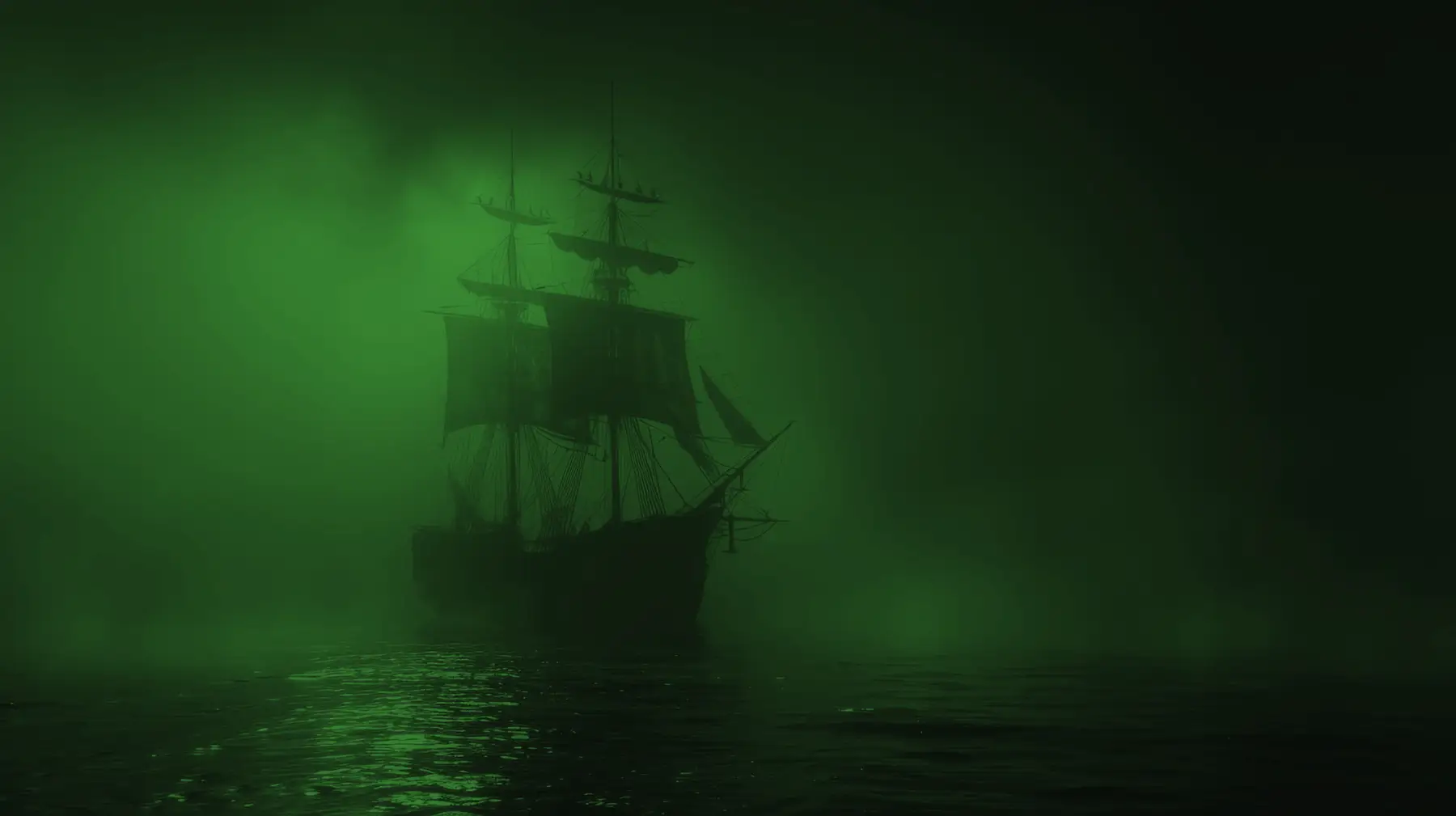
In 1749, a fourteen-year-old orphan went for a swim in Havana harbor, lost his leg to a shark, and went on to become Lord Mayor of London. His was the first shark attack ever to make the news. More than a century later, sailors in the Indian Ocean told a far darker story: one enormous shark, marked by a strange white lump on its back, that seemed to be hunting them ship by ship.
An orphan in Havana harbor
Brook Watson was born in England in 1735 and orphaned at seven. With no relatives at home to raise him, he was shipped across the Atlantic to an aunt and uncle in the colonies, a voyage of at least a month through storms, sickness and the threat of pirates. His uncle was in the shipping business, and the boy loved the sea. At fourteen, Watson signed on to one of his uncle's merchant ships bound for the Caribbean.
In Havana, with his work done and the harbor calm and clear, he dove in. A shark slammed into him and tore the flesh below the calf of his right leg. As his shipmates tried to haul him out, it made a second pass and snapped off his foot at the ankle. They wrestled him onto the deck just as the shark circled back. The leg was amputated at the knee. Watson spent three months recovering in a Cuban garrison, then sailed home to discover his uncle had gone bankrupt.
He was fine. Better than fine. He joined the British military, earned the nickname "the Wooden-Legged Commissary," returned to England a successful businessman, and was eventually named Lord Mayor of London.
Sharks in the papers
Sharks have been on Earth for 450 million years, surviving every mass extinction, and sailors had always paid the price in lives and limbs. After Watson, the stories started showing up in print. In 1753 the Maryland Gazette reported a sailor in Barbados bitten in half. His friend grabbed a harpoon, leapt into the water, rode the wounded shark to shore, hacked it to death, then called for a coffin for what was left of his shipmate. The tale circulated for years.
In 1833 the Pittsburgh Gazette reviewed The Life of a Sailor, a three-volume book by a naval captain. It described the wreck of a small ship called the Magpie off Cuba. Fifteen sharks moved in among the 22 men in the water, and one bite set off a feeding frenzy. Lieutenant Smith kept barking orders until a shark severed both his legs above the knee. His men heaved him aboard, where he asked them to "tell the admiral I was in search of the pirate when this lamentable occurrence took place. Tell him I have always done my duty and that I." Then the boat heeled violently and tipped him back into the sea.
Two men survived, with no mast, oars, food or water. When a passing brig (a two-masted sailing ship) turned away without seeing them, a sailor named Tom declared, "by heaven, I'll do it or we are lost," and jumped in. The sharks followed him. At the last moment a man appeared on the brig's deck, and Tom and his shipmate Jack were both saved.
The shark with the white lump
In 1863 the English brig Fairhope was sailing east of Ceylon, now Sri Lanka, toward the Strait of Malacca. On merchant ships it was customary to let the men stop work to kill any shark they spotted. A lookout in the rigging saw "a monster lying alongside the ship," hidden from the deck by the ship's high sides, and marked by an odd milky white swelling about eight feet behind its head. The captain decided to capture it alive and haul it to Singapore. It ignored hours of baited hooks. When the ship's carpenter tried a harpoon, he fell overboard and was gone.
Three days later, the American ship James F. Bradwell, loaded with tea, sat becalmed — stuck without wind — when the same pale-marked giant settled alongside. Guessing it was near death, the crew planned to noose its tail. The sailor trying it from a dinghy lost his balance, and all five witnesses said the shark swallowed him with "no more difficulty than if he'd been a piece of the pork they'd tried using as bait."
Two weeks later, in the Bay of Bengal, three fishermen near the English whaler Two Sisters decided they, too, would take the shark alive. One strike shattered their little reef-fishing boat. One man was pulled aboard, one was devoured on the spot, and the man clinging to the rudder was plucked off while the crew pelted the shark with buckets and hammers. In taverns and shipyards, sailors gave it a name: the Sea Demon.
For three years, sailors across thousands of miles of ocean kept running into the same shark, recognizable by the white lump behind its head. It followed their ships and waited for men to fall overboard. And crew after crew decided to capture it alive.
Thirty-eight feet, three inches
In early 1864 a squall tore the masts off the Speedwell, bound for Philadelphia, and the shark tucked itself along her port side. This crew had heard the stories, so the officers measured it: 38 feet and three inches, roughly a bus, more than twice the length of an average great white. The only sharks that grow that large are the plankton-eating basking and whale sharks and the tiger shark, whose stripes no witness ever described. Megalodon, anyone? Captain Taylor fired buckshot at it. Three times it dove; the fourth time it moved to the stern and stayed too low to hit. When a sailor fell from the yardarm, the shark swallowed him "life preserver ring and all."
That April it turned up beside the brig Charleston off Mauritius, 3,000 miles from its last attack. Twelve revolver rounds did nothing. Sailors believed no shark would follow a moving ship, but this one paced the Charleston from Tuesday to Friday, until the cook lowered a pail, the ship lurched, and he vanished without a scream.
The gunboat's answer
The killing went on for two more years: a man who fell from the bowsprit (the spar jutting off the bow) of the Scottish whaler Albatross, a sailor off the Boston ship White Wave, nine castaways from the wrecked Cape Horn, stalked on their raft for seven days and nights. In 1866, back in the Bay of Bengal, the shark settled beside an English gunboat. Nobody there talked about taking it alive. They loaded the guns and fired. When the smoke cleared, the shark was gone, with no sign they had hit it. The Sea Demon was never seen again.