Case file 155Unsolved & Vanished1900–1945

Deadly Belle - The Serial Killer Who Lured Men to Her Murder Farm

"Come alone. Bring your money. Tell no one." For the men who answered Belle Gunness’s letters, those instructions would prove deadly.

Sep 25, 20261h 39m
00:00 / 1:39:03
Or listen to this episode onApple PodcastsSpotify
Share this episode

In this episode

  • A lonely widow, and the matrimonial ads that brought hopeful bachelors straight to Belle Gunness’s door
  • The unsettling pattern surrounding Belle: fires, insurance money, and the many men who disappeared
  • The suitor who woke in the dead of night to find Belle standing over his bed…and became one of the very few men to leave her farm alive
  • The farmhouse fire that was supposed to be the end of Belle Gunness, but instead exposed the horrors buried beneath her property
  • The mystery that refuses to stay buried: whose body was actually found in that burned-out house…and where did Belle Gunness really go?

“…a wholesale murderess…so demonically possessed of lust for money that she would not have stopped at any degree of crime to enrich herself.”

The story

In 1908 a Wisconsin bachelor named Carl Peterson opened a letter from a Norwegian widow in La Porte, Indiana. She described twelve rooms, a windmill, 75 acres of apples, plums and currants, and three frisky children. Then came the catch: he would need $1,000 in cash. "I would not care for you as a hired man." Peterson didn't have the money, and he was ashamed to be turned down. Being poor probably saved his life.

Fires, fevers and good insurance

She was born Brynhilde Paulsdottir Størseth, and she left Norway for Chicago at 21. She worked as a servant and then in a butcher shop, processing animal carcasses, and she renamed herself Belle. She married a fellow immigrant, Mads Sorenson. Their home burned, and they had insurance. Their candy store burned too. Belle blamed an exploding kerosene lamp, though no lamp turned up in the ruins. They had insurance on that as well.

Two of their children, Caroline and Axel, died of colitis two years apart, and Belle collected on both policies. The neighbors whispered that she had never once been pregnant. In 1900 Mads came home with a headache. Belle gave him quinine powder, and within hours he was dead, on the last day one of his two life insurance policies was in force. Guests in the next room heard him start to say "Belle, you have been..." before she shut the bedroom door. His family believed he'd been poisoned with strychnine, but they couldn't afford to have his stomach analyzed. The widow collected $5,000 and waved off any talk of an autopsy: "Before I saw my dear husband cut up, I would forfeit that insurance money."

A sausage grinder falls

With that money she bought a hog farm outside La Porte. It had once been a brothel run by a notorious madam, and Belle fixed it up handsomely. In April 1902 she married Peter Gunness, a tall, blond, handsome widower. Eight months later he was dead. By Belle's account, he bent over to tie his shoe in the kitchen, and a heavy sausage grinder fell off a shelf above the stove and struck him on the head. At the time she had a pot of brine simmering for head cheese, a jellied loaf made from a hog's head. The coroner weighed the grinder, measured how far it had fallen, and ruled the death an accident. Peter's brother Gust turned down her invitation to stay and help run the farm: "I didn't like her eyes, and I didn't like the place, so I refused."

Bring only cash

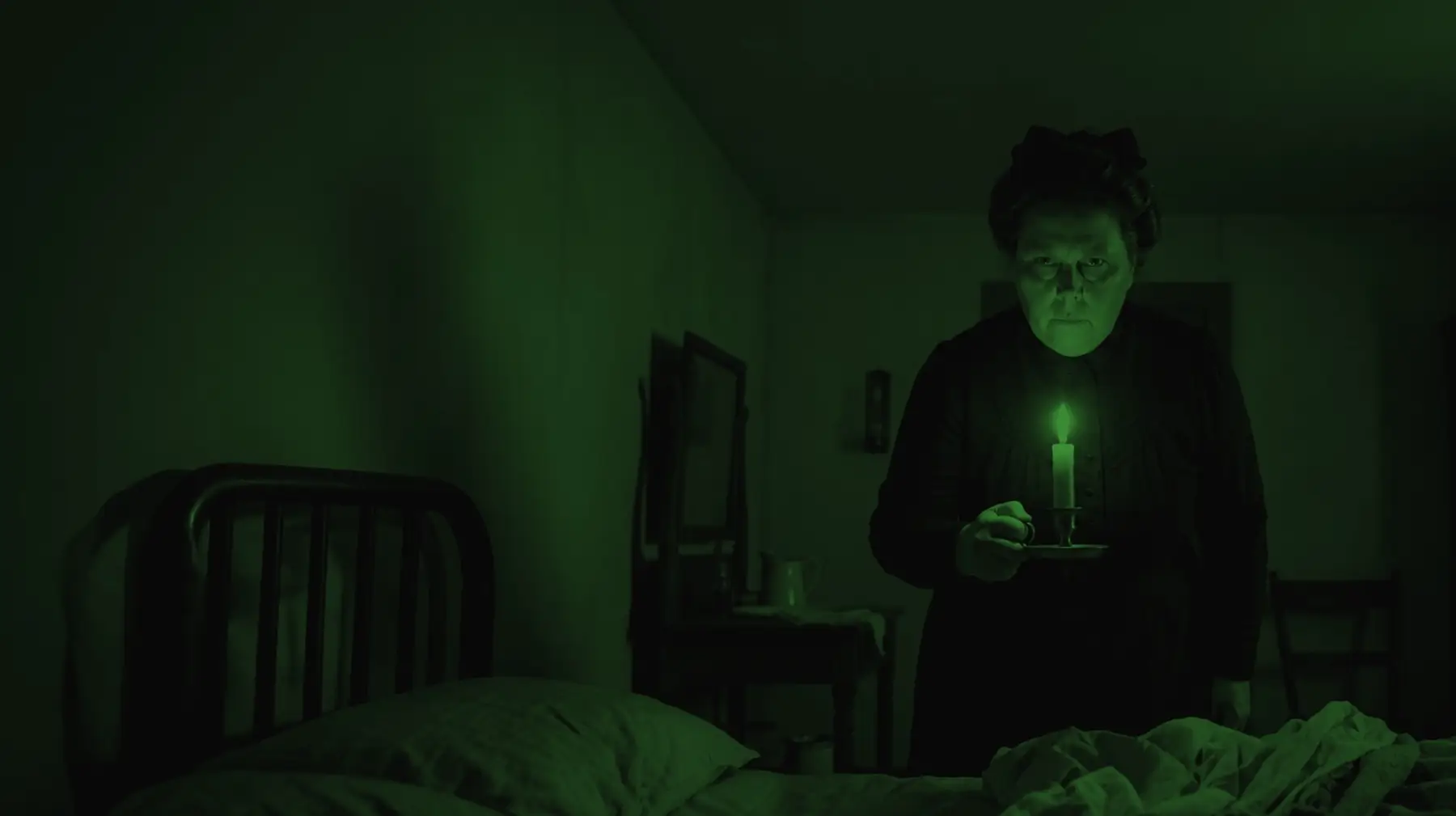
Twice widowed, Belle placed matrimonial ads (the period's personal ads for people looking to marry) in Norwegian-language newspapers, looking for a gentleman willing to join fortunes with her. The mail carrier later testified that as many as eight letters a day came from hopeful suitors. They were mostly lonely, middle-aged farmers. John Moe came from Minnesota with $1,000 to pay off her mortgage and vanished within a week. Ole Budsberg mortgaged his Wisconsin land at a La Porte bank and was never seen again. When his sons wrote to her, Belle replied that she had never met him. George Anderson of Missouri woke one night to find Belle standing over his bed holding a candle, with a look so cold that he screamed. He caught the first train home. He was the only suitor who ever left her farm alive.

Andrew Helgelien, a North Dakota farmer, exchanged letters with her for two years. The letters were tender and insistent: "Do not say anything, even to your nearest." Keep your money away from the banks. And finally: "you must come for good, and prepare yourself. Do not return." In January 1908 he withdrew his life savings and went.

The weird part

Belle Gunness lured at least eleven men to her farm and killed them for their money; she disappeared and was never caught. The body buried under her name isn't hers, and nobody knows where she, or her roughly one million dollars, ended up.

What the hog pen held

Belle's hired man and lover, Ray Lamphere, was a hard-drinking carpenter, and by then she had pushed him out. She told the whole town she was afraid of him. The day before her house burned, she signed a will and told her lawyer, "I'm afraid that fool Lamphere is going to kill me and burn my house." She also bought several large cans of coal oil. On April 28, 1908, the house burned down. Searchers found three children and a headless woman in the ruins, and Lamphere was arrested. The examining physician wasn't convinced: "In my opinion, the body of the woman found in that house is not Mrs. Gunness." The corpse weighed 150 to 160 pounds, and Belle weighed a solid 225.

Helgelien's brother came looking for Andrew. A farmhand named Joe Maxson showed him the soft spots he'd been told to level in the hog lot: "Just rubbish and garbage we've buried." Under the garbage they found men's shoes and a burlap sack holding hands, feet and Andrew's head. More sacks followed, until they had eleven bodies, each cut into six parts and packed in quicklime. Thousands of people came to watch, bringing picnics, and vendors sold ice cream and popcorn.

Everywhere and nowhere

The coroner declared Belle dead, so no warrant was ever issued. People kept reporting sightings of her anyway, in Detroit, New Mexico, Canada and New York City. An anonymous letter to the mayor claimed she had drugged the children, planted a decoy body and set a slow match: "Mrs. Gunness is alive and well." Lamphere was convicted only of arson, because two jurors refused to budge on the murder charges. He died of tuberculosis in prison a year later. In 1931, two men identified a Los Angeles poisoning suspect named Esther Carlson, who had died before trial, as Belle. Nobody has ever exhumed Carlson to test her DNA.

Belle's schemes brought in roughly a million dollars in today's money, and none of it was ever traced. Helgelien's brother put up a tombstone calling Andrew "the last victim of the Gunness Horror." Nobody can say whether that's true.

The transcript

Chapters & full transcript14,381 words
Chapters
  1. 00:26A letter to Carl Peterson
  2. 02:56Fires, fevers and dead husbands
  3. 16:20The suitors of La Porte
  4. 30:25The fire and the hog pen
  5. 41:45Sightings, a trial and Esther Carlson
  6. 54:38Born this way?

This transcript was generated automatically from the episode audio and may contain errors. Times are approximate, since ad breaks can shift them by a minute or two.

00:00

Hey True Weirdos, just a minute before we get started in, thank you so much for listening. We are very proud of our brand new website, trueweirdstuff.com. It has all kinds of great stuff. You are going to want to check this out. And if we could just remind you to subscribe, rate, and review on whatever platform you listen to this podcast.

00:21

And thank you again. First, I'll tell you that I'm Norwegian. I've been in this country for 20 years. I live in Indiana, about 59 miles from Chicago and one mile north of La Porte. I'm the sole owner of a nice home in a pretty location. That letter was addressed to a man named Carl Peterson, who lived in Wapaka, Wisconsin.

00:49

There are 75 acres of land, also all kinds of crops, improved land. I have apples, plums, and currants. I'm on the boulevard road and have 12 rooms in my house, practically new, a windmill with all modern improvements, situated in a beautiful suburb of Chicago, worth about $15,000. Carl Peterson had contracted with a matrimonial agency.

01:22

Think of that as something like a matchmaker. The agency served as a go-between for bachelors hopeful of finding a wife and women in need of a husband. All of this is nearly paid for. It is in my own name. I am alone with three small children from 5 to 11 years old. The smallest is a little boy. The two largest are girls, all frisky and well.

01:48

As marital prospects went, Carl Peterson couldn't help but be impressed. Now, if you think that you are able to, in some way, put up $1,000 cash, we can talk the matter over personally. If you cannot, it's not worthwhile to consider it. I would not care for you as a hired man. Carl Peterson wasn't a wealthy man. He was just a man in search of a wife, and $1,000 was a small fortune in 1908.

02:19

He simply didn't have that kind of money, and he was embarrassed and ashamed to be rejected. Little did he know that being a poor man probably saved his life. True Weird Stuff In 1881, at age 21, Brynhilde Paulsdatter Størseth, youngest of eight children, left her native Norway for a new life in Chicago. With a sister and brother-in-law already there, she had a place to stay.

03:14

She found work as a servant, and then in a butcher shop, processing animal carcasses. Brynhilde changed her name to one easier for non-Norwegians to pronounce, Belle Petersen. Three years later, she met and married a fellow Norwegian immigrant named Mads Sorenson. The couple bought a home in Chicago, only to lose everything in a fire.

03:39

Luckily, they had insurance and were able to invest that money in a little business, a candy store, right at the corner of Grand Avenue and Elizabeth Street. Despite the good location, they struggled to make a success of it. And then, don't you know that misfortune struck again, and their candy store burned to the ground?

04:01

The cause of that fire was deemed mysterious. Belle speculated that perhaps a kerosene lamp had exploded, igniting the blaze. No lamp was found in the ruins, but again, luckily, the couple had good insurance. With that payout, they decamped for the community of Austin, Illinois, on the west side of Chicago. They purchased another home and tried to start a family.

04:27

There are some who insist that Mads and Belle were unable to conceive children of their own, and so they took in foster children. But however they arrived on Earth, it appeared that the couple had four children together, Caroline, Axel, Myrtle, and Lucy. For it was tragic when baby Caroline died in 1896. Colitis, they said.

04:53

The same affliction that took baby Axel just two years later in 1898. So terrible. So shocking. But then, you know, the life expectancy for children in those days was shockingly poor. Nearly two out of every ten children didn't survive to celebrate their fifth birthday. Gastrointestinal diseases like colitis were the cause of death for 25% of infants.

05:19

Heartbreaking for Belle and her husband. But the neighbors weren't so compassionate. That woman had never once been pregnant, the rumors went. She did something to those babies, was the ugly gossip. You know how people can be. Judgmental. Rude. Unkind. Just because Belle had purchased insurance policies for both children, and then collected pretty sizable payouts after their untimely deaths, that didn't make her a murderer or a bad mother.

05:54

How did Belle learn from painful experience that insurance was just a good, practical investment? Hey, hey, maybe give this woman a break. Because just two years after the loss of baby Axel, Belle was widowed. On July 30th, Mads Sorenson came home complaining of a headache. Belle fetched some quinine powder for the pain and left him lying down.

06:27

It was a terrible shock when she returned to check on him. He was dead. Cerebral hemorrhage was the stated cause, or maybe heart failure? It wasn't clear. Even in death though, Mads was a good provider. He'd purchased two life insurance policies for himself. And as fate would have it, one of those policies was set to expire at midnight on July 30th.

06:54

With both policies in force, Belle collected $5,000 in death benefits. A sum equal to just over $198,000 today. The insurance company was suspicious, but ultimately could find no reason to deny the claim. Because even the suggestion of an autopsy had sent the widow into spasms of grief. Before I saw my dear husband cut up, I would forfeit that insurance money.

07:28

Perhaps there were just too many memories for Belle and Austin. She took the insurance money and purchased a pig farm in La Porte, Indiana. Far enough away for a fresh start. It may seem odd that a grieving widow at 41 years of age would even consider buying a farm. But for Belle, farming wasn't a new thing. It was a return to her early life.

07:54

Farm work was how she'd earned the money to emigrate to the United States. She was a strong woman. Tall. Heavyset. Capable. And think about it. She'd known little but tragedy since arriving in Chicago. Her home burnt. Her business burnt. Two children died. Her husband died. Who could blame her for wanting a fresh start out in the country? Where a woman could get a loanful of clean air and hear her own thoughts?

08:24

Also, there'd been some real ugliness with her late husband's family after his death. Torvald Sorenson, a brother of Mads Sorenson, claims that the death of Mads was brought about by drinking a potion handed to him in his bedroom by his wife while friends were in the sitting room at her home. These people heard Sorenson say, Belle, you have been...

08:49

Before the guests could catch the rest of the remark, the door to the bedroom was closed by the woman. Soon after, she came out and announced that the man was dead. Mads Sorenson's family pleaded for answers. Another brother, Oscar Sorenson, even went to Chicago and had Mads' body exhumed and examined. The family simply couldn't afford to have the contents of Mads' stomach analyzed by an expert chemist. But they were convinced that Mads had all the symptoms of strychnine poisoning, and it was his wife who'd given him the fatal dose. Unable to persuade the Chicago police to take any interest in the case, the Sorensons were forced to drop it. Meanwhile, the widow Belle wasn't alone on her farm in Indiana.

09:37

She had three foster children with her, Jenny Olsen, who'd been in Belle's care from age eight, Myrtle, and Lucy. The farm itself had a history. It had served as a brothel under the management of a notorious madam named Maddy Altey. With Maddy dead and gone, everything had slowly deteriorated. Belle spent a fair amount of her insurance money making repairs to the farm with its 65 acres and spacious two-story brick house.

10:06

Belle planted trees and shrubs and flowers. She fixed up the outbuildings, and the neighbors were delighted to see a hardworking widow transform the shabby old whorehouse back into what they considered a more respectable home. It was hard work and lonesome work. A woman out there all by herself with only young children for company.

10:30

It's no wonder Belle's thoughts turned to companionship and maybe even marriage. People have been looking for love in the personal ads since the year 1695 when the very first personal ad was published in a London weekly. They called them matrimonial ads back then, and by 1710, every single newspaper in London was running them. That's how popular they were.

10:58

Stateside, Belle crafted a matrimonial ad of her own and paid to have it published in German and Norwegian language newspapers. Personal. Family widow who owns a large farm in one of the finest districts in La Porte County, Indiana desires to make the acquaintance of a gentleman equally well provided with view of joining fortunes.

11:23

No replies by letter considered unless Sander is willing to follow the answer with a personal visit. Belle traveled to Janesville, Wisconsin to meet Peter Fredrickson, one of the bachelors who'd responded to her ad. Fredrickson evidently did not have enough money to suit her tastes. Fredrickson later married another woman.

11:44

That trip, though, wasn't a waste. The Fredrickson's housekeeper Mrs. Gunness had a son named Peter. He was tall, blonde, bearded, and handsome. Blame Kismet or Cupid's arrow or who even knows what now, but the housekeeper's son, Peter Gunness, is the man Belle married on April 1st, 1902. Peter Gunness had been married before and brought a daughter named Svanhilda to his new home in La Porte.

12:15

The newlyweds settled in. There's always so much to do on the farm, but the children helped where they could, weeding, raking, feeding the hogs. Peter spent hours in the cornfields, and he and Belle quickly became regulars at La Porte's trade days, selling cows and corn, bartering manure for tools. It wasn't an easy life. Farming never is.

12:39

But from the outside, at least, it looked like a good life. Eight months later, on December 16th, 1902, there was a bizarre accident on the farm. Peter, according to the testimony Belle gave at the coroner's inquest, was alone in the kitchen when it happened. There was a shelf in that kitchen mounted above the coal stove.

13:02

On that shelf sat a heavy metal sausage grinder. There was a large pot of brine simmering on the stove. Belle was preparing to make a batch of head cheese from a freshly butchered hog. Apparently, as Peter bent to tie his shoes, the shelf above the stove abruptly gave way. The sausage grinder fell, striking Peter on the head.

13:29

Hearing the crash, Belle rushed into the room. He was dead. He was already dead. There was a small wound on top of Peter's head. The coroner visited the home, weighed the sausage grinder, and measured the distance it had fallen. Peculiar as the incident was, accidents happen. That was the coroner's ruling. The gossip disagreed, but ultimately, nothing more came of it.

13:59

Peter's brother, Gust Gunness, made the trip to La Porte, where the widow Gunness begged him to stay and help her manage the farm. I didn't like her eyes, and I didn't like the place, so I refused. She begged me several times to stay, but I didn't think we'd get along. I had no money to speak of, and she might have been all right to me, but I tell you, I'm glad I didn't take up that offer.

14:27

Gust left La Porte, satisfied that Belle was, at the least, a good stepmother to his niece, Svonhilda. In fact, Belle had insisted that the child remain in her care, which is why Goose was surprised that spring to receive a letter from Belle about the girl. She said that Svonhilda was lonely. She wanted her own folks. She said she wanted me to come and get her. Miss Gunness sent the money for the trip and paid all the expenses. That visit, she didn't say nothing about me helping with the farm.

15:05

It was only later that Gust realized that he and his niece were both lucky to be alive. In spite of all the crimes charged to that woman, she was real fond of children. She treated Svonhilda and her own children well. Svonhilda never complained of nothing except loneliness. So, there had been some confusion regarding Peter Gunness's life insurance policy. His daughter, Svonhilda, was the beneficiary.

15:38

That $2,500 bucks, about $97,000 to you and me, where was that money? Belle sent a letter and explanation. Peter had turned that insurance policy over to a mining company for the purchase of shares of stock. If that stock ever amounted to anything, Peter said that Svonhilda would be a rich, rich girl. It's just too darn bad that a fire destroyed the house before anyone even had a chance to look for those stock certificates. Of all the bad luck, but let's don't jump ahead just yet.

16:20

Widowed a second time, Belle began placing matrimonial ads in Norwegian language newspapers like this one that ran in Chicago's Scandinavian newspaper. A woman who owns a beautifully located and valuable farm in first class condition wants a good and reliable man as partner in the same. Some little cash is required for which will be furnished first class security.

16:49

Then there was this ad, a little more direct in its message. Comely widow who owns large farm in one of the finest districts in Laporte County, Indiana, desires to make the acquaintance of a gentleman equally well provided with view of joining fortunes. This last part was important. Belle had no real interest in courtship.

17:14

Hers was a much darker agenda. No replies by letter will be considered unless sender is willing to follow answer with a personal visit. Chryslers need not apply. The mail carrier who served Belle's address later testified that she received as many as eight letters per day for potential suitors. The men that Belle targeted were easy marks. They weren't worldly.

17:39

They were mostly middle-aged bachelors who may have seen Belle as their one chance at married life. One farmhand told a reporter that Belle had a constant stream of mail visitors from Chicago, Wisconsin, the Dakotas, Kansas, Missouri. She introduced them as her cousins and the farmhand said she made a point of keeping the children away from these cousins. Farmhand described her as a private person who was secretive about the men who came to call.

18:10

Men like 50-year-old John Moe. Moe made the trip to Laporte from his home at Elbow Lake, Minnesota. He brought $1,000 intending, he told neighbors, to pay off his future bride's mortgage. Strangely, John Moe had only been on the farm about a week when he just disappeared. So unlucky in love was Belle. A shame. Soon enough, though, another Norwegian gentleman turned up. George Anderson of Tarkeo, Missouri. Anderson found Belle to be severe in her manner. Stout. And not at all the beauty he'd been expecting. Still, as he said later, she made him welcome in a guest room and cooked excellent dinners.

18:58

They spent some time getting acquainted and one night over dinner Belle broached the subject of her mortgage. Anderson said that if they were to get married, why, of course, he would pay off the note on the farm. Though she was not as he'd imagined, he was very close to proposing. Until late that night when he woke up in his bed to find Belle standing over him. She was holding a candle and the expression on her face, according to George Anderson, was so coldly sinister that he let out an involuntary scream. Anderson flung himself out of the bed and grabbed for his clothing. He left that farm that very night and the next day took the first train back to Missouri. Of all the would-be suitors who showed up at Belle's farm in Indiana, George Anderson was the only one who ever left.

19:54

Alive, that is. Hey, are you wondering what the neighbors made of Belle at this point? Folks couldn't help but notice that the shutters on the house were kept tightly closed in all weather, day and night. It was also odd, people said, the way you could find Belle just digging away in the hog pen and at night. Whoever heard of doing such a chore in the dark? And right around the same time that George Anderson bolted in the middle of the night, Belle began taking deliveries of what can only be described as enormous trunks.

20:29

The man who delivered those trunks, Clyde Sturgis, marveled at the way Belle shook off his offers of help, snatching a trunk off the back of his wagon, hoisting it onto her shoulders and toting it into the house as though it weighed nothing. Then there was the elderly widower from Iola, Wisconsin, by the name of Ole Budsberg.

20:48

The last time anyone saw Mr. Budsberg was on April 6, 1907 at the LaPorte Savings Bank. It was an important transaction. Budsberg was there to sign the papers mortgaging his land back home in Wisconsin in exchange for thousands in cash. Budsberg carefully signed over the deed to his property. Budsberg had grown sons who'd not been told by their father of his plans.

21:16

It took some sleuthing, but they finally figured out where their father had gone off to. A farm in Indiana? To get married? They wrote immediately to Belle Gunness and she replied. She was so sorry for them and hated to give disappointing news, but I told them I never met their father. 1907 saw multiple middle-aged men with marriage on their minds showing up at LaPorte to call on Belle. They appeared and then disappeared just as swiftly.

21:51

Sell everything you own. Bring only cash. That spring, 1907, Belle hired a man to help her run the farm. His name was Ray Lamphere. He was 30 years old with a mop of unruly curls and a big old drinking problem. Younger than Belle by 18 years and described by those who knew him as not too bright, Lamphere had enough skill as a carpenter and enough charm as a man to talk his way into a spare bedroom at the farm. It took Ray Lamphere almost no time to suspect that Belle was running a deadly scam, luring prosperous men to the farm to rob and murder them. This realization wasn't enough to keep him out of Belle's bed, however. They became lovers and then accomplices. Soon they were living as man and wife, though Belle hadn't stopped hunting for wealthier prey.

22:51

Lamphere was either naive or cocky or too often drunk to realize that simple truth. While he was in LaPorte's bars and saloons bragging about how Belle had seduced him, showing off the expensive gifts she'd showered him with, a fancy watch, a beaver top hat, Belle was back on the farm looking for her next victim. Imagine Lamphere's shock when he heard the gossip. Belle Gunness and her new beau had strolled into Oberreich's department store downtown to purchase a wedding ring. Lamphere was near out of his mind with jealous anger, which didn't last long since that man vanished. Weirdly, cold feet? Lamphere's relief at the disappearance of a rival was short-lived. Lamphere, who'd been telling anyone who'd listened that he and Belle would soon marry, had no idea that Belle already had another suitor on the scene.

23:51

One that something with Lamphere for all his youth and swagger could never match. Money. Andrew Helgelien was a farmer from North Dakota. He and Belle traded letters for two years before he made the trip to La Porte. As it is so far, and it probably will be so late in the fall when you get here. I know I will not like to be alone again, but if you should go to Dakota, or any other place you wish to go, we would do the best we could. But how pleasant it will be to sit and talk Norwegian about everything.

24:58

Don't you think so too? Aww, sweet. You'd never guess that this is the same woman who's planning to kill you, butcher your body, and bury the parts deep in the hog pen. We're always on our best behavior in the beginning of any relationship though, aren't we? Belle's letter continued. You will see how happy we will be, but do not tell a word to anybody out there before you go. Only tell them after you have been here a while.

25:31

I have now thrown away all the other answers I got. By answers she means to the ads she placed in the Norwegian language newspapers. I keep all of yours in a secret place, all by themselves. I prize them so highly, but I prize the writer more highly. And when I get to know you, I will set you above all others, as much as a man as I have not found among the Norwegians and Americans. There is altogether too much cunning and humbug in this land. Well, I must close for this time and go and milk.

26:10

Hope soon to hear from you, your friend Belle. With hindsight, Belle's letters to Andrew Helgelien read like the spider carefully setting her web for the fly. Now, my dear, you must surely advise me just when you leave, and telegraph if you can, when you come to Minneapolis or St. Paul, and then I may have the permission to be the first one to welcome you to La Porte. First one to welcome the man, and also to whisk him out of sight before too many curious eyes fell on him. I will be at the depot with my gray pony. I am rather a stout woman, and will have a nice buggy with a checked apron.

26:53

Belle was also aware that time had dimmed her beauty and that previous suitors had cruelly observed, and her curves had coarsened and thickened. Even a serial killer can get her feelings hurt. Even if the world has been a little hard with me, I have just the same kept my good nature, and I can still take pleasure in my life, but come alone. Do not take anyone from up there with you before we have become a little acquainted. It would be rather awkward at first, when there are strangers about. Just a first, anyway. Heartiest regards from your best friend, Belle Gunness. Reading these letters, it's hard not to see all the red flags, but this was 1907. No dateline, no my favorite murder, no bestie hooked on true crime to point out. Hey, does this seem a little off to you? Remember the advice I gave you in regard to your money.

27:54

Do not say anything, even to your nearest. It seems as if one cannot fully trust anyone these days. Let it be, as I said, a little secret between us two, and no one else. We will hold our little private affair to ourselves. I set you higher in my estimation than even the king, and I hope to hear soon that you're coming. Your best friend, Belle Gunness. Knowing what we know now, lines like, you my dearest friend, need a good long rest.

28:30

And, it feels good to be honest, sincere, and natural, and then to find a friend who has exactly the same traits. If a woman is ever so honest, good, and faithful, what good does it do when one is unfortunate and comes in contact with falseness and deceit? No, it would be much better to be dead. It's horrifying to watch her lay this trap for Andrew Helgelien. Do not even let the banks have anything to do with your money, not even to send it to you, for you. Do not know one thing about what will happen nowadays. One bank closes right after the other, and the cashiers steal. You're the first one I ever told this secret to. I know you'll follow it. Helgelien's letters in response must have given Belle the impression that he was less convinced than she would like.

29:30

This is real love. I hope to God you will not take long. In your first letter, you speak of just making me a visit. No, you must come for good, and prepare yourself. Do not return. And then, for good measure, Belle decided to play the poor, helpless woman all alone on the farm card. I have depended on you to come and take charge of everything, and I've not hired any staying man for the winter on this account. I have waited so long and hoped so long that I am sure you will not put me up any longer, my dear friend. In January 1908, Andrew Helgelien withdrew his life savings and left Minnesota to begin a new life with Belle.

30:17

There's a reason why we have Belle's letters to Helgelien, but not his letters to her. The farm residence of Mrs. Belle Gunness was destroyed by fire at an early hour on the morning of April 28, 1908. Four lives, those of Mrs. Gunness, who is a widow, and three children ranging in ages from five to eleven years are believed to be burned in the ruins. Search is now being made for their bodies. The theory advanced is that the fire was started by a former hired man.

30:54

Young, handsome, and furious that Belle had kicked him off a gravy train. Was it enough to drive the man to commit murder? Mrs. Gunness had been having legal trouble with the man whom she attempted to have declared insane. The suspect has disappeared. And then, almost as an afterthought, Mr. Gunness died under suspicious circumstances several years ago. Suspicious circumstances had a way of finding Belle Gunness.

31:26

Dr. Robert H. Long, one of the physicians, called in to autopsy the body of the adult female whose remains were found in a burned home on Belle's Indiana farm. In my opinion, the body of the woman found in that house is not Mrs. Gunness. There's more. A strange coincidence is that the foreheads of all the children were burned at the same place.

31:47

This is extraordinary. A skull crushed by a blow at any part and then subjected to fire would be more likely to burn away at that point than at an uninjured place. He went into grim detail about bony structures and cartilage. Rough stuff. The body at the morgue is not Mrs. Gunness because it is not correctly proportioned. It is that of a rather plump woman of the same general contour of Mrs. Gunness but weighing between 150 and 160 pounds.

32:20

Mrs. Gunness was literally a succession of billows of flesh and weighed fully 225 pounds. She was a woman of unusual appearance. She was large, bony, powerful looking with square jaws and black eyes. A lack of womanly characteristics. Her remarkable countenance and her generally vicious appearance gave her an aspect that was almost terrifying. And there was Ray Lamphere in jail awaiting trial on four counts of murder.

32:52

Meanwhile, the search of the burnt ruins of Belle's home were beginning to yield more questions than answers. And more bodies. On May 5th, 1908, nine bodies were found including the dismembered corpse of Andrew Helgelien. His own brother had come to La Porte in search of him. He knew where to look because Belle wrote a letter to him after Andrew's disappearance.

33:16

Sell your brother's stock and come here and we will hunt for your brother together. The secrets that began spilling from that smoking wreckage. Remember Clyde Sturgis? The man who delivered all of those huge trunks to Belle Gunness? He came forward and told police that on that day, there was also a man at the farm tall with sandy hair and a smooth complexion. The description matched the missing bachelor from Iola, Wisconsin. Old Budsberg.

33:48

The neighbors who'd made a practice of minding their business where Belle Gunness was concerned, suddenly had all sorts of revelations to share. Remember last summer, they said? It was so strange. Mrs. Gunness told Chief of Police Cochran that a child had been murdered in the woods behind her house by a man and woman she'd seen driving by. There was an investigation but no body was found and after a week, police dropped it.

34:16

A week later, Mrs. Gunness sent her little daughter to the Chief of Police to state that she could take him to the spot where the supposed murdered child had been buried. Cochran went with the girl. In the woods, she showed him an empty hole, explaining that someone must have taken the body away. As he stood in the burnt ruins of the Gunness home, Police Chief Cochran allowed as to how upon reflection, he now believed that Belle herself had murdered a child and buried the body in the woods herself.

34:47

Mrs. Gunness has always been regarded as eccentric. She was frequently seen as late as 2 o'clock in the morning walking about her yard. Whatever was she doing out there in the middle of the night? Officers advanced the theory that the bodies of men found were those of matrimonial dupes of the woman. That they came here with the expectation of marrying her. As soon as she got their money, she put them out of the way. You hear bodies and you think well, bodies. But that's not how Belle worked.

35:20

The way in which they were dismembered and packed indicates that there were others besides Mrs. Gunness involved. Now, seemingly everyone who'd ever encountered Belle was tripping over themselves to say how they suspected all along that she was guilty of terrible things. The doctor who treated Belle's first husband, Mads Sorenson, came forward and declared his belief that strychnine poisoning may have killed the man. Belle's own sister stated her belief that Mrs. Gunness was a wholesale murderess, so demonically possessed of lust for money that she would not have stopped at any degree of crime to enrich herself.

36:00

She also said she agreed with the physician who examined the bodies that Belle Gunness had set fire to her own home and escaped. Yet the coroner made the decision to have her declared officially dead, which meant no arrest warrant would be issued, even though she was indicted for the murder of Andrew Helgelien. Ray Lamphere was indicted on seven counts of murder, one count of arson, and one count of accessory in the Helgelien murder.

36:28

With no bond set, Lamphere languished in his cell awaiting trial. He described himself as heartbroken by the way Belle had treated him. First she kicked him out of the house, made him sleep in the barn. Then she fired him and began telling anyone in Laporte who listened that Ray Lamphere had it out for her, that she was frightened of his temper.

36:51

She was just a widow after all, all alone on that big farm. She even met with a lawyer to draw up a will. He repeatedly threatened my life. He had persistently laid claim to my affections, and I spurned him. I want to prepare for any eventuality. I'm afraid that fool Lamphere is going to kill me and burn my house. And don't you know, it was the very next day after she signed her last will and testament, that her house burned to the ground.

37:23

Whether it was her intention or not to give him the perfect motive for murder, that's how the law saw it, Ray Lamphere in a frenzy of jealousy had burned down the house, killing every soul inside. Meanwhile, the land on Belle's farm was giving up the most grisly harvest. Three skeletons in one hole in the chicken yard, but only two skulls. A skull found in the cesspool, long hair still attached. Andrew Helgelien's brother refused to abandon his own search, though now his heart was heavy with fear and dread.

37:59

He approached a farmhand whom Belle had hired a few months before the fire. That hand, Joe Maxson, was sympathetic. Helgelien told him that he no longer had any faith that his brother Andrew was still alive. What he wanted, he said, was to give his brother a proper Christian burial. He asked Maxson if he knew of any other spots on the farm where digging had been done or earth had been moved.

38:24

Maxson led the man to a fenced-in hog lot roughly 50 feet from the main house, one of Maxson's earliest chores on the farm had been to level a number of soft depressions in the ground. Just rubbish and garbage we've buried. Maxson had done as ordered. Helgelien's brother wondered if maybe an all that buried trash was a clue to his brother's whereabouts.

38:49

Shovels were fetched and the men began digging in the hog yard. There was a rotting layer of garbage just a few inches down and weirdly, men's shoes. Then they saw it. A burlap sap tangled in the muck. Inside that gunny sack were a pair of hands, a pair of feet, and a human head. The face staring out was withered, filthy, decomposing, and unmistakably, Andrew Helgelien. Shocking, horrible, unthinkable, and all around where the two men stood were dozens more depressions in the soft earth. Burlap bag after burlap bag yanked from the ooze. Torsos, arms, hands, bones draped in rotting flesh. One body, five bodies, nine bodies, eleven bodies. Please stop counting after that. The remains were dredged in quicklime. Faces dusted with it. Ears stuffed full of it. In a nightmarish twist, it was possible to see a pattern in the gruesome find.

39:53

Bodies were dismembered in six parts. The head was removed. Arms were lopped off at the shoulder. Legs hacked at the knee. Authorities could not identify the bodies. Criminal forensic science may have been limited in 1908, but you didn't need DNA to know that the injuries to the skulls suggested blunt force trauma. Were a body could be tested at all?

40:16

Traces of strychnine, a poison commonly found on farms to deal with rats, were found. Belgunas, it seemed, was powerful, fond of strychnine. Word got around very quickly as to just what was coming out of Belle's hog yard. Newspapers went from eulogizing the poor widow to calling her the female bluebird and the ogress of Indiana. Thousands of people gathered to watch the body parts being pulled from the mud.

40:47

They brought picnics, the way people of the past did, whether it was a public hanging or the exhumation of human remains. Entrepreneurial types showed up hawking ice cream and popcorn. The atmosphere was downright festive. A welcome little break from the endless grinding labor of farm life. Police in La Porte found themselves bombarded by the relatives of missing men. Men, they said, who'd been in touch with a widow in La Porte.

41:17

Olaf Jensen's family received a letter saying he was off to Indiana to be married and they never heard from him again. Same for Christy Hilkvin, who sold his farm in Wisconsin in 1906, told folks he was moving to La Porte to be with a widow. Charles Nyberg, Bert Chase, T.J. Tiefland, Andrew Schwindler, Charles Edmonds, Tanias Lean, all men who'd vanished after corresponding with Belle.

41:45

Suddenly, there were sightings of Belgunas everywhere. A farmer living 10 miles outside La Porte swore he saw Belle a month after the murders in the company of two men disappearing into the woods behind his property. In late June, the Detroit police announced they were on her trail and an arrest was imminent. On July 9th, three months after the fire, a neighbor, D.M. Hudson, told police he'd seen her in the company of two men on the road near the very hog pen she'd turned into a makeshift cemetery. His two children also saw her and testified that even with a veil drawn over her face, there was no mistaking Belgunas like a bogeyman out of a scary story or a phantom.

42:33

Belgunas was everywhere and nowhere. And there was Ray Lamphere in the courtroom fighting for his life. And then in November 1908 while on trial, the mayor of La Porte received a letter allegedly from one of the men Hudson had spotted with Belle back in June. Dear sir, I hope you will see that this letter gets into the right hands so that it will help the poor innocent man, Lamphere, that they have on trial for burning Mrs. Gunness' house and herself and her children. Mrs. Gunness set the fire to the house and was 20 miles away when it took fire. She had a slow match going and the house was saturated with coal oil. On the day before the fire, Belle left her attorney's office and purchased several large cans full of coal oil from a merchant named Minnick. She poisoned the children beforehand.

43:33

There was evidence of strychnine in the bodies. The body with no head was one of her victims whom she killed some 10 days previous. She cut off the head so people would think it was her. The arm was cut off at the same time. The head was buried on the place as all the body would have been. But before she had time to do the job, she was afraid of being found out. As for the children she murdered? The children would have been a burden to get away with.

44:01

The letter writer added that he was aware that neighbor Hudson and Hudson's children had seen him with Belle on July 9th. He explained that they had returned to fetch some valuables that Belle had hidden on the property. Mrs. Gunness was afraid of Lamphere and would have killed him if she remained there. It was getting pretty hot for her, so she had to get out.

44:22

Mrs. Gunness is alive and well. She hoped Lamphere would get hung or a life sentence. I could not think of him, an innocent man, being so treated. Now I tell you again, Lamphere is innocent and should be acquitted at once. It was too bad for Lamphere that his attorney tried and failed to bring the letter writer to Laporte to take the stand. Ultimately, Ray Lamphere was found guilty on only one count, the charge of arson.

44:52

It took the jury 28 hours to arrive at that verdict, November 26, 1908. The judge asked Lamphere if he had anything to say before he pronounced sentence. Lamphere, described by onlookers as haggard and downcast, replied that he didn't think his words would make any difference at all. It took the judge five minutes to sentence Lamphere to the Michigan City Penitentiary. Two to 21 years was the sentence, the amount of time Ray Lamphere would serve.

45:21

For a crime few people today believe he committed. Lamphere's lawyers openly called the verdict ridiculous. If the man is guilty of arson, then he's guilty of murder was their reasoning. Later, when jury members who were extremely reticent to speak publicly finally talked, it came out that Lamphere narrowly dodged being found guilty on all counts. It was two jurors who wouldn't be budged.

45:49

Two jurors who can ultimately be credited with saving the man from death by hanging. Lamphere was hustled off to prison, where he was put to work as a carpenter. In a letter he sent to his mother, Ray Lamphere was pretty philosophical. He was an innocent man behind bars, but he had to congratulate himself for having survived Belgunis, who was still thought to be alive. Even the insurance company holding the policy on her burned home refused to pay out and declared that they thought less than nothing of that jury's verdict. That woman is alive and committing fraud among other crimes, and we won't pay a dime.

46:33

Their argument was for sure backed up by all of the many, many Belgunis sightings that continued. On December 6, 1908, Lamphere's lawyers sent a private detective on their payroll to follow up a lead in Chicago. Another mysterious letter. This one hinted that Belgunis was working as a cook at a hotel somewhere in the Pacific Northwest. But tragically, just a year later, Ray Lamphere died in prison. Tuberculosis.

47:02

It didn't matter that he hadn't been found guilty of anything but arson. Many papers reported that the slayer of Belgunis and her children was dead in his cell. Bel's farm was put up for sale. All living relatives that the state of Indiana could find signed quick claim deeds. They wanted no part of that blood-soaked piece of land.

47:25

Tucumcari, New Mexico, October 1909. Delta, Colorado, December 1909. Alberta, Canada, December 1912. New York City, April 1914. Sheboygan, Wisconsin, February 1917. Jackson, Mississippi, 1930. She would have been 71 years old, but that's not so unthinkable. Then in May 1931, in Los Angeles. A man who viewed the body of Mrs. Esther Carlson who died before she could be brought to trial on poison charges said today that she was actually Mrs. Belgunis, operator of a murder farm in La Porte, Indiana 20 years ago. The man said he knew Mrs. Gunis in Indiana. A second man confirmed that identification, though without the certainty of a DNA test, something which was a couple of decades in the future, it was impossible to be absolutely certain. The woman, Esther Carlson, was charged with murder by poison, something Bel had experience with. Still, how could anyone be sure that the ogress of Indiana was finally dead?

48:41

It seemed an awfully anticlimactic ending, especially for a wily fiend like Belgunis. It was an unsatisfying end, leaving the living with neither justice nor vengeance. Between insurance scams and murder for money, Belgunis made about a million dollars in today's money for her crimes. Money that vanished when she did. Money that couldn't be traced.

49:10

Not everyone was willing to accept that Bel had died in Los Angeles under a fake name. As late as April 1947, people were still on the hunt for Bel, who by then would have been 88 years old. Not an impossible age, though maybe a little bit unlikely. How do you even begin to understand a person like Belgunis? Even those who joked about her preying on lonely old bachelors fell silent when it came to the murder of children.

49:46

Some crimes are such a violation of decency, of fundamental humanity, that all we have left are words like monster, evil, insanity. She had the devil in her, some said. She was a serial killer before we had that name for predators like Bel. But was she born broken in some way that made her bad? Or did she become bad? Even today with all our criminal forensics and psychology, we still don't know.

50:23

Most experts agree that it's a combination of factors, not any one thing that turns a person into a serial killer. Genes, environment, trauma, it's more complicated than we used to think. Bel's villain origin story goes like this. Belgunis was pregnant as a teenager. The father was an older man. While Bel was attending a village dance in her native Norway, she was attacked and viciously kicked in the stomach. She miscarried and her attacker later died of what was thought to be stomach cancer, a sudden and painful death. Stomach cancer were Bel's first try at poisoning a man with strychnine. We'll never know.

51:11

It was shortly after all this drama that Bel emigrated to America and began her new life in Chicago. Did all of that trauma trigger something in Bel that turned her into a serial killer? She got away with it all and set up an innocent young man to take the fall. Then he died in prison a year later of what they used to call consumption.

51:34

For Bel, that was just a lucky break and a troublesome loose end eliminated. Did she die in Los Angeles in 1931? Buried in a grave marked by a stone carved with another woman's name, Esther Carlson. If you're thinking, well, can't we dig her up and test the DNA now? It's a fair question. Authorities were able to obtain a DNA sample from some of the envelopes Bel licked and mailed to her potential victims. Testing was tried in 2008 with the body found in the burned ruins of her home.

52:14

The body, presumably that of Belle Gunness, buried under that name. The body that the physician who performed the autopsy insisted could not be Bel. The DNA in those remains, though, was far too degraded to yield any kind of reliable result. But no one has yet exhumed the body of Esther Carlson to test that DNA. And speaking of headstones, Andrew Helgelien's brother never got past his rage at Bel, nor his horror at finding Andrew's butchered body and severed head in a sack in the mud and garbage and filth of the hog pen at Bel's farm in La Porte. The sheer ungodly horror of unknotting that filthy burlap sack to reveal his brother's skull, eyes locked in a lifeless stare. There was no amount of time or even prayer that lessened that man's furious grief. He ordered a tombstone to be carved and set above Andrew Helgelien's grave that read Andrew Helgelien, 1859 to 1908, the last victim of the Gunness Horror. Remains found by his brother, Osley K. Helgelien on May 5th, 1908.

53:39

Rest in peace. It feels good to be honest, sincere, and natural. There are many false people in this world. Next time on True Weird Stuff, we trust doctors. You know, we believe doctors and when doctors tell us to do something or take something or stop taking something, listen. But you know what? Medicine has its own very weird, weird history.

54:15

And sometimes when we take a look, we realize that doctors might not always know best. Join us on the next True Weird Stuff. For the lady, a Lysol douche. Our voice talents on this episode were Carolyn Thornton, Sam Moore, Don Morgan, and Kary "Doc" Bowser. Sherry, when you described them finding bodies on Bell Guinness' farm and the more they dug, the more they found, it reminded me of what happened when they went into John Wayne Gacy's hall space and they found one body, then two bodies, and then all of a sudden a host of young men who had been buried there.

55:00

Max, I am so glad that neither one of us can comprehend how you find yourself in Bell or John Wayne Gacy's shoes. I am so glad that of all the things I can imagine, I can't imagine that. But I know that, and we say this a lot on this show, it's the first one that's the hardest. Once you get past that first one, I guess it becomes a little more just business as usual. And I think, it's funny, towards the end you were asking the question, well she had these things happen to her, did these events turn her into this? And I would say, I think she was a sociopath to begin with, and I would say the events probably fueled this, and as you say, when you get away with it the first time, then it becomes a pattern of behavior, because you can get away with it. And something else that happens with this, and this is something that we find now when people meet people through dating apps and meet people online, and that is, when you first meet, you become, the two of you become your own little world at the beginning. So you are your own little world and you're really not talking to anybody else about this, because there's something that's really neat about that little secret that's just the two of you at that time. And so this is, in that way, I think you can see how she was able to get away with writing letters to these lonely bachelors, saying things like, now don't tell the bank, and don't do this, and don't do that, because then they go, I'm in love with this woman, I can convince myself that whatever she's saying actually makes sense. Nailed it, yeah.

56:49

I mean, this is the worst kind of catfishing. It really is. It's the worst kind of catfishing. The thing about Belle, so her villain origin story, if you look at the rates of psychopathy and sociopathy in the whole population, do you remember it wasn't but a few years ago that the news broke that there are a lot of psychopaths walking amongst us, and many of them are in the C-suites of big corporations.

57:22

So here's what I want to say about that. There are a lot of people who are sociopathic. They're lacking empathy. They can perform empathy. They know what they're supposed to say and do, but they don't actually feel it. That's what sociopathy is. It's an absence of empathy, an inability to put yourself in someone else's shoes or to recognize that other people are real in the way that you yourself are real.

57:48

Not every person who is a sociopath or a psychopath these cats are fighting. Can you stop? As I'm saying psychopath and sociopath, my two cats are just punching each other in the face. I am such a cliche. Crazy cat lady podcaster, biting cats while the microphone's on. Anyway, just because you have a diagnosis of sociopathy or psychopathy even, that doesn't mean you're going to be violent. It doesn't mean you're going to be a fiend, a killer or a criminal. It just means that you struggle with a conscience, a set of moral values, empathy, et cetera, et cetera. So let's line up the sociopaths in the room and ask ourselves, why is this one managing the bank and this one is a murderer?

58:42

That's where I think that life experience trauma piece might come in. You're right. I agree with you. There's no way to look at Belle Gunness and not see a psychopath. She might have been a psychopath who lived her whole life wondering why other people, because here's the thing about psychopaths and sociopaths, they don't have empathy or a conscience or this constellation of values and they don't believe you do either. They think you're just really good at faking it.

59:17

If you want to read a fantastic book, Max and I recommend it all the time. It's by Martha Stout and it's called The Sociopath Next Door. So these people not only are lacking these fundamental human features of empathy and conscience, they don't believe you have it either. They think you are just bullshit. So it's possible that Belle could have lived her entire life in Norway, going through the motions, doing what everybody does and wondering why we're all play acting. That happens all the time.

59:57

Some of you have parents or possibly spouses where are you feeling a cold chill because we're describing somebody you live with? Yeah. Somebody you know. Absolutely. So Belle was a young girl who was impregnated by a much older man. Right now in the year 2026, we are still struggling with how we describe a situation like that. There's a case in California, I believe it is, where a 14-year-old girl, impregnated by her father, is on the run and being called a murderer because she was a child being repeatedly raped by an adult man.

1:00:40

For some reason, and I know what that reason is and don't even get me started, we are unwilling to call things by their correct name. Here we have a young girl in a small village in Norway who is pregnant out of wedlock by a much older adult male. That is all by itself a trauma. Then she's kicked brutally at the village dance and violently miscarries.

1:01:09

That's another unbelievable trauma. And if you think that that man died of stomach cancer, I've got a bridge to sell you. She poisoned that sumbitch and then got on a boat and came to America. Come on. And may I just ask, like today, your house burns down, your husband dies of some violent gastrointestinal situation. Then your candy store burns down and then your kids die of violent gastrointestinal situations.

1:01:39

Girl, Josh Mankiewicz and Keith Morrison will be at your door. Like today, you wouldn't go far with that, would you? No. And you were talking about the fact that children didn't live long there. If you've done anything, and I'm somebody who goes into old cemeteries and is fascinated by the headstones and everything else. A lot of families had children that died and childbirth shortly thereafter or under the age of 10 who died. And so you can see where she got away with that. And that wasn't terribly surprising. This is just sort of unfortunate. The thing is, she's not she's not insane because she knows right from wrong.

1:02:18

And the thing that makes her a little bit different from some of these other serial killers is that she had a motive. The motive was the money. You know what I mean? And so in a way, that's kind of her undoing because a lot of serial killers It's the hunt. It's all of the excitement with the rest of that. It's not about the money. Besides, she left a paper trail. So she's a little sloppy, too. I just thought I would point that out and got sloppier with every incident. But like a serial killer her victims were coming from everywhere.

1:02:58

So they appeared. It wasn't until the end when you saw the pattern. Let's give the people of the past a little bit of a break here. This is 1906, 1907, 1908. No Internet. No telephone. It took a long time for someone to write you a letter and say, I'm coming or I'm on my way home. You didn't know where people were. Can I talk about Dr. Lon and his description of her? I'm going to read this again because this is one of my favorite things.

1:03:37

Mrs. Guinness was literally a succession of billows of flesh and weighed fully 225 pounds. She was a woman of unusual appearance. She was large, bony, powerful looking with square jaws and black eyes, a lack of womanly characteristics. Her remarkable continence and her general vicious appearance gave her an aspect that was almost terrifying. And yet Max is collecting some of the descriptions in newspapers of the day describing women. I mean, they're horrible, are they not?

1:04:12

They're just horrifying. And yet, Ray Lamphere became her lover. There was something about her that was attractive in some kind of way and he became her lover and ultimately her patsy. And he was a good looking guy. I mean, he was one of those smoldering handsome taking off his shirt while he's operating the rake. He was caught under the spell of this woman and then ended up, of course, was her patsy.

1:04:51

The question was raised, and I think this is a good point. After they had the fire at this house and all these bodies were found and all of that stuff, he is arrested thinking that he is indeed the person who set the fire and he is the one who killed all these people. So this is presented to a jury and the jury says, okay, what are the charges? He said, well, it's murder and there's arson.

1:05:15

Well, the jury looks at that and goes, you know, we can't say for sure that it was murder and we really can't say for sure that it's arson, but maybe something happened here so we'll go with arson. You see this oftentimes with juries where they have a compromise decision about a situation because they can't come to any other complete resolution with the charges. It was a miscarriage of justice. I don't think that Ray Lamphere would have even made it to a courtroom today because the evidence would not add up for him.

1:05:51

But again, to give the people of the past a little bit of grace, they didn't have to work with what we have to work with now forensics. Now where I do cut a side eye at the people of the past is they literally thousands of people gathered with picnics to watch body parts come out of the hog pit. You know what? That is a sign that Netflix hasn't been the worst thing for civilization.

1:06:18

That we get our entertainment elsewhere. It's true. Well, you know they did that the first battle of the Civil War. The first big battle. People brought picnics to watch it. No idea of the horror of what they were going to watch. But the idea that we're selling balloons and popcorn at this kind of horrifying situation is just, it's beyond. It really is.

1:06:43

There are so many things that when you look back you go, man, we are the veneer of civilization on our species. It's not even paper thin in some spots. It's like you can rub it right off, you know. So the thing about the thing about Ray Lamphere's fear in the absence of DNA, you couldn't get away with any of what Belle got away with because you would know immediately that the body in the fire wasn't Belle's. But she was able to stage these scenes and the word premeditation here, you know, like a lot of thought went into this.

1:07:32

She went to the lawyer's office. She updated her will. She went to the hardware store and bought coal oil. And then the house burned down, saturated with coal oil. The body that was found in the house, well, that body had been, she killed that body and waited a week and a half before setting the fire. I mean, this is a person who is not human really in any demonstrable way. This is some sort of next level cold calculated predator.

1:08:08

Do you think that the body in California, Esther Carlson, do you think that's Belle? Well, given what the charges were against her, I would have to say, yeah. Sure is an interesting coincidence. It really is. And of course, we know she didn't die in that fire. So we know she got away. And of course, back then, it was so much easier. If you didn't like your life here, go to another part of the country, build another life. And that didn't follow you, you know.

1:08:38

And I can't believe the ability she had for getting away with this. She would stop because, well, there was no reason for her to stop. It was a working plan for her economically. Well, and if you think about it, you know, this was how she made her living. This was her career. And by the way, Sherry, I don't mean to be unkind, but I saw a picture of her in EGAD. Yeah.

1:09:07

The Ogres of Indiana. You know, so I had so many thoughts because, you know what, beauty is the eye of the beholder and it's skin deep and all of that. Pretty is as pretty does. So when we say she looked like a coarse brute, we're not body shaming or appearance shaming because she was also a bloodthirsty monster. Yeah. I think all bets are off if you're a bloodthirsty monster.

1:09:38

So, you know, I think about her relationship with Ray Lamphere and, you know, you want like that screaming Jay Hawkins song. She put a spell on him, you know, like he was. It wasn't just that he enjoyed the money and gifts that she gave him like he was in it to win it. And apparently she just, you know, tore the wallpaper off the walls in the bedroom. And as I've often said to my husband, you need to be glad that I'm not like that because any woman that'll be like that is also going to murder you. So you're welcome.

1:10:14

I have my husband. I think I have my husband convinced that if a woman is a little too wild, he's in danger of being murdered. Could be. It's working out pretty good. It could be. In regards to Ray, if that element was not part of the equation, I don't think he would have gone along with it. I think he was totally put under the spell by that, as you said. And yeah, I'll be damned if I can figure it out because she looked more like John Madden, you know, than some if you have this idea of like some blonde pigtail Norwegian beauty. Oh, and she was scary looking. And as a man, I can say that, you know, sometimes you do get put under the spell by it and you do and you say things and once that happens and then when you get on the other side of it, you go, oh, my God, what did I do? Yeah. Yeah. That's why that's why this former Catholic school girl keeps it between the lines, because I don't want you to ever wake up in the middle of the night and think you're sleeping next to a murderer with me.

1:11:23

Yeah, the Ray Lamphere piece of this. Well, first of all, it's utterly and completely tragic. He caught tuberculosis in prison, which, you know, was we've done. Remember, we did an episode on the doctor who tackled tuberculosis in prison. Yeah. Now it was crazy because he was like, well, it was crazy what he did. But you know, Ray Lamphere would probably have lived a much longer life if he hadn't gotten caught up in all of this. It's just it's tragic. I think he was railroaded in that courtroom.

1:11:57

And I think that he got tuberculosis because he was in prison and a woman where it was rapid. Yeah. And a woman in her position, she's able to look around. And you find this a lot of times with really controlling people. They look for somebody and they go, that person's vulnerable. I can get away with something with that person. And so that's why they are drawn into the Web.

1:12:21

And I think that's what happened with him. I think maybe he was he was a simple guy, not terribly complicated, a guy without any guile. And so he couldn't see what was happening. I think what normal, emotionally sound people struggle with. It is very difficult to wrap your head around the fact that you're sitting across from a human being who is empty inside, like you say to yourself, well, how could she do that to someone? How could she how could she kill children with a blunt object, which is what happened there? We're going to come back to that. Don't let me forget. How could she bring children and then set them on fire and watch their bodies burn?

1:13:05

Well, easily, because Bell didn't have the feeling for other human beings that you do. For Bell, people were a means to an end or a problem to be solved or a loose end to be tied up. People weren't people for Bell. So when she bashed those children in the head and set their bodies ablaze, it wasn't like you doing that. It was just for Bell.

1:13:30

It was what needed to be done. And thank goodness that there was somebody here capable of doing it. They don't feel the way you feel. And that's why we are so vulnerable to becoming their prey. Because while they're circling around us and tightening the noose, we're coming up with a million explanations and justifications for that behavior. And by the time we realize what we're in the room with, it's often too late. We call that seeing the red flags and painting them green.

1:14:06

This is why, if you're interested in this kind of psychology, you've got to read Martha Stout's books. Fascinating. Sherry said, you need to read this book. And so she did. And what's interesting is, in that book, she sets up all kinds of situations. One of the examples is sort of a situation with something that happens with a dog. And how you relate to a dog in a particular situation. Tells you a lot about how you feel about people. And it is. It's truly fascinating. And at the same time, a little harrowing for some of us. And I'm not saying that if you are suddenly realizing that you're married to a sociopath, that you need to run for the exit.

1:14:50

There's a fascinating, and I can't remember where I read it. If it was the Atlantic or New York, I don't even know. It was a few years back. This man who discovered that he is a doctor. And he participated in like a blind box research study on psychopathy. As a control. Like you know you have a control group. But then he found out that he himself was a psychopath.

1:15:15

And it launched him on this journey of reflection. And it's crushing to realize this about yourself. But he was so courageous. He kind of stared it in the face. And thought very deeply about what this meant for him. And he reflected back on his life leading up to this moment. And he works very, very hard at empathy. He doesn't feel it. To him it seems a little bit like a performance.

1:15:51

But now that he understands that that's a deficit on his part and not a fraud on yours. He's able to he has all these things that he does to sort of engage with the people in his life. To be a better person. It's a fascinating story. So yeah, you don't have to run screaming for the people. It's just because you realize you're sleeping with a sociopath.

1:16:14

I mean I know somebody. And I say that I knew him. We weren't close friends or anything. But I knew him well enough that we'd have conversations. But somebody close to both of us died. And his comment was, everybody seems to be feeling something about this. But I just don't. And he said, I wish I did. But I don't. And I think that's the perfect example of that. That you don't have I can remember one time when I was in school and I'm studying psychology. It's a very dangerous thing for a college freshman to study psychology. Because then you start going, am I this? Am I that?

1:16:51

Am I this? Am I that? So I took the test. Are you a sociopath? Or are you a psychopath? So I took the test. It turns out I'm the opposite of that. Perhaps I care too much about this or that. Yeah. You're painfully the opposite. And you know, in the same way that you said sociopaths, psychopaths, when they react, they think everybody else is that way. I in turn and I'm not trying to say I'm saintly or something. Please don't hear that. But I in turn think everybody else will think the way I think about a situation. And I'm shocked when people don't. When they react a way and I go Oh my God, how could you act that way? How could you say that? How could you do that? Don't you realize this hurts people? Or don't you realize what the repercussions of this are? But Max, I have to say as someone who has, I mean, we're like siblings. We've been together for so long.

1:17:49

We have seen each other through everything. Yes. When I was pregnant with my first child, Max and I were in the studio together and I was like, guys, these boobs are insane. And I whipped up my shirt so they could see. Were they not insane? Were they not so insane? My pregnant nursing boobs. I was like, Max is my Bubba. Max is my Boo.

1:18:13

Get a load of these honkers. Sherry, no! We have walked together through joy and sorrow and thrills and losses, big wins, big defeats. We've been there on the boring days. We have been at each other's side through everything. So I tell you this, Max is over. He's the opposite of a sociopath, which makes him their favorite bait. They can't get enough.

1:18:48

And they're able to climb inside his life and do unbelievable damage because while they're wrecking things, Max is over here going, but there must be a reason. And if I can just get to the reason and love them through it, we're going to live happily ever after. And the beauty of you is that you've never accepted that these are just predators.

1:19:13

You keep trying to save them. It's the beauty of you but it's also the exhaustion. To my own detriment. You are so empathetic. It's not mysterious. We seek in others what we're missing in ourselves. And so a person who thinks that everybody is just play acting, giving a damn, bumps up into someone like Max and it's irresistible.

1:19:44

It's irresistible. But give that person enough time in your life and they will absolutely destroy you and watch your pain with their head cocked to the side like a curious bird. I once said this about somebody I dated one time. She would stab me in the back and go, oh my god, you're bleeding. Does that hurt? Are you alright? Has anyone seen my kitchen knife? Yeah. Oh, that one.

1:20:16

That one. So you do have to you have to protect not just your heart from these individuals because they'll break that. You can recover from a heartbreak hopefully but they'll drive you insane and that's a little harder to get back. They will make you crazy. And the betrayal of trust and decency is something you may not recover from.

1:20:44

So we want to be careful about trying to save the world when we bump up against people that, honest to god, you've been there. You're talking to them. You're looking into their eyes and there's a blankness. There's a vacancy. You can feel it. Human beings have, this is why we have what we call the uncanny valley. Human beings have evolved to detect threats in the environment because we're prey. We live in a world that can kill us very easily, very quickly. So we have evolved all of these skills and senses to detect when we're in the presence of a predator, presence of danger.

1:21:24

And so you're sitting across from this man or woman and I don't care if it's your father or your boyfriend or your boss, your wife, the nurse taking your blood. You're sitting with this person and all of your alarms internally are going off. You know something's wrong. But they are performing the behavior, right? They're saying the words but you can feel it.

1:21:52

That's the instinct to never, ever ignore. Oh, I'm going to throw out another book suggestion. What the hell? Gavin DeBecker's The Gift of Fear. If you read The Sociopathic Store and The Gift of Fear, well, I'm just going to be honest with you. You're going to be paranoid for a little bit and you're not going to want to hang out with other humans, but you're going to be safer and better as a result.

1:22:19

But for your own self-preservation, it does help if you know yourself. It does. So back to Belgunis, for me, there's a very disturbing piece in this story that I don't know that anybody else really is going to hook into the way I did. But in the absence of DNA testing and the kind of technology we have to prove arson, all of this modern science, in the absence of all of that, the coroner at the inquest of the burned farm in La Porte observed that all of the children had suffered a blunt force injury and that the burns on their heads were more pronounced at the place of the blunt force injury because the skull would be protective against the force of the flames, but once the skull was bashed in and the brain was exposed, the fire burned more hotly and did more damage. So even though we had limited criminal forensics, I'm shouting this out not to horrify you and give you nightmares, but to point out the skill that the coroner deployed at this inquest.

1:23:38

I thought that was very interesting because I didn't think that when we talked, when the newspaper article about that came out, it was the idea that I didn't think that they were that advanced forensically that they could look at that situation and understand that that's what that meant. That was really fascinating. It was so, oh my God, that haunted me for days and days. It just haunted me because in movies we would call that a practical effect, right?

1:24:12

A skull protecting your brain from fire. Oh God, I've really struggled with that. This whole story of Belgodus, if you think about other True Weird Stuff stories that we've done, this is one that we just told, we started at the beginning and took it to the end. We didn't do any narrative tricks. We didn't first person you as the victim. We just told the story because this story was so absolutely horrific.

1:24:47

Do you know what I mean? Think about what we did with The Bloody Benders where we turned the listener into someone heading for the California goldfields and wandering into the bender's cabin. We put you in the cabin and we murdered you. But for Bel, there was such a cold, she was running like an LLC of murder. It was so cold and so vicious.

1:25:14

Over a fairly short period of time. Well, when she told those bachelors that she was a hard working farm widow and take her at her word, she didn't rest. She didn't sit down much. She definitely was that. But there was no way to tell her story any other way than I thought, straight through. Just complete chronological, here's where it begins, here's where it ends with the only twist being, was she born this way or did something happen? Because it was absolutely horrific.

1:25:50

From the minute she arrived in Chicago, it was a nightmare. Was she born this way or did something happen? I think the answer to that is both. Both. I agree with you. And that's where we get, that brings us back to what ingredients go into a serial killer? The thinking on that has really evolved just in the past 15 years where we no longer have such easy, quick answers for that.

1:26:21

But the other piece of it is, is we so seldom catch one. That when we do, it's an opportunity to learn. We kicked off this season of True Weird Stuff in Philadelphia where they're investigating the possibility of a father-son pair of serial killers. Although I think when this one shakes out, it's going to be Robert Horsch with his son Eugene, just a hapless accomplice.

1:26:45

I think Robert's the serial killer, not Eugene. But we'll see. We'll see what the Philadelphia police turn up. This, you know, Belle Gunness was a serial killer who, by the way, was never caught. Nope. And I kept on waiting as you're going through the story because when you narrate it it's the first time I hear it. I kept on waiting for the and they caught up with her and she met justice because I did see a picture of her and she looked like she was a little older. So I thought, oh, surely they caught her. They never caught her. And that's the part of the Belle Gunness story that's interesting because that's not the first thing you discover is, hey, this one got away. But that one got away.

1:27:30

That one got away. The body buried in the grave under that tombstone that says Belle Gunness, that's not her. They know that now. Esther, what's her name? Well, we have two women. They buried the body of the woman found in the Berm Farmhouse in Indiana and called it Bell. Oh, I see what you're saying. And then they buried Esther Carlson in California and called it Esther.

1:27:53

We know that the body in the grave marked Belle Gunness isn't. But what we don't know is whether or not Belle Gunness died under the name Esther Carlson. What we absolutely know for certain is she got away with murder. She was never caught. Never prosecuted. And the other thing is we don't know where the money is. We don't know.

1:28:18

All that money, a million bucks, nobody knows. So, you know, maybe that money somehow was tied to Esther Carlson. Or maybe that money was never in a bank. It was in a lockbox somewhere. And when Bell died, the knowledge of that lockbox died with her. We don't know. It's kind of insane, isn't it, that a case of this magnitude is unknown? It is.

1:28:53

But if they would exhume the body of Esther Carlson, we could find out for sure, couldn't we? And I know you're wondering, because I am too, like, well, just dig the body up. Well, like everything else in this wide world, it costs money. And it's more complicated than that. You can't just dig up the body. Yeah. Like Max and I can't just go, you know what, this weekend we're going to dig up that body and live stream it on YouTube.

1:29:15

It doesn't work that way. But I'll bet we would get viewers. And here's the other thing. Who cares, right? Like, in order to dig up Esther Carlson's body, and we don't even know that we can get viable DNA, okay, so there's that. But let's say there's a chance, there's always a chance. In order to get the funding and the wherewithal to dig up Esther, somebody's got to give a damn. I don't think anybody does. Yeah, probably at this point, no. Unless it's one of the families of the victim whose descendants are saying, hey, we'd like some answers.

1:29:51

Yeah, many generations down. And so many men died at her hands. And children. So these bachelors that she sought out, they came over in these waves of immigration, they came over and began farming in Wisconsin and Minnesota and Michigan and Missouri, right? Yeah. And they came over as strapping young men with the expectation that they were going to start a new life in the new world and that they would marry and have children and all of that.

1:30:30

But you know what? When you're a dude who's running a farm, where's this wife coming from? Farming is seven days a week. A lot of these guys were dairy farmers. You can't even stop looking at a cow if you're a dairy farmer. Where were these brides? So while many of these men did go on to have wives and children and their descendants are possibly listening right now and don't even realize that that's their family story. Not all of them were so lucky.

1:31:06

There was always that handful where it just never quite worked out. And those were the men that she targeted. Those were the men. And they were simple men, hardworking, innocent, decent men who took her at her word that she was looking for a partner. Why would they not? We all have vulnerabilities when it comes to a romantic situation. We all do. It's heart-wrenching.

1:31:39

And the thing is, like today, if some woman sent you an email, come alone, don't tell anyone, bring all of your money. I would be like, Max, that bitch gonna kill you. And wear your skin. And you'd be like, you think? Maybe, yeah. Back then. Because Max is so deeply empathetic. Here's what Max would say. Well, I mean, it's good skin.

1:32:06

Who am I to keep my own skin? He's so ridiculously kind. But you hear what I'm saying, right? These men, these were I'm hoping that some of them were like, and some of them were, you know, not every man showed up at the farm. But enough of them did. Including Peter Helgelien. And all of his letters to Belle were burned in the fire. That's why we just don't we only have the one side. Because when his brother Ossel went to Peter's farm after his brother's death, the bundles, Andrew Helgelien had kept Belle's letters tied up with a ribbon.

1:32:57

For God's sake. That's why we have all of that. It's so sad. So sad. And can we, before we wrap this up, because I just cannot even believe the story about Peter Gunnison, who apparently looked like Alexander Sarsgaard. I would not have brained that man with a sausage grinder. At least not right away. But anyway, he was apparently just like a big old, just hot.

1:33:29

So he's in the kitchen and he bends over to tie his shoes. And the sausage grinder falls off and clocks him on the head. Oops. Come on, Max. You know what's going on. If that happened here, you'd be putting money in my commissary account. And we both know it. I'd go down for that. That's right. Yeah. The old sausage grinder falling off the shelf story.

1:33:59

So there were lots and lots and lots of times, right down to Chicago, before they left Chicago and went to Indiana, when the insurance company was like this simple shit. How many opportunities were there to stop her? Many. And I think that that, you know, and like I say, in that way, she's different from a lot of serial killers because she was motivated and there was a trail where a lot of these people are randomly killing people they don't know and then slipping out of town or slipping to another part of town or something, which is why they're not caught.

1:34:35

She really left a lot of motivation and paper trails and evidence. I think that because she was a woman and a widow, that she was given grace that would not have been given to a man in that same situation. I know some of y'all just wrecked your cars because they were like, wait a minute. Did she just say that a man would have not gotten the same benefit of the doubt? I did. Yeah, because at the time people struggled to wrap their heads around this sort of that a woman, the fairer sex, could be capable of this. And they were so busy struggling to believe that she could be capable, that a woman could be capable, that they she slipped right through their fingers. And she did.

1:35:33

To the end of her life. Yeah, now today the opposite dynamic would be in play. Today it would be like, oh, she did it. She did it. And there'd be almost no reasonable doubt or benefit of the doubt or any of that, she'd be. Yep, yep, yep, yep. She'd be all anything, all any of us had in our news feeds was the diabolical Belle Gunness.

1:36:06

That wraps up this episode. I have to shout out our voice artist who played Belle, Carolyn. Carolyn had said to me, Carolyn is the most good, kind, decent, helpful, charitable, a woman of such faith that it radiates. And she said to me, I want to play a bad girl. I want to play a killer. I was like, you do? Well, hang on. And Carolyn thoroughly, thoroughly enjoyed, enjoyed climbing into Belle's bloody pig mud stained boots.

1:36:51

So for next time on True Word Stuff, we're going to take a look at how, once upon a time, Lysol, which is what you use to clean your bathroom, you know, your toilet, your kitchen floor. Lysol was sold and marketed to women as a feminine hygiene product. That sounds like, it sounds made up, but apparently it's true. It's so true.

1:37:21

And when you understand what was really happening with telling ladies to douche with Lysol, eyes go bug out your head. If you thought Bessigel gave you that springtime fresh feeling. Good heavens. Yeah, buddy. For the lady, a Lysol douche. That's on the next True Word Stuff. We'll see you then. And if you listen to us on Apple Podcasts, hit the plus button in the top right corner.

1:37:54

And now it helps an independent podcast like ours to get discovered. And we really appreciate it if you subscribe, rate, and review True Weird Stuff. Hit our website, trueweirdstuff.com for show notes and photos and videos when we have it and bonus content. Everything True Weird is waiting for you at trueweirdstuff.com.

1:38:16

And follow True Weird Stuff on Instagram. True Weird Stuff is a Now! Media production. Our executive producer is Anthony Garcia. The show is written and hosted by me, Sheri Lynch, along with my deeply weird director, Max Sweeten. Our equally odd producer is Kary Bowser. Additional production by the mysterious Stephen Call. Our digital witch and social media cult leader is Heather Furr. Original graphics by Kevin Nash. Original artworks by Olivia Axland. True Weird original music composed and performed by Jack Griffin and Zane Nash.

1:38:50

Copyright 2026 Now! Media. All rights reserved. All wrongs remembered.

Creative Co-Conspirators

Voice talent

One new weird tale a week.

The strangest true stories in history, in your inbox.

Unsubscribe anytime. Privacy policy.