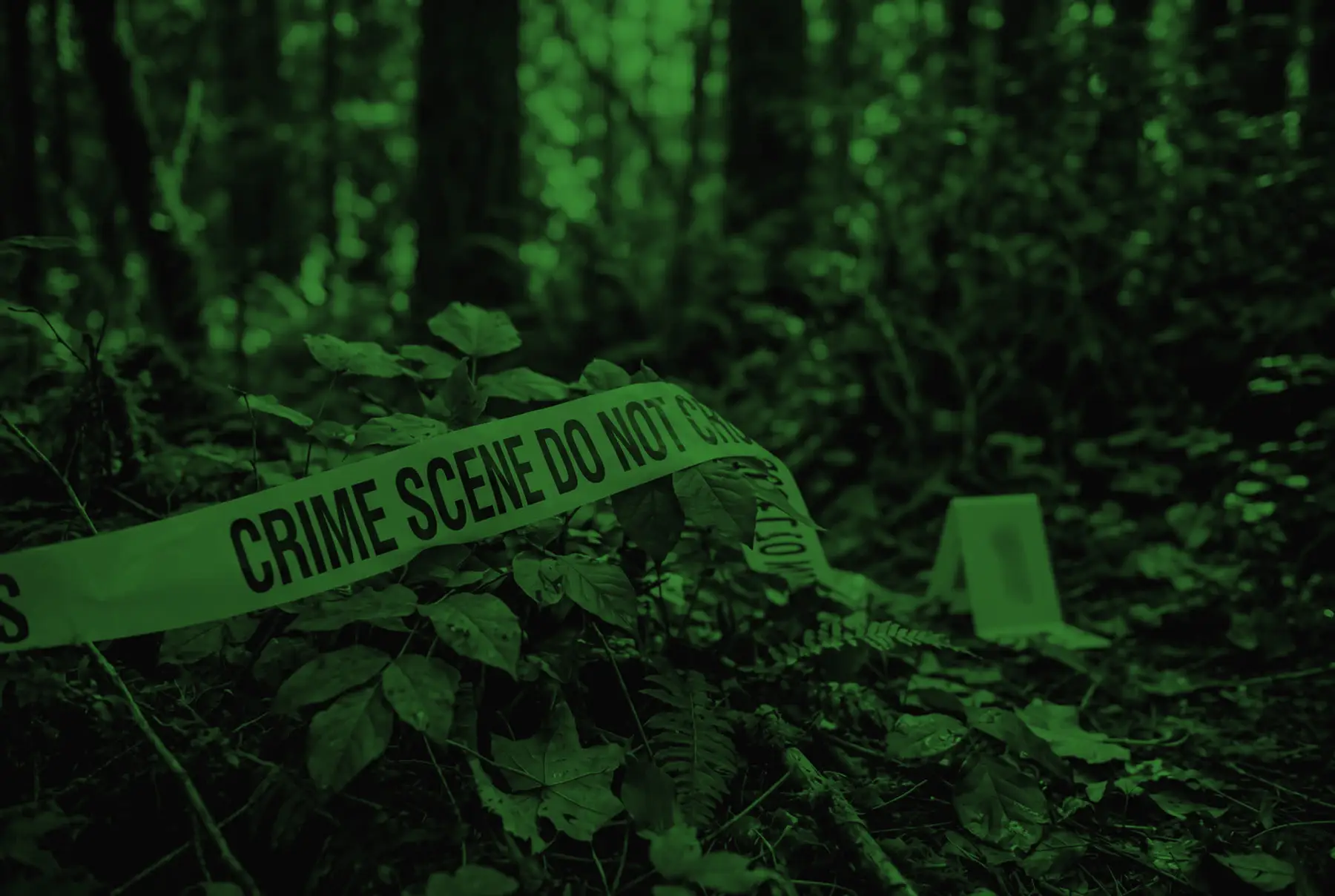
In April 2023, ranchers along Texas's old San Antonio Road found six dead cattle spread across three counties. Each animal's tongue had been cleanly removed, along with the hide from one side of its mouth. There was no blood on the bodies or on the ground, and there were no footprints or tire tracks. Not even the vultures would touch them.
It was strange, and it was news, but it wasn't new. For more than half a century, cattle have turned up dead across the American West and Midwest with parts precisely cut away. Across all those decades, there has not been a single arrest.
The Texas Six
The Madison County Sheriff's Office described one of the victims, a six-year-old longhorn cross cow, lying on her side. A straight, clean cut had removed the hide around her mouth and left the meat underneath untouched. Two of the six cattle were also missing their genitalia and anuses, removed with the same precise circular cut. The grass around the bodies wasn't disturbed, and there was no sign of a struggle.
The details got stranger. Each cow came from a different herd and lay in a different pasture, with nothing to show how any of them got there. Even stranger was what hadn't happened to them. Nature cleans up the dead fast. Bacteria, insects and birds can strip even an elk. Vultures carry genes that let them eat flesh laced with anthrax or an animal killed by rabies, and yet these vultures skipped this meal. People floated the obvious explanations: a new strain of something like mad cow disease, or teenagers with laser surgery tools ordered off Amazon. Do either of those hold together?
Not new news
In January 2011, Casey Hamilton went out to feed the cattle he grazed on land leased from Kansas City International Airport. The herd keeps the grass short, which keeps deer off the runways. He found his six-year-old cow with her udder and reproductive organs removed. The gate was still locked, and no footprints or tire tracks led to the body. A veterinarian pointed out that a mastectomy that big would leave blood all over the field. There wasn't any. Fellow rancher Gordon Phillip had found a mutilated cow of his own thirty years earlier, and his vet back then went looking for burn marks: "He went round and round looking for where a space machine had landed."
In 2019, near Fletcher, Oklahoma, Betty Bessire had her own theory about the mutilated cow she found: "They was getting ready to make a sacrifice, I think, to the devil over that red moon." In Henry County, Missouri, rancher Lyn Mitchell lost three cows this way, starting in December 2011. The tongues were gone, one heart was left hanging out, and one body was circled by a char mark. Every cut looked surgical, and none of them bled. She wasn't sure what to believe, only that it was "not in your normal."
Cruder livestock mutilations go back to the 1700s. In 19th-century Ireland, people slashed throats and hacked off ears as a way to push back against the British Crown. Livestock have long been pawns in fights over land. That history is exactly what makes the bloodless, trackless cases stand out.
Ranchers, rangeland and the BLM
For more than a century, ranchers grazed cattle on open public land. It was a free-for-all, and parts of the range got badly overgrazed. People who had walked across the country behind covered wagons weren't experts in watersheds. In 1934, the Taylor Grazing Act divided public land into managed grazing districts, and for a while it worked. Then came a wave of environmental laws: the National Environmental Policy Act in 1969, the Endangered Species Act in 1973 and the Federal Land Policy and Management Act in 1976. The Bureau of Land Management, the federal agency that oversees those lands, began changing the grazing leases and permits ranchers had long taken for granted. Things between the two sides turned tense and hostile.
Coincidence or not, the 1970s brought more than 10,000 reports of mutilated cattle, and possibly only one case in ten was ever reported. Sheri Lynch was a little kid then, living in a valley of cattle ranchers in northwestern Wyoming. Her house had no phone and no radio, but she still heard all about it, because the grown-ups talked about it openly. Wyoming had more than 15 reported cases in a single season. Colorado had more than 130 across 20 counties, and Senator Floyd Haskell pleaded with the FBI to step in. The New York Times ran the headline "11 states baffled by mutilation of cattle."
Colorado State University did necropsies, which are autopsies on animals, on 16 of the carcasses. Humans had butchered five of them, all after death. The other eleven had been alive when they were cut. They showed no poison, no sign of being restrained and no trace of human activity. As Elbert County Sheriff George A. Yarnell put it: "I've been around cattle my whole life, and I can sure tell whether it's been done by a coyote or a sharp instrument."
Tens of thousands of cattle have been surgically mutilated across more than half a century, with no blood, no tracks and plenty of reward money on offer. Not one person has ever been arrested, charged or convicted.
Silent helicopters
Federal investigators found no evidence of cults. A U.S. attorney admitted that neither the "nuts nor the occult" could be blamed. Then came the helicopters. One Colorado sheriff's office got half a dozen sightings a night and never spotted a single chopper. Ranchers were so jumpy that the BLM painted its own survey helicopters red, white and blue and launched a publicity campaign, basically begging locals not to shoot them down.
Dave Batterson of the Colorado Cattlemen's Association had no patience for the skeptics. He said he saw a helicopter every night while patrolling his herd, its floodlight lighting up a circle about 100 feet wide. Sometimes he could see it and not hear it. He asked who was supplying all that fuel, and why nobody was looking into it. As for the scavenger theory: "I just know it isn't coyotes." A coyote, he pointed out, would have to chew through the jaw to reach the tongue. In these cases the jaws were untouched and the tongues were simply gone.
A theory with a menu
Terry Mitchell, a lecturer at the University of Minnesota, told the Fort Worth Star-Telegram in January 1975: "The evidence gets stronger and stronger that it all has to do with UFOs." He tracked the killings by season, and he pointed to traces of mercury found in a pond near a kill site and in the kidneys of dead cattle. From that he proposed an "electromercuric gun." His visitors were friendly and careful not to meddle with humanity, much like Star Trek's Prime Directive, the fictional rule against interfering with less developed civilizations. They were collecting tissue samples, he said, and also stocking up on beef for their crews.
Decades later, the answers are no closer. If it were pranksters, someone would have been caught or bragged about it by now. "This ain't a sitcom where every cop is a well-intentioned bumbling goof."