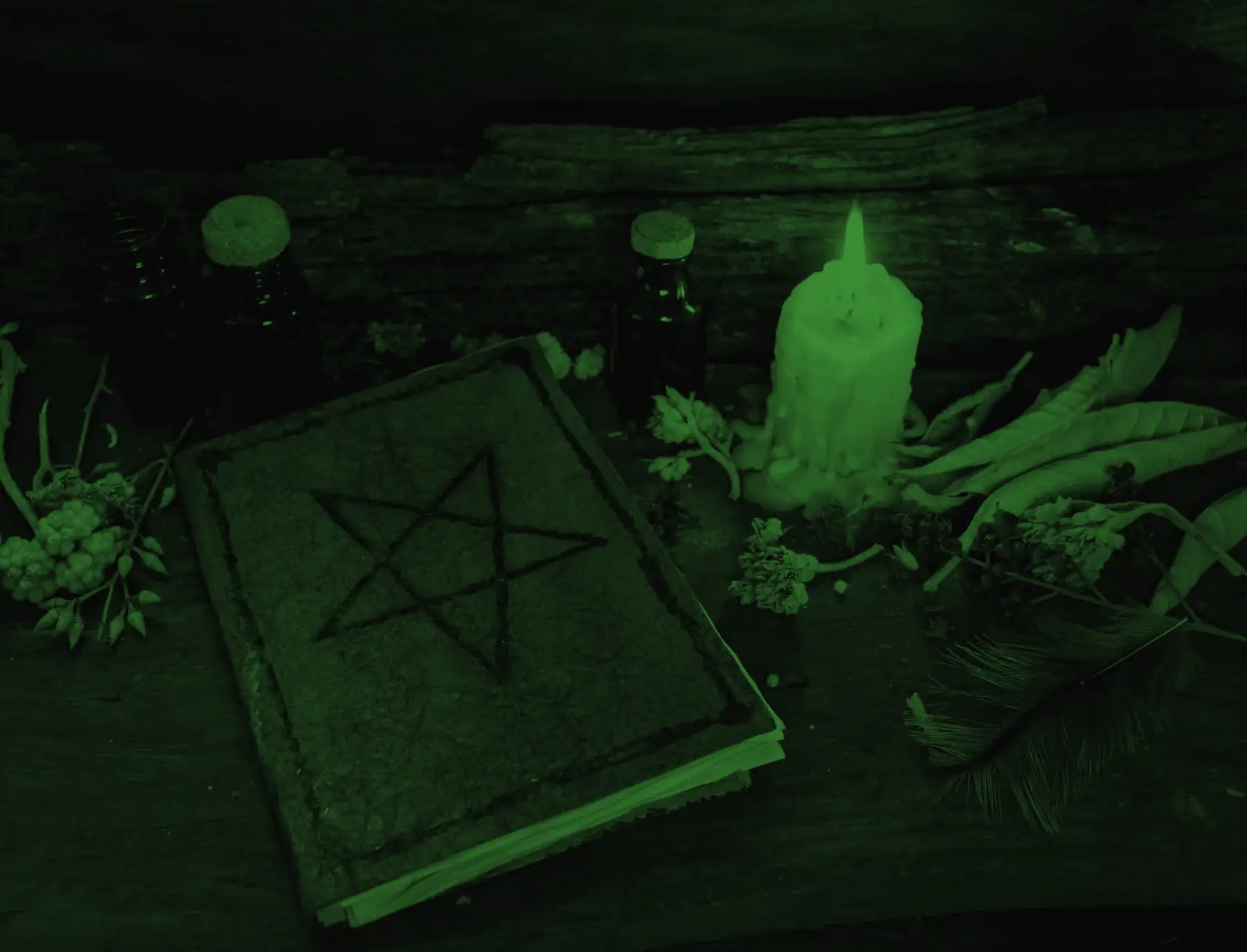
On the far side of the moon, the side that never turns toward Earth, sits an ordinary impact crater named for Jack Parsons. He was one of the fathers of the American space age, a man whose work helped carry Apollo to the moon. He was also a blood-drinking, orgy-hosting high priest of occult sex magic. That goes a long way toward explaining why his only monument is one nobody on Earth will ever see.
Two boys and a Latin motto
Parsons was born in 1914 and grew up rich in a Pasadena mansion, but he was a lonely kid. His parents divorced soon after he was born, and he spent his days buried in classical mythology and Jules Verne, dreaming of other worlds. He did poorly in school, possibly because of dyslexia, according to his biographer George Pendle. The other kids bullied him for his money, for being effeminate, for being weird.
Then an older boy named Edward Forman, new to California from the Midwest, stepped in to defend him. Better still, Forman loved exactly what Jack loved: science fiction and rockets. The two began launching model rockets in their backyards with every intention of reaching the moon. They even picked a Latin motto, "Ad Astra Per Aspera," which translates to "Through Hardship to the Stars."
Neither boy finished college. Parsons talked his way into a part-time job at an explosives manufacturer while still in high school and taught himself chemistry there. The Great Depression wiped out his family's money, but in 1935, the year he married Helen Northrup, he landed a job at Caltech without a degree or the experience it usually took.
The Suicide Squad
By then the backyard was too small, so the pair moved their launches out to a dry canyon at the base of the San Gabriel Mountains. A Caltech grad student named William Bollay, who dreamed of a rocket plane that could carry the mail coast to coast in an hour, steered them toward another student, Frank Malina, who was deep into rocket propulsion research. The three pitched Dr. Theodore von Kármán, the aeronautics lab director who had fled Europe as Nazism rose. He liked what he heard.
They scavenged parts from junkyards. After a fuel leak got them kicked out of their lab space, another blast took out part of an exterior wall, and people started calling them the Suicide Squad. In 1938, Army Air Corps chief General Henry Arnold came by and walked away impressed. Soon they had a contract to develop JATO, or jet-assisted takeoff, rockets bolted under the wings to get heavy military planes off short runways. It was the first rocketry research the U.S. government ever paid for. In 1940 the Army asked Malina to keep it quiet, a request news outlets promptly reported. In 1942 the founders each chipped in $250 to start Aerojet General Corporation, and a year later they were calling themselves the Jet Propulsion Laboratory. JPL is still managed by Caltech today.
Do what thou will
Parsons's interest in the occult had grown right alongside his rockets. By the early 1940s he was West Coast leader of the Ordo Templi Orientis, or O.T.O., the secret order run by Aleister Crowley, a man some called the wickedest man in the world. Crowley had turned the order into a vehicle for Thelema, the religion he invented, built on The Book of the Law, which he said a being called Aiwass dictated to him over three days in 1904. Thelema's sex magic treated ecstasy as a path to higher consciousness. Its communion wafers, called Cakes of Light, were made with flour, oil, honey, ashes, and semen or menstrual blood. Its one real commandment: do what thou will.
Parsons kicked off rocket tests by reciting Crowley's Hymn to Pan. Meanwhile the FBI watched his Pasadena mansion, nicknamed the Parsonage, fill at all hours with guests in togas, antlers and hooves. Add his brief flirtation with Marxism in the late 1930s, and the feds saw a security risk. His shares in the company he had helped found were bought out. He was 30.
One of the fathers of the American space age was also the West Coast leader of Aleister Crowley's sex-magic order. The only tribute to him is a crater on the side of the moon no one on Earth can ever see.
The houseguest who took everything
His marriage fell apart in 1945 over his affair with Helen's 17-year-old sister, Betty. Then a science fiction writer named L. Ron Hubbard showed up at the Parsonage, moved in, and became Parsons's close friend. Hubbard also went after Betty, right in front of Parsons.
In 1946 Parsons set out to summon the Thelemic goddess Babalon in human form. He believed she would help him fulfill his destiny as the Antichrist and bear his moon child. Breaking his vow of secrecy, he taught Hubbard some of the order's most guarded rituals. The first attempt ran 11 days. A few days in, a red-haired woman named Marjorie Cameron turned up on the doorstep looking for a place to stay. Scarlet woman, scarlet hair. She became his second wife.
Hubbard ran off with Betty and $10,000 of Parsons's life savings, and used the money to buy three yachts. In 1969, the Church of Scientology offered its own version: "L. Ron Hubbard broke up black magic in America," and "Hubbard rescued a girl they were using."
One last rush order
Parsons briefly worked on the Navajo missile program until Red Scare suspicion cost him the job. A former colleague accused him of spying. The FBI cleared him but banned him for life from classified work anyway. The inventor of solid rocket fuel ended up mixing explosives for Hollywood special effects.
On June 17, 1952, the day before he was to join Marjorie in Mexico, he was filling a last-minute order in his home lab when the blast went off. Pinned under a heavy laundry tub, he died 37 minutes later. His last words: "I'm not finished yet." Hours after hearing the news, his mother swallowed most of a bottle of sleeping pills.
Police said he dropped fulminated mercury, a wildly unstable explosive. Colleagues called him scrupulously neat. Chemical engineer George Santmyer said piling explosives into trash cans would be like "a surgeon performing an operation with dirty hands." Marjorie blamed Howard Hughes. Others suspected a crooked cop Parsons had testified against, or the government. Detective Lieutenant Cecil Burlingame wasn't having any of it: "It was an accident. Case closed."
Parsons died 16 years and 336 days before Apollo 11 lifted off.