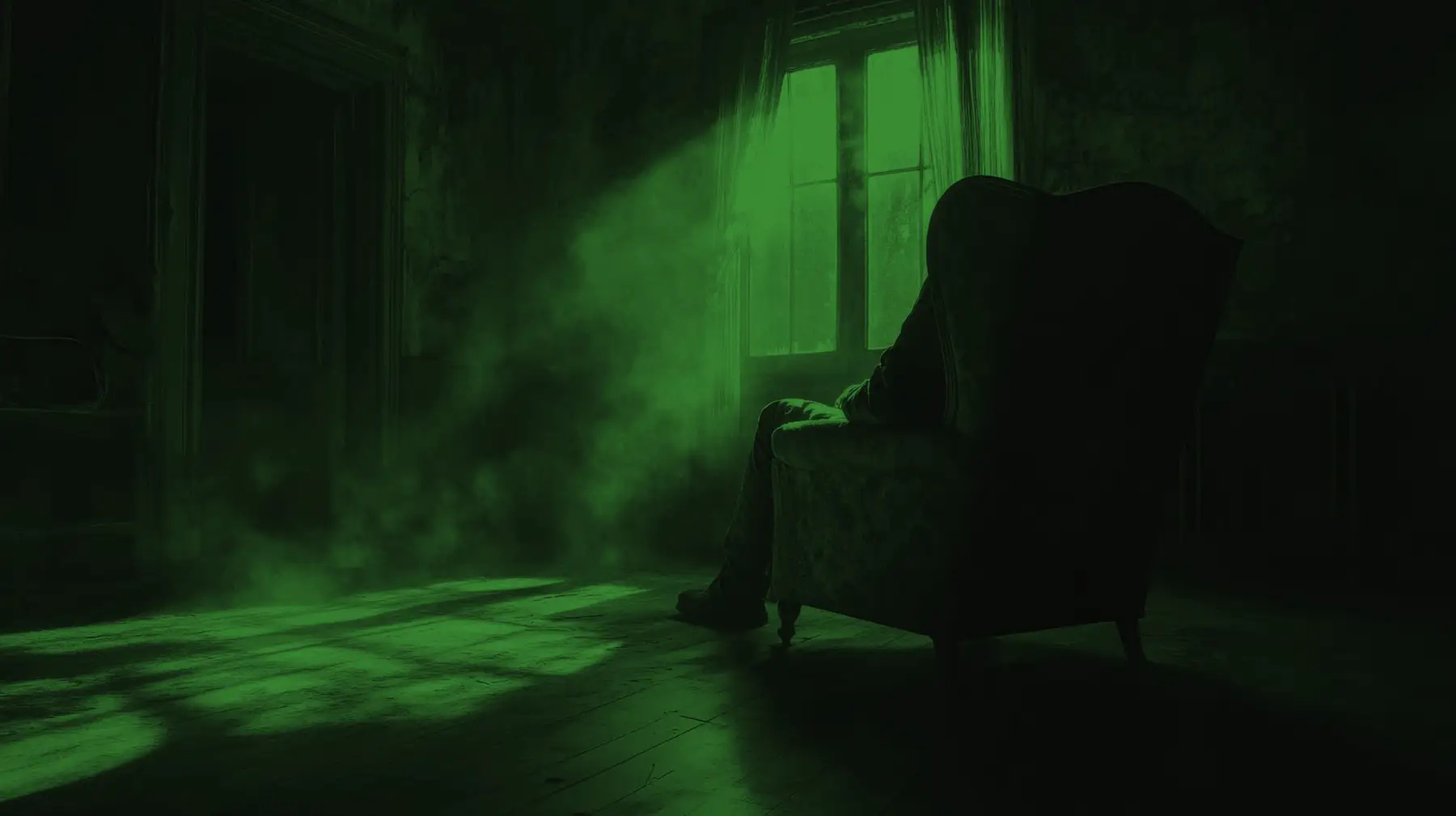
At about 2:30 on a cold November morning in 1953, the doorman outside New York's Statler Hotel heard glass shattering somewhere high above him. Then a body came pinwheeling out of the night sky, ricocheted off a plywood construction partition and slammed into the sidewalk. Ten stories up, drapes fluttered from the smashed window of room 1018A, which was registered to two men: Robert Lashbrook and Frank Olson.
The Statler had once been the largest hotel in the world, with 2,200 rooms, ballrooms, shops, and even its own newspaper and library. NBC used to broadcast live from its cafe. By 1953, television had emptied the ballrooms, the chandeliers sat dark to save electricity, and the old girl had become a cheap place to sleep near Penn Station. That night, she took in a new ghost.
The man on the toilet
Police found room 1018A empty, with cold air rushing through the broken window and bedcovers flung to the floor. In the bathroom, under an undershirt and socks drying on the shower curtain rod, a man sat slumped on the toilet with his head in his hands. He told the police he'd been asleep, woke to a noise and had no idea what happened.
That was Dr. Robert Lashbrook. He called himself a chemist consulting for the Department of Defense. In truth he worked for the CIA as Sidney Gottlieb's deputy, and he was up to his eyeballs in MKUltra, the agency's top-secret mind-control program. Rattled by reports that the Soviets were pulling confessions out of people with drugs and hypnosis, the CIA secretly dosed prisoners, soldiers, mental patients and college students. Under a related project codenamed Artichoke, two CIA agents suspected of switching sides were given sodium pentothal, or "truth serum," then hypnotized and questioned. Afterward, neither remembered a thing. The people running it knew what they were doing. One official turned down a psychiatrist because "his ethics might be such that might not care to cooperate in certain more revolutionary phases of our project." Gottlieb destroyed most of the records when he retired in 1973.
A farm boy in the germ business
Frank Olson was the brilliant son of Swedish immigrants, raised in Wisconsin in a family without money for a PhD. The Reserve Officers' Training Corps paid for school, and World War II made him a captain in the Army Chemical Corps. Then his old thesis adviser, Ira Baldwin, was put in charge of a secret biological weapons program, and he recruited Olson. Olson's wife, Alice, had to sign a form saying that if he died, his body would go into a sealed casket "which shall not thereafter be opened."
Olson's specialty was spreading germs through the air. He made lethal sprays disguised as shaving cream and bug spray. On Operation Harness, off the Caribbean island of Antigua, Royal Navy ships towed dinghies full of caged monkeys, guinea pigs and sheep into clouds of anthrax and Brucella bacteria. Rough seas forced the boats so close to shore that the islanders were breathing it too. Monkeys got seasick, 2,225 guinea pigs died before testing even started, and local radio signals knocked out the equipment meant to measure the germs. In 1950's Operation Sea Spray, the Navy sprayed bacteria at San Francisco. Eleven people landed in the hospital with rare urinary tract infections, and one man died.
Olson rose to acting chief of Fort Detrick's Special Operations Division, the unit working out how to use chemical and biological weapons in secret. The work gave him ulcers, and in 1953 he stepped down as chief but stayed on as a CIA man. He opposed military control of science and made no secret of it. In England, he watched a 20-year-old soldier dosed with the nerve gas sarin foam at the mouth and die. At a CIA safe house in Stuttgart, Germany, he watched men die, often in agony, from weapons he had made. William Sargant, a British psychiatrist who helped run the sarin research, decided Olson was no longer inclined to keep secrets and reported him.
Drinks at Deep Creek Lake
On November 19, 1953, at a CIA and Fort Detrick retreat at Deep Creek Lake in Maryland, Olson's drink was spiked with LSD. So were the drinks of other men there, and it later turned out Lashbrook had dosed Olson. They weren't told until about 20 minutes later. Back home, Olson ignored his children, refused to eat and told Alice they were trying to poison him. He nearly sobbed, "I've made a terrible mistake." He came home on November 24 with a co-worker in tow because "They're afraid I might hurt you," and then he was rushed to New York to see Dr. Harold Abramson, the CIA's go-to consultant on drugs.
Abramson recommended a hospital near Olson's home, but the room wouldn't be ready for a day, so Olson and Lashbrook checked into the Statler. Lashbrook said Olson was cheerful at dinner and already had a list of books to read in the hospital. He washed his socks, they watched TV, and a few hours later he went through the window. One call went out from the room that night, to Abramson. A switchboard operator listened in and heard "well, he's gone" and "That's too bad."
The CIA admitted in writing that its secret LSD experiment led to Frank Olson's death, and a president personally apologized to his family. Yet when his body was dug up, an injury to his skull suggested someone may have hit him before he went out the window.
An apology in the Oval Office
The CIA got to work right away. The New York police were encouraged not to investigate, and CIA agent James McCord, later one of the Watergate burglars, took Lashbrook's statement in the room. The official story was a depressed scientist who jumped. Then, in 1975, The Washington Post reported that an Army scientist had been secretly dosed with LSD by the CIA before leaping from a hotel window. Alice Olson filed a lawsuit worth millions. White House chief of staff Donald Rumsfeld and his deputy Dick Cheney feared the case would drag classified secrets into court. Cheney recommended a public expression of regret.
On July 21, 1975, President Ford brought the Olsons into the Oval Office to apologize. No family of a dead CIA officer had ever been invited there before. CIA director William Colby told them, "It was a terrible thing. That should never have happened." The family accepted $750,000, approved by a special act of Congress.
A skull that didn't fit
Olson's son Eric, a Harvard-trained psychologist, never believed his father killed himself, and a 1984 talk with Gottlieb only made him more suspicious. In 1994, he had his father's body dug up. A researcher named Stars found no toxins and no glass in the head or neck. He also found an injury above the left eye, even though Olson supposedly landed on his back. Stars called it "singular evidence of the possibility that dr Olson was struck a stunning blow to the head by some person or instrument" before he went out the window.
Why would anyone kill him? Olson talked too much, enough that a neighbor reported him to security. And he knew about a small French town called Pont-Saint-Esprit, where in 1951 the whole village started hallucinating.