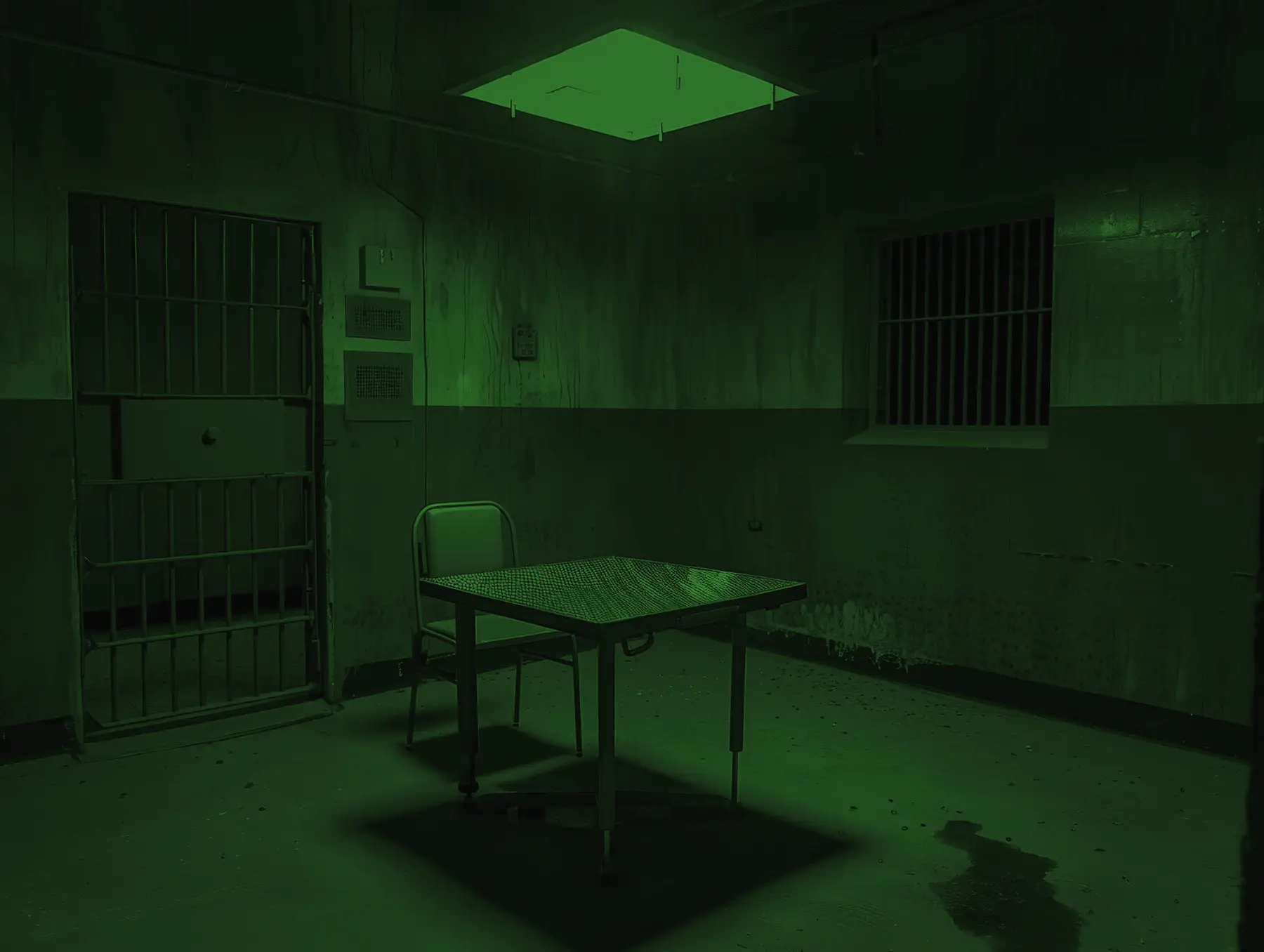
In 1957, a psychiatrist who had once helped judge the sanity of a Nazi war criminal set up shop in a mansion on a hill above Montreal. Over the next several years he put patients who'd never agreed to it into comas lasting weeks, ran electric current through their brains, dosed them with LSD and piped recorded messages into their ears. Many woke up unable to recognize their own children. The bills were paid, in secret, by the CIA.
The man who judged Germany
Dr. Donald Ewen Cameron, born in Scotland in 1901, was no fringe figure. He served as president of both the Canadian Psychiatric Association and the World Psychiatric Association, and he was one of three psychiatrists brought in at the Nuremberg trials to assess Rudolf Hess. The three experts diagnosed Hess with hysteria and amnesia. Hess later admitted he faked the amnesia.
Cameron came out of Nuremberg with strong views. In The Social Reorganization of Germany and Nuremberg and Its Significance, he argued that German history, culture and biology were a recipe for future atrocities. He also believed mental illness was literally contagious, and he named the people he considered enemies of civilization: the passive, the possessive or jealous, the insecure, and the psychopath. He argued such people shouldn't even be permitted to be parents. His cure for what he saw as a malformed brain was chemicals, electroshock, isolation and reprogramming. Quite a broad brush for a man who thought being a little passive made you a threat to society.
A mansion called Ravenscrag
Every week Cameron commuted from his home in Lake Placid, New York, to the Allen Memorial Institute, the psychiatric hospital at McGill University. It was a huge Italianate mansion with a tower, a ballroom and stables, originally named Ravenscrag, as if the gothic asylum look needed any help. Cameron was paid $69,000 to run what became known as the Montreal Experiments. The CIA had its own name for the work: MKUltra Subproject 68, part of the agency's secret mind-control program.
Cameron believed a mind could be de-patterned, meaning wiped like a hard drive. He used psychedelic drugs and heavy electroshock, then put patients into drug-induced comas that lasted weeks and, in at least one case, more than three months. During this "sleep treatment," recordings played on a loop. He called it psychic driving: hammering a new personality into a brain that had been scraped clean. Helen McIntosh, admitted for postpartum depression after her second child, heard one sentence over and over: "You're a good wife and mother, and people enjoy your company." She never consented and was never told what the treatment involved. Afterward, her family photo albums looked like picture books full of strangers.
Linda MacDonald had five children under the age of five and was exhausted. Cameron diagnosed her with acute schizophrenia and kept her in a coma for 86 days. She woke up without her name, her memory or any sense of who she was, and she had to be toilet trained all over again. "I had no identity, I had no memory, I'd never existed in the world before." Her depression was gone, and her whole previous life went with it.
Bob Logie was 18 in 1958 when he was admitted for leg pain that doctors apparently thought was all in his head. Cortisone eventually fixed it. First, though, he spent 23 days asleep with a speaker under his pillow repeating "You killed your mother." His mother was alive and well. When he got home and found her there, it didn't make any sense to him.
The psychiatrist chosen at Nuremberg to judge a Nazi war criminal's sanity, a man who wrote books about German inhumanity, went on to run secret, CIA-funded experiments on patients who never consented. That was exactly the crime the Nuremberg Code had outlawed.
Who was paying
The CIA couldn't be seen experimenting on people, never mind citizens of another country. So it set up front organizations and funded work at more than 80 institutions. Montreal's money came through the Human Ecology Fund, a harmless-sounding name for an outfit run by the agency's brainwashing experts. The Canadian government says it didn't know.
The motive was Cold War panic. In 1953 The New York Times reported that American POWs coming home from Korea seemed to have been converted by communist brainwashers, and some refused to come home at all. In an April 1953 speech at Princeton, new CIA director Allen Dulles warned that the West was falling behind at brain warfare. Three days later he signed off on MKUltra. Nothing was off limits: hypnosis, radiation, chemicals, electroshock, torture. MKUltra chief Sidney Gottlieb was especially interested in Cameron's methods. A funding application that survived a 1973 shredding spelled out the plan: intensive electroshock, taped messages at least 16 hours a day, partial sensory isolation, then days of continuous sleep so the patient would forget it all. Cameron offered to add LSD and paralytic drugs like curare. His research went on to feed the CIA's 1963 KUBARK Counterintelligence Interrogation Handbook.
Velma Orlikow once hid in her washroom to avoid an injection. Cameron knocked and called, "now come on Lassie, you know you're in there." She told him, "I don't care if I die." It only bought her a short break before treatment started again. She remembered a man, no more than 30, who came out of sleep therapy, smiled, said goodbye to everybody and jumped off the roof.
Snared by his own noose
Cameron left Allen Memorial in 1964 and died of a heart attack three years later. Records were so poor that nobody knows how many patients he de-patterned. The public didn't hear the word MKUltra until 1975, through Senator Frank Church's committee. In 1977, CIA director Admiral Stansfield Turner squirmed through a Senate hearing on 149 sub-projects and insisted it was all in the past.
Canadian victims learned the truth slowly, partly through the TV news program The Fifth Estate. A class action settled in 1988 for $67,000 per victim. In 1992 the government paid 77 victims $100,000 each in exchange for giving up further claims. Roughly 250 more got nothing, some because they missed deadlines or lacked records, and some because they had "not been tortured enough."
People who defend Cameron say you can't judge the past by today's standards. But the Nuremberg trials produced the Nuremberg Code, which made human experimentation without consent a war crime. Cameron wasn't just aware of Nuremberg. He was there. As one of his victims put it: "I was a fly. Just a fly."