Case file 090Asylums, Prisons & Human Experiments1900–1945

Forbidden Island

The abandoned New York island that held smallpox patients, imprisoned Typhoid Mary for decades, and saw the city's worst maritime disaster.

Nov 30, 20241h 22m
00:00 / 1:22:29
Or listen to this episode onApple PodcastsSpotifyYouTube
Share this episode

In this episode

  • Why the commissioners in charge of an island full of prisons and asylums refused to take smallpox patients
  • Oyster Bay, 1906: a banker's whole family, ten days in August, and the investigator hired to explain it
  • A cook named Mary Brown, a hospital gelatin dish, and a bathroom on Long Island
  • Captain Van Schaick's choice: a pier piled with lumber, or a quarantine island a mile away
  • 349: the number that makes Mary Mallon's punishment look very different

“Tragedy has a way of finding certain places and marking them for its own.”

The story

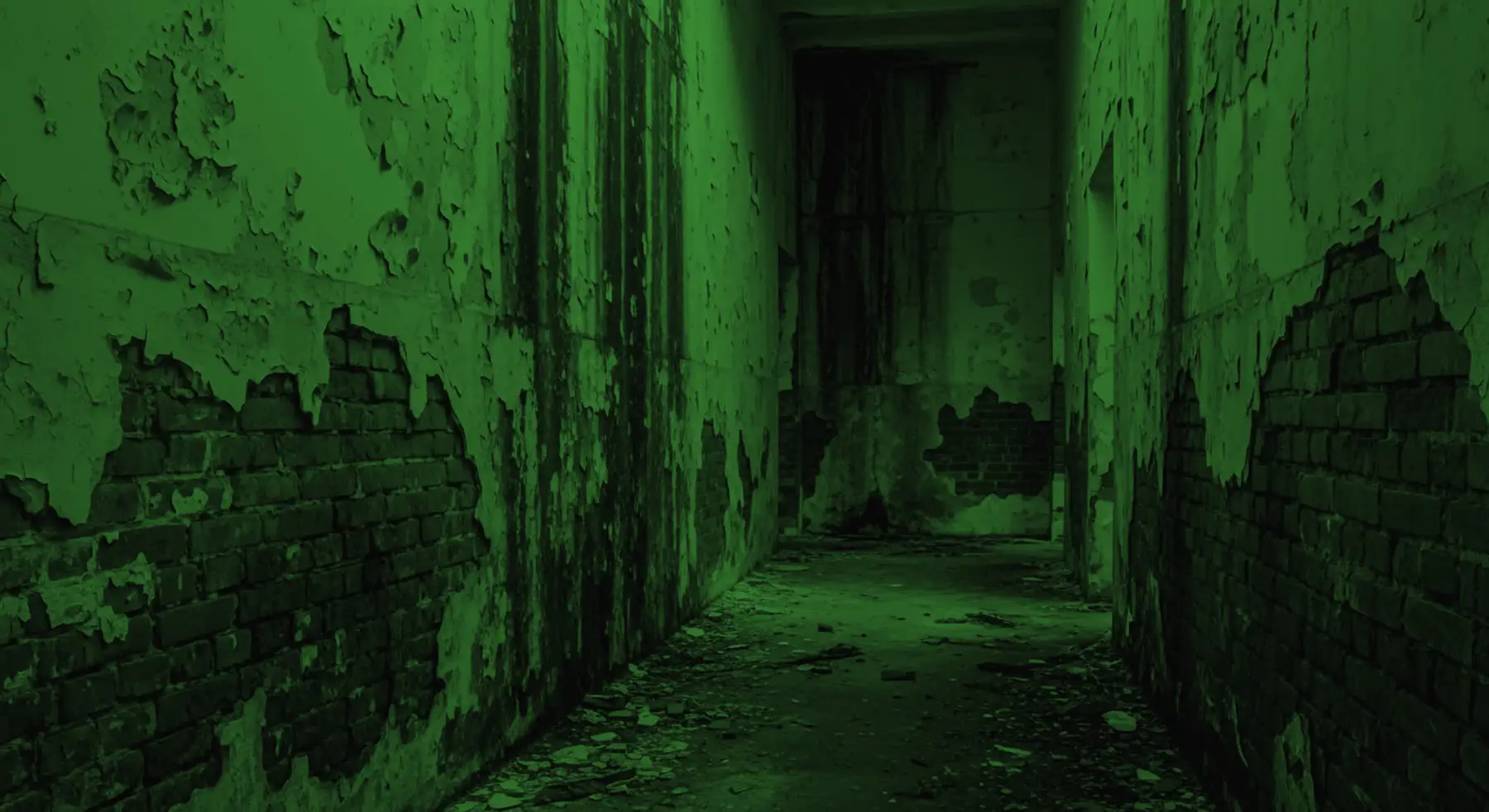
Less than a mile from Manhattan, in a city with some of the most valuable real estate on earth, sit 22 acres where no people live. Trees grow through what was once a hospital, the theater seats are rotting, and the manholes were left uncovered for weeds and vines to hide. The only residents are herons and egrets. This is North Brother Island, and tragedy found it more than once.

A hospital built to hide the sick

In 1884, New York was hunting smallpox one tenement at a time. People called it the speckled monster. The virus had stalked humanity for at least 3,000 years, and its marks show up on the mummified scalp of the pharaoh Ramses V. It killed three of every ten people it infected. Nine years earlier, an outbreak had killed more than 2,000 New Yorkers.

The city's hospital for contagious diseases sat on Blackwell's Island, now Roosevelt Island, alongside prisons, poorhouses and the New York City Lunatic Asylum. The commissioners of charity and corrections didn't want to share their island with smallpox patients. So the city turned to a wild scrap of land in the East River whose currents were too strong to make it worth developing. Until then, its only building was an 1869 lighthouse. Riverside Hospital opened there in 1885. By 1892, with cholera arriving, sick immigrants from Ellis Island were being sent straight to it.

It looked like a little town, complete with a morgue, a school and even a tennis court. The patients were mostly poor and often immigrants, sick with smallpox, measles, tuberculosis, leprosy, scarlet fever and venereal disease. Many slept in tents. There were no telephones for reaching family, not enough milk for the children and not enough coffins for the dead. The hospital was built to isolate the sick more than to heal them. It was more common to land there and never be seen again than to go home.

The cook who was never sick

Mary Mallon crossed the Atlantic alone from County Tyrone, Ireland, at 15. She worked her way up to cooking for some of New York's most elite families, and typhoid followed her from house to house. In Bar Harbor, Maine, seven of nine family members got sick. Mary stayed on to nurse them, and the footman took the blame. In 1906, every member of banker Charles Warren's family came down with typhoid at Oyster Bay, the Hamptons of its day. Nobody suspected the cook, because Mary was perfectly healthy and people still believed dirt caused disease. The real culprit was a bacterium that lived in urine, feces, blood and bile.

Typhoid wasn't supposed to strike somewhere as wealthy as Oyster Bay, so the owners of the house hired an investigator named George Soper. He worked backward through employment agencies and connected the jobs to Mary, but she never left a forwarding address. In 1907 he tracked her to the kitchen of a Park Avenue house where the family's daughter had just died of typhoid. When Soper demanded a stool sample, Mary reportedly came at him with a meat cleaver or a carving fork.

Police took her into custody. She admitted she seldom washed her hands. And why would she? She had never had typhoid. A prison matron forcibly took samples, and the cultures showed her gallbladder seething with bacteria. Mary was a carrier, a person who spreads a disease without ever showing symptoms. The state gave her two choices: quit cooking or have her gallbladder removed. She refused both. No other job paid as well or came with a place to live, and surgery then carried a real risk of death. Even when the state offered to pay for the operation, her answer was "no knife."

Prisoner of the island

In March 1907 she took the ferry to North Brother Island. Soper wrote up the case in the Journal of the American Medical Association, and the press soon named her Typhoid Mary. Two years into her confinement, she wrote to a young attorney that the authorities meant only to "keep me a prisoner without being sick nor needing medical treatment." "I have been, in fact, a peep show for everybody," she wrote.

A judge denied her petition in 1909. The next year, a new health commissioner named Ernst J. Lederle released her on the condition that she never cook again. Then she vanished for five years. In 1915, typhoid tore through Sloane Maternity Hospital, with 25 cases and two deaths traced to a gelatin dish. Every kitchen worker was ordered to get tested. The cook, Mary Brown, fled instead. Police found her hiding in a bathroom on Long Island. "I'm Typhoid Mary," she admitted.

This time she stayed on the island for good. Meanwhile, a baker named Alphonse Cotils, also a healthy carrier who broke his promise to stay away from food, went free. His judge said, "I could not legally sentence this man to jail on account of his health."

The weird part

Less than a mile from Manhattan, New York held a perfectly healthy cook on a quarantine island for more than two decades. Meanwhile, 349 other typhoid carriers walked free.

Fire on the East River

On June 15, 1904, St. Mark's Evangelical Lutheran Church chartered a paddle boat called the General Slocum to celebrate the end of the school year. Most passengers were German-American women and children in their Sunday best, singing along with a German band. The ship had passed a fire inspection a month earlier. But the crew had never held a single fire drill, and nobody had noticed that the canvas fire hoses were rotted.

When smoke rose from the lower deck, one sailor compared fighting the blaze to "trying to put out the fires of hell itself." Captain Van Schaick feared his steering would fail in the currents, and a tugboat captain warned him away from a pier piled with lumber. So he raced for North Brother Island. The wind fed the flames. The life preservers were rotted too. Most passengers couldn't swim, and their heavy clothing dragged them under. Some who jumped were sucked into the paddle wheel. Nurses from the hospital swam out to haul the burned to shore. Within an hour, the island's shoreline was covered in bodies, and small children wandered among them in shock.

The final death toll was 1,021, the worst maritime disaster in New York history. The captain, blinded and crippled, was sentenced to ten years in prison, and his sentence was later commuted. Nobody commuted Mary's.

What the birds inherited

Mary spent the rest of her life in a one-story cottage not far from where the Slocum's dead had been piled. A stroke in 1932 left her bedridden, and she died of pneumonia on November 11, 1938. The press called her body a "plump breeding ground of death." At the time, the city was tracking 349 other typhoid carriers, all free to come and go as long as they didn't handle food.

In the 1950s the island housed a program for teenagers with addictions, until reports of corruption and abuse closed it in July 1963. Today there's no dock, just a boat ramp slick with algae, and police boats patrol the water off Rikers Island next door. One major hurricane could put North Brother Island under the East River for good.

The transcript

Chapters & full transcript11,451 words
Chapters
  1. 00:25The island no one calls home
  2. 03:40The speckled monster
  3. 10:35The cook from County Tyrone
  4. 27:45The General Slocum burns
  5. 35:38Mary's last years and the island today
  6. 41:48Hands, heroes and hindsight

This transcript was generated automatically from the episode audio and may contain errors. Times are approximate, since ad breaks can shift them by a minute or two.

00:00

Hey, true weirdos. We just wanted to take a minute and thank you so much for your support. True weird stuff has won the best history podcast and the women in podcasting awards. And we've also won a signal award in the paranormal category. And that's only happened because of you, our fellow strange people. Thanks. Stick around.

00:19

If you want after the episode for a little bonus content and conversation. No people call it home. It's difficult to visit illegal. Even you'll need a permit. Good luck. Getting one. There are buildings still, but they're falling down dilapidated and dangerous to enter dense stands of trees grow up and around through what was once a hospital.

00:48

There's a theater still standing, but seats are rotting and disintegrating broken glass, rusted metal, chunks of brick and cement are strewn everywhere. There are roads, but they're overgrown with thick mats of weeds and vines and poison Ivy. So watch your step. Most of those manholes were left uncovered and now nature has slyly concealed them.

01:15

That'd be a bad fall. God only knows how far down to the bottom. This desolate outpost, this lost world feels like the set of a movie or a TV show, an end of the world thriller or a season of the walking dead. How could a place this shrouded in mystery, this forbidden be less than a mile from Manhattan? How is it that in a city with some of the world's most valuable real estate, these 22 acres are home only to waiting birds, like herons and goals and egrets.

01:55

Tragedy has a way of finding certain places and marking them for its own. Welcome to North brother Island. Another nest of smallpox has been discovered by the health department in the big tenement harboring 20 families and 100 people at 2704 eighth Avenue. As a result, there are eight patients seriously ill and one man detained in Riverside hospital on North brother Island.

02:54

The first intimation the health department had of the pest house was when the uptown inspector heard there was a suspicious case. All members of three families were ill with the disease and no physician had been called in, in the ward family apartment, a sad scene. Little Annie age nine lay on her bed, dying all beside her was William ward, the distracted father who refused to leave his child's side.

03:22

It was March 29th, 1884, nine years after the last massive outbreak of smallpox in New York city had claimed over 2000 lives. Public health officials were vigilant determined to prevent the disease from spreading again. They called it the speckled monster. We have no idea how smallpox originated, but it's been stalking humanity for at least 3000 years.

03:53

When the mummified body of Egyptian Pharaoh Ramses V was discovered, there were the telltale marks on his scalp of smallpox pustules, the virus killed indiscriminately three out of every 10 sufferers died. If you were lucky enough to survive, you carried the scars and that scarring could be severe. Now the last outbreak of smallpox in the U S went down in 1949.

04:22

So unless you're 75 or older, it's super unlikely that you know anyone who battled the virus. Though you might know people who have the distinctive round scar on their upper from the smallpox vaccine, but only the very elderly boomers and Gen Xers now because the U S ended routine vaccinations for smallpox in 1972. And the end of smallpox vaccines happened because here in North America, smallpox was considered eradicated by 1952.

04:57

The world health assembly declared the entire planet earth free of smallpox on May 8th, 1980. That is a pretty astounding feat of public health. The virus no longer exists in the human body. It no longer spreads from host to host. We won, unless we haven't yet. Given that there are only two labs in the whole world with stockpiles of the virus for research purposes, of course, it would be a daunting task for new Those two labs, one in Russia, one in the U S would do their best in a scenario where weaponized smallpox triggered a global epidemic, but nevermind that.

05:45

It's too scary to think about. Let's don't trouble trouble till trouble troubles us, right? But 19th century New York city was most definitely being troubled by trouble. March 31st, 1894, two new cases of smallpox were reported at the Bureau of Contagious Diseases this morning, Angelo Cleso, 24 years old, and John Filomena, four months old.

06:23

Both were taken to Riverside hospital, North brother Island. The Riverside hospital opened on North brother Island in 1885. Up to that point, the only inhabitant of the Island was a lighthouse built in 1869. The Island was a wild spot in the middle of the East river with currents far too strong to make the place worth developing, but the very things that made it a hard place to live, made it an ideal spot for a quarantine hospital, the city's former hospital for contagious diseases was located on Blackwell's Island.

07:03

And that's now called Roosevelt Island. Blackwell was home to prisons and poor houses and insane asylums like the New York city lunatic asylum, which was a real place and not something out of a Batman movie, the commissioners of charity and corrections at the time had very strong objections to sharing their Island with smallpox patients.

07:24

So funds were appropriated in 1881. And by 1885, a new structure was built on North brother Island by 1892 with a cholera outbreak, trying to jostle smallpox out of the spotlight, public health officials in New York clamped down even tighter on Thursday, September 15th, 1892, the board of health adopted the following resolution that from, and this date, all persons sick with contagious disease from the United States Bureau of immigration, Ellis Island must be delivered direct to the Riverside hospital, North brother Island.

08:05

You know, for a lot of us, those were our ancestors filing through those lines at Ellis Island. By what lucky chance did your great, great grandparents arrive in the new healthy, making it possible for you to one day be born. We don't think about that enough about what lucky little miracles we all are with all the odds stacked against us.

08:30

You'd think we try to be better, more appreciative humans, but oh, well, that's just crazy talk to get to North brother Island, workers and patients alike had to go to 138th street in the Bronx where they boarded a ferry. It was a beautiful place designed to be its own little town, couple dozen buildings on the Island, including a morgue.

08:53

There was a little public school and even a tennis court. There was a small contingent of doctors and nurses who lived on the Island full time, but most of the residents were poor. Many were immigrants and all were sick, not just smallpox, but also measles and yellow fever and tuberculosis. Leprosy, venereal disease, and scarlet fever.

09:20

Living conditions were harsh. There was overcrowding and many patients were housed in tents. There were no telephones, no way for family members to communicate with their quarantine, loved ones. Mortality rates were high. It was more common to land on North brother Island and never be seen again. Then it was to recover and return to the mainland for a joyful reunion.

09:46

When the hospital first opened in 1885, there really wasn't any effective treatment for smallpox. The patients packed off to North brother Island, couldn't even hope for much in the way of comfort care. Fact was the place was designed to isolate the sick more than restore them to health. Patients went hungry. There was insufficient milk for the children and not enough coffins for the dead.

10:13

It's a fascinating place with a sorrowful history. And that's all it would have been just another abandoned place, mostly forgotten along with all the people who lived and died there. But two things happened that would forever change North brother Island and the city of New York itself. The first involved an Irish immigrant by the name of Mary Mallon, born in 1869 in County Tyrone, Ireland, Mary emigrated to the United States in 1884.

10:48

She was just 15 years old and she crossed the Atlantic all by herself, hoping to find a better life. An aunt and an uncle were waiting to take her in. She's a lovely girl, strong and healthy, and she soon found work as a household servant. Mary had a talent for cooking and eventually worked her way up to what was then a most prestigious position for a domestic servant by 1900.

11:16

She was in demand cooking for some of the most elite families in the city. It was the winter of 1901 and Mary was cooking for a wealthy family in New York. Not long after her arrival, the laundress became ill. To the shock of the family, it was typhoid fever. The girl was immediately sent away. And since no one else in the house got sick, there was nothing more to be done.

11:47

By the following summer, 1902, Mary had moved on. She traveled with her new employers to Bar Harbor, Maine for the summer. Seven of the nine family members soon got sick. Typhoid fever. Since Mary herself was well, she offered to stay on and help care for the sick family members. After a brief investigation, it was decided that it must have been the footman who brought the sickness into the house, which made sense to them because people back then believed that it was dirt that caused disease.

12:23

In the case of typhoid, it wasn't dirt, it was bacteria, the salmonella typhi bacillus to be specific. It lived and multiplied in the urine, feces, blood and bile of an infected person. It could also live in sweat and in breast milk. Whole water systems could be contaminated by it. Philadelphia, here's a fun fact, was one of the first cities in the country to dramatically decrease the rate of typhoid just by filtering and chlorinating their public drinking water.

12:56

But now it's 1904 and Mary Mallon is working for the Gilsey family in Sands Point, New York. That's a little village on the north shore of Long Island. Household staff live separately from the family in another building on the property. And again, the sickness came, this time taking out four of the And again, it was the laundress who took the blame, which made sense to them.

13:23

After all, Mary was perfectly healthy. There was no reason at all in the world to think that their cook was the carrier. Summer 1906, Mary's now cooking for the very prominent Warren family at Oyster Bay on Long Island. Charles Warren was a wealthy banker and Oyster Bay was the place to be if you were rich or famous. It was where President Roosevelt had his summer White House.

13:51

It was kind of like the Hamptons of its time. And over 10 days that August, every single member of the Warren family came down with typhoid fever. Everyone survived and Mary immediately moved on. But this was the beginning of her end. The Warrens had rented the house in Oyster Bay and the owners were worried about contamination.

14:18

They had the water tested from the faucets to the cesspool, all negative for typhoid. And it was baffling because typhoid typically showed up in places where living conditions were unsanitary and crowded. This was affluent Oyster Bay. The virus was like an affront. So the owners of the home decided to dig deeper and they hired an investigator named George Soper.

14:46

Meanwhile, Mary Mallon had no trouble finding her next job. By that autumn, she was employed by the Kessler family in Tuxedo Park. Again, it was the laundress who fell sick with typhoid. Made no sense. No one else in the house was ill. The woman was taken to St. Joseph's Regional Hospital. She was the very first typhoid patient to be admitted there in years and she didn't survive. Eventually, Mary Mallon returned to New York City and by winter 1907, she was employed again in a house on Park Avenue where first the chamberman got sick and then another servant and then the daughter of the family.

15:33

That daughter didn't survive. And by this point, investigator George Soper was convinced that he'd found a pattern. Starting with the Warren family, Soper worked backward, interviewing the employment agency that the family had used to hire their staff. He then quickly connected Mary Mallon, the cook, to the Gilsey family and then to the family in Bar Harbor.

15:58

The problem was when Mary quit a job, she never left a forwarding address in a city of more than five million people. How was he to find one woman and a servant at that? Soper needed more than a little bit of luck. He was about to get it. When George Soper learned of the typhoid cases on Park Avenue, he hustled to the kitchen was the very woman he'd been hunting, the family's cook, the elusive Mary Mallon. What happened next depends on who you believe.

16:41

George Soper swears he was a gentleman and the very soul of diplomacy. Might there be, he suggested, a connection between your cooking and the outbreaks of typhoid that seemed to follow you from house to house. Mary cursed him for the insult. Then Soper demanded that she provide him with a stool sample. Outrageous. It's alleged that Mary threatened Soper with a meat cleaver or a carving fork.

17:12

I mean, not that you'd want to be stabbed with either. This is exactly the sort of thing that tends to get the police involved. Mary resisted, but it was no use. They took her into custody and the questioning began. Mary forcefully denied everything. She couldn't possibly be a carrier of typhoid. She'd never had the disease and she was as healthy as could be.

17:38

The commissioner of the health department pressed, asking questions about how she ran her kitchen. Mary admitted that she seldom washed her hands. And why should she? She's no threat to anyone. Sounds gross, but remember, germ theory still wasn't widely accepted then and people weren't great about handwashing and hello, people still aren't great about that even now. Plus, when it came to typhoid, the whole idea of a healthy person transmitting the bug without ever being sick herself, it was thought to be not just unlikely, but downright odd, like almost impossible.

18:20

The health department, though, persisted in demanding stool and urine samples, which they finally got thanks to a prison matron forcibly taking them. The cultures came back. Mary Mallon's gallbladder was seething with the bacteria, which can colonize in the gallbladder, causing a chronic typhoid infection, but with no symptoms.

18:48

So the state of New York offered Mary two options, either quipping a cook or let us surgically remove your gallbladder. Mary refused both. Cooking was her occupation. How else was she to survive? No other job would pay her that well. Plus, offer her a place to live. Without that, she would surely end up homeless. And also, they were wrong about her infecting anyone.

19:15

As for the surgery, the risk of death was pretty high at the time. So that was a hard no. But we'll pay for the operation, said the state. Yes, still not doing it, replied Mary. Little did she know that this refusal would ultimately cost her. Health authorities promptly and loudly declared her public enemy number one.

19:41

And in March 1907, Mary boarded the ferry for North Brother Island and quarantined. Her urine and stool was tested three times a week. Again, she was offered gallbladder removal. Again, she refused. George Soper wrote all about how he tracked down the source of the typhoid outbreak in the families Mary had worked for.

20:08

The article was published in the Journal of the American Medical Association. It took about a hot minute for the press to give her the nickname that would follow her into history. Typhoid Mary. Two long years into her isolation on North Brother Island, Mary sat down and wrote a six page letter to a young attorney named George O'Neill.

20:33

There was never any effort by the board authority to do anything for me. Except to cast me on the island, keep me a prisoner without being sick nor needing medical treatment. Mary described the blood draws, the fecal samples. She complained of an issue with one of her eyes that went untreated for months. In January 1908, they were about to discharge me when the resident physician came to me and asked me, where was I going when I got out of here?

21:03

Naturally, I said to New York. So there was a stop put to me getting out of here. Then the supervisor nurse told me I was a hopeless case. Then in April, a friend of mine went to Dr. Darlington and asked him, when was I to get away? He replied, that woman is all right now and she's a very expensive woman, but I cannot let her go myself.

21:29

The board has to sit. Come around Saturday. When he did, Dr. Darlington told this man, I've got nothing more to do with this woman. Go to Dr. Stutterford. He went to that doctor and he said, I cannot let this woman go. And all the people that she gave the typhoid to and so many deaths occurred in the family she was with. State request for gallbladder surgery incoming.

21:58

I said, no, no knife. Will be put on me. I've nothing the matter with my gallbladder. Also, the supervising nurse asked me to have an operation performed. I told her no. She made the remark, would it not be better for you to have it done and remain here? I also told her no. And she made the remark, would it not be better for you to have it done and remain here?

22:31

I told her no. Now, 40 years old, Mary Mallon had no illusions about her circumstances. There is a visiting doctor who came here in October. He did take quite an interest in me. He really thought I liked it here, that I didn't care for my freedom. As though being confined on an island and treated as a pariah ought to be just fine with her. Didn't she have a roof over her head?

23:01

I have been, in fact, a peep show for everybody. Even the interns had to come and see me and ask about the facts already known to the whole wide world. The tuberculosis men would say, there she is, the kidnapped woman. I wonder how Dr. William H. Park would like to be insulted and put in the journal and call him or his wife, Ty Floyd, William Park, an immigrant, a servant, a woman, three strikes already against Mary Mallon and then demonized as a walking typhoid epidemic in the flesh.

23:43

What chance did she have? Mary petitioned for release from quarantine. She stated that she had no ability to spread the typhoid fever and was forced to live like a leper alone with only a dog for company. Her case went before Judge Mitchell Erlanger of the New York State Supreme Court in July 1909. The court expressed its sympathy, denied her appeal and suggested that if she could be fully cured, then she might renew her application.

24:16

It looked hopeless for Mary, but the following year brought a new health commissioner, a man named Ernst J. Lederle. He made the decision to release her from her cage on North Brother Island on the condition that she never work as a cook again. Mary Mallon agreed, she boarded the ferry back to the Bronx and then completely disappeared for the next five years.

24:46

Let's jump ahead to March 1915. There was a major typhoid outbreak at the Sloane Maternity Hospital in New York City. Twenty five cases, two deaths. A health department investigation pointed to a gelatin dish that had been served to both patients and staff. Every employee in the hospital's kitchen was immediately ordered to report for testing.

25:15

All complied, except for the cook who left abruptly and disappeared. The cook's name, Mary Brown. The authorities tracked the cook, Mary Brown, to a home on Long Island. A whole raft of cops and health department workers surrounded the place. And they found a woman hiding in the bathroom, a woman they knew. Resigned, she admitted it.

25:43

I'm Typhoid Mary. Back, she went to North Brother Island where she remained for the next 23 years alone with only a dog. And maybe you're thinking, well, good. She had a chance to change and do better and not make people sick. And she didn't take it. Lock her up. OK, that's fair, except it wasn't. At the very same time that Typhoid Mary was pacing her small quarters on North Brother Island, another food worker in New York was getting the benefit of the doubt.

26:20

His name was Alphonse Cotils. He owned a bakery. And like Mary Mallon, he was a perfectly healthy carrier of typhoid fever. He promised the judge to never handle food again. A promise that, like Mary, he didn't keep. When apprehended again, he was found guilty. But the judge was lenient. While I am thoroughly impressed with the extreme danger from these typhoid carriers, particularly when they're handling food, I could not legally sentence this man to jail on account of his health.

26:59

Interesting. But of course, Mary Mallon was condemned to spend her remaining days in isolation on North Brother Island. Other typhoid carriers would be free to live a somewhat normal life, not Typhoid Mary. A different set of rules for her, an immigrant, a servant, a woman. Remember the beginning of this story and how tragedy sometimes marks a place as its own? Well, in 1904, as Mary was working away in the kitchen of the Gilsey family home in Sands Point, an unthinkable disaster was barreling toward North Brother Island. It was Wednesday, June 15th, 1904.

27:50

St. Mark's Evangelical Lutheran Church on the Lower East Side had chartered a paddle boat called the General Slocum. It was meant to be a day away from the city, a day to celebrate the end of the school year with the thrill of watching the New York skyline recede as the ship made its way to the North Shore. Most of the passengers were dressed in their Sunday best.

28:14

There were picnic baskets and a German band playing on deck as the passengers sang along. That day, the General Slocum carried 1,358 passengers plus crew, most of whom came from the German-American community, most of them women and children. General Slocum was a beauty. Built in 1891 of yellow pine, locust and white oak, it gleamed in the sunshine.

28:44

Designed to hold 2,500 passengers, the ship carried that many life preservers. It was sturdy and safe. And it just passed a fire inspection one month earlier, an inspection that might not have been quite as thorough as it should have been. The first puffs of smoke were spotted by crew on the lower deck. Sailors rushed into action.

29:10

But here's the thing. The crew had never carried out a single fire drill, not one. So they had no idea that the canvas fire hoses on board were rotted, something the fire inspector missed as well. One sailor described the hopelessness of extinguishing the blaze as trying to put out the fires of hell itself. There were people watching from the shore, they screamed at the ship's captain to turn back. But Captain Van Schaick was afraid that the steering equipment on the General Slocum would break in the powerful currents.

29:50

He steered the ship toward another pier on 134th Street, but a nearby tugboat captain signaled, No, don't. That pier is piled with lumber. You'll ignite an inferno. So Captain Van Schaick made the decision. North Brother Island was only a mile away. Maybe he could somehow beach the General Slocum. The ship was moving fast and the wind was strong.

30:18

The combination of the two only fed the flames, the wails of frightened children, the screams of their panicked mothers carried over the water. The flames shot higher and higher, engulfing the ship. Passengers were throwing themselves overboard in a frantic attempt to escape the burning. The crew was racing to pass out life preservers.

30:40

But like the canvas fire hoses, many were rotted and useless. Most of the one thousand three hundred and fifty eight people on board that day didn't know how to swim. Their heavy clothing rapidly became waterlogged and dragged them under the surface. It was a spectacle of horror beyond words to express a great vessel all in flames sweeping forward in the sunlight within sight of the crowded city while her helpless screaming hundreds were roasted alive or swallowed up in waves.

31:20

Children were trampled, people in flames leapt from the port side of the ship only to be sucked into the giant paddle wheel. As the middle deck collapsed, more bodies were flung overboard. There was a pregnant woman on the General Slocum that day. And in the shock and horror, she went into labor. She died in the water, her newborn clutched tightly in her arms.

31:46

It all happened so fast. Staff at the Riverside Hospital on North Brother Island gaped in disbelief as the burning ship beelined toward them. They raced to the hospital's own fire pumps, thinking that perhaps they might be able to put out the blaze. The island blew the fire whistle and as Captain Van Shake managed to beach the ship about 25 feet from the shore, people on the island dove into the water to try to rescue the passengers.

32:16

Nurses swam out and hauled the terribly burned land. But the flames and the heat prevented anyone from getting much closer to the ship. A mini regatta of tugboats had pursued the General Slocum to North Brother Island, their crews pulling dozens of bodies from the river, most of them dead. Within an hour of sighting that first puff of smoke, the shoreline of North Brother Island was covered in bodies.

32:45

Little ones, two, three, four or five years old, wandered among the corpses in shock. The very last person off the ship was the captain. His feet were burned to the point of crippling him. He'd been blinded. He would ultimately be sentenced to 10 years in prison for the General Slocum's criminal unpreparedness. Only 321 people survived that day.

33:14

The stories the survivors told sounded like something out of Dante's Inferno. One little girl described how a grown man snatched the life preserver out of her hands as she watched her grandmother drown. Divers told of struggling to free bodies wedged in the ship's paddlewheel. More of the missing were crushed into the mud beneath the ship's hull.

33:39

Ten days later, only 730 bodies had been recovered. One hundred and twenty five of those hadn't been identified. More than 300 passengers were still missing. Grief and loss rippled outward. The German-American community in New York was devastated by the magnitude of the loss. Suicide spiked. People could not overcome their despair.

34:05

There is hardly a German family on the east side that is not mourning a dead and injured or a missing friend or relative. The General Slocum was the worst maritime disaster in the history of New York. The final death toll was one thousand twenty one souls. America would have to wait 97 years and 88 days for the next highest death toll in our history. The terrorist attacks on September 11th, 2001.

34:51

Funeral after funeral, more than 300 services on one day alone. As for the unidentified victims, this was a time before forensics, before DNA. The city set aside land for the unidentified victims of the General Slocum to be buried. Imagine the pain of those families who knew their loved one was gone and had to stand before a mass grave.

35:20

You, child of Ellis Island, may have lost an ancestor you don't know about in that tragedy. Part of your family line down in flames off the shore of North Brother Island. As for typhoid Mary Mallon, she lived out her days in a private little one story cottage, not very far from where the bodies of those lost in the fire on the General Slocum had been piled. By 1918, she was allowed the occasional day trip to the city.

35:56

And by 1925, she even had a job on the island. A doctor named Alexander Plowska came to North Brother Island to build a laboratory. Mary served as her technician, washing bottles and making reports. And then on December 4th, 1932, Mary had a stroke that left her completely bedridden. We don't even know if she still had her dog or even a little bit of a view from her bed. Did anyone visit?

36:28

Just sit by her side for a chat? That bed is where she remained until her death on November 11th, 1938. The press was mostly ghoulish. They called her body a, quote, plump breeding ground of death, end quote, and seems surprised that after all those years, this woman who had been so demonized as typhoid Mary could die of something as common and mundane as pneumonia.

37:03

It was sort of grudgingly acknowledged at the time that Mary Mallon wasn't the worst typhoid carrier in America, just the first. At the time of her death, the New York City Health Department was tracking 349 typhoid carriers, all of whom were free to come and go as they please, so long as they didn't handle food. Would things have been different for Mary Mallon had she been part of New York Society or a man?

37:36

And if you're thinking, why didn't she just let them take her gallbladder out? Why did she resist? Two things. First, gallbladder surgery in 1907 wasn't a casual thing. It's not like today when even heart and brain surgeries might be outpatient procedures. Mary was afraid of dying from the operation. Second, the state had no right to her body just because she was poor, an immigrant and a woman doesn't change the fact that she was a human being who deserved bodily autonomy.

38:11

The state should have no right to your body. Oh, what a slippery slope it is. Almost as slippery as getting onto North Brother Island today. Even if you can get a permit, there's no dock. You'll have to scramble up a dilapidated boat ramp that's slick with algae. And hey, if you're trying to visit on the sly, good luck.

38:38

The legendary and notorious Rikers Island, home to one of the largest corrections institution in the world, is right next door. And the water is crawling with police boats. Everywhere you look, you see ruins. Like the former coal-fired power plant, totally submerged now during high tide. You can hear water lapping the shore, the cries of seabirds, the wind moving through the branches. But they say the island is riddled with restless spirits.

39:12

It was a place of hopelessness and death and tragedy. Such places are often haunted, memories, ghosts. What's the difference, really? Nature is reclaiming North Brother Island. There are those who want to see it developed, want to see it used as it was after Typhoid Mary and the disaster of the General Slocum. World War II veterans were housed there for a brief time until the place was abandoned again. In the 1950s, the island was home to a treatment center for adolescents suffering from substance disorders.

39:51

The first of its kind in the U.S. treating patients under age 21. They called this new version of Riverside Hospital a paradise. But critics openly wondered what kind of paradise required its inhabitants to be locked up. Allegations of corruption and abuse were rolling in almost from the beginning. And so in July 1963, the hospital was shut down permanently.

40:21

Maybe there are places in this world that should be allowed to sink back into the earth. Places where people just no longer really belong. This might be one of them. And if sea levels continue to rise or if New York gets stomped by a major hurricane, the North Brother Island will most likely be swallowed by the East River.

40:47

It'll become just one more mystery for the people of the future to unravel, if they can. Until then, it's a burial ground, a crumbling monument and a haunted refuge for waiting birds and their nests. Next time on True Weird Stuff, Moron, Idiot, Imbecile, Feebleminded are all insults today, but they used to be a diagnosis, used to be a person could get packed off to an insane asylum for just about anything, laughing too loud, skipping school, ticking off a husband.

41:34

Get ready to meet the asylum ladies on the next True Weird Stuff. Special thanks to our voice talents on this episode, Stuart Watson and Wendy Tonetti. Sherry, what's interesting about the typhoid Mary part of this story? For whatever reason, it seems like every 10 years somebody does another article about this. They have another, they sort of dredge it up again and kind of retell this whole story. And I, you know, I wasn't aware of the fact that they had told her she had surgery or they make her live on this island.

42:15

I can't imagine what a conundrum that was for her. Especially back then when, OK, people didn't people didn't know about germs. They weren't washing their hands. I mean, she admitted that she never washed her hands. Right. Surgery, abdominal surgery like that was a great big deal. And she was scared to death of it. And not unjustifiably, you know, you can make you can make the case, I think, in a couple of ways. Like on the one hand, she was a typhoid carrier, unbeknownst to her.

42:50

And she was making people very sick. And she did seem by about the third family, she did seem to know that she was at least going to get into trouble because you notice that she was she was dipping out of those jobs and disappearing. Right. So she at that point, she knew that she was at least under suspicion. But there were other people in New York at the time.

43:13

And I mentioned the one man, the baker, who had the same thing going on. And they were not banished to a quarantine island for the remainder of their lives. So you do have to you do have to like raise an eyebrow at how questionably all of that was handled. And Mary Mallon said, you know, it's just like with your grandparents or great grandparents or however far you go back who emigrated to the United States.

43:41

You know, unless you had people that were keeping diaries or were very prominent citizens like we don't know a lot. So why did Mary come to the New World at age 15? Well, a lot of young Irish women brave the Atlantic Crossing alone to do that. It's one of the theories about Mary Mallon is that while her mother was pregnant with Mary, her mother contracted typhoid and Mary was exposed to it in utero.

44:09

And I guess built up an immune response, which meant she could carry it and transmit it without succumbing herself. But that's just a theory. You know, a lot of people are carriers and then they themselves aren't sick. Isn't it true that people can pass COVID-19 that way? Yeah. Am I? Yeah, I was my understanding that people would have it and be asymptomatic.

44:33

Yes. Yeah. So, I mean, that's that's not news. It's just the perfect storm of timing for her. She's a servant. So she's, you know, at the very bottom of the pecking order and an immigrant bottom of the pecking order and a woman like three strikes you're out, Mary Mallon. And I took note of something here and I wrote this down each time she went to a family, the chambermaid or the laundress got sick first.

45:05

So I'm guessing that's because her quarters were close to their quarters. Right. Yeah. Yeah. And in in most cases, with with one exception for Mary Mallon, the servants of these prosperous families lived in the same house. Right. It was in the one family, the Warren family, where they had separate quarters. But the servants ate their meals together.

45:30

They commingled. And Mary was preparing food for the entire family, including the servants, without washing her hands. I mean, look what happened at the Sloane Maternity Hospital. Jell-O got them. Well, they didn't call it Jell-O back then, but Jell-O got them. And the cook in the hospital had not washed her hands. And remember that the typhoid bacteria is carried in like feces and urine and blood.

45:58

So if you're using the restroom and you're not washing your hands and you've got typhoid bacteria, it's not complicated at all to see how people got sick. Right. Right. Not mysterious. Her punishment was very, very severe, like far beyond, you know, what anybody else suffered. For me, this little tiny patch of land in the middle of the East River, it's almost horrifying that the tragedies that happened on that teeny tiny little island, starting with the quarantine hospital for smallpox and cholera and typhoid, Mary Mallon's confinement there for all those years.

46:45

She had a stroke in 1932 and for six years laid alone in her bed on that island. So I'll ask a question that's more rhetorical, and you may not know the answer to this, but as far as her being able to carry typhoid, did she carry that the rest of her life? Is the question that I have, because I know some people, oh, there are certain diseases that you could be asymptomatic, be a carrier, but at some point along the line, not be a carrier anymore.

47:23

That's a great question, because the bacteria populates in the gallbladder and she refused gallbladder surgery. I can't think of any set of circumstances that would have eradicated it. I mean, she was never administered like a course of antibiotics for it, right? Right. We didn't sell them. And and, you know, she worked as that lab assistant for a little while.

47:53

Yeah. And that was part of the reason I was wondering. But interestingly enough, you know, that she wasn't handling food. She was washing beakers and flasks and taking notes and stuff. So apparently and, you know, Alexandra Plavskaya did not come down with typhoid. So even if she was still like crawling with the infection, she didn't transmit it.

48:22

Because, again, if you think about it, the way that the bacteria is passed. You know, you'd have to be drinking out of those laboratory beakers that she was washing. I have to believe that if they understood that the the issue was in her gallbladder, they were looking at something in a microscope. So they knew. They knew that there were germs, they knew there was bacteria.

48:51

And I'm surprised that there must have been somewhere along the line in there where somebody was putting two and two together, said, you know, we may need to wash our hands and that might help the issue. I mean, people today don't want to I don't know why people don't want to wash their hands. I don't understand warm water and soap like it's not a beating.

49:12

But, you know, we still have foodborne illnesses transmitted in restaurants. Sure. From employees who don't wash their hands. And these were early, early days in that for that level of medicine. It was it was kind of shocking to me that the place where typhoid Mary got her notoriety was in the Journal of the American Medical Association and not the New York Post. How about you?

49:42

Well, it's interesting. They did at least understand that there was they said that they thought the germs came. Well, they thought the sickness came from dirt. I don't know if they were calling them germs or probably not, but that the sickness came from dirt, which is different than the way. Do you remember when we were doing the enema thing?

50:03

Those people weren't bathing because they they they thought that bathing is what caused sickness. Yeah, we are. This wasn't all that long ago. Oh, I know. Very far, very far from for me. Like, I love I love abandoned things. I love abandoned buildings. And when I was a kid out West, there was a little silver mining town just on the other side. So we lived very, very close to the Wyoming, Idaho border.

50:37

And there was a stretch of national forest that was just like freaking impenetrable unless you had a horse, a snowmobile or like a four by four. But embedded deep, deep, deep in that wilderness was an abandoned silver mining town that was supposed to be haunted. And I wanted to go to that as a kid, the way normal children want to go to Disney. I have always been obsessed with abandoned places.

51:04

And North Brother Island is fascinating to me. I mean, there it is right next door to Rikers. And there's a good reason to not develop it. Like, literally, we only need one more Superstorm Sandy to take it under. It's not optimal for development, but it's also so freaking haunted by horror and tragedy that I'm not sure you'd want to develop it.

51:29

The National Park manages it now. Yeah. As a sanctuary. But you think about it, every single use that island was put to in the modern era was awful. People, people dying. And if you think I'm not going to get into a whole vaccine thing because my fellow Americans, good grief. But if you think that cholera is an easy disease to manage or that you might rather have smallpox and a vaccine, think again.

52:02

People suffered terribly in these quarantine hospitals. And damn, they were sending you there for V.D. Like it wasn't even just like smallpox, leprosy, gonorrhea. There you are. You're on this island where care was minimal. You were not there to be treated. You were not there to be cured. You were there to be gotten the hell out of the way.

52:24

People suffered and they died. They died of their diseases. They died of hunger and cold. It was a terrible place. And that was before the General Slocum racked up on its shores with all of those dead, burned and drowned children and their mothers. So. North Brother Island has bad juju, I think it makes Riker Island look like a playground. What do you think?

52:54

I've looked at pictures of it. I mean, and I have seen it and you're right, if another storm comes along, it certainly would. It's not it's not a viable place. The location's great. There's there's New York and everything else around. So about the smallpox vaccine, and I think the thing that's different from that and the flu and covid is it must not be a mutating entity.

53:22

In other words, the part of the problem when you're the flu and covid is it's continually mutating and changing and sort of adapting. And this must be to be able to eradicate it. I don't know. This is another infectious disease question that I don't know the answer to. Well, you have to remember that the common cold and the covid virus are coronaviruses and coronaviruses.

53:51

That's why they can't cure the common cold, because no sooner do we no sooner do we have the common cold pinned down, then it mutates. That's why there's not a cure for the common cold, because the virus is so adaptable. Right. So the smallpox, the smallpox virus was super interesting. I read a bunch of stuff about it.

54:16

I mean, I'll be honest. We could have done a whole episode on the smallpox virus. And that's a real feel good podcast for the folks. They estimate using they had some viral smallpox from a 17th century mummy in Lithuania. And they were able to calculate that the smallpox virus might mutate once or twice a year. So, yes, it does mutate.

54:48

But here's the dealio. Like I said, we haven't had a case of smallpox in this country since the late 1970s. And in the world, we've eradicated it. But there are two labs, one in Russia, one in Atlanta, that have the smallpox virus. If you were to turn the smallpox virus into a weapon, a bioweapon. You could take out the world because there's not enough time for either of those labs. And we mentioned this in the episode.

55:22

There's just not enough time to whip up a vaccine that will protect the population. So of all the other things, here's a new nightmare scenario. Of all the other things that we worry about, someone, some bad actor, some bad government or terrorist group or lunatic weaponizing the smallpox virus. That's it. That's, you know, lights out because it is so incredibly contagious and it is so incredibly lethal.

55:52

And once it's out in the population, it will mutate. Yeah, it will. It will mutate and spread. They were able to lock it down and study it. And it's an ancient, ancient disease. Listen to what listen to what we said. They found it in the bodies of Egyptian mummies. That's I mean, it is an ancient, ancient enemy and it spreads not quite as fast as measles or chickenpox, but it spreads within households.

56:27

Right. So by the time you realize that you're sick, sick enough to stay in bed, you've transmitted it to your classmates and your co-workers and people at the grocery store. And so that's the problem with smallpox, is that it has a slow burn in the beginning where you're super you're shedding virus and you're super contagious and don't know it. We, for the most part, unless you have like Max's parents live to be more than 100 years old.

56:58

So your mom and dad had living memory of smallpox. They had the vaccine scars, I'm sure. Right. Yep. Most people today, most people listen to this today, have heard of smallpox, but maybe it doesn't go much further than that and don't realize how violent and virulent it is. Yeah. So in most countries in the world, people that are 40 years or older were vaccinated for smallpox.

57:32

And that vaccine that you got, if you're 40 or over, that vaccine you got when you were little, it may not be giving you the full protection it once did, but it protects you from the worst parts of smallpox. I see. So, OK, so imagine kind of the way like a covid vaccine. You may get covid, but you might not end up in the hospital on a ventilator with it. Right. So here's the scenario.

57:59

Here's the nightmare scenario. So somebody weaponizes smallpox, the people that are most vulnerable to it are going to be the youngest and the healthiest because they have no vaccine protection at all. Like, you see how covid came for grandpa? Yeah. Smallpox would come for the kids and the millennials and the Gen Z, Gen Z. Grandpa's got a little bit of protection from that long, long, long ago smallpox vaccine.

58:36

I see. Yeah. Isn't that scary? So if if smallpox reemerged, whether it was weaponized or not, and I think it would kind of have to maybe be weaponized because we did eradicate it. But let's say smallpox reemerged. People 40 and older would have a little bit of a head start, but we can't we can't spin up the labs fast enough.

59:03

It would be maybe even an extinction level event, depending on how fast it spread. So it makes me wonder why there are labs that still have it. You know, I mean, I guess there is some reason to still have it in case this happens and they have to come up with a more updated vaccine. I don't know. So here here was the deal with that when they when the World Health Organization and everyone sort of all the adults in charge sort of collectively agreed that smallpox had been eradicated.

59:40

An agreement was arrived at and this happened in like late 1979, if I remember right. And everyone agreed that all of the remaining supplies of the smallpox virus would be destroyed or given to one of those two laboratories in the U.S. and in Russia. By the early 1980s, all of the smallpox virus that was in the world had either been destroyed or given to one of these two laboratories.

1:00:12

So to your point about why do we still have it? I think for scientific and research purposes, you know, that it was decided, well, we've eliminated this virus, but we you know, we should keep we should close up again, we'll recognize it. But it is it is scary to think about, you know, could security be breached at one of those two laboratories?

1:00:39

Could an unscrupulous government in the United States or Russia decide to weaponize that virus in the name of freedom or the name of conquest? Yeah, I mean, it sounds like the plot of a Hollywood movie. But hello, I mean, it doesn't sound all that farfetched, right? Right. When you think about it, so and there are many governments in the world think that there is a risk that smallpox could be deliberately weaponized and released and that you can't really assess that risk because you you can't there's no way to sort of there's no way to use math to pre guess a crime, a crime against humanity like right.

1:01:37

It's really scary. It's really scary. So I know that go ahead, you know, that smallpox is like it's a pox virus, you know, that it's sort of like, I guess, a cousin to the variola virus, the chicken, chicken pox virus, and you just don't, I just don't understand. All right, I'm not coming for the anti vax people because they exhaust me, but I love a vaccine personally, like, um, people in the middle ages would have would have stomped over your mom's head to get to a vaccine, if it could have kept them alive and free of disease a little bit longer.

1:02:19

I just, I don't understand the world we live in Max. So when somebody says a pox on your family, this is what they're talking. That's what they're talking about. I had never thought about that. I just kind of, Oh, it's just something you say, but now, now I know. So there are some heroes in this short in this story. Can we shout out some of the heroes in this story?

1:02:41

Yeah. Um, the medical staff that worked on North brother Island did so knowing that they were treating patients who were incredibly contagious with horrible diseases for the most part. And, and because we didn't know very much about like leprosy back then, much less, you know, uh, why we should wash our hands. Those people were operating from such a high place of decency and morality.

1:03:14

Would you not agree? Oh, yes. And how about when the blazing screaming horror nightmare that was the general Slocum came barreling toward the Island? It was nurses that ran from the hospital and flung themselves into that water to try to save people. Those are the heroes of this story. And of course, you know, no, nobody bothered to write down their names.

1:03:43

You can't even shout them out. But there were a lot of incredibly good and brave and fine human beings in this story, but you know how things are. Bad guys get all the press and the good guys get forgotten, but there sure were a lot of them in this one. And, um, I didn't put it in the episode because, um, we ran out of time, but the captain of the general Slocum who was blinded and badly burned on his feet and sent to prison for 10 years, his sentence was commuted.

1:04:19

He was not made to serve his 10 years, but I'll remind you again, that Mary Mallon, I'll remind you again, that Mary Mallon relived for 23 years and died on that Island. Nobody commuted her sentence. No. And how about the fact that that ship, that boat passed a fire inspection without a fire drill and without the fire inspector taking a look at the hoses?

1:04:49

What's up with that? Well, they, they did ask Mary don't cook anymore. And she went back to cooking. So I will say that, you know, I mean, she didn't, she did do what they asked her not to do. Well, I, I couldn't find any evidence that the fire inspector got yelled at for not looking at the fire hoses. You probably wouldn't find that.

1:05:15

Do you know? I couldn't find it. It's very interesting, uh, how things catch in the press and they do take on a life of their own, like with Mary. Because if this had not been such a big press story, do you think that they would have made her do that for all those years at that Island? No, I don't. I think that, um, George Soper, the investigator, um, when he published that story in the journal of American medicine, it, it, it did that thing that we do a lot in American news media.

1:05:52

We have a story that is complicated. But if we can put one person's name on it and make it about a person, it can really go wild, go viral. And I think that's what happened with, um, Mary Mallon. You can think of a handful of, um, cases of news stories over time in this country where, wow, that, that was a really big deal.

1:06:18

I wonder why that was such a big deal. Because the person at the center of it made for a good copy and sold newspapers and a lot was projected onto Mary Mallon. Like you're right. She did not stop cooking. She did not. She went back into the kitchen. She did not wash her hands. Her defense was, I have no other way to support myself.

1:06:41

If I can't cook, I'm on the street. So that was her defense, um, for her behavior. But if you look at everything that was projected onto her, you know, she was, she was deliberately doing this. She was skulking around and she didn't care that she was making people sick. A lot of that was laid on her. It didn't come from her.

1:07:06

Right, right. And was there another way to tell the story like this? First of all, like, I want you to get on a damn boat and emigrate to a new 15, right? Was it possible that the other way to tell this story was we have this confused, frightened person who has no safety net and only one way to earn her living and has never been sick a day in her life.

1:07:37

And you're accusing her of something that is baffling to her and bewildering. Listen, there's no question. She is a sympathetic character because if you were, if any of us were in her shoes at that time with not the understanding of disease that we have now, you'd say, how could I be causing this problem? There's nothing wrong with me.

1:07:58

I mean, I mean, I'm sure if I were in her situation, I would have said that. And, and I understand her reluctance to have that surgery, especially given the time. I mean, it was over a hundred years ago and medicine isn't what it is today. But do you, would you, all of those things being so, would you take that risk knowing that the, your, your only other option was to go and live in this Island and, and be a pariah.

1:08:31

So, um, I would have to try to put myself as best I could in Mary Mallon's shoes. So someone who left an impoverished orphaned, life in Ireland at age 15 and came to America did not have the benefit of a lot of education. And this all was at a time when people didn't understand germ theory or how diseases like that worked.

1:09:01

So now I'm looking at someone who is scrapping it to keep body and soul together, who has chosen a profession that guarantees her a place to sleep at night. And I'm going to ask this person who has no training in medicine or science at a time when neither did much of anybody else. I'm going to ask her to take on faith that even though she's well, she's sick.

1:09:35

I can see the problem there. Can't you? Yeah. I mean, certainly, I, I mean, would she not be able to look at that situation and say, okay, I don't, I feel fine and I'm not sure I believe what you're saying, but I can turn around and look that every place that I went, this is what happened. And that's a little bit more than just coincidence. I mean, it appears to be the case toward the end, doesn't it? That she did know.

1:10:05

Yeah. I think that she did know because she would abruptly leave because if she didn't know, she would just say, Hmm, you know, I didn't know. So let's maybe look at it this way. Um, you know, the movie Minority Report. Oh, I love that movie. Even though Tom Cruise is a total kook. No, I love that. I love the premise of the movie.

1:10:26

Oh, I love that movie. Um, if someone came to you, if the authorities came to you, Max, and told you something unthinkable about yourself, how long might it take you to believe it? How many, how many things would have to happen before you went? Yeah, maybe I am destined to be a murderer, which is the premise of Minority Report. So with Mary Mallon, you do have to ask yourself, like, did it take a bit for the possibility that what she was being told was true?

1:11:06

That you're perfectly healthy, but you're making people sick. And, you know, 1902, think about where we were as a society in 1902. We certainly were not as enlightened about a lot of these things involving infectious diseases, especially as we are now. So it's hard to say it really is. At the, at the risk of pissing the whole freaking entire world off. Um, look at how people behaved during the COVID pandemic.

1:11:41

Look at, I mean, the state where I live has made it illegal to wear masks in public. There are people that are really medically fragile, who can't catch the flu and hope for a good outcome. Like we, we have, we are, we are back. We are heading into a dim new age of, um, medical skepticism and science skepticism. When I look at how people behave during the COVID pandemic, I find the Mary Mallon story, not all that unbelievable.

1:12:20

And listen, I don't give a damn. If you get vaccinated or don't get vaccinated, you go do you, bro. I do not want to engage you on that. But I think that the historical parallels are there for sure. Like, Oh my God, how many people were like, I feel fine. Okay. Well, you're carrying a virus. It's making other people sick.

1:12:47

Oh, Oh, I'm sorry. Did I just attack your, your central belief system? It's a fricking virus. It's your virus doesn't have ideology or partisan politics. Well, and I think that for, especially for the two of us, and we had a coworker die from it very early on. Remember, I mean, they, they, they, you know, this is really bad.

1:13:10

This is the sort of thing. And then you got a phone call. And I'll never forget when you got the phone call and this guy was admitted to the hospital. He wasn't feeling well. He was taken by ambulance, I think. And he was dead in a very short amount of time. A couple of days, that phone call, Sherry, I have bad news. I'm like, what? Remember we've memory hold it folks.

1:13:33

Remember how many people died? Remember the refrigerator trucks outside hospitals. Remember doctors and nurses wearing garbage bags. I want you now to go back to 1902 and using your COVID goggles, take another look at Mary Mallon. She's perfectly healthy. She's fine. She must earn a living. No one is going to put a roof over her head or food on her table.

1:14:00

And you telling her that she's sick when she's not sick, it's just a bunch of noise. Now, does it make a little more sense? Yeah. History. What's the expression? She don't repeat, but she, she rhymes. I mean, think about it. The parallels are just right there. And I know cause I always get the blah, blah with your woke, blah, sweetie pie. We are guests on this planet.

1:14:31

Viruses and fungi own the place. And that is something that's absolutely true. We have an episode coming up called once upon a shroom. Listen to me, are just visiting virus fungi world and we're vulnerable and we don't, we tend to not do well when it comes to discomfort or inconvenience. Mary Mallon did not want to be uncomfortable or inconvenienced.

1:15:08

Does that sound familiar? Does that sound like ripped from the headlines? So yeah. And, and we definitely, because we, we lost people to COVID we lost a coworker. I lost an uncle. We lost another family member. Well, because we lost people to COVID, you know, we early, we were a little more, um, I don't know, on board or scared or, you know, woke or weak or pussies or whatever you want to call it. I've called all of it.

1:15:41

When people on social media would say, Hey, does anybody really know anybody that died? And you know, the answer is yes. I really did know people that died from this. So, I officiated the memorial service for an incredible gentleman who died of a COVID incredible human being who died of COVID. I was asked to officiate his memorial service. So yeah, it's real.

1:16:07

But again, listen, listen, listen, don't get any vaccines. Don't wash your hands. Don't wipe your butt. Go out under a full moon. Sacrifice a chicken. Do you? Okay. We appreciate your listening to true work stuff. That is true. I mean, you go listen, I'm all for freedom. You go do it, but don't get your shorties in a knot when somebody tells you a story that makes you uncomfortable because it sounds weirdly familiar like this one.

1:16:39

That's all we're saying. So yeah, that's the, that's the Typhoid Mary, General Slocum, North brother Island triangle. And did you know, a lot of people don't know that that was the biggest loss of life in America till September 11th. That I did not know. I had heard of the tragedy, but I didn't know. Can I just add one little, the little thing, the journalism cut at Mary calling her plump.

1:17:09

That her, that was so unnecessary. Oh my God, Max, there were so many hateful descriptions of her in the tabloid press, her body, a plump breeding ground of death. How about a stout surly faced Herod in, that was another one. They were constantly her meaty arms, her impassive, stupid face. Like they were tabloid journalism back then.

1:17:42

I was just like, Oh yeah, yeah, yeah, yeah. I would like very much to go visit North brother Island before it. I'm looking at the pictures of this and this is, this is something to see. It really is. I can't think of any way that we could get on the island. The national park service is really strict about like, you can't just get on to be a looky Lou.

1:18:08

They let a documentary crew on and they've let a handful of journalists on, but I don't think you, I like you have the weird wiring of having a fascination with abandoned places. So when I would visit my parents in Nevada, I'd say, is there any ghost towns around here? So they took me to a little ghost town where they had a tour into a mine where they used to mine gold.

1:18:35

And so they take you down in this and it gets a lot colder when you get down in there. And when you get down there, the equipment is still all there that was left in 1942, 1940, 1942. And the reason the equipment was left in 1942 all the men that were working on that had to go to world war two. So it was, that is a fascinating little abandoned place where I went.

1:19:02

I love it. I love it. And in fact, in next week's episode we're going to pay a visit to another abandoned place. It's abandoned now, but we're going to go when it was in full glorious swing in New York state, New York. Oh God. The insane asylums, what they called the lunatic asylums in New York. What a tangled web that is.

1:19:34

And one of them is still standing today, abandoned, but all around it has grown up like, like a little business area. So you're like, Oh, I'm going to drop off my taxes and get a coffee and have a walk through the abandoned graveyard next to the lunatic asylum. It's just, Oh, it's fantastic. Fantastic. So that one is called asylum ladies. And that'll be, that'll be next week.

1:20:06

And y'all, you know, just be careful out there. One thing I can tell you, whether you believe in vaccines or bio weapons or haunted islands, or why we should maybe check the hoses during a fire drill. There's one thing I can promise you. Y'all need to be washing your hands after you go to the bathroom. Please just wash your hands.

1:20:33

That's it for this episode. This is where we're going to end up, but well, you just don't even want what's in, in that mess. Please wash your hands. And the fact that we have a product called dude wipes now, are you familiar with dude wipes? No, they're like baby wipes for grown men because apparently some of y'all were not getting the job done as efficiently as you could soap and water and sing happy birthday in your head and you're good to go.

1:21:03

And isn't that easier than contracting some weird fecal borne bacteria? Yes. And Max thinks it is. And that should be good enough for y'all. We'll see you next time on true weird stuff. And if you listen to us on Apple podcasts, hit the plus button in the top right corner. And now it helps an independent podcast like ours to get discovered.

1:21:24

And we really appreciate it. If you subscribe rate and review true weird stuff, hit our website true weird stuff.com for show notes and photos and videos when we have it. And bonus content. Everything true weird is waiting for you at true weird stuff.com and follow true weird stuff on Instagram. True weird stuff is a Now! Media production.

1:21:46

Our executive producer is Anthony Garcia. The show is written and hosted by me, Sheri Lynch along with my deeply weird director, Max Sweeten. Our equally odd producer is Kary Bowser. Additional production by the mysterious Stephen Call our digital witch and social media cult leader is Heather Furr original graphics by Kevin Nash.

1:22:08

Original artworks by Olivia Axland. True weird, original music composed and performed by Jack Griffin and Zane Nash. Copyright 2024. Now! Media all rights reserved. All wrongs remembered.

Creative Co-Conspirators

One new weird tale a week.

The strangest true stories in history, in your inbox.

Unsubscribe anytime. Privacy policy.