In a Tulsa hospital in October 1954, a rookie intern named Dr. W. Dean Hidy stood over the body of his patient, Sam Doss, and flatly refused to sign the death certificate. Doss had fought his way through more than three weeks in the hospital, made it home, and died almost at once. Hidy demanded an autopsy. It turned up a massive dose of arsenic, and a plump, rosy-cheeked, giggling grandmother who had been burying her own family for nearly thirty years.
Her name was Nancy, but everyone called her Nanny. She loved romance novels and the Lonely Hearts columns, the newspaper personal ads where lonely people went looking for love. She confessed to poisoning four husbands and was suspected in seven more deaths. Her reason was simple. They got on her nerves.
A crack in the head
Nanny was born on November 4, 1905, in Blue Mountain, Alabama, now Anniston. Her father, James Hazle, was controlling and abusive, and none of his five children were allowed to finish school. Nanny left in the fifth grade. At nine, she was riding a train that jerked to a sudden stop, and she smashed her head on the metal back of the seat in front of her. Headaches, blackouts and depression followed her for years. Decades later, at a hearing on her sanity, she put it this way: "I cracked my head open. Sometimes I think I might be thinking crooked."
Her father banned dances, pretty dresses and makeup, convinced that any man would molest his daughters if given half a chance. So Nanny pored over the Lonely Hearts column and dreamed of being courted.
Husbands, and a habit of headstones
At 16, working at a linen thread mill, she caught the eye of Charley Braggs. They were married within four months. His mother came first in that house, and Nanny burned with resentment. Four daughters came between 1923 and 1927. Nanny started drinking and chain-smoking, and Charlie started vanishing for days at a time. In 1927, their two middle daughters, Zelmer and Gertrude, died suddenly. Food poisoning was suspected, though Charlie later recalled neighbors saying there was something funny about the way the girls died, because "they turned black so quick." He took their eldest, Malvenia, and ran, leaving Nanny with their daughter Florine and his own mother, who died soon after. Charlie divorced her in 1928. He was the one who got away.
Husband number two, Robert Franklin Harrelson, was a drunk and the man Nanny loved best. The marriage lasted 16 years. In 1945, he came home drunk and aggressive, and by Nanny's account he raped her. "I thought I'll just teach him." She spiked his rotgut whiskey with rat poison, and he was dead the next Sunday. His tombstone read "God be with you till we meet again," and she bought the plot beside his.
In 1947 a Lonely Hearts ad led her to Lexington, North Carolina, and Arlie Lanning, a charming, drunken womanizer. They married two days after they met. Two years later he was dead, supposedly of heart failure. His last words: "It must have been the coffee." The house they'd shared went to his sister, then burned to the ground, and Nanny pocketed $1,400 in insurance money. Lanning's mother died in her sleep. Nanny's bedridden sister Dovey died shortly after Nanny moved in with her.
Next came Richard L. Morton, who worked at a pool hall in Emporia, Kansas. He wrote to their Lonely Hearts Club asking to be dropped: "We have met and are happily married." Nanny's mother, Louisa, moved in with them and died almost immediately. Three months later, suspecting Morton was fixing to run around with another woman, Nanny spooned rat poison into his morning coffee. He died on May 19, 1953.
Four husbands, two children, two grandchildren, her mother, her mother-in-law and her sister all died suddenly around Nannie Doss. Nobody suspected anything until her fifth husband, who wouldn't let her turn on a lamp, died and a rookie intern refused to sign his death certificate.
A man with rules
Sam Doss didn't drink, didn't smoke, went to church and pinched every penny. He called her romance novels evil. He banned the radio and television, allowed lamps mostly for reading scripture, enforced bedtime and expected sex on a schedule. In the opening words of her confession: "Well Sam was a peculiar man." Nanny fled home to Alabama. Doss begged her to come back with letters and gifts, put her name on his bank account, and then sealed his fate: he took out two life insurance policies, both naming her the sole beneficiary.
That fall, Nanny served him prune cake swimming in fresh cream. "He sure did like prunes. I used a whole box." Hours later he was doubled over in agony. He spent 23 days in the hospital and came home badly weakened. Nanny couldn't wait. On October 12, 1954, she stirred sugar, cream and a heaping helping of rat poison into his coffee. Arsenic, the deadly ingredient in rat poison, is easiest to hide in wine, milk and coffee.
Giggling all the way down
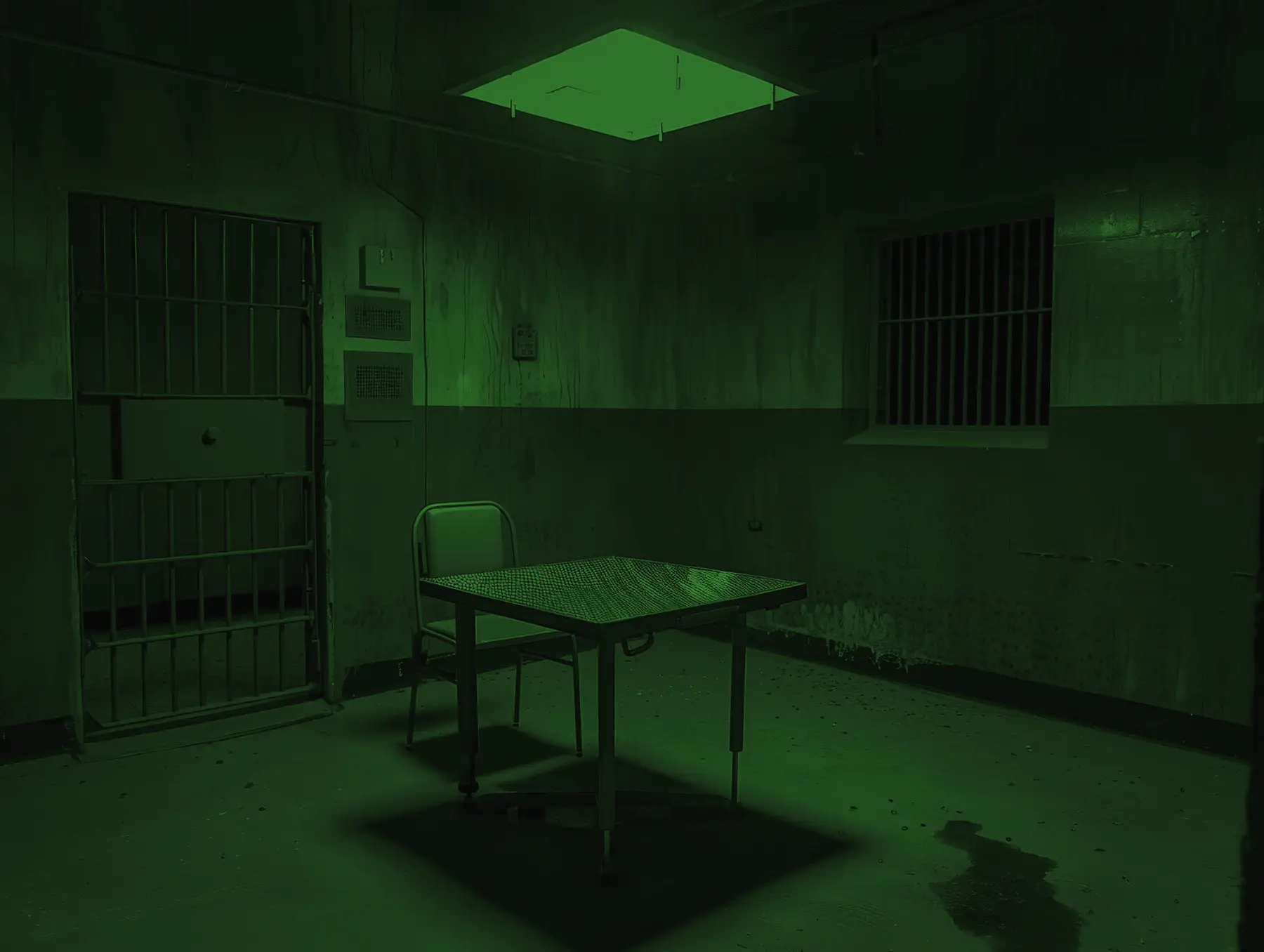
Arrested, Nanny denied everything and giggled, flipping through a copy of True Confessions. "Oh boys. Come on now. I killed nobody." Captain Harry Stege, a veteran homicide detective, kept her under questioning for seven hours, with four teams of two detectives taking turns. "I feel awful bad about keeping you fellas up this way." In the end she confessed to killing four husbands. The press called her "the giggling grandma."
Then the bodies were dug up. Lanning and Louisa Hazle both tested heavy for arsenic. In Alabama, investigators exhumed Harrelson, Dovie Weaver, and Robert Higgins, Melvina's baby son, who died at two months old while in Nanny's care. Nanny had once said a baby "toddling around" might have gotten into rat poison. Babies that age can't toddle. Malvenia also recalled watching her mother hold another of her newborns: "I saw my mother pick up my little baby. And stick a pin into its head."
Oklahoma charged Nanny only in Sam Doss's death. Found competent in April 1955, she insisted, "I'm as sane as anybody," then pleaded guilty on May 15. Judge Elmer Adams, citing experts who had called her a "mental defective," gave her life in prison instead of the electric chair. Other states filed holds so she could never be paroled. Prison suited her. "It's just like home." She died of leukemia on June 2, 1965, a model prisoner who was always ready with a joke. Near the end, she told a reporter: "When they get shorthanded here in the kitchen. I always offer to help out. But they never do let me."